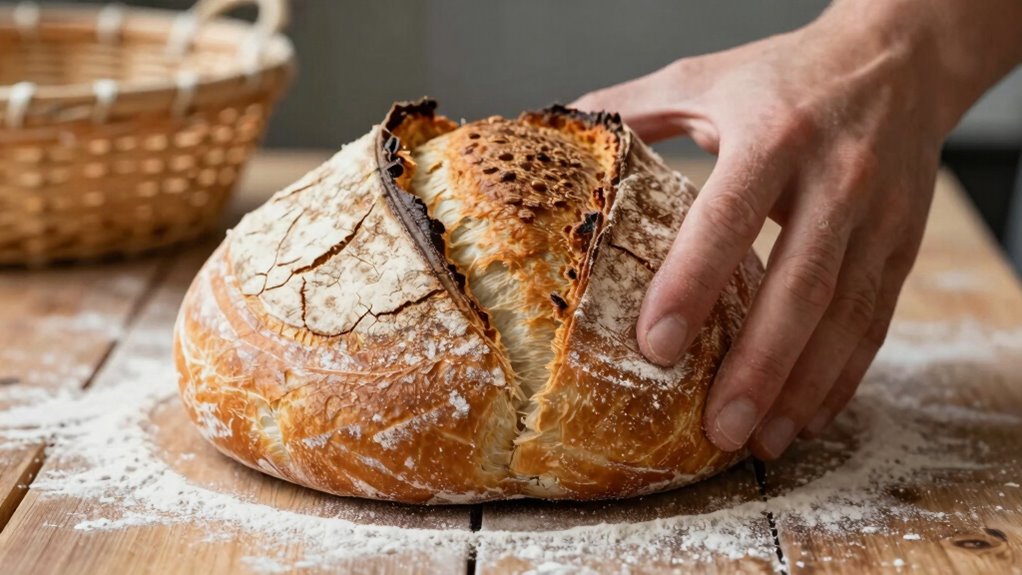
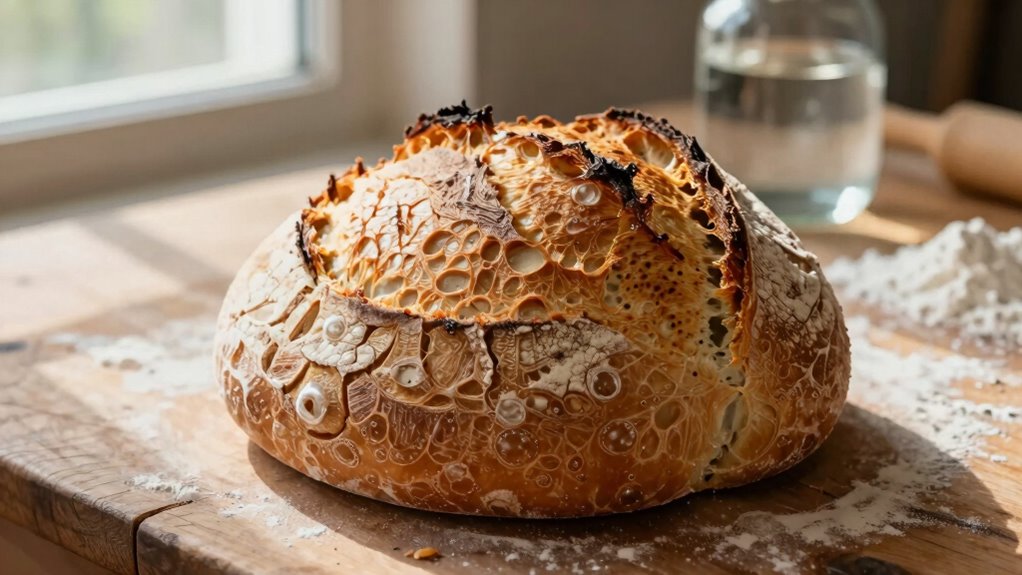
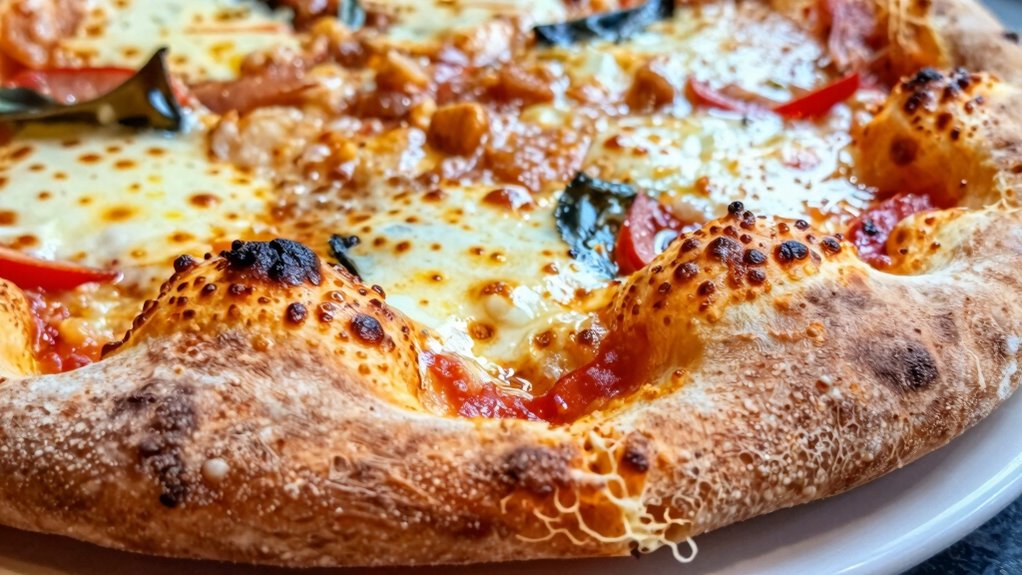
I’m curious about how warm and better proofing methods influence your bread’s flavor and texture—discover the key differences below.
Browsing Category
Bread & Sourdough Systems
49 posts
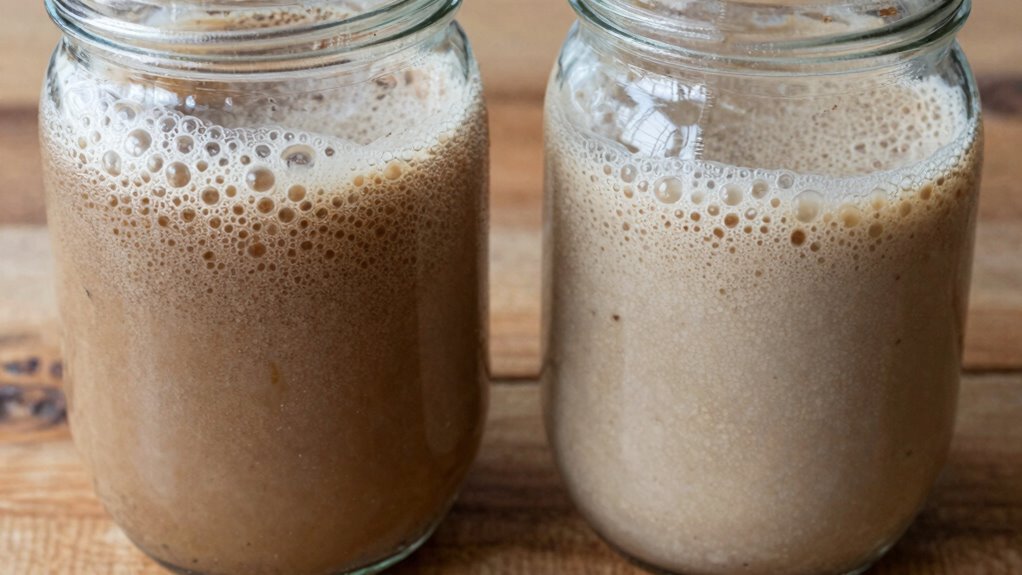
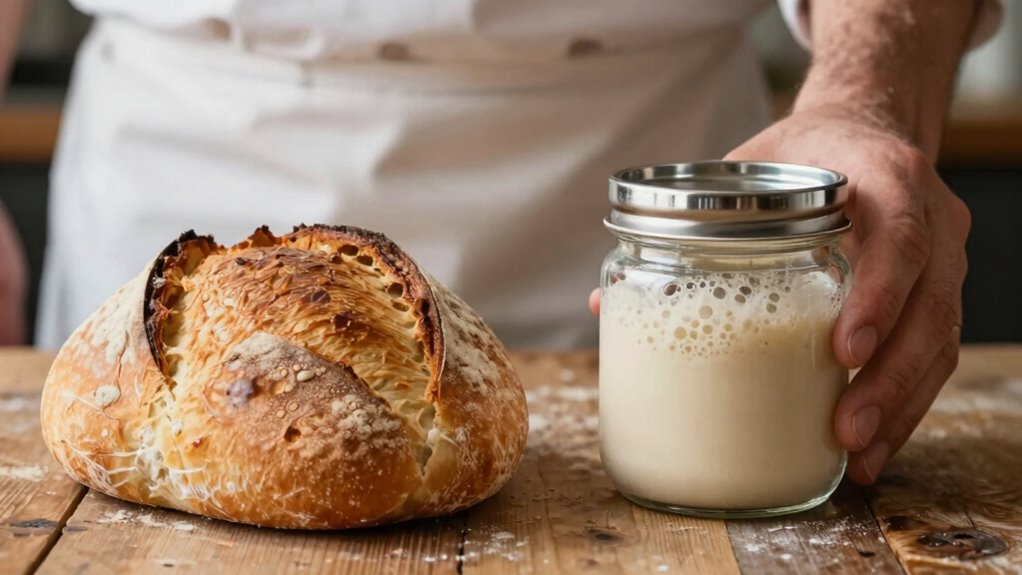
Why Whole Grain Starters Behave So Differently
Nurturing whole grain starters reveals complex fermentation dynamics driven by nutrients, microbes, and hydration, shaping your baking in surprising ways.
How Humidity Changes Dough Skin and Rise Behavior
How humidity affects dough skin and rise behavior can significantly influence your baking outcomes; discover the key factors to optimize your bread’s texture and volume.
The Real Reason High-Hydration Dough Bakes Up Dense
A dense loaf from high-hydration dough often stems from weak gluten development, and understanding how to fix it can transform your baking.
Why Dough Temperature Is the Real Proofing Lever
A deeper understanding of dough temperature reveals the key to perfect proofing; discover how controlling this factor can transform your baking results.
How to Judge Proofing Without Poke-Test Panic
Proofing your dough confidently without panic involves key visual and tactile cues that reveal its readiness—discover how to master these signs.
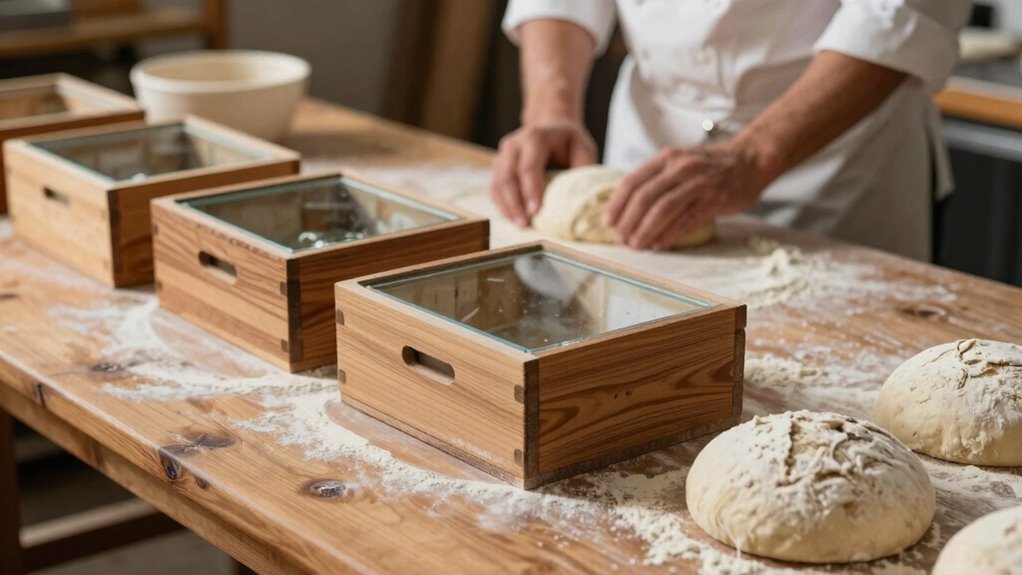
Proofing Boxes Do Not Replace Good Fermentation Judgment
The truth about proofing boxes is that they can’t replace the vital skill of judging dough readiness; discover how to refine your fermentation instincts.
Why Your Sourdough Seems Better on Some Days for No Obvious Reason
Lurking environmental factors can subtly influence your sourdough’s perfection, leaving you wondering why some days yield better loaves—discover the hidden reasons.
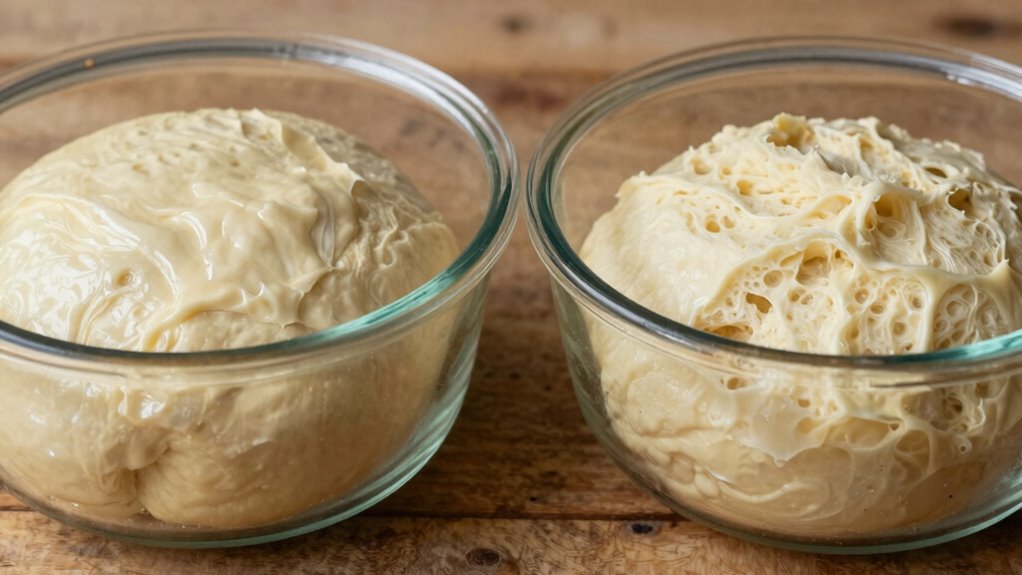
The Starter Peak Myth That Confuses New Bakers
Omitting the idea of a single “starter peak,” this article reveals why sourdough success is a continuous journey worth exploring.
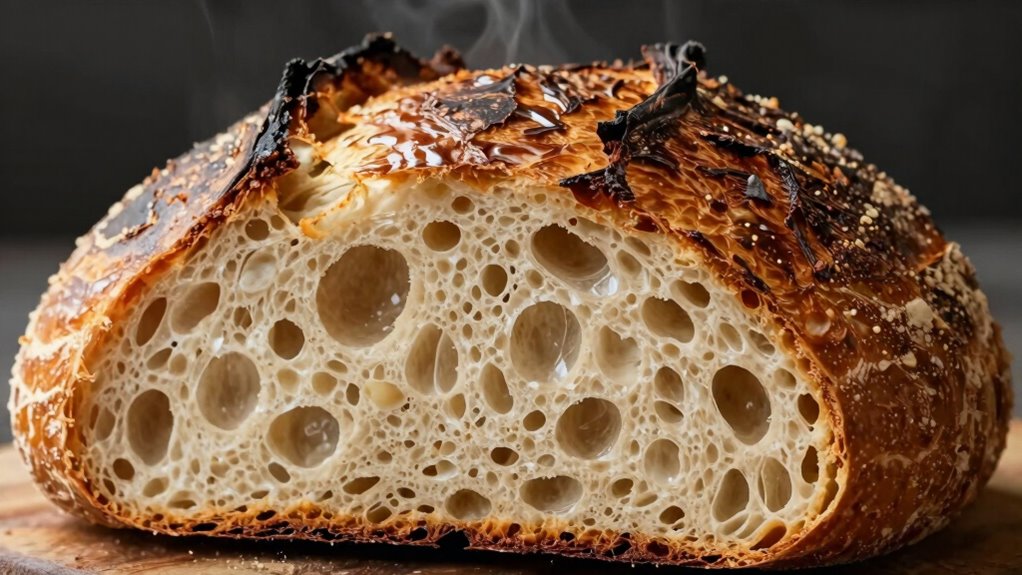
Why Thick Crust and Wet Crumb Often Happen Together
One reason thick crusts and wet crumbs often occur together is that certain baking techniques and dough properties influence moisture and texture.