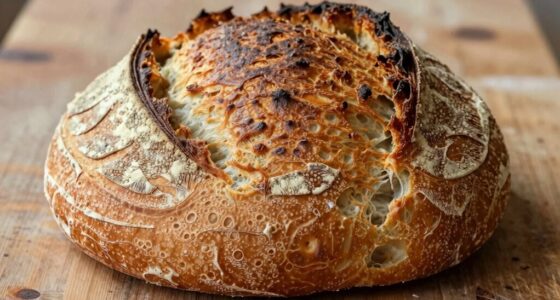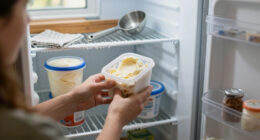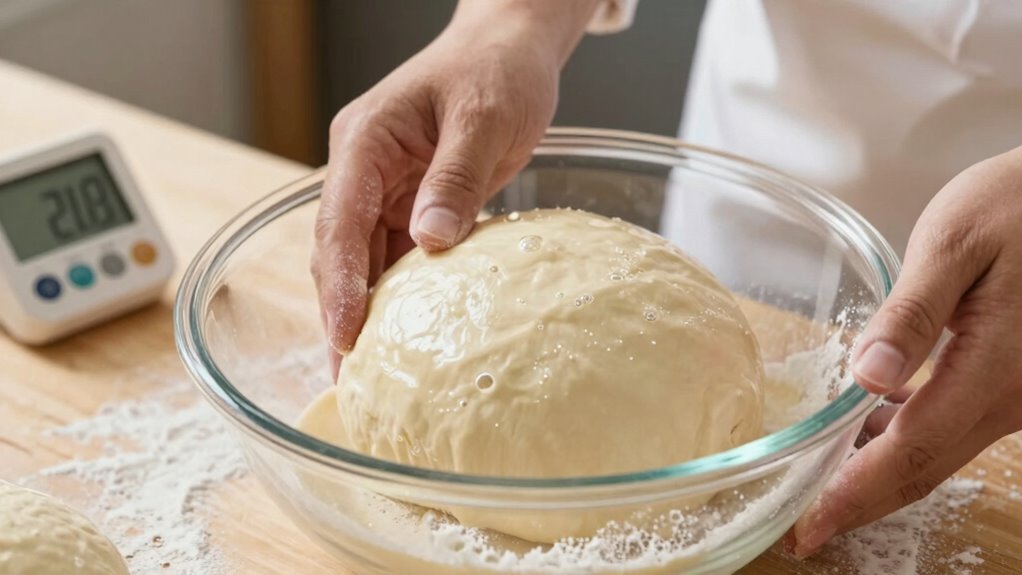

You can control proofing more precisely by managing dough temperature because it directly affects yeast activity and fermentation speed. Warmer dough speeds up fermentation but risks over-proofing, while cooler dough slows it down, resulting in better flavor and texture. By adjusting temperature, you become the master of your proofing process, ensuring consistent results. When you understand this key lever, you gain the confidence to create bakery-quality bread every time—so stick around to learn more about mastering this essential technique.

Get baking supplies delivered free with Prime
- Fast, free delivery on millions of items
- Prime Video, Amazon Music and more included
- Member-only deals all year
Key Takeaways
- Dough temperature directly influences yeast activity, controlling fermentation speed and proofing timing.
- Adjusting dough temperature allows for precise management of bread flavor, texture, and rise.
- Cooler dough enhances flavor development and dough extensibility, while warmer dough speeds up proofing.
- Proper temperature control prevents over-proofing or under-proofing, ensuring consistent bread quality.
- Dough temperature acts as a “proofing lever,” enabling bakers to fine-tune fermentation for optimal results.

Understanding the relationship between dough temperature and proofing is essential for achieving perfect baked bread. When you control dough temperature, you directly influence fermentation control, which is vital for consistent results. Yeast activity thrives within a specific temperature range, and by adjusting the dough temperature, you can fine-tune how quickly or slowly fermentation occurs. If the dough is too cold, yeast activity slows down, leading to a sluggish rise and potentially dense bread. Conversely, if it’s too warm, yeast becomes overly active, causing rapid fermentation that can result in over-proofing and a loss of structure.
Controlling dough temperature is key to consistent fermentation and achieving perfect bread texture.
Dough temperature acts as the primary lever you can manipulate to control proofing time. When dough is warmer, yeast becomes more active, accelerating fermentation. This means your dough will rise faster, which might be desirable if you’re short on time. However, a rapid rise can sometimes compromise flavor development and gluten structure, resulting in a bread that’s airy but lacks depth. On the other hand, cooler dough slows yeast activity, extending fermentation and proofing. This slower process enhances flavor complexity and improves dough extensibility because the gluten has more time to develop. You gain better control over the proofing process, making it easier to achieve a well-balanced, flavorful loaf.
You also need to be mindful of how dough temperature impacts the overall baking process. If you start with a dough that’s too warm, it may over-proof quickly, causing the dough to collapse or deflate when shaped or baked. Too cold, and you risk under-proofing, which can lead to dense texture and uneven crumb. Your goal is to find that ideal temperature window—typically between 75°F to 80°F—where yeast activity is perfect for steady, predictable fermentation. Using a thermometer to monitor dough temperature helps you maintain consistency, especially when scaling recipes or baking in different environments. Consistent temperature management ensures predictable results and helps avoid common pitfalls like over- or under-proofing.
Understanding how dough temperature influences fermentation control gives you the power to produce bakery-quality bread. You can adjust proofing times based on the desired flavor, texture, and appearance of your loaf. It’s not just about speed; it’s about precision. In fact, dough temperature can be considered the “proofing lever” that allows bakers to fine-tune their process for optimal results. By managing dough temperature effectively, you harness yeast activity to your advantage, ensuring your bread rises perfectly every time. Proper temperature control is also linked to yeast activity, which plays a critical role in the fermentation process and final bread quality. This control ultimately leads to a more reliable, satisfying baking experience and consistently excellent results in your bread baking endeavors.
As an affiliate, we earn on qualifying purchases.
Frequently Asked Questions
How Does Dough Temperature Affect Fermentation Rate?
You’ll notice that dough temperature directly influences fermentation rate by affecting yeast activity. When the dough is warmer, yeast becomes more active, speeding up fermentation, which enhances dough elasticity and causes it to rise faster. Conversely, cooler temperatures slow yeast activity, resulting in a slower fermentation process and a more controlled rise. Adjusting dough temperature allows you to control fermentation speed, ensuring ideal dough elasticity and flavor development.
What Tools Are Best for Measuring Dough Temperature Accurately?
Picture a slim probe slipping into your dough, sensing warmth and coolness with precision. The best tools are digital instant-read thermometers and probe thermometers, which provide quick, accurate readings. Make sure your thermometer is properly calibrated for true accuracy. Focus on temperature zones—around 75-78°F for ideal fermentation. These tools help you maintain perfect dough conditions, turning temperature into your secret weapon for perfect proofing every time.
Can Dough Temperature Influence Bread Crust Color?
Yes, dough temperature influences bread crust color. When dough is warmer, it promotes crust browning through the Maillard reaction, which occurs at higher temperatures and enhances flavor and color. By regulating dough temperature, you can optimize crust browning, achieving the desired golden hue. Cooler dough results in lighter crusts, while warmer dough accelerates browning. Precise temperature management ensures consistent crust color and improved bread quality.
How Does Ambient Temperature Impact Dough Proofing?
Imagine you’re back in the Renaissance, but today, ambient temperature greatly impacts your dough proofing. Warm air accelerates yeast activity, making your dough rise faster, while cooler air slows it down. It also affects dough elasticity, helping it stretch or become stiff. By controlling ambient temp, you optimize proofing time and dough texture, ensuring consistent results. So, stay mindful of your environment to master perfect bread every time.
What Are Common Mistakes When Controlling Dough Temperature?
You might make mistakes by not monitoring dough temperature closely, which can affect hydration consistency and yeast activity. If the dough gets too warm, yeast ferments too quickly, leading to over-proofing and poor structure. Conversely, too cold slows yeast activity, resulting in under-proofed dough. Always measure temperature accurately and adjust your proofing environment accordingly, ensuring ideal hydration and consistent yeast activity for the best rise and texture.
bakery-quality bread proofing basket
As an affiliate, we earn on qualifying purchases.
As an affiliate, we earn on qualifying purchases.
Conclusion
Now that you understand how vital dough temperature is, imagine the possibilities when you master this simple yet powerful lever. Just a slight shift in warmth can transform your proofing process, revealing secrets you’ve yet to uncover. Will you wait for the perfect rise, or will you take control and access the full potential of your dough? The choice is yours—your next perfect loaf is waiting, but only if you dare to adjust the temperature just right.
proofing box with temperature control
As an affiliate, we earn on qualifying purchases.
As an affiliate, we earn on qualifying purchases.
kitchen yeast fermentation thermometer
As an affiliate, we earn on qualifying purchases.
As an affiliate, we earn on qualifying purchases.
Fall Picks
fall essentials
As an affiliate, we earn on qualifying purchases.