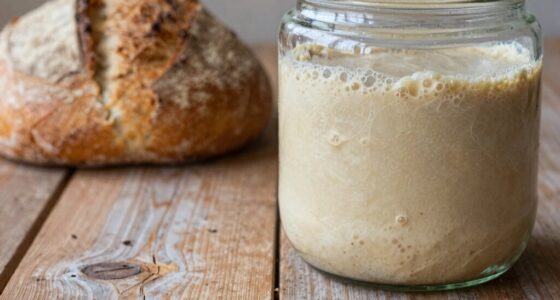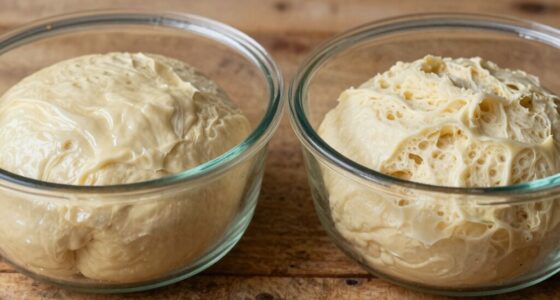

Humidity impacts your dough’s skin and rise by controlling moisture levels during proofing. In high humidity, the dough stays softer longer, delaying crust formation and giving it more time to expand. Low humidity causes the skin to develop quickly, trapping gas early and limiting rise. This makes the crumb denser. By managing humidity, you can influence how your dough evolves. Keep exploring to understand how to optimize these factors for better baking results.

Get baking supplies delivered free with Prime
- Fast, free delivery on millions of items
- Prime Video, Amazon Music and more included
- Member-only deals all year
Key Takeaways
- High humidity slows crust formation, allowing more dough expansion and a lighter crumb.
- Low humidity accelerates skin development, trapping gases prematurely and reducing rise.
- Moist environments improve gluten development, increasing dough elasticity and gas retention.
- Drier conditions can cause crusts to form quickly, limiting dough expansion during proofing.
- Controlling humidity helps balance crust formation and fermentation for optimal loaf volume.
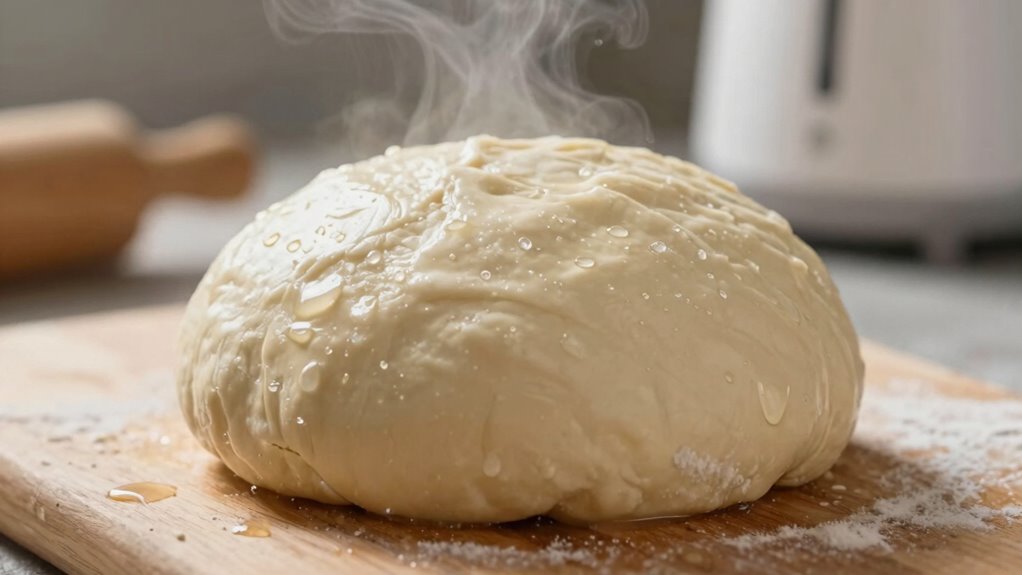
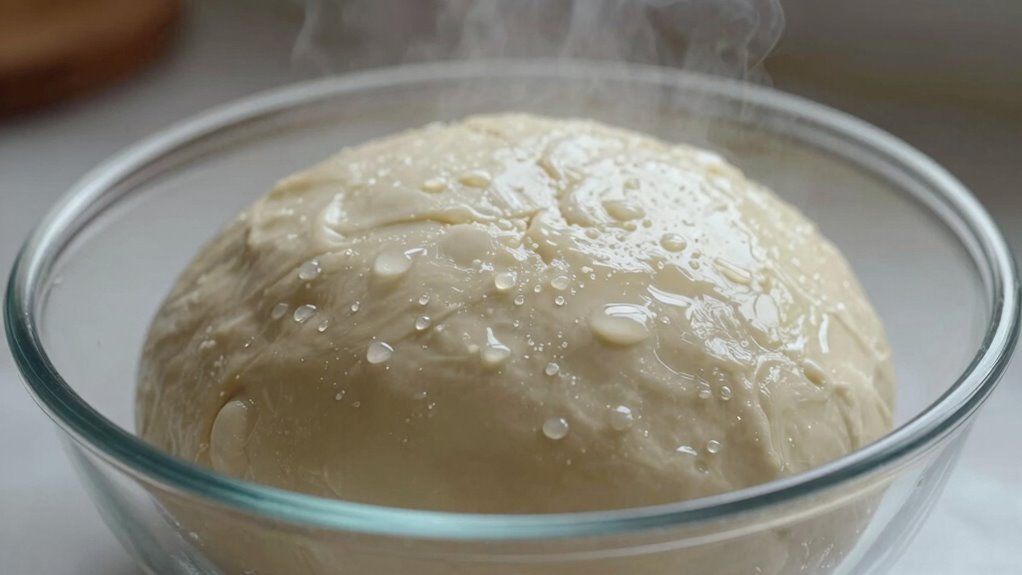
Humidity plays a crucial role in how your dough develops its skin and rises. When the air around you is humid, it directly influences the fermentation rate and yeast activity inside your dough. Higher humidity levels create a moist environment, which keeps the dough softer and more pliable during proofing. This moisture helps regulate the fermentation process, allowing the yeast to work steadily without being stressed by dryness. As a result, your dough tends to rise more consistently, producing a lighter, airier crumb. Conversely, in low-humidity conditions, the dough loses moisture quickly, which can slow down fermentation and suppress yeast activity. The dough might become stiff or dry, making it harder for the yeast to do its job efficiently. This often leads to a denser loaf with less volume because the yeast isn’t generating enough carbon dioxide to lift the dough properly.
Humidity influences dough rise and texture, with high humidity promoting softness and consistent fermentation, while low humidity can cause dryness and density.
When you’re working with high humidity, you’ll notice that the dough remains softer and easier to handle throughout the process. The increased moisture content allows the gluten to develop better, giving the dough more elasticity and strength. This elasticity is essential for trapping the gases produced during fermentation, helping your bread rise higher and form a better crust. On the other hand, in drier environments, you might need to add a little extra water to your recipe or cover your dough more tightly to prevent it from drying out. Failing to do so can lead to uneven fermentation, where parts of the dough may rise while others stagnate. Additionally, controlling environmental factors such as humidity control can be crucial for consistent results in baking. Proper environmental management can help maintain stable conditions, leading to more predictable dough behavior. Recognizing and adjusting for humidity fluctuations can greatly improve your baking success.
Furthermore, understanding the impact of humidity on dough can help bakers adjust their techniques for different environments, ensuring optimal fermentation and rise regardless of external conditions. Humidity also affects how quickly the dough skin forms during proofing and baking. In humid conditions, the skin develops more slowly because the surface remains moist longer. This can be beneficial, as it allows the dough to expand more before the crust hardens. In contrast, low humidity speeds up skin formation, which can trap gases inside prematurely, resulting in a less open crumb. The key is to find the right balance—if the environment is too dry, your dough might form a thick crust prematurely, inhibiting proper rise. In very humid settings, you might need to adjust your drying or proofing times to prevent over-fermentation or overly soft dough that won’t hold its shape. Recognizing the importance of humidity management can significantly improve your baking outcomes.
As an affiliate, we earn on qualifying purchases.
Frequently Asked Questions
How Does Humidity Affect Yeast Activity During Fermentation?
Higher humidity boosts yeast metabolism by providing a moist environment, which accelerates fermentation rate. When humidity is low, yeast activity slows down because the dry air dehydrates the yeast cells, hindering their function. You’ll notice faster rising dough in humid conditions, as yeast ferments more efficiently. Maintaining proper humidity levels guarantees consistent fermentation, helping your dough develop better flavor and structure during the rising process.
Can Humidity Control Prevent Dough From Drying Out Too Quickly?
Did you know that proper humidity control can boost dough moisture retention by up to 30%? Yes, it can indeed prevent dough from drying out too quickly. By maintaining ideal humidity levels, you keep the dough’s skin moist, ensuring better fermentation and a softer crumb. Using a humidifier or covering your dough with damp cloths provides effective humidity control, helping your dough stay supple and rise consistently without premature drying.
Does Humidity Influence the Flavor Development in Bread Dough?
Yes, humidity influences flavor development in bread dough. Higher humidity levels promote better ingredient interactions, allowing enzymes to work more effectively and develop complex flavors. It also helps maintain moisture, encouraging fermentation and yeast activity, which enhances flavor complexity. When humidity is controlled, you support a more balanced environment, resulting in richer, more nuanced bread. So, adjusting humidity can be a subtle yet powerful way to improve your bread’s taste.
How Do Different Humidity Levels Impact Gluten Development?
Ever notice how humid days seem to make dough softer? Higher humidity levels boost moisture retention, which enhances dough elasticity and makes gluten development smoother. Conversely, low humidity dries out the dough, reducing elasticity and making gluten less flexible. So, you’re more likely to get a well-risen, chewy loaf in humid conditions. Adjust your water content accordingly to maintain ideal dough texture and gluten structure, no matter the weather.
Is There an Ideal Humidity Range for Outdoor Bread Baking?
For outdoor bread baking, an ideal humidity range is around 60-70%. This level helps control dough moisture, leading to a crust that’s crisp yet not overly thick. Higher humidity prevents the dough from drying out too quickly, promoting even rise and better gluten development. If humidity drops below this, the crust may become too tough, and if it’s too high, the crust may be too soft.
As an affiliate, we earn on qualifying purchases.
Conclusion
Understanding humidity’s impact on your dough helps you perfect your baking. When humidity is high, dough develops a softer skin, making it easier to stretch and shape. Conversely, low humidity can cause a tougher crust and slower rise. Did you know that humidity levels as low as 30% can reduce dough’s rise by up to 20%? Keep an eye on your environment, and you’ll master consistently delicious loaves every time!
As an affiliate, we earn on qualifying purchases.
dough rising environment hygrometer
As an affiliate, we earn on qualifying purchases.
As an affiliate, we earn on qualifying purchases.
Halloween Picks
halloween
As an affiliate, we earn on qualifying purchases.