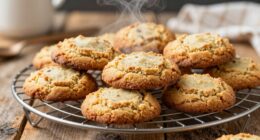
Lacking fresh quality, old flour undergoes oxidation that alters its baking properties, making it essential to understand how it behaves differently.
Browsing Category
Ingredients & Baking Science
48 posts
Why Fresh Flour Absorbs More Water
Just how does fresh flour’s natural moisture and enzyme activity influence its water absorption, and what surprising effects occur during aging?
Nut Flour at Home: Why It Turns Into Nut Butter
Tackling homemade nut flour reveals how natural oils transform it into creamy nut butter, and discovering this process unlocks endless flavor possibilities.
Blender Heat: How It Affects Custards and Chocolate
Lurking beneath the blender’s power lies heat that can make or break your custards and chocolates—discover how to master it for perfect results.
Pie Thickener Choices: Cornstarch vs Tapioca vs Flour
Choosing a pie thickener like cornstarch, tapioca, or flour influences your dessert’s appearance and texture—discover which option best suits your pie.
Why Cheesecake Is Grainy: Protein Coagulation Explained
Find out why cheesecake can turn grainy and how protein coagulation affects its texture, so you can achieve that perfectly smooth dessert every time.
Gel vs Liquid Colors: Which Work in Airbrushes (and Why)
Optimize your airbrushing by understanding whether gel or liquid colors suit your needs—discover which works best and why in this detailed guide.
Cotton Candy Sugar Choice: Why Some Sugars Don’t Spin
Understanding why some sugars don’t spin into perfect cotton candy can help you choose the right one—continue reading to find out what to avoid.
Sugar Stages Explained: Soft Ball to Hard Crack Without Guessing
To identify sugar stages from soft ball to hard crack, use a…
Chocolate Coloring Basics: Fat-Based vs Water-Based Colors
Unlock the secrets of chocolate coloring by understanding the differences between fat-based and water-based colors to achieve perfect, vibrant results.