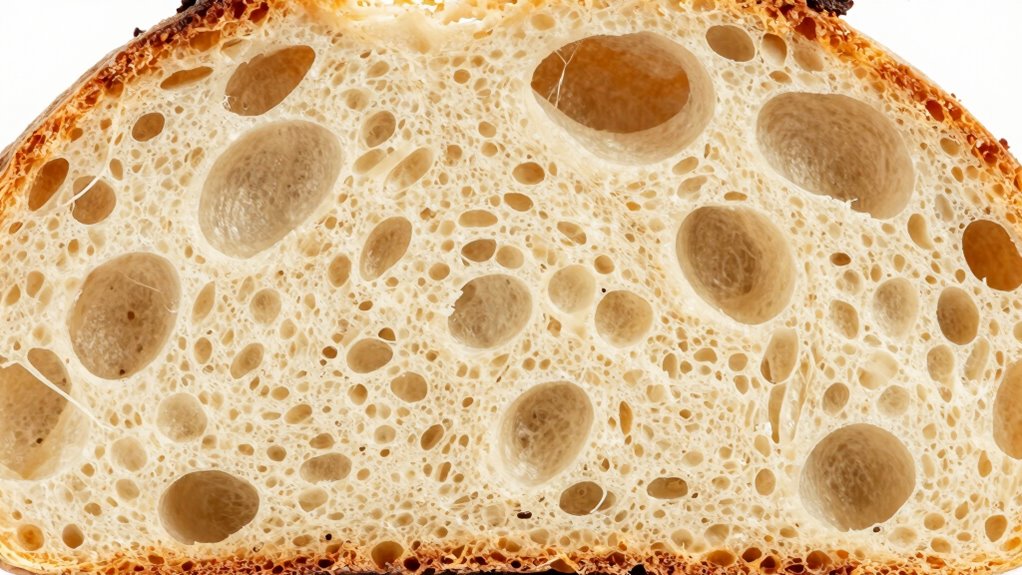
To interpret crumb structure as a diagnostic, pay attention to hole size, distribution, and density. Large, irregular holes often mean overfermentation, while tight, dense crumbs suggest underproofing. Feel the crumb’s texture—moist and tender indicates good fermentation, while gummy or dry hints at issues. Smell the aroma to gauge fermentation activity—sour signals proper fermenting, yeasty flags rushed proofing. Mastering these cues sharpens your baking skills; keep exploring to uncover even more insights.

Get baking supplies delivered free with Prime
- Fast, free delivery on millions of items
- Prime Video, Amazon Music and more included
- Member-only deals all year
Key Takeaways
- Examine the size and distribution of holes to assess fermentation and proofing effectiveness.
- Feel the crumb’s moisture and density to identify over- or under-fermentation issues.
- Observe aroma cues, such as sourness or yeastiness, to gauge fermentation progress.
- Consider gluten development and dough handling, which influence crumb structure and openness.
- Use visual, tactile, and sensory clues collectively to fine-tune baking parameters and improve results.
Have you ever wondered what crumb structure reveals about your bread’s quality and baking process? The way the bread’s interior appears and feels can tell you a lot about how well you’ve managed fermentation and proofing, as well as the overall baking technique. When you analyze the crumb texture, you’re fundamentally performing a diagnostic check that highlights key fermentation indicators. A good crumb isn’t just about aesthetics; it reflects the development of gluten, yeast activity, and proper dough handling.
Crumb structure reveals key insights into fermentation, gluten development, and baking technique for perfect bread.
When you look at the crumb, pay attention to the size and distribution of the holes or alveoli. Large, irregular holes often suggest overfermentation, where the yeast has produced excessive gas, or perhaps uneven proofing. Conversely, a tight, dense crumb may indicate underfermentation, meaning the yeast didn’t have enough time or conditions to produce enough gas to aerate the dough fully. By understanding these indicators, you can adjust your fermentation times or temperature to improve future bakes.
Crumb texture analysis also involves feeling the bread. A well-fermented loaf typically has a light, open texture with a moist, tender feel. If the crumb feels gummy or overly moist, it might be a sign of overproofing or insufficient oven spring. On the other hand, a crumb that’s dry and crumbly could point to underproofing or overbaking. These tactile clues are vital in diagnosing what went right or wrong during the fermentation process. Recognizing these fermentation indicators can help you develop a more consistent baking process. Additionally, understanding how gluten development influences the crumb can guide you in adjusting kneading and resting times for optimal results. Paying attention to dough handling techniques can further refine your process and improve your bread’s overall quality. Developing an awareness of fermentation progress can also help you anticipate the perfect timing for baking.
In addition to visual and tactile cues, the aroma can give you subtle hints about the fermentation indicators. A slightly sour smell often signifies active fermentation, while a bland or yeasty aroma might mean fermentation was rushed or incomplete. Combining these sensory observations with crumb texture analysis provides an all-encompassing picture of your baking process. Recognizing the fermentation process and its effects can help you fine-tune every aspect of your bread-making.
Ultimately, reading crumb structure like a diagnostic tool helps you refine your bread-making skills. It guides you in tweaking fermentation times, hydration levels, and baking conditions. Over time, you’ll develop an intuitive sense for what your crumb should look and feel like, enabling you to produce consistent, high-quality bread. The more you analyze, the better you’ll understand the subtle cues that reveal the success or shortcomings of your fermentation indicators. This approach turns baking from guesswork into a precise science, helping you craft bread that’s not only visually appealing but also perfectly textured and flavorful.
bread crumb structure analysis tools
As an affiliate, we earn on qualifying purchases.
As an affiliate, we earn on qualifying purchases.
Frequently Asked Questions
Can Crumb Structure Indicate Specific Types of Bread Spoilage?
Yes, crumb structure can indicate specific bread spoilage. A dense crumb often signals staling or improper fermentation, while a lack of elasticity suggests mold or bacterial growth. You can identify spoilage by observing changes in crumb density and elasticity—if the crumb becomes overly hard or crumbly, it’s a sign of deterioration. These structural cues help you diagnose bread freshness and detect spoilage early, ensuring quality control.
How Does Humidity Affect Crumb Structure Analysis?
Did you know that high humidity levels can increase crumb moisture by up to 30%? Humidity impact is significant when analyzing crumb structure. Excess moisture makes the crumb denser and less aerated, while low humidity results in a drier, crumblier texture. By observing these changes, you can assess the freshness and storage conditions of bread, helping you identify spoilage or improper handling through crumb structure analysis.
Are There Tools to Objectively Measure Crumb Quality?
Yes, you can use tools like image analysis software and sensory evaluation methods to objectively measure crumb quality. Image analysis helps quantify crumb structure, such as pore size and distribution, providing consistent, visual data. Sensory evaluation involves trained panels assessing texture, softness, and mouthfeel. Combining these methods gives you a thorough, objective understanding of crumb quality, helping you make informed baking decisions and improve your products consistently.
What Role Does Flour Type Play in Crumb Appearance?
You might think flour type doesn’t matter, but it plays a essential role in crumb appearance. Higher-protein flours promote better gluten development, giving your bread a sturdy, open crumb. Meanwhile, softer flours with less protein lead to a tighter crumb, affecting starch gelatinization during baking. Understanding these effects helps you predict crumb structure, ensuring your baked goods meet your desired texture and appearance every time.
Can Crumb Structure Predict Shelf Life or Freshness?
Crumb structure can give you clues about a bread’s shelf life and freshness. If you notice a light, open crumb with good elasticity, it’s likely fresher and will stay soft longer. Dense crumbs or those lacking elasticity often indicate staleness or extended storage. Monitoring crumb density and elasticity helps you assess freshness, as these features reflect moisture retention and bread quality over time.
As an affiliate, we earn on qualifying purchases.
Conclusion
By understanding crumb structure, you’re like a baker with a secret map, guiding you to perfect bread every time. When you read those tiny, airy pockets, you’re revealing the bread’s story—its rise, hydration, and fermentation. With a keen eye, you’ll see the breadcrumbs of quality, helping you craft delicious loaves that delight every time. So, keep exploring, and soon, reading crumb structure will become as natural as tasting the first bite of fresh bread.
As an affiliate, we earn on qualifying purchases.
As an affiliate, we earn on qualifying purchases.
Halloween Picks
halloween
As an affiliate, we earn on qualifying purchases.