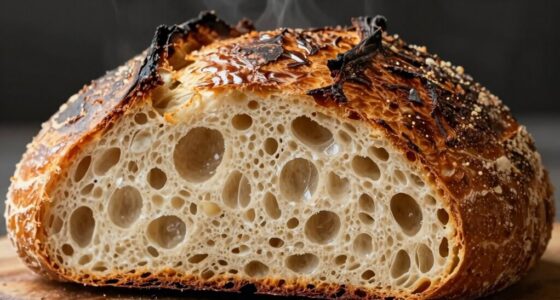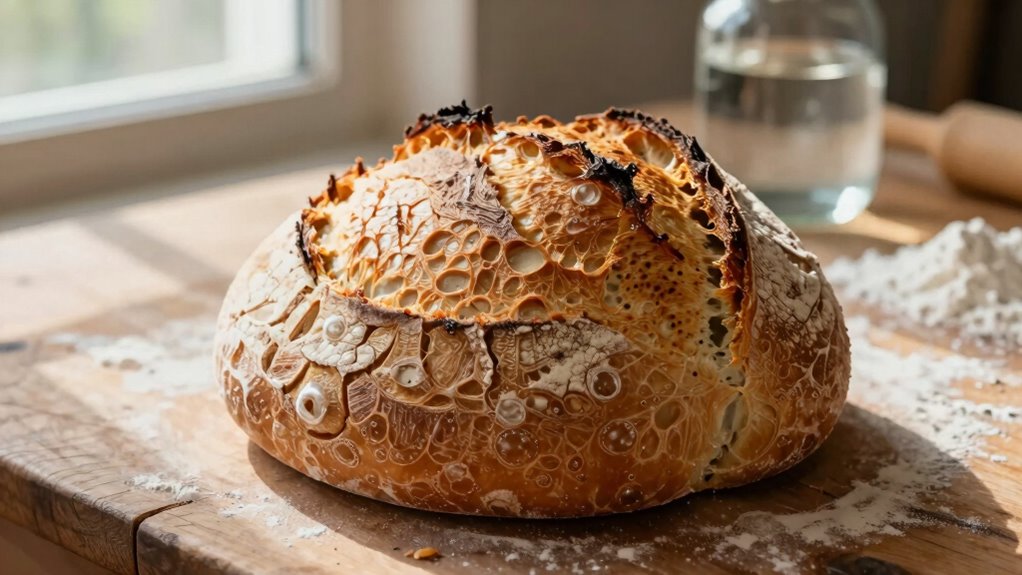

Your sourdough might turn out better on some days due to small, often unnoticed changes in temperature, humidity, or fermentation timing. Warmer environments speed up yeast and bacteria activity, while cooler conditions slow them down, affecting rise and flavor. The freshness of your flour also plays a big role, as newer flour boosts fermentation. Even air circulation and subtle environmental shifts can influence results. Pay attention to these details, and you’ll discover the secrets behind more consistent, delicious loaves every time.

Get baking supplies delivered free with Prime
- Fast, free delivery on millions of items
- Prime Video, Amazon Music and more included
- Member-only deals all year
Key Takeaways
- Slight environmental changes, like temperature or humidity shifts, can enhance fermentation and improve bread quality unexpectedly.
- Variations in flour freshness or starter vitality can influence dough activity from day to day.
- Minor adjustments in fermentation timing or ambient conditions can lead to noticeable differences in loaf texture and flavor.
- Airflow, drafts, or even subtle changes in your baking environment impact dough development.
- Inconsistent results often stem from unnoticed fluctuations in fermentation variables or ingredient quality.
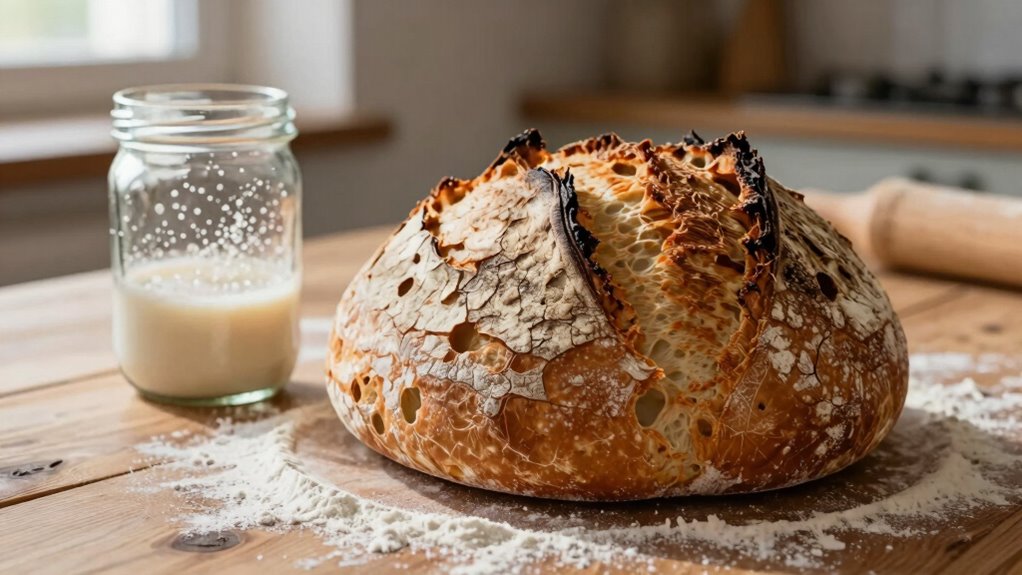
Have you ever noticed that your sourdough turns out perfectly on some days, only to fall flat on others, without any clear reason? It’s frustrating, isn’t it? The truth is, a lot of it comes down to subtle changes in fermentation variables and the freshness of your flour. These factors can significantly impact how your dough ferments and rises, yet they often go unnoticed.
Fermentation variables are the main culprits behind inconsistent sourdough results. Even slight fluctuations in temperature, humidity, or timing can make a big difference. For instance, if your kitchen is warmer one day, the yeast and bacteria in your starter become more active, accelerating fermentation. Conversely, cooler days slow everything down, leading to denser, less airy loaves. Similarly, the duration of fermentation matters; too short, and your dough might not develop enough flavor and structure, too long, and it can overproof, collapsing in the oven. Small changes in how long you let your dough ferment or proof can cause big differences in the final product. Paying attention to fermentation timing can help you better control these variables. Additionally, monitoring ambient conditions and adjusting your process accordingly can make a noticeable difference in your results.
Small changes in temperature, humidity, or timing can dramatically impact your sourdough’s rise and flavor.
Another often overlooked factor is flour freshness. Fresh flour contains more enzymes and nutrients, giving your sourdough a lively, vigorous fermentation. When your flour sits on the shelf for a while, it can lose some of that vitality, resulting in a weaker rise and less developed flavor. If you use older flour, your starter may struggle to produce the same amount of carbon dioxide, leading to a flatter loaf. Plus, the type of flour you choose influences fermentation. Whole grain flours retain more natural oils and nutrients, which can boost activity, while highly processed white flours may yield a milder rise. Ensuring your flour is fresh and properly stored helps maintain the consistency you’re aiming for.
It’s also worth noting that even small environmental changes, like drafts or air circulation, can affect fermentation. Drafts can cool your dough unexpectedly or dry out the surface, impacting how it develops. Likewise, the freshness of your flour and how it’s stored can vary day to day, influencing fermentation outcomes. Paying close attention to these details can help you find a rhythm that produces reliably good sourdough every time. Being mindful of environmental factors such as airflow and temperature fluctuations can further refine your baking process.
Additionally, understanding fermentation variables and how they interact can help you troubleshoot inconsistencies and improve your baking process. In the end, understanding and controlling fermentation variables and keeping your flour fresh are key to leveling up your sourdough game. Once you get familiar with how these factors influence your dough, you’ll start seeing more consistent results, making those perfect loaves feel just a little easier to achieve.
As an affiliate, we earn on qualifying purchases.
Frequently Asked Questions
Does the Weather Affect Sourdough Fermentation?
Yes, weather affects sourdough fermentation. Climate variability and humidity fluctuations influence how your dough behaves, as they impact yeast activity and bacteria growth. Higher humidity can speed up fermentation, making your sourdough rise faster, while dry conditions slow it down. Temperature changes also play a role, so adjusting your proofing times and environment can help you maintain consistent results despite weather shifts.
How Does My Starter’s Age Influence Bread Quality?
Your starter’s age influences bread quality by affecting fermentation timing and flavor development. As it matures, the starter’s hydration levels stabilize, creating consistent fermentation, which results in better rise and flavor. Younger starters may ferment faster but lack complexity, while older ones develop deeper flavors and stronger gluten structure. Keep an eye on your starter’s maturity, adjust fermentation timing accordingly, and you’ll notice more reliable, delicious sourdough every time.
Can My Mental State Impact Sourdough Rise?
Your mental state can influence your sourdough’s rise because stress levels and mental clarity affect your focus and patience during baking. If you’re stressed, you might rush or not give your starter enough time to ferment properly, leading to inconsistent results. Conversely, when you’re calm and clear-headed, you pay better attention to timing and environment, helping your sourdough rise more predictably and beautifully.
Do Different Flours Change Sourdough Flavor Unpredictably?
Different flours can definitely change your sourdough’s flavor unpredictably. Grain variability means each batch of flour may have different mineral or protein levels, affecting the taste. Additionally, flour freshness plays a vital role; fresher flour usually results in a more vibrant flavor, while older flour can lead to muted or altered notes. So, experimenting with various flours and tracking their freshness can help you understand and predict your sourdough’s flavor better.
How Do Ambient Pollutants Affect Sourdough Baking?
Ambient pollutants, like poor air quality and chemical exposure, can impact your sourdough baking. Pollutants can introduce unwanted microorganisms or chemicals into your environment, affecting fermentation and flavor. When air quality is low, these contaminants might alter yeast activity or contribute off-flavors. To keep your sourdough consistent, bake in a well-ventilated space, and avoid exposure to strong chemicals or polluted air during fermentation and baking processes.
As an affiliate, we earn on qualifying purchases.
Conclusion
So, next time your sourdough surprises you with a perfect rise or a dazzling crust, remember—it’s a dance of tiny, unseen factors working together. Like a mystery wrapped in flour and water, the magic isn’t always clear, but that’s what makes each loaf special. Embrace the unpredictability, for in those fleeting moments of perfection, you savor the true art of baking—an enchanting reminder that sometimes, the best things in life are the ones you can’t quite explain.
As an affiliate, we earn on qualifying purchases.
As an affiliate, we earn on qualifying purchases.
Fall Picks
fall essentials
As an affiliate, we earn on qualifying purchases.