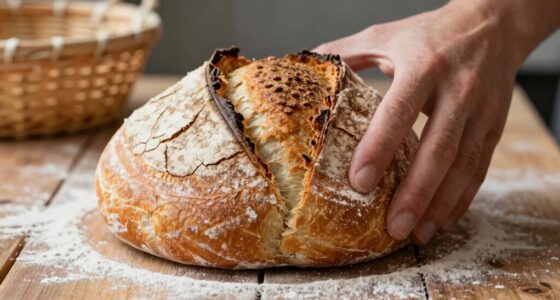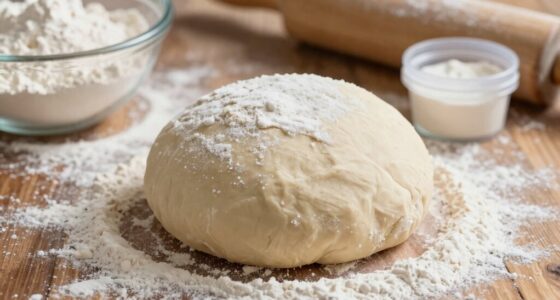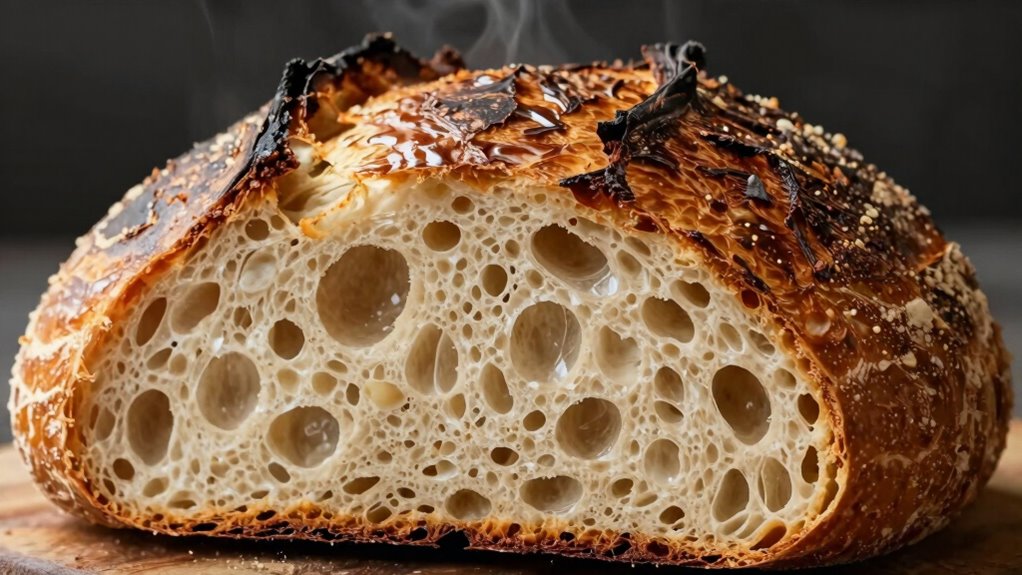

If your high-hydration dough bakes up dense, the main reason is likely weak gluten development. Too much water can make kneading and folding harder, leading to a poor gluten network that can’t trap gases effectively. Without strong gluten, your loaf won’t rise properly, resulting in a dense crumb. Focus on kneading thoroughly and managing fermentation well. Keep exploring to discover how proper gluten formation and fermentation can help you achieve a lighter, more open crumb.

Get baking supplies delivered free with Prime
- Fast, free delivery on millions of items
- Prime Video, Amazon Music and more included
- Member-only deals all year
Key Takeaways
- Inadequate gluten development in high-hydration dough weakens the structure, preventing proper gas retention and resulting in a dense loaf.
- Insufficient fermentation time can lead to under-leavened dough, reducing volume and crumb openness.
- Overhydration without proper gluten formation causes the dough to be too slack, collapsing during baking.
- Poor handling or shaping can break the gluten network, releasing gases and causing a dense crumb.
- Temperature and humidity issues during fermentation hinder gluten strength and gas production, leading to a dense bake.
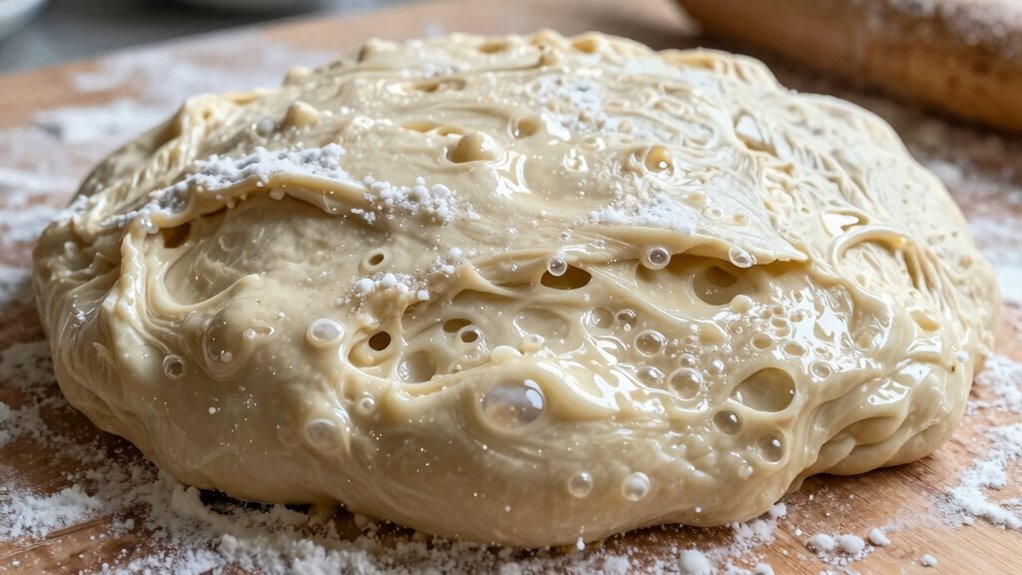
High-hydration dough, prized for its airy crumb and open crumb structure, often surprises bakers when it bakes up denser than expected. The main reason behind this unexpected outcome usually lies in how the gluten develops and how the fermentation process unfolds during mixing and proofing. When working with high-hydration dough, you might assume that the excess water will create a lighter loaf, but if the gluten isn’t properly developed, the dough won’t have the necessary strength to trap gas effectively. Without strong gluten networks, the dough can collapse or settle, resulting in a denser crumb once baked.
Gluten development is essential here. When you mix your dough, you need to knead or stretch and fold sufficiently to align the gluten strands. This creates a resilient network capable of capturing the carbon dioxide produced during fermentation. If you under-knead, the gluten remains weak, and the dough can’t hold the gases generated during the fermentation process. As a result, the dough might not rise as much, or it can deflate during shaping or baking, leading to a denser loaf than anticipated. Proper gluten formation is critical for creating the structure needed to support the dough’s rise. Developing this network thoroughly can be the difference between a light loaf and a dense one.
Proper gluten development through kneading and stretching strengthens the dough to trap gases and achieve an airy crumb.
The fermentation process itself plays a key role. During fermentation, yeast consumes sugars and releases carbon dioxide, which leavens the dough. Proper fermentation ensures the dough develops flavor and creates enough gas to expand the dough’s structure. However, if fermentation is too short or too slow, the gluten network might not be fully activated or strengthened. This means that even with high hydration, your dough lacks the necessary gas retention capacity. Conversely, over-fermentation can weaken the gluten structure, making it unable to support the dough’s rise, which also results in a denser crumb. Achieving the right balance in fermentation is crucial for optimal gluten strength and gas retention. Additionally, Proper fermentation helps develop the dough’s flavor and texture, making it essential beyond just rise. Maintaining consistent temperature and humidity during fermentation can significantly influence these outcomes.
Another mistake often made is rushing the proofing stages. High-hydration dough needs ample time for the gluten to relax and for fermentation to fully develop. If you cut this short, the dough may not have the strength or gas pockets needed for an open crumb. Additionally, improper handling during shaping can break down the gluten network, causing gases to escape and resulting in a denser loaf. Patience during proofing is vital for allowing the gluten to fully develop and trap the gases effectively. Proper proofing time allows the dough to reach its full potential for volume and crumb openness.
In essence, achieving that light, airy high-hydration bread hinges on thorough gluten development and a patient, well-managed fermentation process. When you focus on these two factors—kneading enough to strengthen the gluten and allowing fermentation to fully work—you give your dough the best chance to rise properly and produce the open crumb you’re aiming for. Without these steps, even the highest hydration levels can’t compensate for weak gluten or rushed fermentation, leaving you with a dense loaf instead of the light, airy bread you desire. Proper gluten development and fermentation are key to unlocking the full potential of high-hydration dough.
As an affiliate, we earn on qualifying purchases.
Frequently Asked Questions
Can Adjusting Hydration Levels Improve Bread Lightness?
Adjusting hydration levels can definitely improve bread lightness. By finding the right hydration balance, you help develop better dough elasticity, which traps more gas and creates a lighter crumb. Too much water, however, can make the dough sticky and hard to handle, resulting in dense bread. Experiment with hydration to find the sweet spot where your dough becomes elastic enough for a fluffy, airy loaf.
Does Fermentation Time Affect Dough Density?
Yes, fermentation time affects dough density. When you extend fermentation, yeast activity increases, allowing more gluten development, which creates a stronger, more elastic dough. This results in better gas retention and a lighter crumb. Conversely, short fermentation can lead to denser bread because gluten hasn’t fully developed, and yeast hasn’t produced enough gas. So, giving your dough enough time guarantees ideal gluten structure and a more airy, well-leavened loaf.
Are Specific Flours Better for High-Hydration Doughs?
You’ll find that bread flours with higher protein content are better for high-hydration doughs, even as weaker flours struggle to develop gluten. The key is gluten development—stronger flours create a resilient network that traps gas effectively. Think of it as building a sturdy framework; with the right flour, your dough can handle the moisture without becoming dense, resulting in a lighter, airier loaf.
How Does Kneading Influence Dough Structure?
Kneading plays a vital role in shaping your dough’s structure by promoting gluten development, which strengthens the dough’s network. As you knead, you increase dough elasticity, making it easier to stretch and shape. Proper kneading guarantees even gluten formation, resulting in a well-structured, airy crumb. Without adequate kneading, your dough may be too weak or dense, compromising its ability to hold gases and rise properly during baking.
What Role Does Oven Temperature Play in Loaf Density?
Oven temperature plays a vital role in loaf density by influencing how the dough expands and sets. If your oven is too low, the loaf won’t rise properly, resulting in a dense texture. Conversely, a higher oven temperature causes rapid steam formation, promoting better oven spring and a lighter crumb. To achieve a less dense loaf, make certain your oven heats evenly and to the right temperature for your specific bread recipe.
As an affiliate, we earn on qualifying purchases.
Conclusion
So, next time your high-hydration dough turns out dense, don’t blame the flour or your oven. It’s probably because you’ve been unknowingly sabotaging your own masterpiece! Think of it like trying to inflate a balloon with a tiny pinhole—no matter how much air you blow in, it’s just not going to rise. Master the hydration balance, and you’ll release bread so light and airy, it’ll practically float off the plate!
As an affiliate, we earn on qualifying purchases.
As an affiliate, we earn on qualifying purchases.
Halloween Picks
halloween
As an affiliate, we earn on qualifying purchases.