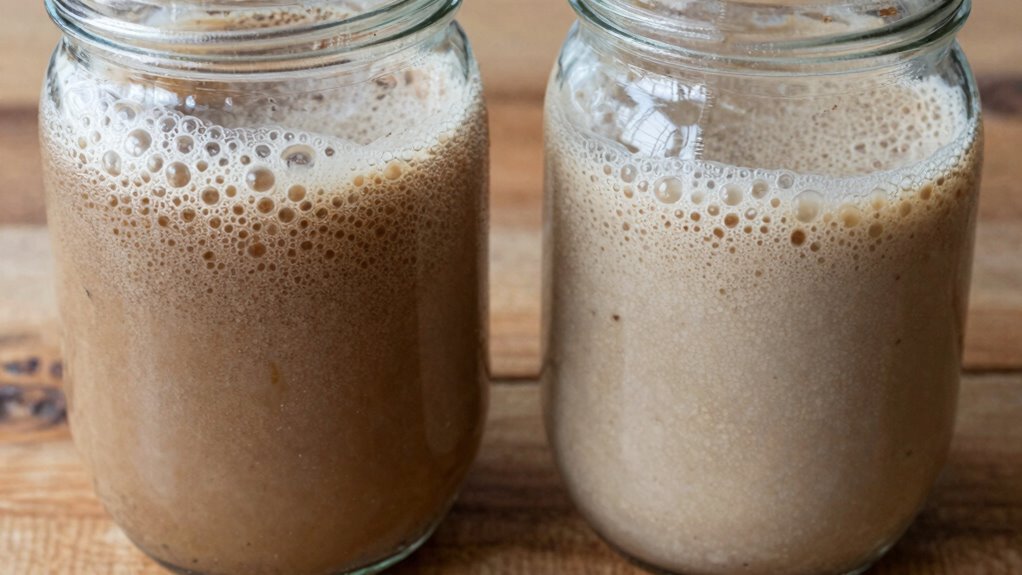

Whole grain starters behave differently because they have more complex carbs, fiber, and nutrients that shape fermentation. These components support diverse microbes, which interact uniquely in dense, nutrient-rich environments. They also absorb more water, making the dough denser and fermentation slower. Grain quality, environment, and hydration all play roles in how your starter develops. To understand how these factors affect your baking, keep exploring how to adapt and optimize your whole grain fermentation process.

Get baking supplies delivered free with Prime
- Fast, free delivery on millions of items
- Prime Video, Amazon Music and more included
- Member-only deals all year
Key Takeaways
- Whole grains contain more complex carbs, fiber, and nutrients, affecting microbial activity and fermentation speed.
- The density and toughness of whole grain dough slow down microbial and enzymatic breakdown.
- Variability in grain quality, freshness, and grinding influences microbial diversity and fermentation behavior.
- Higher water absorption in whole grains results in denser dough, impacting rising patterns.
- Environmental factors like temperature and humidity significantly alter fermentation dynamics in whole grain starters.
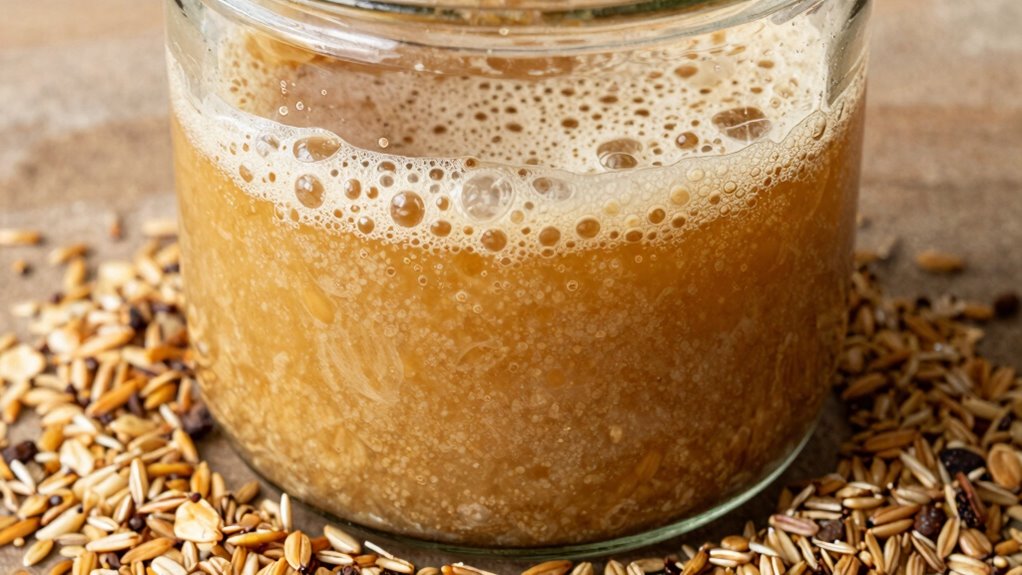
Starting a whole grain starter is a simple way to deepen your baking skills and enjoy healthier bread options. Unlike white flour starters, whole grain starters often behave differently because of their unique fermentation dynamics. Whole grains contain more complex carbohydrates, fiber, and nutrients, which influence how the microbes in your starter ferment and develop. These microbes, primarily wild yeasts and lactic acid bacteria, interact with the dense, nutrient-rich environment differently than with refined flours. As a result, your starter might take longer to become active or show more variability in rising and bubbling patterns. This is due to the slower breakdown of the tougher bran and germ components, which require more time for their enzymes to act upon. Understanding these fermentation dynamics helps you better anticipate how your starter will behave and adjust your feeding schedule accordingly. The microbial diversity in whole grain starters adds complexity to the fermentation process, making it essential to observe and adapt over time. Nutrient absorption plays a crucial role in why whole grain starters act so differently. Whole grains are packed with nutrients that influence microbial activity. The presence of more minerals, vitamins, and fiber creates a complex ecosystem within your starter. These nutrients support a diverse community of beneficial microbes, which can sometimes compete or cooperate, affecting the overall fermentation process. Because of this, you might notice that your whole grain starter develops a tangier flavor or takes longer to reach peak activity compared to a white flour starter. The increased fiber content also impacts the hydration levels needed; whole grains tend to absorb more water, making the dough denser and requiring adjustments in your recipe. This higher nutrient density can slow down the fermentation process, but it also leads to a more flavorful, nutrient-dense bread once active. Additionally, the natural variability in whole grain flours—due to differences in grain type, freshness, and grinding process—affects how your starter behaves. These factors influence the initial microbial populations and the availability of nutrients. Environmental factors, such as temperature and humidity, further contribute to the variability in your starter’s performance, emphasizing the importance of consistent observation and adaptation. Recognizing that these differences are normal helps you embrace the unique characteristics of whole grain starters. As you gain experience, you’ll also find that grain quality can significantly impact the fermentation process and the overall success of your starter. Furthermore, factors like grain freshness can introduce additional variability, making careful selection and storage important. Over time, as you experiment and refine your feeding routine, you’ll notice your starter stabilizes and develops a more reliable fermentation rhythm. Understanding the fermentation process is key to achieving consistent results and appreciating the complexity of whole grain baking. Embracing this variability ultimately results in bread that boasts complex flavors and richer nutritional benefits, making your baking journey more rewarding.
whole grain sourdough starter kit
As an affiliate, we earn on qualifying purchases.
As an affiliate, we earn on qualifying purchases.
Frequently Asked Questions
How Does Hydration Level Affect Whole Grain Starter Activity?
You’ll notice that hydration level, or water to flour ratio, directly impacts your whole grain starter’s activity. Higher hydration levels create a more consistent environment, encouraging yeast and bacteria growth, leading to faster fermentation. Conversely, lower hydration can slow things down, making your starter less active. Maintaining hydration consistency helps you control fermentation speed and flavor development, ensuring a lively, healthy starter that’s ready when you are.
Can Different Types of Whole Grains Be Mixed in One Starter?
Imagine your starter as a bustling marketplace, where different grains are vendors offering unique flavors. Mixing various whole grains can work if their compatibility is good; some grains blend harmoniously, creating a rich tapestry of flavors, while others clash. You might enjoy diverse flavor variations, but keep in mind, incompatible grains could hinder fermentation. Experiment carefully, and you’ll discover delightful combinations that keep your starter lively and flavorful.
Why Do Some Whole Grain Starters Develop Mold Easily?
Some whole grain starters develop mold easily because of moisture, warmth, and nutrient richness. Mold prevention starts with proper starter storage—keep it in a cool, airtight container, and avoid excess humidity. Regularly feed and discard portions to maintain healthy bacteria, which helps prevent mold growth. Additionally, using less moist grains and ensuring cleanliness during feeding also reduces mold chances, keeping your starter healthy and active.
How Does Temperature Influence Fermentation in Whole Grain Starters?
Did you know that temperature fluctuations can cause a 50% change in microbial diversity? When you control temperature, you influence fermentation in whole grain starters considerably. Higher temperatures speed up fermentation by encouraging yeast and bacteria growth, while cooler temps slow it down. Consistent, ideal temperatures promote healthy microbial activity, preventing mold and undesirable microbes. So, keeping your starter in a stable environment ensures a lively, balanced fermentation process.
What Are Common Signs of an Unhealthy Whole Grain Starter?
You’ll notice signs like a foul smell, pink or orange mold, or a sticky, discolored surface, indicating an unhealthy whole grain starter. If it develops mold, discard it immediately to prevent contamination. Regular starter feeding helps maintain healthy fermentation, keeps bacteria balanced, and prevents mold growth. Always keep your starter at the right temperature and discard any problematic sections to guarantee mold prevention and a thriving, active starter.
fermentation thermometer for bread making
As an affiliate, we earn on qualifying purchases.
As an affiliate, we earn on qualifying purchases.
Conclusion
Understanding why whole grain starters behave so differently is like discovering a secret code in nature’s kitchen. By paying attention to their unique needs—like hydration, temperature, and timing—you can nurture a lively, resilient starter that rises with confidence. Embrace the quirks and magic of each batch, knowing that, just like a good story, your starter’s personality will develop over time. With patience and care, you’ll turn these wild ingredients into a beautiful symphony of bread.
As an affiliate, we earn on qualifying purchases.
As an affiliate, we earn on qualifying purchases.
Fall Picks
fall essentials
As an affiliate, we earn on qualifying purchases.