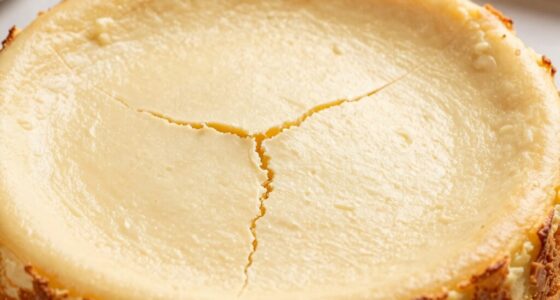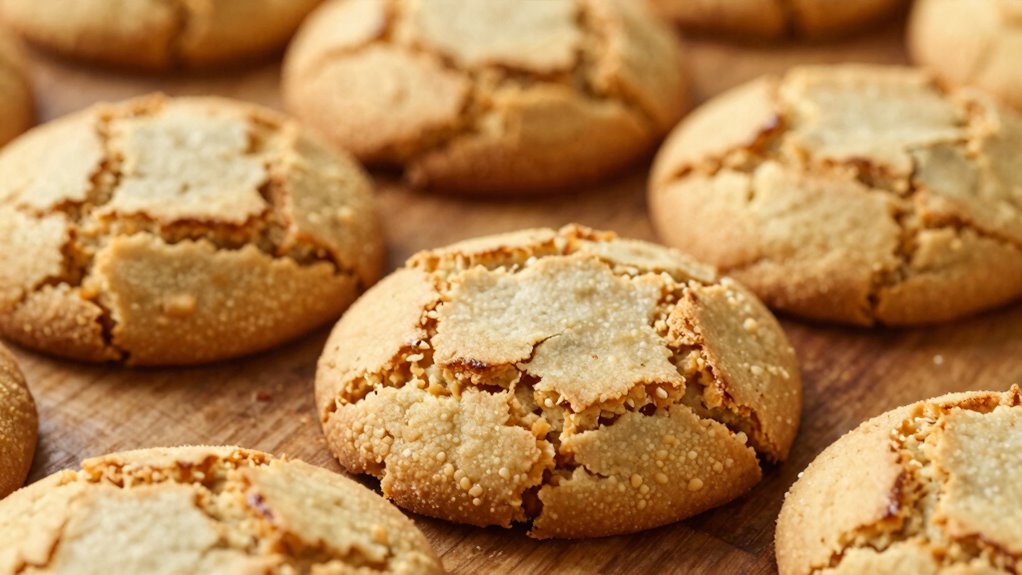
Cracks on your cookie tops often happen when the dough rises quickly in the oven, which signals good rising and a desirable texture. They’re especially common in rustic or crinkle-style cookies and can add visual appeal and character. Cracks mean your cookies have expanded properly and are often a sign of a well-baked treat. If you want to master these effects and know when cracks are a positive sign, keep exploring the details behind cookie baking.
Key Takeaways
- Cracks often result from proper rising, indicating well-developed gluten structure and good oven temperature control.
- Slight cracks can add rustic charm and are especially desirable in crinkle or craggy-style cookies.
- Excessive cracking may suggest overbaking or too high oven temperature, but can be intentionally used for visual appeal.
- Proper dough consistency and correct ingredient proportions help control cracking and prevent unwanted surface splits.
- Cracks reveal a textured, flavorful top, enhancing the cookie’s appearance and character when aligned with the recipe style.
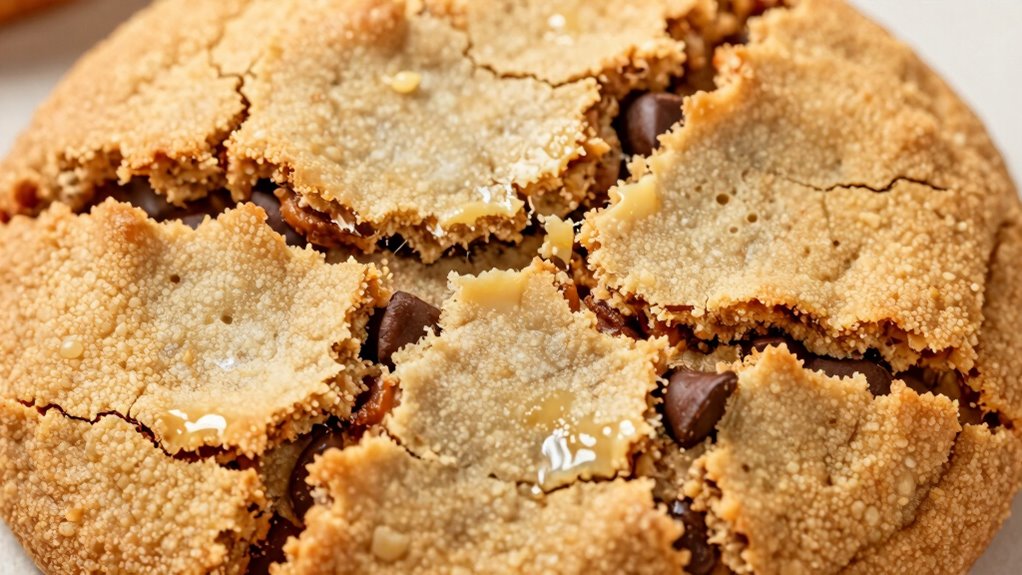
When baking cookies, you might notice that the tops sometimes crack open unexpectedly, revealing a rough, uneven surface. This cracking can be surprising, especially if you’re aiming for perfectly smooth cookies, but it’s often a normal part of the baking process. To understand why this happens, you need to look at two key factors: oven temperature and cookie dough consistency. Both play vital roles in how your cookies rise and develop their surface.
First, oven temperature has a direct impact on cookie cracking. If your oven is too hot, the outer layer of the cookie will set quickly while the inside is still expanding from the heat. As the interior continues to expand, it puts pressure on the outer crust, causing it to crack open. Conversely, if the oven temperature is too low, the cookies may spread too slowly, resulting in a denser, less risen surface that’s less prone to cracking. Finding the right oven temperature ensures that the cookies rise evenly and develop a smooth surface. Usually, baking at a temperature around 350°F (175°C) is ideal for most cookie recipes, but you should always follow your recipe’s specific instructions.
Oven temperature influences cookie cracking; too hot sets the outside quickly, too low causes less rising and fewer cracks.
Cookie dough consistency also influences cracking. If your dough is too stiff or dry, it won’t spread evenly in the oven and can lead to cracks as the edges pull apart from the rising process. On the other hand, if the dough is too soft or greasy, it spreads excessively, which can cause uneven rising and cracking. Achieving the right consistency—smooth, pliable, but not sticky—helps the cookies rise uniformly. Typically, a dough that holds together when gently pressed but doesn’t stick excessively to your fingers indicates proper consistency. Using ingredients like butter and sugar in the right proportions, and not overmixing, will help you reach this ideal texture.
Sometimes, cracks are a good sign. They indicate that your cookies are rising well, especially if they’re meant to be a bit rustic or cracked-top style, like crinkle cookies. The cracks give the cookies character and texture, enhancing their visual appeal and flavor. To encourage this, you can slightly underbake the cookies or ensure your oven runs a bit hotter, so the tops crack just as they should. Remember, a little crack on top isn’t necessarily a flaw—it’s often a sign of a well-risen, flavorful cookie.
As an affiliate, we earn on qualifying purchases.
Frequently Asked Questions
Can Overmixing Dough Cause Cookies to Crack?
Yes, overmixing dough can cause cookies to crack. When you overmix, you develop too much gluten, which affects the cookie texture, making it tougher and more prone to cracking. This also alters the dough consistency, making it stiffer and less pliable. To prevent this, mix just until ingredients are combined. Properly mixed dough results in cookies with a better texture and fewer cracks on top.
Does Oven Temperature Affect Cookie Cracking?
Oven heat is the puppeteer behind your cookie cracks, pulling the strings with every degree. When the oven’s too hot or too cold, it throws off the delicate balance needed during baking. Proper baking duration and temperature control help make sure cookies develop a beautiful, crackled top without splitting apart. Keep your oven at the right temperature, and watch your cookies crack just right, like a work of art coming to life.
Are Cracked Cookies Safe to Eat?
Cracked cookies are safe to eat as long as they’ve been stored properly and aren’t contaminated. To preserve their freshness, store them in an airtight container at room temperature or in the fridge. Use proper storage techniques like layering with parchment paper to prevent sticking or breakage. Enjoy your cookies within a few days for the best texture, and always check for any signs of mold or unusual odor before indulging.
How Does Humidity Influence Cookie Cracking?
Humidity impacts cookie cracking by affecting moisture levels in your dough. When humidity is high, the added moisture can make cookies softer and less prone to cracking, as the moisture helps keep the surface flexible. Conversely, low humidity causes moisture to evaporate quickly, leading to drier dough that’s more likely to crack during baking. Managing humidity and maintaining consistent moisture levels helps you control cookie cracks and achieve the desired texture.
Can Using Different Sugars Change Crack Patterns?
Yes, using different sugars can change crack patterns in cookies. For example, granulated sugar promotes faster sugar crystallization, leading to more pronounced cracks. Conversely, brown sugar contains molasses that can slow crystallization and influence caramelization processes, resulting in smoother tops. Adjusting sugar types affects moisture retention and how heat interacts with the dough, ultimately shaping crack formation and appearance. Experimenting with sugars lets you control the texture and aesthetics of your cookies.
silicone baking mats for cookies
As an affiliate, we earn on qualifying purchases.
As an affiliate, we earn on qualifying purchases.
Conclusion
So, next time your cookies crack on top, remember it’s just a sign of their personality, a tiny imperfection that adds character. Like a starry night sky or a weathered painting, these cracks tell a story of perfect baking. Embrace the quirks and enjoy each bite—because in the end, it’s these little flaws that make your cookies uniquely delicious. After all, isn’t the beauty of baking found in its charming imperfections?
As an affiliate, we earn on qualifying purchases.
As an affiliate, we earn on qualifying purchases.