If your banana bread turns out gummy, it’s likely due to using overly ripe or mushy bananas that release excess moisture, or baking at the wrong temperature. Too high a heat can cause the outside to cook faster than the center, leaving a dense, undercooked inside. To fix this, select bananas that are ripe but not black, preheat your oven, and bake at around 350°F, checking for doneness with a toothpick. More tips await to help perfect your loaf.

Get baking supplies delivered free with Prime
- Fast, free delivery on millions of items
- Prime Video, Amazon Music and more included
- Member-only deals all year
Key Takeaways
- Use bananas that are ripe with brown spots but not overly mushy or black to prevent excess moisture.
- Bake at around 350°F and verify oven temperature with a thermometer for even cooking.
- Ensure proper mixing without overdoing it to avoid dense, gummy bread.
- Check for doneness with a toothpick inserted in the center, and adjust baking time as needed.
- Avoid overripe, overly mushy bananas to maintain the right moisture balance and structure.
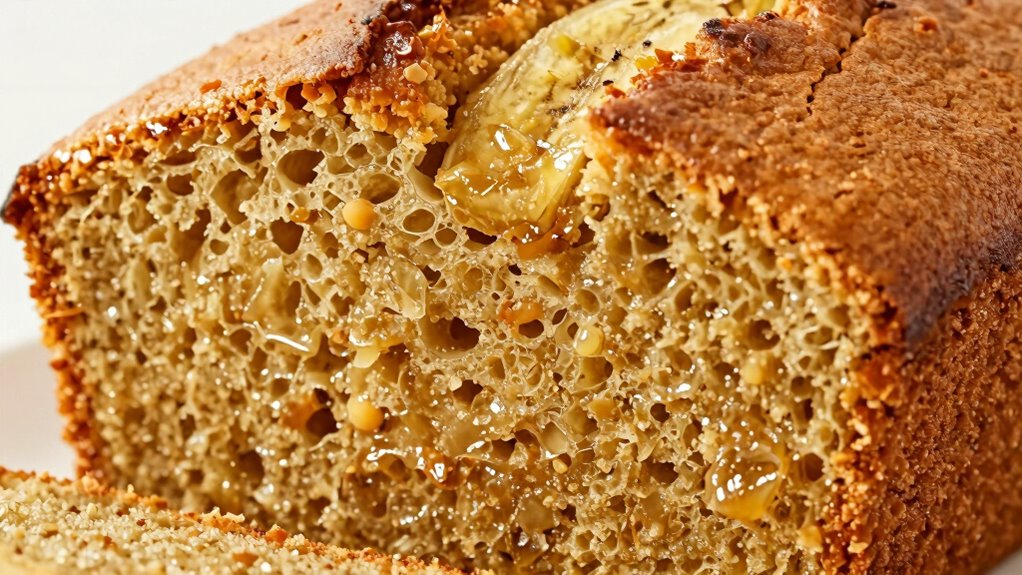
If you’re craving the comforting flavor of banana bread but want a fun, chewy treat, the Banana Bread Gummy Fix is just what you need. When your banana bread turns out gummy instead of moist and tender, it’s often due to a few common issues, particularly involving overripe bananas and baking temperature. Overripe bananas are essential for that rich, sweet flavor and moist texture, but using bananas that are too ripe or not ripe enough can throw off the balance. If your bananas are overly mushy and dark, they might release excess moisture, which can make your batter too wet. This excess moisture prevents the bread from baking evenly, resulting in a gummy or dense texture. To avoid this, select bananas that are just ripe—bright yellow with some brown spots—not overly black or mushy. This guarantees the banana flavor is prominent without adding too much moisture, giving your bread a better chance to bake up perfectly.
Baking temperature also plays a vital role. If your oven runs hot or you set the temperature too high, the outside of the bread can cook faster than the inside, leading to a gummy middle. Conversely, baking at too low a temperature might not set the structure properly, leaving you with a dense, undercooked center. The ideal baking temperature for banana bread is typically around 350°F (175°C). At this temperature, your bread will bake evenly, allowing the heat to penetrate thoroughly and cook the batter all the way through. Always preheat your oven and use an oven thermometer if you suspect your oven’s temperature isn’t accurate. Additionally, the baking time matters—overbaking can dry out the bread, while underbaking can cause a gummy, uncooked center. Stick to the recommended baking time, but check for doneness by inserting a toothpick into the center; if it comes out clean, your bread is ready.
As an affiliate, we earn on qualifying purchases.
Frequently Asked Questions
Can Using Overripe Bananas Affect the Bread’s Texture?
Using overripe bananas can make your banana bread moister, but it can also affect the texture if you’re not careful. The high sugar content from very ripe fruit can lead to overmixing, which creates a dense, gummy crumb. To avoid this, use bananas that are ripe but not overly soft, and mix just enough to combine ingredients. This helps keep your bread light and tender instead of gummy.
Does Substituting Ingredients Change the Bread’s Moisture Level?
Did you know that ingredient substitutions can alter your banana bread’s moisture balance? When you swap ingredients like oil for butter or applesauce for eggs, it changes how moist your bread turns out. To avoid a gummy texture, pay attention to these changes. Using too much liquid or dry ingredients can affect moisture levels, so adjust your recipe accordingly. Proper ingredient choices help you achieve perfectly moist, fluffy banana bread every time.
How Does Oven Calibration Impact Banana Bread’s Consistency?
Oven calibration directly impacts your banana bread’s consistency by ensuring temperature accuracy. If your oven isn’t properly calibrated, it may run too hot or too cold, causing uneven baking or a gummy texture. To fix this, use an oven thermometer to check the temperature and adjust the calibration if needed. Accurate oven temperature helps your banana bread bake evenly, resulting in a moist, fluffy crumb every time.
Can Mixing Techniques Influence the Gummy Outcome?
You can often influence your banana bread’s texture through mixing techniques. If you mix too quickly, you might incorporate excess air, leading to a gummy result. Instead, try folding the batter gently, which preserves moisture and prevents overdevelopment of gluten. Using a slow, steady mixing speed helps avoid overmixing, ensuring your bread turns out perfectly moist without becoming gummy. Pay attention to your technique, and your banana bread will shine.
What Role Does Baking Pan Material Play in Texture?
The pan material substantially affects your banana bread’s texture. Metal pans heat quickly and evenly, giving a crisp crust and preventing gumminess. Glass pans, on the other hand, heat more slowly and retain moisture, which can make your bread denser or gummy if overbaked. You should choose metal for a better crust or glass if you prefer a softer, moister crumb. Adjust baking times accordingly for each material to avoid over or under-baking.
As an affiliate, we earn on qualifying purchases.
Conclusion
So, next time your banana bread turns out gummy, remember that even the tiniest tweak—like checking your oven’s temperature or measuring your ingredients carefully—can make all the difference. Sometimes, it’s the small coincidences, like a quick reset of your baking timer or a fresh batch of bananas, that lead to perfect results. Keep experimenting, and soon you’ll find that your bread rises just right, turning those sticky moments into delicious successes.
As an affiliate, we earn on qualifying purchases.
As an affiliate, we earn on qualifying purchases.
Halloween Picks
halloween
As an affiliate, we earn on qualifying purchases.