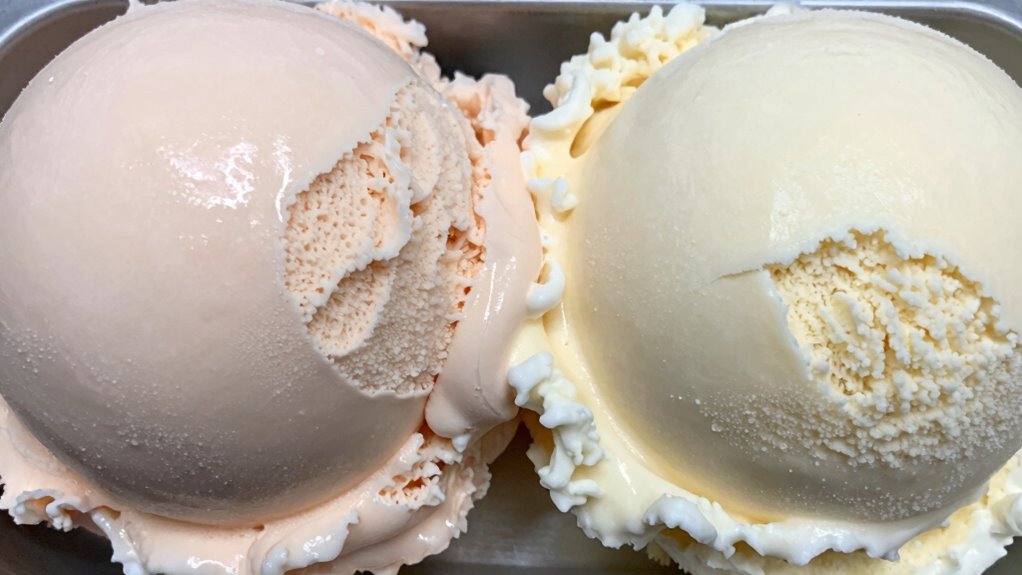

Gelato and ice cream differ mainly in fat content and texture. Gelato has less fat, usually around 4-8%, making it denser and creamier because it’s churned more gently with less air. Ice cream contains more fat, up to 20%, which gives it a richer, lighter feel due to higher air content. The difference in ingredients and serving temps influences how each feels and tastes, so exploring further reveals more delicious distinctions.

Get baking supplies delivered free — and shop member deals
- Fast, free delivery on millions of items
- Access to Prime Big Deal Days deals on October 6–7
- Prime Video, Amazon Music and more included
Key Takeaways
- Gelato contains less fat (4-8%) than ice cream (10-20%), resulting in a lighter, denser texture.
- Less air (overrun) in gelato creates a smoother, more velvety mouthfeel compared to the fluffier ice cream.
- The lower fat content in gelato allows flavors to be more pronounced and vibrant.
- Gelato is served at a slightly warmer temperature, enhancing its softness and flavor release.
- Ice cream’s higher fat and air content produce a richer, creamier, and more aerated texture.
As an affiliate, we earn on qualifying purchases.
What Makes Gelato Different From Ice Cream? Key Ingredients and Qualities
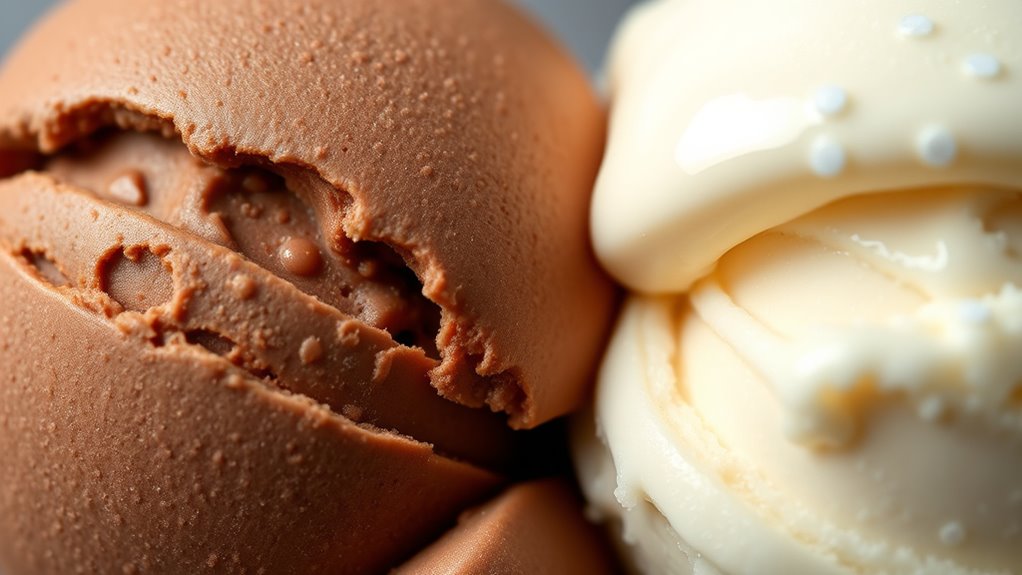
While gelato and ice cream may seem similar, their key ingredients and qualities set them apart. Gelato is crafted with artisanal techniques that emphasize slow churning and careful ingredient selection, resulting in a denser, creamier texture. Its flavor profiles are more intense because it contains less air—called overrun—giving each bite a richer taste. Traditional ice cream often uses higher fat content and incorporates stabilizers, which can dilute flavors. Gelato’s lower fat and warmer serving temperature allow its natural ingredients and vibrant flavors to shine through. You’ll notice that gelato’s smooth, silky consistency and bold taste come from these artisanal methods. This focus on quality ingredients and craftsmanship makes gelato distinct from the more aerated, fattier ice cream. Additionally, churning process used in gelato production plays a crucial role in achieving its characteristic dense and velvety texture. Moreover, European artisanal techniques contribute to maintaining authentic qualities that differentiate gelato from mass-produced frozen desserts. Proper storage and handling also help preserve the authentic flavor and texture, ensuring a superior experience. To truly appreciate these differences, understanding the ingredient quality involved can make a significant impact on your enjoyment. Incorporating traditional methods further enhances the uniqueness of authentic gelato compared to other frozen treats.
As an affiliate, we earn on qualifying purchases.
How Is Traditional Ice Cream Made? Composition and Features Explained
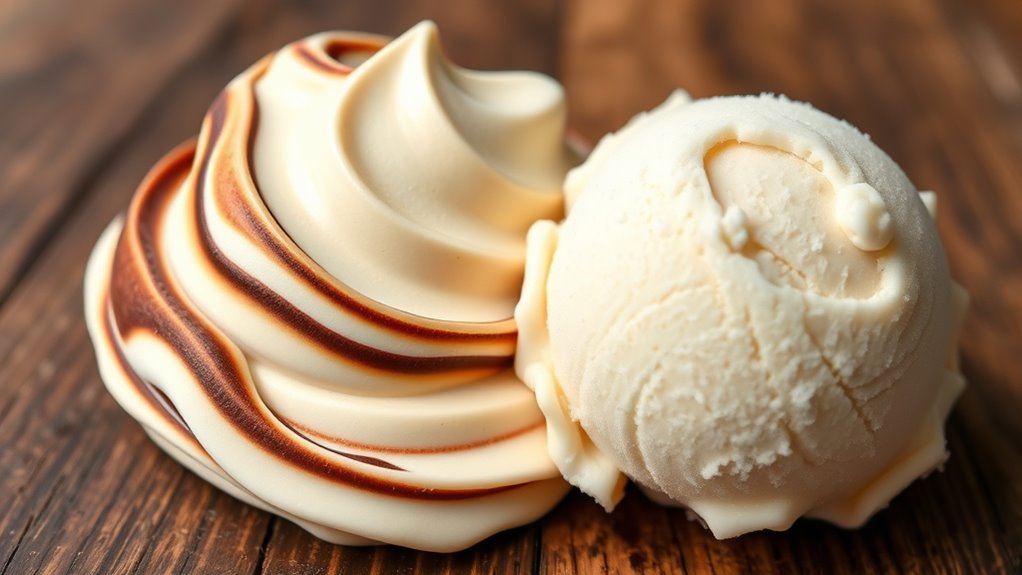
Traditional ice cream is crafted through a process that emphasizes higher fat content and the inclusion of stabilizers to achieve its signature texture. It begins with traditional dairy ingredients like cream, milk, sugar, and often egg yolks, which contribute to its richness. These ingredients are combined and pasteurized to kill bacteria, then cooled before the freezing process. During freezing, air is incorporated to create a smooth, creamy consistency. Stabilizers help prevent ice crystal formation, ensuring a uniform texture. The mixture is churned continuously as it freezes, which introduces air and prevents large ice crystals from forming. This process results in a dense, velvety product with a rich mouthfeel, distinguished by its higher fat level compared to other frozen desserts.
As an affiliate, we earn on qualifying purchases.
How Do Gelato and Ice Cream Differ in Fat Content?
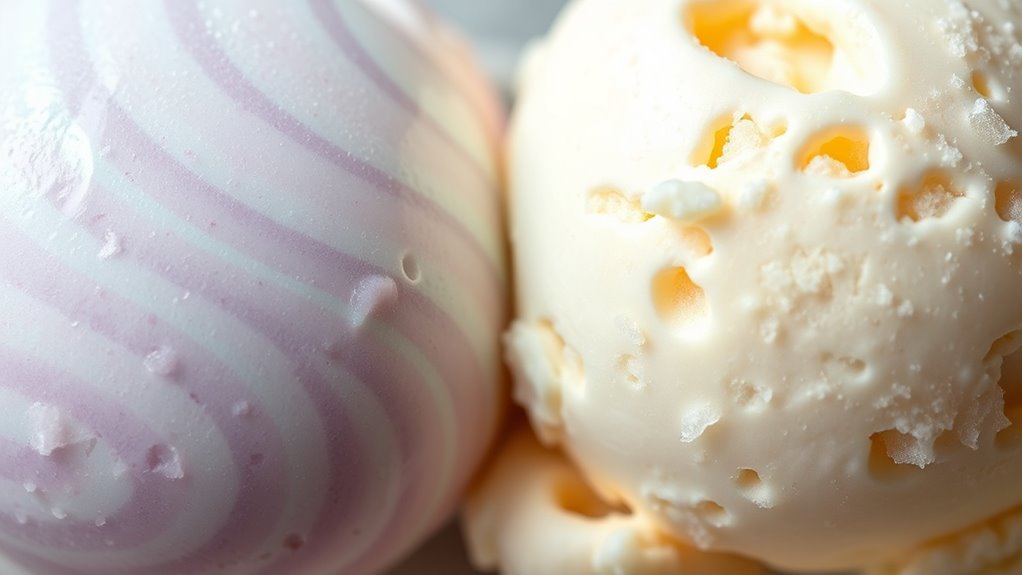
Have you ever wondered why gelato tastes so rich and creamy despite containing less fat than ice cream? The fat content comparison shows that gelato typically has about 4-8% fat, while ice cream often has 10-20%. This lower fat level in gelato is due to its traditional recipes, which use less cream and more milk. The health implications of this difference are notable; consuming less fat can help reduce calorie intake and promote better heart health. Additionally, the texture and flavor profile of gelato are influenced by its churning process and ingredients. So, even with less fat, gelato can offer a satisfying, indulgent experience, making it a popular choice for those seeking a lighter dessert. Moreover, the air incorporation process in gelato is typically less vigorous, resulting in a denser and creamier texture despite the lower fat content. This process also contributes to the overall mouthfeel, enhancing the sensory experience of gelato. The temperature at serving also plays a role in its creamy texture, as gelato is usually served slightly warmer than ice cream, which accentuates its smoothness.
frozen dessert storage containers
As an affiliate, we earn on qualifying purchases.
As an affiliate, we earn on qualifying purchases.
Why Does Gelato Feel Different From Ice Cream in Your Mouth?
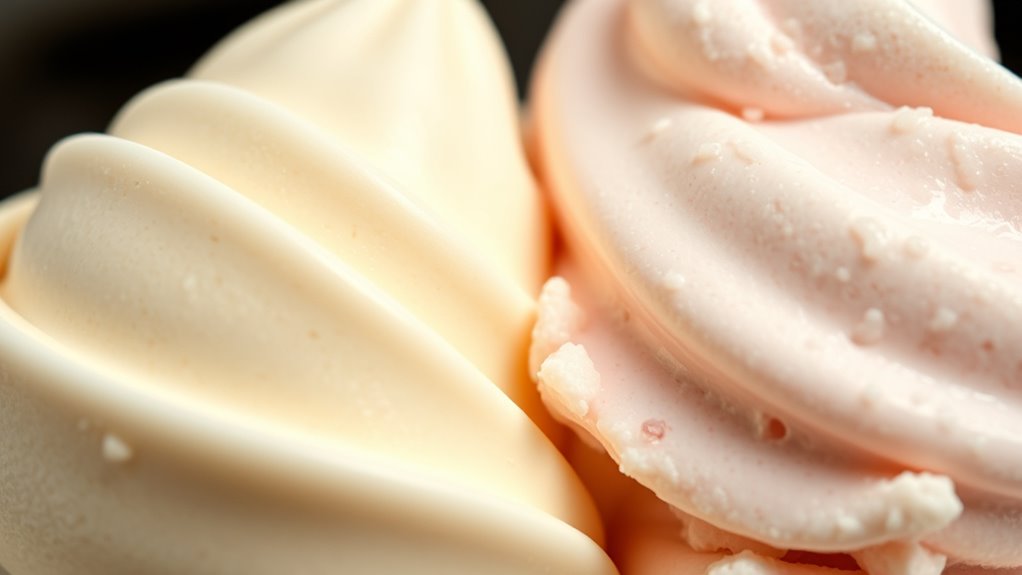
Despite gelato having less fat than ice cream, it often feels creamier and smoother in your mouth. This is due to its unique mouthfeel differences, which enhance the sensory experience. Gelato is churned at a slower speed, resulting in smaller air bubbles and a denser texture. This density allows it to coat your palate more thoroughly, creating a richer, more velvety sensation. The lower fat content also means less melting resistance, so it liquefies quickly, revealing flavors more intensely. As a result, gelato’s texture feels softer and more delicate, giving a different sensory experience compared to the lighter, fluffier feel of ice cream. Additionally, texture perception is influenced by factors like fat content and air incorporation, which shape how we experience the dessert in our mouth. Air incorporation plays a key role in how light or dense a frozen dessert feels, further distinguishing gelato from ice cream. Moreover, the slower churning process results in fewer ice crystals, contributing to its smooth texture, which enhances the mouthfeel. Fewer ice crystals also contribute to the overall fusion of flavors, making each spoonful more flavorful and harmonious. Incorporating technological innovations in production methods can further refine the texture qualities of gelato, elevating its sensory appeal. All these factors combine to make gelato’s mouthfeel distinct and more satisfying in your mouth.
How Does Serving Temperature Impact the Taste and Texture of Gelato and Ice Cream?
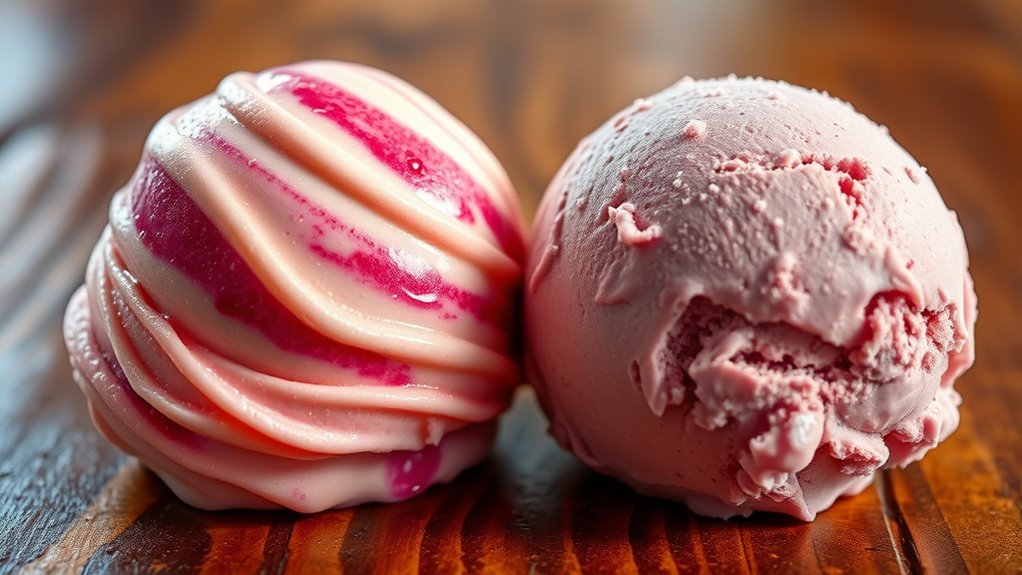
The temperature at which gelato and ice cream are served considerably influences their taste and texture. When served too cold, both desserts tend to numb your palate, dulling flavor release and making them seem less flavorful. A slightly warmer serving temperature allows the flavors to come alive, enhancing the overall taste experience. Gelato is typically served at a slightly higher temperature than ice cream, which helps it feel softer and more velvety while allowing richer flavor release. Conversely, ice cream’s colder temperature results in a firmer texture and more subdued flavors. Proper serving temperature is essential for highlighting each dessert’s unique characteristics. Adjusting the temperature control can significantly impact the sensory qualities of these treats, allowing their true flavors to shine through. Additionally, the fat content influences how flavors are perceived at different temperatures, with higher fat levels providing a richer mouthfeel. The texture differences between gelato and ice cream are also affected by their fat and air content, which in turn are influenced by serving temperature. Proper storage and temperature management are crucial for maintaining the ideal texture and flavor profile during serving. By adjusting the serving temperature, you can better enjoy the distinct textures and flavors of each treat, making your tasting experience more satisfying and nuanced.
Frequently Asked Questions
Which Type of Dessert Has More Calories per Serving?
Ice cream generally has more calories per serving than gelato because of its higher fat content. When comparing calorie counts, consider the serving size too, as larger portions increase calorie intake. You’ll find that a standard serving of ice cream often contains more calories, especially if it’s rich in cream and butterfat. So, if you’re watching calories, gelato might be the lighter choice, but always check the label for precise info.
How Long Does Each Dessert Typically Stay Fresh?
Did you know gelato typically stays fresh for about 1 to 2 weeks, while ice cream lasts 2 to 3 months? You should check storage life and spoilage indicators like freezer burn, off-odor, or discoloration to know when they’re no longer good. Properly stored in airtight containers at consistent freezing temperatures, both desserts can stay fresh longer, but consuming them sooner guarantees the best texture and flavor.
Can Gelato and Ice Cream Be Made Dairy-Free?
Yes, you can make gelato and ice cream dairy-free by using dairy-free options and plant-based alternatives. Coconut milk, almond milk, cashew milk, and soy milk work well as bases. You can add natural flavors and sweeteners to create delicious dairy-free versions. Many brands now offer pre-made dairy-free ice cream and gelato, making it easier to enjoy these treats without dairy. Just follow recipes that suit your dietary needs.
What Are the Health Benefits of Gelato Compared to Ice Cream?
Imagine indulging in a treat that’s not just delicious but also boosts your health. Gelato offers nutritional advantages like lower fat content and often contains more antioxidants, which help fight free radicals. Its creamy texture comes from less air, making each spoonful richer. Compared to ice cream, gelato can support better health while satisfying your sweet tooth, giving you a delightful way to enjoy a more nourishing dessert.
How Do Different Flavoring Methods Affect Texture and Fat Content?
Flavor infusion can enhance texture by evenly distributing flavor, while fat emulsification helps create a smooth, creamy consistency. When you add flavorings through infusion, you often preserve the natural texture, but excessive fat emulsification might increase fat content and make the dessert richer. You should balance these methods carefully: too much fat emulsification thickens the texture and raises fat levels, while infusion maintains a lighter feel.
Conclusion
So, now that you know gelato’s lower fat and warmer serving temps make it feel like a silky secret in your mouth, maybe you’ll finally understand why ice cream’s clingy, fatty cling is just so last season. Whether you prefer the indulgent creaminess or the lighter, more delicate texture, one thing’s clear: your dessert choices are just a scoop away from a delicious identity crisis. Happy tasting—your taste buds will thank you for the upgrade.
Fall Picks
fall essentials
As an affiliate, we earn on qualifying purchases.