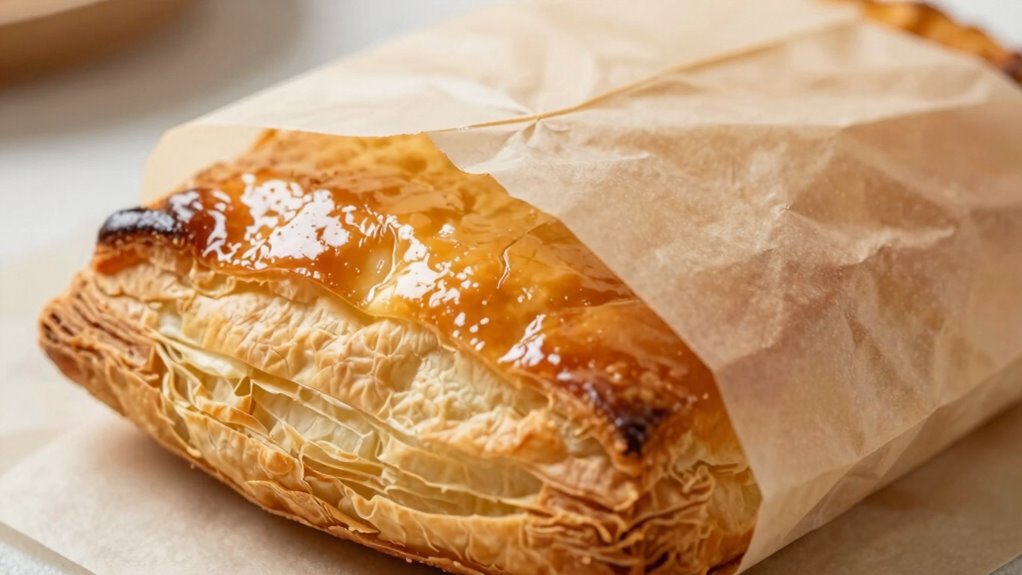
To prevent overbrowning without foil, you can shield your pastry using a baking sheet or oven-safe lid placed loosely over the top, or cover it with parchment paper shaped into a tent. Lower the oven temperature slightly to slow browning and rotate your pastry halfway through baking for even color. Keep a close eye near the end and act quickly to shield any overly dark spots. For more effective tips, see how these techniques can help you achieve perfect results.
Open a free Amazon Business account
Business pricing, bulk buying and tax-exempt orders.
As an affiliate, we earn on qualifying purchases.
Key Takeaways
- Use parchment paper as a tent to shield the pastry surface without direct contact.
- Place a baking sheet or oven-safe lid loosely over the pastry to reflect heat away.
- Reduce oven temperature slightly to slow browning without overcooking.
- Rotate the pastry halfway through baking to promote even color and prevent hotspots.
- Monitor closely near the end, shielding quickly with parchment if edges brown too fast.
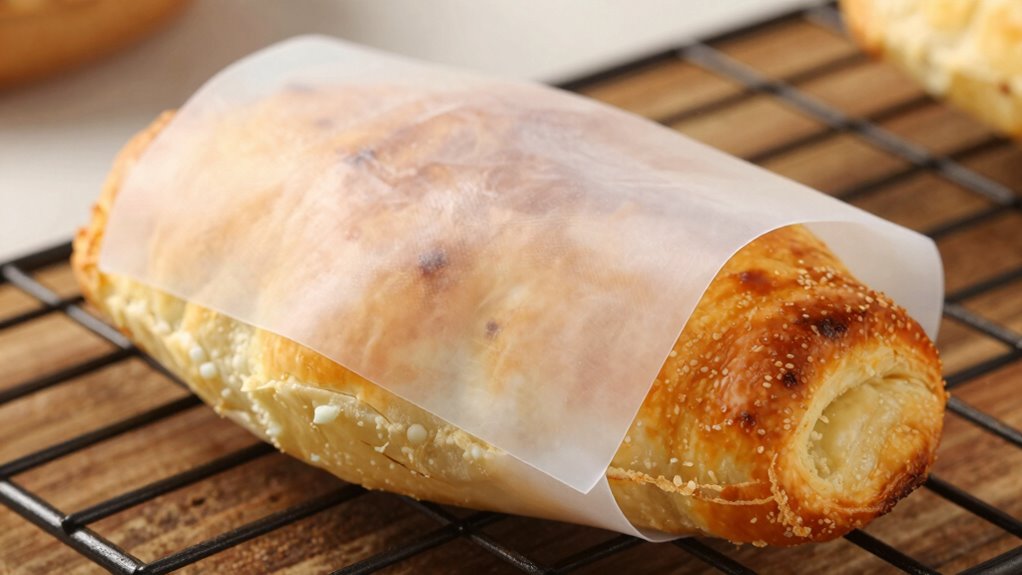
Overbrowned pastry often results from baking your treats a little too long or at too high a temperature. When this happens, you want to prevent further browning without sacrificing the overall bake. One of the most effective ways is to make baking temperature adjustments during the process. Lowering the oven temperature slightly can slow down the browning process, giving your pastry time to cook through without turning dark and bitter. If you notice the edges browning too quickly, reduce the heat by about 25°F and keep a close eye on your pastry. This simple tweak can make a big difference in controlling the final color and texture. Additionally, some advanced techniques involve using contrast ratio adjustments in your oven settings to optimize browning and preserve the pastry’s appearance.
Lower oven temperature by 25°F to prevent overbrowning.
Beyond temperature adjustments, alternative shielding methods work wonders when foil isn’t an option or fails to deliver the desired results. Instead of foil, you can try placing a baking sheet or an oven-safe lid loosely over the top of your pastry. This creates a barrier that reflects heat away from the surface, preventing further browning. Using parchment paper also helps; tent it over your pastry, ensuring it doesn’t touch the surface and cause sticking. Parchment not only shields but also allows some moisture to escape, which can contribute to a more evenly baked crust.
If you’re dealing with particularly delicate or already browned edges, you might want to think about using a heat diffuser or a baking mat underneath your baking dish. These tools distribute heat more evenly, reducing hot spots that cause overbrowning. You can also try rotating your pastry halfway through baking to ensure even coloration. This rotation prevents one side from getting more heat exposure than the other, helping you achieve a uniformly baked product.
Another useful tip is to monitor your baking closely as you near the end of the suggested baking time. When you see the color approaching your preferred shade, you can gently shield the areas that are browning too quickly with a piece of parchment or a silicone mat. This way, you’re actively protecting your pastry without abrupt temperature changes, which can sometimes cause other issues like uneven rises or sogginess.
As an affiliate, we earn on qualifying purchases.
Frequently Asked Questions
Can I Use Parchment Paper Instead of Foil?
Yes, you can use parchment paper as a foil substitute to shield overbrowned pastry. Parchment alternatives like silicone baking mats or even a loose paper towel can help prevent overbrowning without sticking or tearing. Keep in mind that parchment paper offers a different level of heat reflection compared to foil, so monitor your baking closely. These foil substitutes work well for gentle shielding, but for high heat, foil remains the most effective option.
How Do I Prevent Pastry Overbrowning From the Start?
Imagine your pastry as a delicate sunrise, needing gentle protection. To prevent overbrowning, keep your dough thick enough for insulation and place it on the middle oven rack for even heat. You can also lower the oven temperature slightly or tent the pastry with parchment paper early on. These steps act like a soft cloud shielding your pastry, ensuring it bakes beautifully without turning too dark.
Is There a Specific Oven Temperature to Avoid Overbrowning?
You should set your oven temperature around 350°F to prevent overbrowning. Proper temperature control is key, so regularly check your oven’s calibration to guarantee accuracy. If your oven tends to run hot, lower the temperature slightly to avoid burning the pastry. Keep an eye on it during baking, and consider using an oven thermometer for precise results. This approach helps you achieve even baking without overbrowning.
Can Adjusting Baking Time Fix Overbrowned Pastry?
Adjusting the baking time can help fix overbrowned pastry, but it’s not always enough. If your pastry’s color is already too dark, reducing the baking time slightly can prevent further browning. Keep an eye on the pastry during the last few minutes, and test doneness early to avoid overbrowning. Shortening baking time helps control the pastry color, ensuring you achieve a perfectly baked result without burning or excessive browning.
Does Removing Overbrowned Pastry Affect Its Texture?
Removing overbrowned pastry can impact its texture, especially if you cool it quickly, which might cause it to become soggy or lose crispness. To preserve its texture during cooling, gently transfer the pastry to a wire rack, allowing air circulation. This helps prevent further browning and maintains a desirable, flaky texture. Be mindful that abrupt removal from the oven can sometimes cause slight texture changes, so handle it carefully.
As an affiliate, we earn on qualifying purchases.
Conclusion
So, next time your pastry starts to overbrown, don’t let it be a lost cause. Shield it with foil and watch your masterpiece transform from a risk to a reward. Remember, foil isn’t just a simple fix—it’s your secret weapon against culinary mishaps. Think of it as your pastry’s armor, protecting it from the dark side of overbaking. With this trick, your baked goods will always shine, no matter how fierce the oven gets.
As an affiliate, we earn on qualifying purchases.
As an affiliate, we earn on qualifying purchases.
NFL season / tailgating Picks
team gear
As an affiliate, we earn on qualifying purchases.