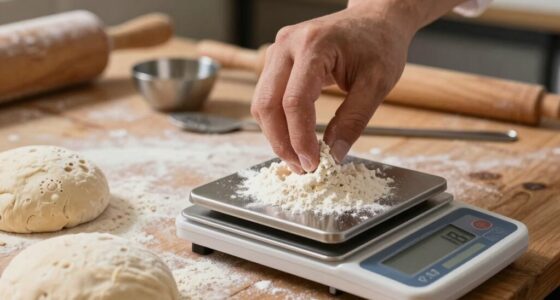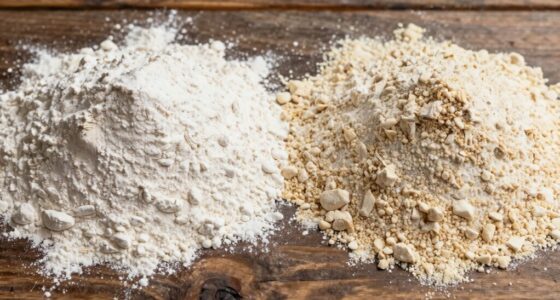
Understanding dough hydration is key to consistent baking. To adjust water content confidently, calculate your hydration percentage by dividing water weight by flour weight and multiplying by 100. Use precise tools like digital scales or manual measuring methods to guarantee accuracy. Proper hydration impacts dough texture, fermentation, and final crumb. Small adjustments can make a big difference, so mastering these basics helps you bake better bread every time. Keep exploring to refine your technique and perfect your dough consistency.

Get baking supplies delivered free with Prime
- Fast, free delivery on millions of items
- Prime Video, Amazon Music and more included
- Member-only deals all year
Key Takeaways
- Understand that dough hydration is the water-to-flour ratio, influencing dough texture, gluten development, and fermentation.
- Use the formula (water weight / flour weight) × 100 to calculate hydration percentages accurately.
- Measure ingredients precisely with digital scales or manual tools to ensure consistent hydration adjustments.
- Adjust hydration gradually based on desired dough characteristics and monitor effects on fermentation and handling.
- Utilize hydration calculators and record-keeping to refine recipes and achieve reliable, optimal bread results.
digital kitchen scale for baking
As an affiliate, we earn on qualifying purchases.
As an affiliate, we earn on qualifying purchases.
What Is Dough Hydration and Why Does It Matter?
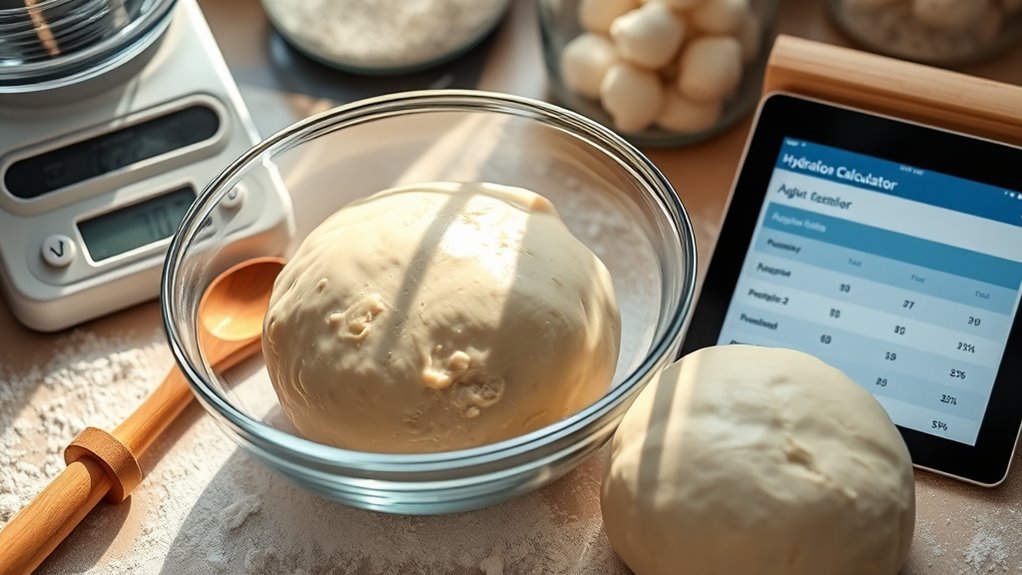
Dough hydration refers to the percentage of water relative to the flour in your recipe. This ratio directly impacts gluten development, which influences the dough’s elasticity and structure. Higher hydration levels create a wetter, softer dough that develops gluten more easily, resulting in a lighter, airier crumb. Conversely, lower hydration produces a stiffer dough that’s easier to shape but may result in a denser crumb. Proper hydration also affects fermentation timing; wetter dough tends to ferment faster because water promotes enzyme activity and yeast growth. Understanding this balance helps you control how your dough rises and develops flavor. By adjusting hydration, you can fine-tune the dough’s texture and fermentation process, leading to more consistent and satisfying baking results. Using precise hydration levels can also optimize energy efficiency in baking, aligning with sustainable practices. Additionally, controlling hydration can influence the crust formation and overall appearance of baked goods. For instance, higher hydration levels can contribute to a more crispy crust and better oven spring. Recognizing the importance of gluten structure can help bakers troubleshoot texture issues and improve their baking techniques.
hydration calculator for bread dough
As an affiliate, we earn on qualifying purchases.
As an affiliate, we earn on qualifying purchases.
How Do You Calculate Dough Hydration Percentage?
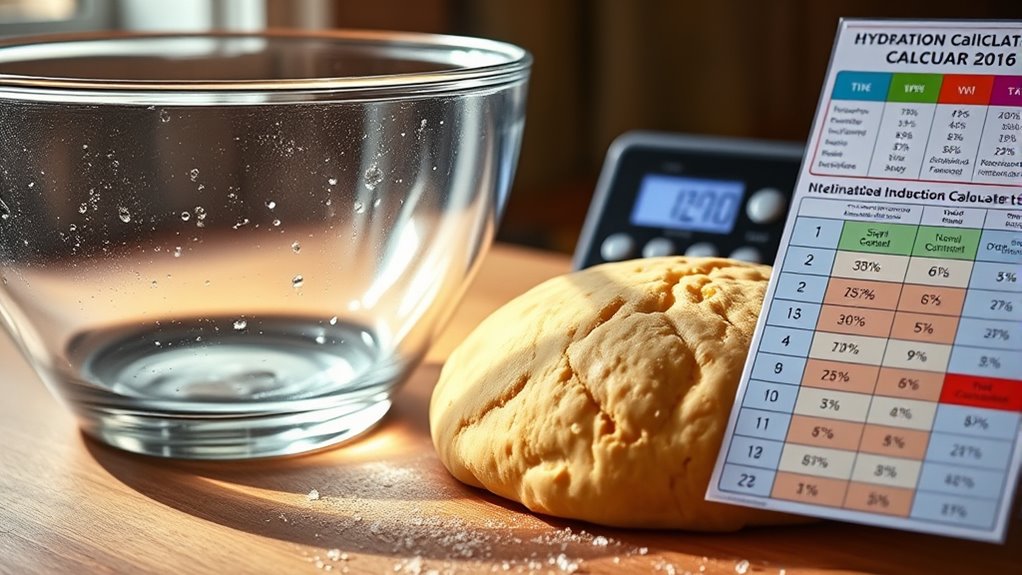
Calculating dough hydration percentage is straightforward once you understand the basic formula. You take the weight of water and divide it by the weight of flour, then multiply by 100. This percentage influences sourdough fermentation and gluten development, impacting dough elasticity and texture.
Here’s what you need to keep in mind:
- Measure water and flour accurately for consistent results.
- Higher hydration promotes better gluten development, essential for airy bread.
- Adjust hydration based on dough behavior and fermentation conditions.
As an affiliate, we earn on qualifying purchases.
Which Tools Help You Measure Hydration—Digital or Manual?
You can choose between digital hydration tools and manual methods to measure your hydration levels. Digital devices often offer quick, precise results, making them easier to use regularly. Manual techniques might take more time but can be just as accurate with proper technique. Incorporating connected cooking technologies can also streamline the process and improve measurement consistency. Additionally, understanding accurate hydration measurement techniques ensures you make better adjustments to your fluid intake. Familiarity with net worth factors can help you better assess financial impacts of hydration-related health expenses. Recognizing hydration’s role in health can motivate you to maintain proper fluid levels for overall wellness, emphasizing the importance of hydration monitoring methods in achieving optimal health.
Digital Hydration Tools
Digital hydration tools have become increasingly popular for accurately tracking your fluid intake and overall hydration status. They help you monitor your hydration levels, ensuring optimal fermentation timing and gluten development in dough. These tools often sync with your smartphone or smartwatch, providing real-time data that simplifies adjusting your hydration. Features like measuring sweat loss or fluid consumption help you fine-tune your approach for different recipes or activity levels. Some advanced devices even analyze skin moisture or electrolyte balance, giving you a comprehensive picture of hydration. By using digital tools, you gain confidence in your measurements, leading to better dough consistency and improved baking results. Whether you’re managing hydration for bread or sports, these tools empower you to make precise adjustments effortlessly.
Manual Measurement Methods
Manual measurement methods remain essential for those who prefer hands-on control over their hydration tracking. Using simple measuring tools like a kitchen scale, measuring cups, and spoons, you can precisely determine ingredient ratios, ensuring your dough has the right hydration level. These tools allow you to measure water, flour, and other ingredients accurately, giving you immediate feedback on your dough’s consistency. By adjusting ingredient ratios based on your measurements, you can fine-tune your hydration to match your desired texture. Manual methods provide a tactile understanding of dough behavior, helping you develop intuition for hydration adjustments. They’re reliable, straightforward, and don’t depend on batteries or software, making them a trusted choice for bakers who want to stay in control of every step. Additionally, understanding personality assessments can help bakers tailor their techniques and preferences to improve their baking experience.
Accuracy and Ease
Choosing the right tools for measuring hydration depends on balancing accuracy with ease of use. Digital tools often provide precise readings, helping you dispel hydration myths and avoid ingredient substitutions that can throw off your dough. Manual methods, like eyeing consistency or using simple scales, may be easier but less exact. To make confident adjustments, consider these options:
- Digital scales with hydration calculators for quick, accurate measurements
- Hydration testing kits that reduce guesswork and improve precision
- Traditional measuring cups for straightforward, manual control
- Using Free Floating techniques to monitor dough hydration levels naturally and effectively
In addition, understanding hydration levels can greatly enhance your baking outcomes and ensure consistency across batches. While digital tools boost accuracy, manual methods are more accessible and less intimidating, especially if you’re just starting out. Choosing the right approach ensures your dough turns out perfectly every time, without second-guessing or relying on questionable hydration myths.
baking ingredient measurement tools
As an affiliate, we earn on qualifying purchases.
As an affiliate, we earn on qualifying purchases.
What Do Your Hydration Results Mean for Your Dough?
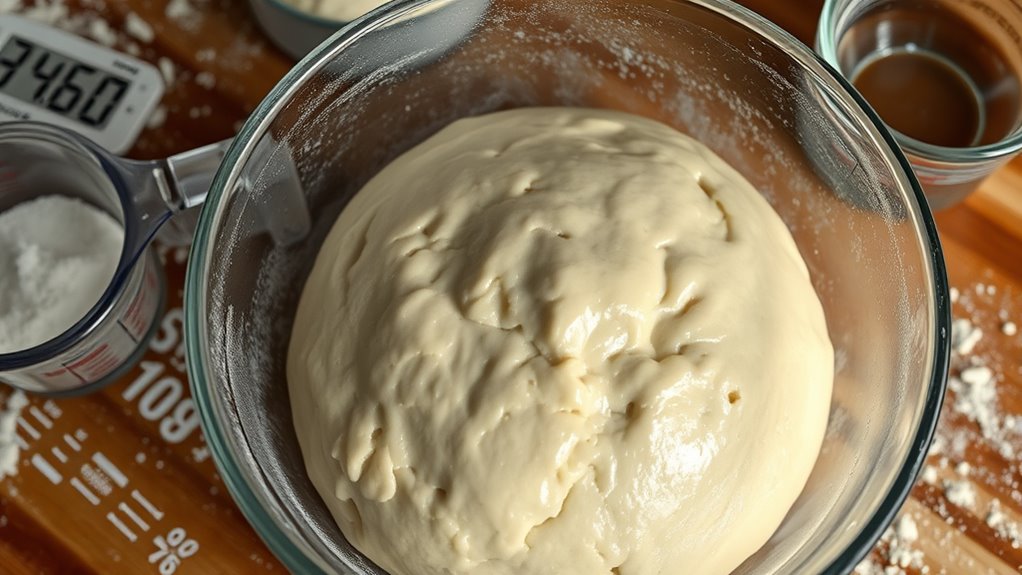
Understanding your dough’s hydration level is essential because it directly affects its texture and handling. Higher hydration typically results in a softer, more elastic dough, which can enhance fermentation dynamics by promoting better gluten development and gas retention. Conversely, lower hydration yields a firmer dough that’s easier to shape but may ferment more slowly. Your hydration results also reveal ingredient interactions; for example, certain flours absorb water differently, influencing overall dough behavior. If your hydration is too high, the dough might become overly sticky and difficult to manage, while too low hydration can lead to dense, dry baked goods. Recognizing what these results mean helps you predict how your dough will behave during fermentation and baking, enabling more precise adjustments for ideal texture and rise. Additionally, understanding smart tools can help you measure hydration more accurately, leading to more consistent baking outcomes. Being familiar with hydration levels allows bakers to troubleshoot and optimize their recipes effectively. Properly interpreting hydration results also supports the development of customized recipes tailored to specific ingredients and techniques. Knowing the impact of flour properties on water absorption can further refine your adjustments for better results. Furthermore, utilizing digital scales can improve measurement precision, contributing to more reliable hydration calculations.
How Can You Adjust Hydration in Your Recipes?
Adjusting hydration in your recipes is straightforward once you know your dough’s current level. To fine-tune hydration, start by slightly increasing or decreasing water based on your desired dough consistency. Lower hydration can improve fermentation control, helping you manage fermentation speed and gas retention. Higher hydration enhances flavor development by encouraging better enzyme activity. Keep in mind that small adjustments make a significant difference. Incorporating appropriate at-home tools can help you measure and monitor hydration levels more accurately. Utilizing hydration calculators can also aid in making precise adjustments tailored to your recipe. Additionally, tracking your modifications can help you understand how different hydration levels influence your dough’s behavior over time. Employing creative storytelling techniques can also inspire innovative recipe adjustments tailored to your baking style. Being mindful of passive voice detection can further improve your writing clarity and precision. Learning from biographies of renowned bakers or chefs can provide valuable insights into hydration techniques and their impact on bread texture and flavor.
Hydration Tips for Different Types of Bread
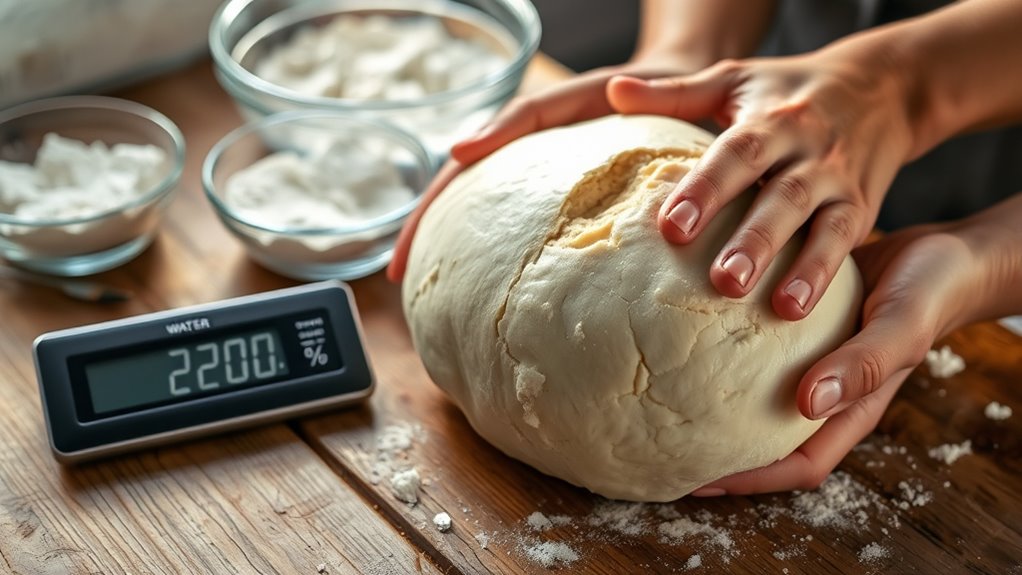
Different bread types require different hydration levels to achieve ideal texture and crumb. For example, French bread often benefits from a slightly lower hydration, around 65-70%, which gives it a crusty exterior and airy interior. Sourdough techniques, on the other hand, typically call for higher hydration, sometimes 75% or more, creating a moist, open crumb. Adjusting hydration helps you tailor the bread’s characteristics—more water yields a softer, more open crumb, while less water produces a denser loaf. When making French bread, keep hydration on the lower side to ensure a firm crust. For sourdough, higher hydration enhances fermentation and texture. Additionally, understanding hydration levels is key to controlling dough consistency and handling properties, making your baking process more predictable. Experiment with small adjustments to find the perfect balance for each bread type, and remember, hydration influences both dough handling and final texture. Proper hydration levels can also impact the gluten development necessary for optimal bread structure.
Troubleshooting Dough Problems Caused by Hydration

When dough has the wrong hydration level, it can lead to common problems like stickiness, tearing, or poor rise. Too much water makes the dough overly sticky, hindering gluten development and making shaping difficult. Too little water results in stiff dough that doesn’t ferment properly, affecting gluten network formation. To troubleshoot:
- Adjust hydration gradually to improve gluten development and avoid tearing.
- Use proper fermentation control to prevent over- or under-proofing caused by hydration issues.
- Incorporate additional water or flour as needed, based on dough feel, to achieve ideal elasticity and extensibility.
Tips for Consistent Results With Your Hydration Calculator
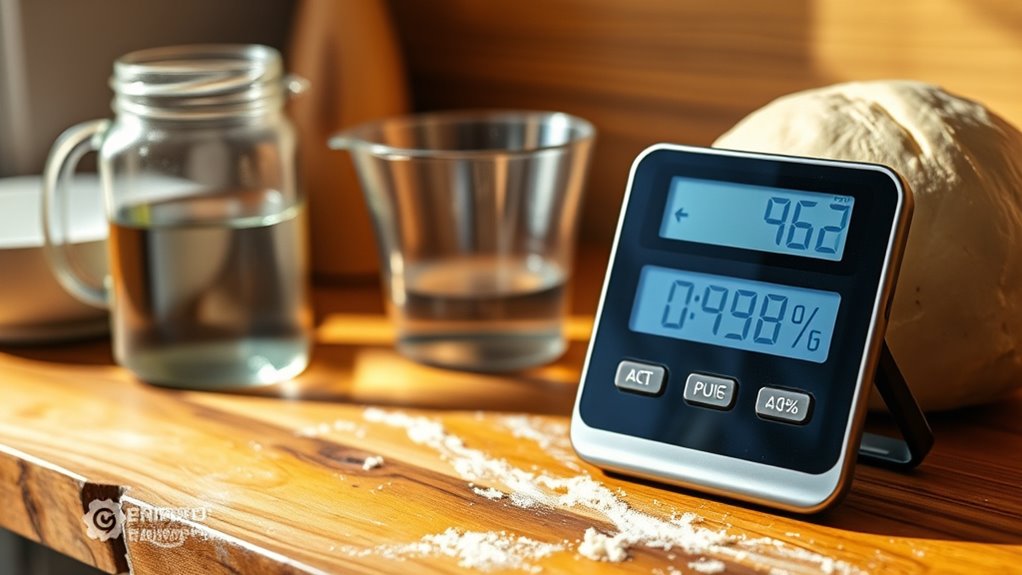
To get reliable results, use the same measurement techniques each time you weigh your ingredients. Keep in mind that slight differences in ingredient brands or moisture content can affect your hydration level, so adjust accordingly. Consistency and awareness of ingredient variations are key to accurate calculations.
Consistent Measurement Techniques
Maintaining consistent measurement techniques is essential to obtaining accurate hydration readings. When you focus on reliable measuring techniques, you guarantee ingredient consistency, which leads to better dough management. To achieve this, always use the same tools and methods each time you measure. Be precise with your water and flour quantities, and measure at the same temperature whenever possible. Consistency in your approach minimizes errors and variability, giving you confidence in your adjustments.
Here are some tips to help you stay consistent:
- Use a digital scale for weighing ingredients rather than volume measurements
- Measure water at the same temperature each time
- Record your measurements to track and replicate successful results
Adjusting for Ingredient Variations
Ingredient variations, such as differences in flour type or water quality, can considerably impact your hydration levels. When making ingredient substitutions, it is crucial to adjust your calculations accordingly to maintain consistent dough texture. For example, switching to a higher-protein flour may require slight hydration tweaks, while using filtered water could alter absorption rates. Always account for batch size adjustments—scaling up or down can affect ingredient ratios and hydration accuracy. Keep in mind that small changes in ingredients may lead to noticeable differences in dough consistency, so monitor your results closely. By understanding how ingredient variations influence hydration, you can fine-tune your calculations, ensuring consistent, reliable dough batches every time.
Frequently Asked Questions
How Does Ambient Humidity Affect Dough Hydration Calculations?
Ambient humidity directly impacts your dough hydration calculations because higher humidity means more moisture in the air, which can make your dough wetter and softer than expected. Conversely, low humidity dries out the dough, making it stiffer. You should adjust your water content accordingly to maintain the desired dough consistency. Monitoring ambient humidity helps you fine-tune hydration levels, ensuring your dough performs perfectly during mixing and shaping.
Can Hydration Levels Vary Between Different Types of Flour?
Think of flour like a musical instrument—its protein content influences dough’s extensibility. Higher protein flours, like bread flour, absorb more water, making your dough more elastic. Lower protein flours, like cake flour, absorb less, resulting in softer dough. So, your hydration levels can vary based on flour type. Adjustments are key; a little extra water with high-protein flour creates a stronger, more extensible dough.
What Are Common Signs of Over-Hydrated or Under-Hydrated Dough?
You’ll notice signs of over-hydration in your dough as it becomes excessively sticky, overly slack, and difficult to shape. Signs of under-hydration include a stiff, crumbly texture that doesn’t stretch well. To improve your dough, adjust water content accordingly. Over-hydrated dough needs less water, while under-hydrated dough benefits from a bit more. Paying attention to these signs helps you perfect your recipe and achieve the ideal dough consistency.
How Do Hydration Adjustments Impact Bread Texture and Crust?
Adjusting hydration levels directly influences your bread’s texture and crust. Higher hydration promotes better gluten development, resulting in a more open crumb and chewy texture. It also enhances crust formation, making it crispier. Conversely, lower hydration yields a denser crumb and softer crust. By fine-tuning water content, you control gluten structure and crust development, ensuring your bread achieves your desired consistency and crust quality every time.
Are There Differences in Hydration Techniques for Sourdough Versus Commercial Yeast Breads?
Your bread journey is like steering a wild river—sourdough fermentation needs a gentler touch, with slightly wetter dough to encourage natural wild yeast and bacteria. In contrast, commercial yeast breads often use less water for quicker rise and consistent results. So, yes, there are differences. You’ll find that mastering hydration techniques tailored to each method enhances your bread’s flavor, texture, and crust, making your baking truly extraordinary.
Conclusion
Mastering dough hydration unlocks endless baking possibilities. Once you understand the basics, you’ll be able to tweak recipes with confidence, achieving perfect textures every time. But there’s more—subtle adjustments can transform your bread from good to extraordinary. Are you ready to discover the secrets behind consistently flawless results? Keep experimenting, and soon you’ll reveal the true potential of your dough. The next breakthrough could be just one hydration tweak away.
Halloween Picks
halloween
As an affiliate, we earn on qualifying purchases.