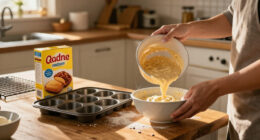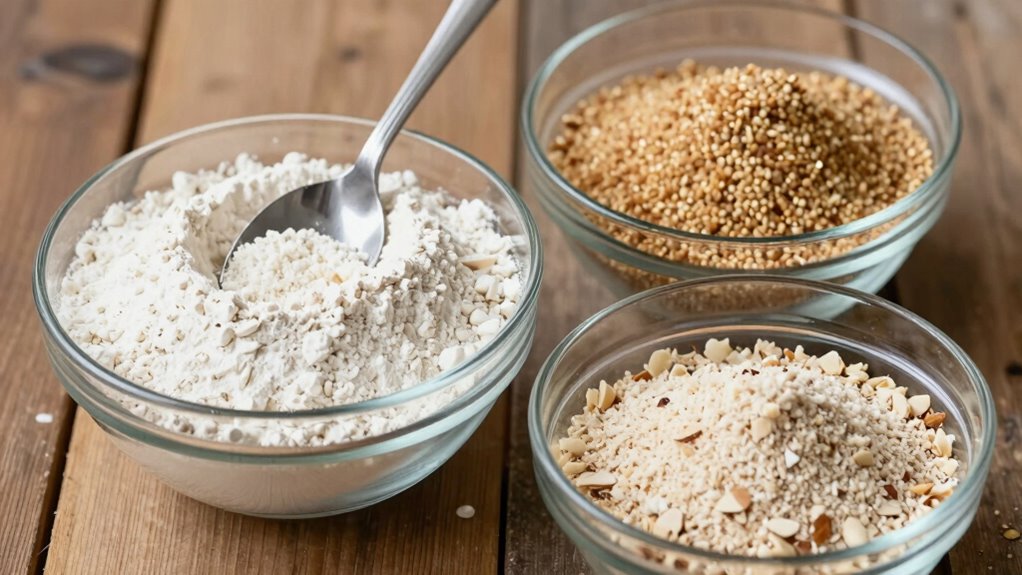
To blend flours for consistent results, start by choosing the right types for your recipe’s texture and nutrition goals. Measure each flour precisely, preferably with a scale, and mix thoroughly to make certain of even distribution. Adjust the liquids based on the flour’s absorption properties, and test small batches to refine ratios. Address clumping or uneven texture by sifting or careful mixing. If you want expert tips, explore further for proven techniques to perfect your flour blends.

Get baking supplies delivered free with Prime
- Fast, free delivery on millions of items
- Prime Video, Amazon Music and more included
- Member-only deals all year
Key Takeaways
- Measure all flours accurately using a digital scale for precise ratios and consistent results.
- Thoroughly mix and sift flours together to ensure even distribution and eliminate clumps.
- Start with small test batches to evaluate texture, rise, and flavor before scaling up your blend.
- Adjust flour ratios based on baking outcomes, refining until achieving desired consistency and structure.
- Store blended flours in airtight containers in a cool, dry place to maintain freshness and prevent spoilage.
digital kitchen scale for baking
As an affiliate, we earn on qualifying purchases.
As an affiliate, we earn on qualifying purchases.
Learn About Different Types of Flours and Their Properties
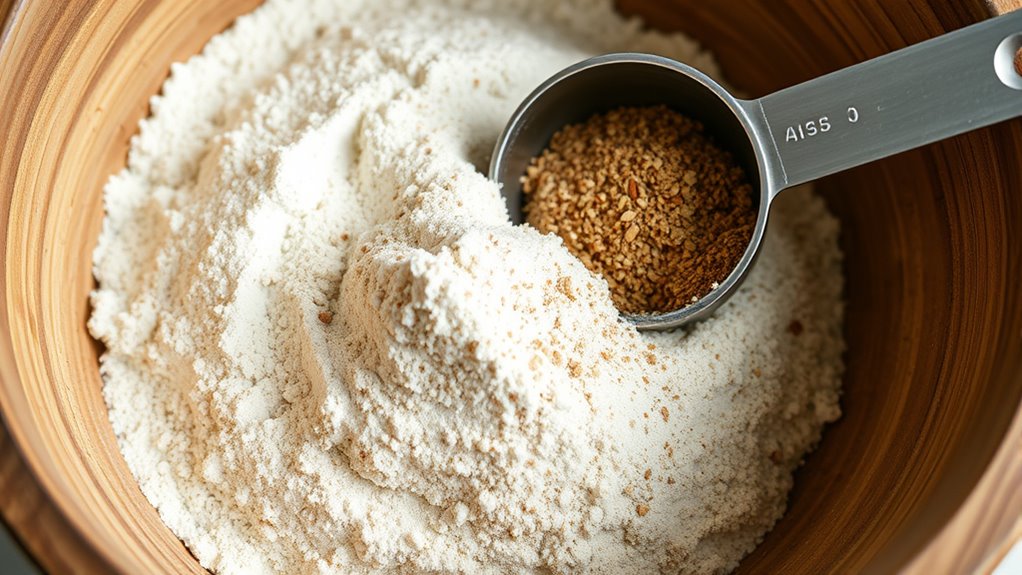
Understanding the different types of flours is essential for blending them effectively in your recipes. Each flour type has unique properties that influence gluten development and nutritional content. For example, bread flour has high gluten-forming proteins, which create a strong structure, perfect for chewy bread. All-purpose flour offers a balanced gluten level, suitable for a variety of baked goods. Meanwhile, whole wheat flour contains more fiber and nutrients, but can result in denser textures. Some flours, like almond or coconut, are gluten-free and add different nutritional benefits. Knowing these differences helps you choose the right combination to achieve the desired texture and nutritional profile. Paying attention to gluten development when blending flours, as it plays a crucial role in the final texture of baked goods. Understanding flour protein content can help you tailor your blends to specific recipes for better results. Additionally, considering flour shelf life is important to maintain freshness and quality in your baking ingredients. By understanding the properties of each flour, you can blend them confidently for consistent, high-quality results in your baking.
As an affiliate, we earn on qualifying purchases.
Why Should You Blend Flours? Benefits and Practical Uses
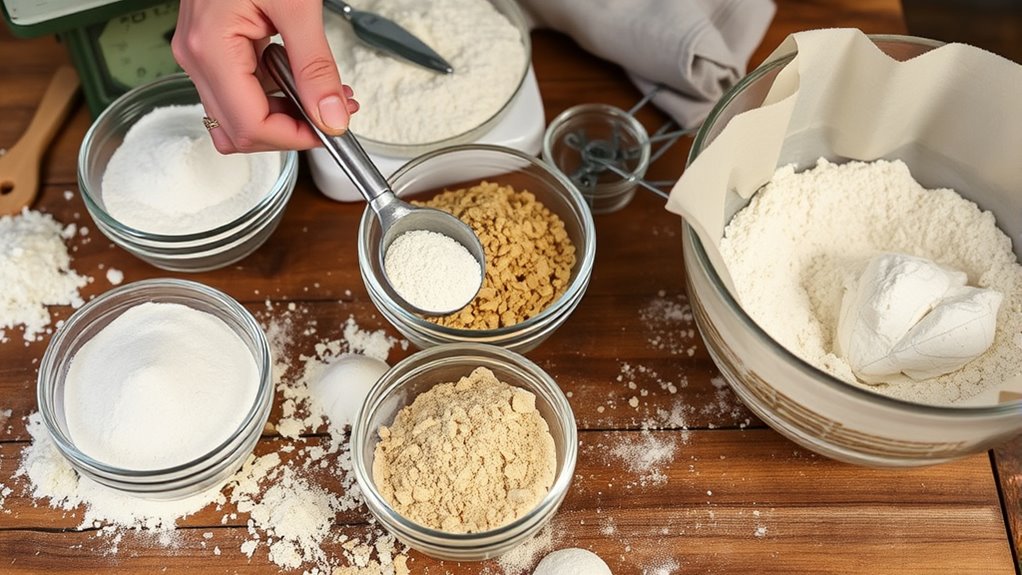
Blending different flours allows you to customize your baked goods to achieve the perfect texture, flavor, and nutritional profile. By combining flours, you can enhance gluten development for better structure or reduce it for tender crumbs, depending on your needs. For example, mixing whole wheat with white flour boosts nutritional enhancement, adding fiber and vitamins without sacrificing lightness. Practical uses include creating gluten-strengthened bread or delicate pastries with balanced textures. Blending also helps you manage moisture absorption and flavor complexity, resulting in more consistent results. Additionally, understanding color accuracy can inspire innovative approaches to your baking setup or workspace for more efficient workflows. Incorporating safe handling practices into your baking routine ensures that your kitchen remains a clean and healthy environment. Recognizing the importance of consistent results can help you refine your technique and achieve your desired outcome every time. Furthermore, exploring natural ingredients can elevate your baked goods with wholesome flavors and health benefits. Overall, this approach gives you control over the final product, ensuring it meets your specific goals for taste, texture, and health benefits.
airtight storage containers for flour
As an affiliate, we earn on qualifying purchases.
As an affiliate, we earn on qualifying purchases.
How Do You Choose the Right Flour Ratios for Your Baking Goals?
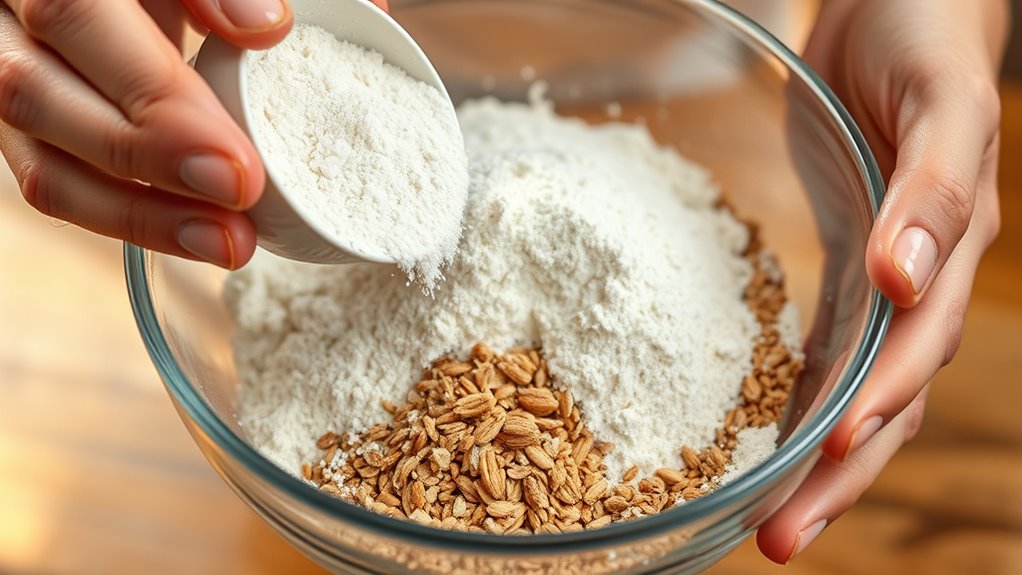
Choosing the right flour ratios depends on your specific baking goals, whether you want a sturdy bread or a tender pastry. To achieve ideal gluten development, balance high-protein flours for structure with lower-protein options for tenderness. Consider the starch content, which influences texture and moisture retention. For bread, use more bread flour with higher gluten potential, ensuring a chewy crumb. For delicate pastries, blend in softer flours like cake or pastry flour to reduce gluten formation and create a flaky, tender texture. Adjust ratios based on how much structure or softness you desire, keeping in mind that more gluten promotes strength, while less promotes tenderness. Fine-tuning these ratios helps you craft baked goods that align perfectly with your baking goals. Understanding flour composition allows you to customize your blends more precisely for consistent, satisfying results, and being aware of protein content can further refine your flour blending strategies. Additionally, learning about gluten development helps you control the texture and elasticity of your baked items, leading to more predictable outcomes. Recognizing how starch properties interact with gluten can also assist in achieving the desired moisture and crumb texture in your baked goods. Moreover, understanding flour blending techniques can help you create more balanced and reliable doughs tailored to different recipes.
As an affiliate, we earn on qualifying purchases.
Popular Flour Blends and How to Use Them
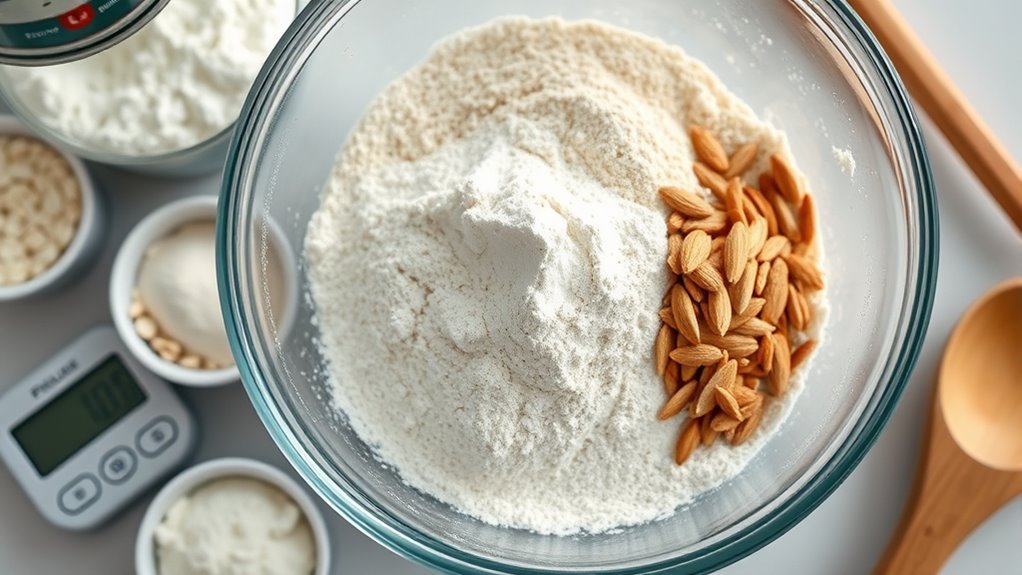
Different flour combinations can greatly enhance your baked goods, offering the perfect balance of structure and tenderness for various recipes. Popular blends often include all-purpose flour with alternative flours like almond, oat, or rice flour, which add unique flavors and textures. When using alternative flours, it’s important to contemplate gluten development; for example, combining wheat flour with gluten-free options helps provide some structure without sacrificing tenderness. Blends like bread flour with rye or whole wheat can improve elasticity and rise, while pastry blends might mix all-purpose with cornstarch for a lighter crumb. Understanding flour blending techniques can further optimize your results and ensure consistent baked goods. Additionally, experimenting with flour ratios allows bakers to tailor textures to specific recipes and preferences. For best results, consider the role of gluten in your flour blends, as it significantly impacts dough elasticity and final texture. Always test small batches to determine how each blend behaves in your specific recipe, adjusting ratios as needed to achieve the desired texture and consistency. Proper measuring techniques are also essential to maintain consistency across different flour blends and baking sessions.
How Can You Achieve Consistency When Blending Flours?
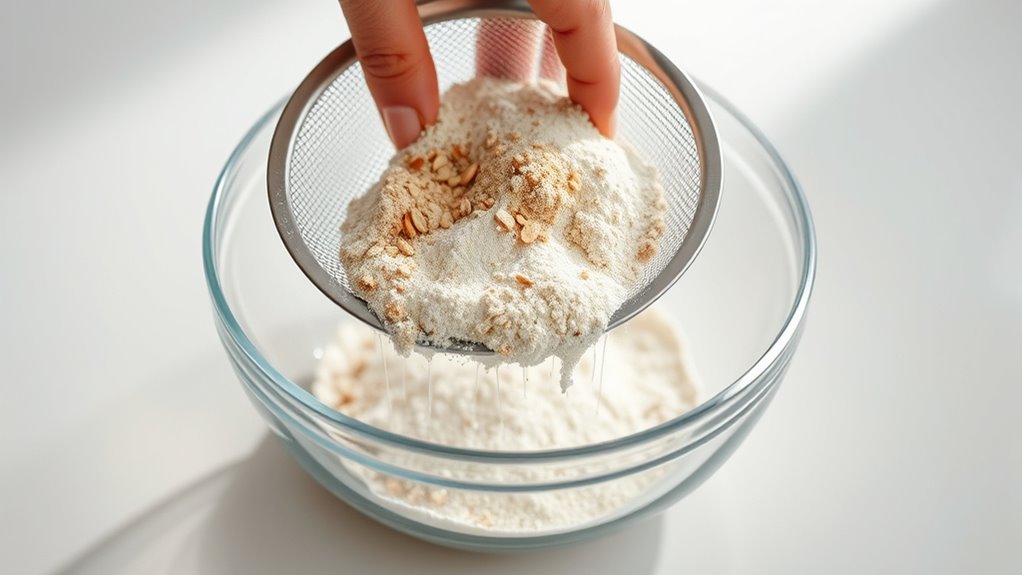
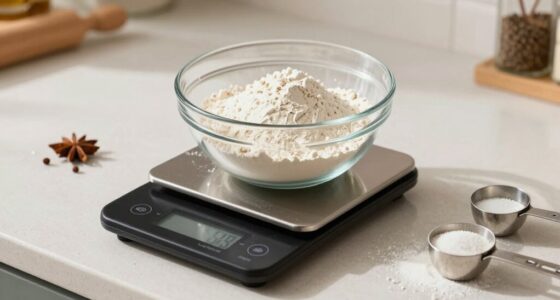
Achieving consistency when blending flours requires careful measurement and thorough mixing. To promote even gluten development, use a digital scale to measure each flour precisely, ensuring your ratios are accurate every time. Mix your flours thoroughly in a large bowl, breaking up clumps and distributing ingredients evenly. Proper storage techniques, such as airtight containers and a cool, dry place, keep your flour blends consistent over time by preventing moisture absorption and spoilage. Label your blends clearly to avoid confusion. Consistent blending also involves regularly checking your measurements, especially when adjusting formulas. By maintaining precise measurements, mixing thoroughly, and storing your flours properly, you ensure each batch provides reliable results, with predictable gluten development and texture. Additionally, understanding body jewelry measurements and materials can help you make informed choices about the products you use in your baking. Incorporating quality ingredients can further enhance the consistency and overall outcome of your baked goods. Using advanced blending techniques can also improve uniformity in your flour mixtures.
How to Adjust Hydration and Liquids for Different Flour Combinations
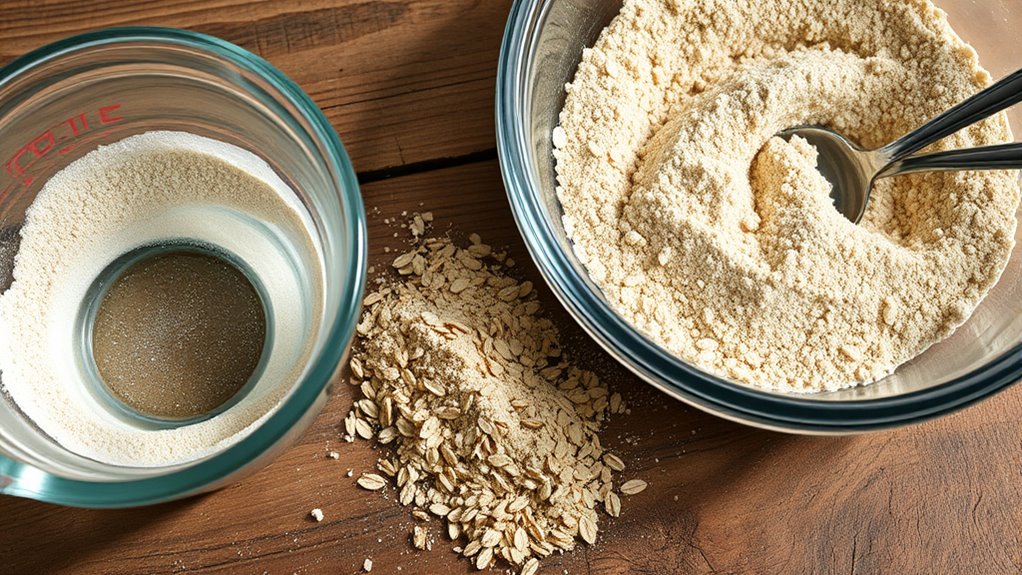
When blending flours, adjusting hydration and liquids guarantees your dough or batter reaches the right consistency. Different flours absorb liquids at varying rates, so hydration adjustment is key. Start by adding liquids gradually, observing how the mixture responds. For denser flours like whole wheat or rye, you may need to increase liquid ratios slightly to achieve the desired elasticity. Conversely, lighter flours like cake or pastry flour require less liquid. Keep in mind that some flour blends may absorb more liquid over time, so it’s helpful to rest the dough briefly before finalizing hydration. Always measure liquids carefully, and adjust as needed, ensuring your batter remains workable without becoming too sticky or dry. Proper liquid ratio management ensures consistent results across flour combinations. Additionally, understanding the flour absorption rates can help optimize hydration adjustments for different blends. Being aware of the hydration levels also allows you to make informed adjustments based on the specific flours used. Incorporating a hydration calculator can further enhance precision in achieving the ideal dough consistency.
What Common Issues Occur in Flour Blending and How to Fix Them?
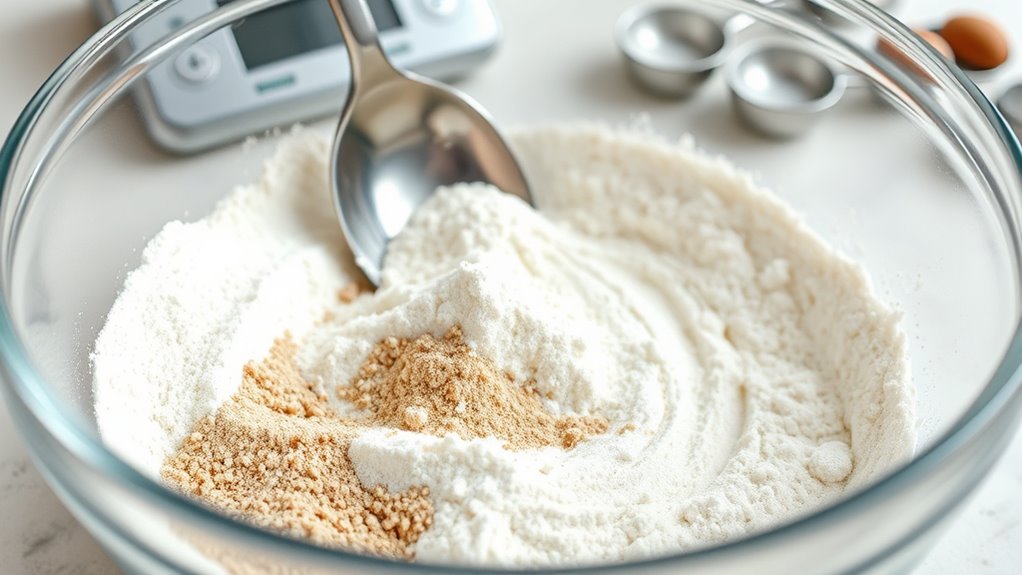
When blending flours, you might notice uneven consistency or incorrect ratios that affect your results. Poor mixing techniques can also lead to clumps or uneven distribution of ingredients. Addressing these issues early helps make sure your blend turns out just right. Incorporating visual and auditory cues can help improve your mixing accuracy and consistency.
Uneven Flour Consistency
Uneven flour consistency often happens when ingredients aren’t thoroughly combined or when different types of flour are used without proper mixing. This can lead to issues like uneven grain texture and inconsistent gluten development, affecting your baked goods’ structure. To prevent this, guarantee you:
- Mix your flours thoroughly, breaking up clumps for uniform grain texture.
- Use a sifter or fine sieve to evenly distribute different flours, promoting even gluten development.
- Incorporate ingredients gradually, blending continuously to achieve a consistent mixture.
Incorrect Flour Ratios
Incorrect flour ratios are a common problem that can lead to dense, dry, or tough baked goods. When your flour measurement is off, it throws off the balance of ingredients, resulting in poor texture and structure. Using too much flour makes baked goods heavy and crumbly, while too little can cause them to spread or collapse. To avoid this, always measure flour accurately using a kitchen scale or proper measuring cups. Be consistent with your method, whether you’re spooning and leveling or weighing. Remember, small discrepancies in flour ratios can considerably affect the final product. Adjusting your flour measurement habits ensures your blends stay balanced, giving you the consistent results you’re aiming for in every batch.
Inadequate Mixing Techniques
Inadequate mixing can cause uneven flour distribution, which affects the texture and rise of your baked goods. Poor techniques may leave pockets of one flour type or dry ingredients unmixed. To avoid this, make sure you:
- Use a large, sturdy mixing bowl to give enough space for thorough blending.
- Employ proper whisk techniques, such as folding and circular motions, to evenly incorporate ingredients.
- Mix until the flour blend appears uniform in color and texture, with no streaks or clumps remaining.
Skipping these steps can lead to inconsistent results, with some areas over- or under-mixed. Proper mixing bowls and effective whisk techniques help achieve a homogenous flour blend, improving your baked goods’ consistency and quality.
How to Test and Refine Your Flour Blends for Perfect Results
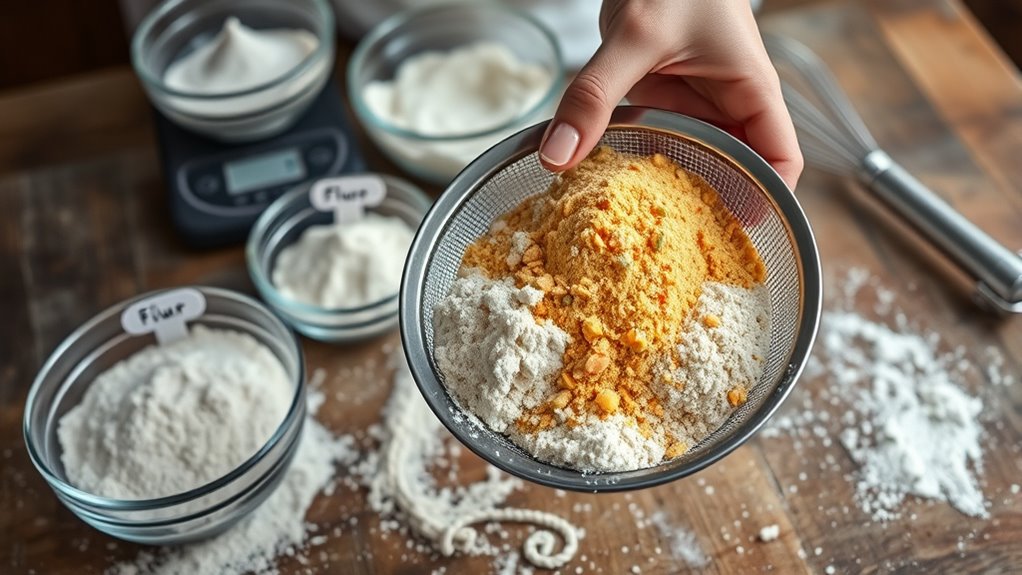
To achieve the perfect flour blend, you need to test and refine your mixture through careful experimentation. Begin with small batches and use flour testing to evaluate how your blend performs in your recipes. Pay attention to texture, rise, and flavor, making notes of each adjustment. If your baked goods are too dense or don’t rise properly, tweak the proportions of your flours accordingly. Repeat the process, gradually refining your blend until it consistently produces the desired results. Remember, blend refinement is an ongoing process—each oven and ingredient batch can vary. By systematically testing and adjusting, you’ll develop a reliable, tailored flour blend that ensures perfect, consistent outcomes every time.
Frequently Asked Questions
Can I Use Gluten-Free Flours in Blending Without Compromising Structure?
Yes, you can use gluten-free substitutions in your blends without compromising structure. To do this, combine alternative flour textures like almond, rice, or tapioca flour to mimic gluten’s binding properties. Mixing these helps provide stability and moisture, ensuring your baked goods hold together well. Experiment with different ratios to find the right balance for your recipe, and consider adding xanthan gum or guar gum for extra support when needed.
How Does Altitude Affect Flour Blending and Baking Results?
Imagine a mountain breeze whispering changes in your baking routine. At high altitudes, you need an altitude adjustment to preserve flour consistency, as less air pressure causes baked goods to rise faster. Slightly reducing leavening and tweaking flour blends helps. By adjusting your flour blend thoughtfully, you guarantee your baked creations stay tender and well-structured, even amidst the lofty skies.
Are There Specific Tools Recommended for Precise Flour Measurements?
You should use measuring tools like a digital scale for precise flour measurements, ensuring accuracy with every batch. A digital scale provides consistent results because of its high scale accuracy, which is essential for baking. Avoid relying solely on volume measurements like cups, as they can vary. Invest in a good quality scale and calibrate it regularly to maintain measurement precision, leading to more predictable and reliable baking outcomes.
How Long Should I Let Blended Flours Rest Before Baking?
You should let your blended flours rest for about 15-20 minutes before baking. This resting time helps improve dough consistency by allowing the flour to fully hydrate, which results in a smoother, more elastic dough. During this period, you can cover the mixture with a damp cloth to prevent it from drying out. Resting guarantees even flour absorption, leading to better texture and consistent baking results.
Can I Reuse Leftover Flour Blends for Future Baking Projects?
Yes, you can reuse leftover flour blends for future baking projects. Store them properly in an airtight container in a cool, dry place to maintain freshness. Keep in mind that flour’s shelf life varies; usually, it’s about 6-8 months for most types. Check for any off smells or signs of spoilage before using, and always label your flour storage to track its freshness and guarantee consistent results.
Conclusion
Blending flours gives you control and consistency in your baking. Did you know that using the right combinations can improve texture and flavor by up to 30%? By understanding different flour properties and adjusting ratios, you can create perfect baked goods every time. Keep experimenting and refining your blends to find what works best for you. With practice, you’ll master the art of flour blending and enjoy consistently delicious results.
Columbus Day / Indigenous Peoples' Day Picks
long weekend sales
As an affiliate, we earn on qualifying purchases.