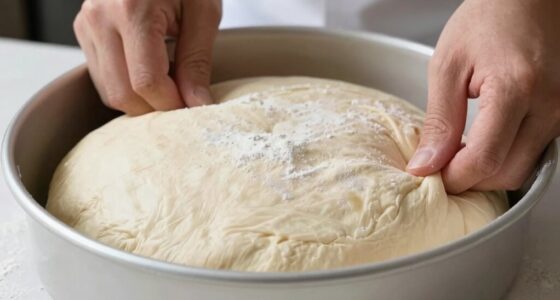

Rushing sourdough fermentation might save time, but it often backfires later. If you cut corners, you limit the natural development of flavor, aroma, and gluten structure, resulting in flat-tasting, dense bread with uneven texture. Shortening fermentation also prevents the bread from reaching its full sour complexity, leading to inconsistent results. To truly elevate your loaf, controlling temperature and allowing proper fermentation is key—stick around to discover how patience transforms your bread.

Get baking supplies delivered free with Prime
- Fast, free delivery on millions of items
- Prime Video, Amazon Music and more included
- Member-only deals all year
Key Takeaways
- Rushing fermentation limits flavor development, resulting in flat, dull-tasting bread with less aroma complexity.
- Shortened process hampers gluten formation, causing dense, uneven crumb and poor texture.
- Rapid fermentation reduces characteristic sour notes and diminishes overall aroma richness.
- Speeding up fermentation increases risk of inconsistent loaf quality and gummy interior.
- Proper temperature control allows faster fermentation without sacrificing flavor and texture quality.
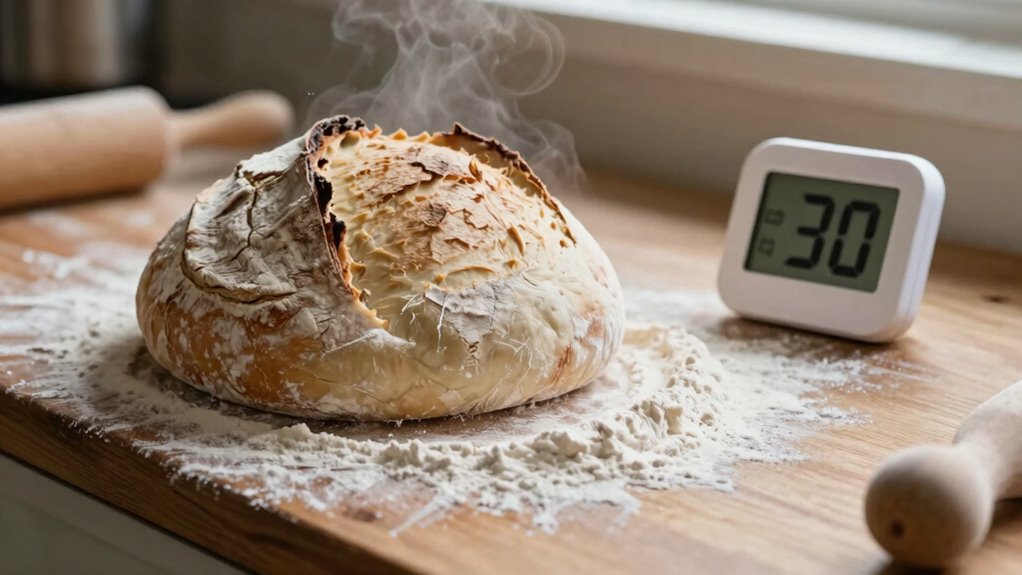
Many home bakers turn to quick timing shortcuts to speed up their sourdough process, hoping to save time without sacrificing quality. While it might seem tempting to cut corners, these shortcuts often interfere with the natural fermentation process. Fermentation speed is vital because it directly impacts not just how fast your bread rises, but also how well it develops flavor. When you try to accelerate fermentation, you risk shortening the window for complex flavors to form, resulting in a bread that tastes flat or dull.
Fast-tracking fermentation might seem efficient, but it often leads to incomplete gluten development and underdeveloped flavor profiles. Sourdough relies on a slow, steady fermentation to allow wild yeasts and bacteria to work together, creating the characteristic tang and depth. When you rush this stage, the dough may rise quickly, but it lacks the intricate sour notes and nuanced aroma that develop over time. The flavor development process is delicate, and hurried fermentation deprives your bread of the full spectrum of taste that slow fermentation yields.
You might notice that bread made with hurried fermentation tends to have a less complex aroma and a less satisfying tang. It can also become overly dense or uneven in texture because the dough hasn’t had enough time to strengthen its gluten network fully. Additionally, rapid fermentation can lead to inconsistent crumb structure, with large holes or a gummy interior. These issues often come back to the fact that the dough didn’t ferment long enough to allow the flavors to fully develop and the gluten to properly relax. Moreover, understanding the importance of fermentation timing is crucial for achieving optimal bread quality. Proper fermentation control ensures that the natural processes work harmoniously, resulting in a better loaf.
In fact, understanding fermentation control can help you manipulate the process without sacrificing flavor, by adjusting factors like temperature rather than rushing the timeline. Recognizing how temperature management influences fermentation speed allows bakers to fine-tune their process for optimal results. Trying to shortcut the process might seem like a good idea at first, but it rarely results in the quality you’re aiming for. Instead, it can backfire by producing a loaf that’s disappointing in both flavor and texture. If you’re enthusiastic to speed things up, consider adjusting your fermentation environment—such as temperature—to encourage a more active fermentation without sacrificing the slow, natural development of flavors. Controlling temperature plays a key role in managing fermentation speed while maintaining flavor complexity. Remember, patience enhances the depth and complexity of your sourdough, and rushing can diminish its character. Ultimately, taking the time to let your dough ferment properly ensures a richer, more flavorful loaf that’s worth the wait.
As an affiliate, we earn on qualifying purchases.
Frequently Asked Questions
Can I Fix My Sourdough if I Overproofed It?
Yes, you can fix overproofed sourdough. Gently reshape the dough to redistribute gases and punch it down slightly to slow fermentation. Let it rest for a short, final proof to develop a better crumb structure. Keep in mind, overproofing can affect flavor development, making it milder, and may lead to a less open crumb. Adjusting your process now helps salvage flavor and achieve a more desirable crumb structure.
What Are the Signs of a Sourdough That’s Overfermented?
You can tell your sourdough is overfermented if you notice fermentation indicators like a sour smell, excessive bubbling, or a very airy, almost collapse-like structure. Overproofing symptoms include a very loose, sticky dough that’s hard to shape, and a weak gluten structure. If your dough has these signs, it’s likely past its prime, resulting in a bread with a dense or sour taste, so watch for these cues early.
How Long Is Too Long to Leave Sourdough Proofing?
You should avoid leaving sourdough proofing for more than 12-14 hours at room temperature. Overproofing can lead to overly sour flavor development and a weak crust texture, making your bread less desirable. If the dough becomes overly puffy or develops a strong smell, it’s a sign it’s gone too far. To prevent this, keep an eye on the dough’s appearance and smell, and adjust proofing times accordingly.
Does Temperature Affect Sourdough Fermentation Speed?
Temperature definitely affects sourdough fermentation speed. When temperature fluctuates, it impacts yeast activity, either speeding up or slowing down the process. Warmer temperatures boost yeast activity, making fermentation faster, while cooler temps slow it down. Consistent, ideal temperatures guarantee steady fermentation, preventing issues like over-proofing or under-proofing. So, keeping your sourdough in a stable, warm environment encourages healthy fermentation and better bread quality.
Can I Save a Failed Sourdough Batch?
If your sourdough batch fails, don’t give up. You can often rescue it by adjusting your sourdough storage and baking techniques. For example, if your dough is sticky or underproofed, try refrigerating it overnight to develop flavor and gluten structure. Then, reshape and bake with a higher hydration level. This approach can salvage your bread, turning a failed batch into a delicious loaf.
As an affiliate, we earn on qualifying purchases.
Conclusion
So, next time you’re tempted to skip or rush the sourdough process, remember that shortcuts often lead to setbacks. While it might seem like saving time now, the flavor and texture suffer later, and you’ll end up wasting more effort. Patience truly pays off in baking. Trust the process, even if it feels slow — the delicious, perfectly risen loaf is worth it. Your future self will thank you for resisting that shortcut today.
As an affiliate, we earn on qualifying purchases.
As an affiliate, we earn on qualifying purchases.
Halloween Picks
halloween
As an affiliate, we earn on qualifying purchases.