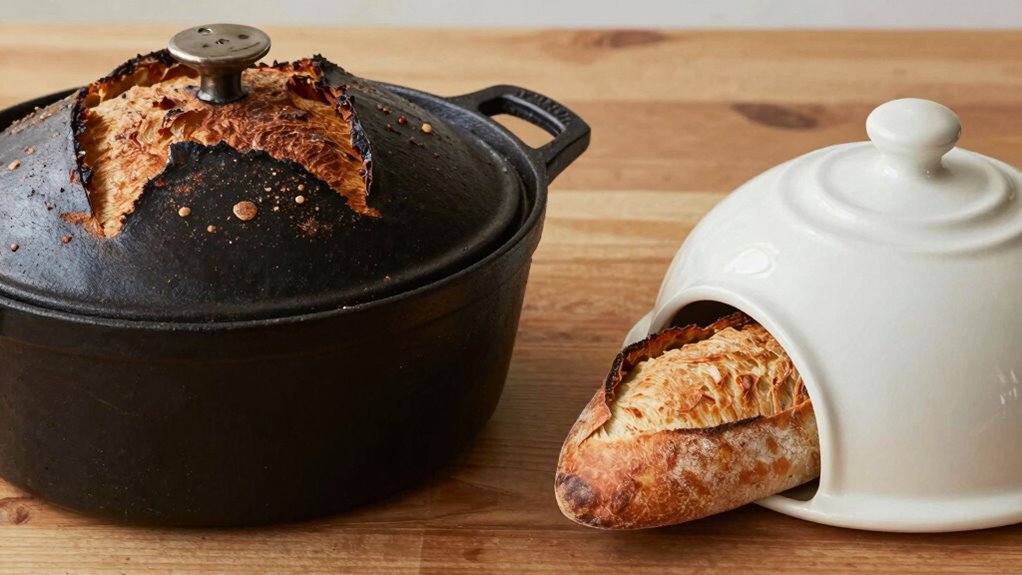
A bread cloche is usually made of porous ceramic or clay, which helps regulate moisture and creates a rustic, crackly crust, while a Dutch oven is typically enameled cast iron that traps steam for even baking. The cloche mimics a professional bakery environment but requires careful handling and pre-soaking, whereas the Dutch oven offers a straightforward, durable option with easier cleanup. Want to learn how each tool impacts your bread’s crust and texture? Keep exploring for more details.

Get baking supplies delivered free with Prime
- Fast, free delivery on millions of items
- Prime Video, Amazon Music and more included
- Member-only deals all year
Key Takeaways
- A bread cloche is typically made of porous ceramic or clay, while a Dutch oven is usually enameled or bare cast iron.
- Cloche mimics professional bakery steam environments, whereas Dutch ovens trap steam through their sealed lids.
- Cloche enhances crust texture with moisture regulation, while Dutch ovens promote even baking and crust development.
- Cloche requires pre-soaking and careful handling, whereas Dutch ovens are easier to clean and maintain.
- Cloche is ideal for artisanal, rustic loaves; Dutch ovens provide consistent heat for more straightforward baking.
Ever wondered how a bread cloche differs from a Dutch oven? While both are essential tools for baking artisan-style bread, they serve slightly different purposes and bring unique characteristics to your baking process. Understanding these differences can help you choose the right equipment for your kitchen and perfect your baking techniques.
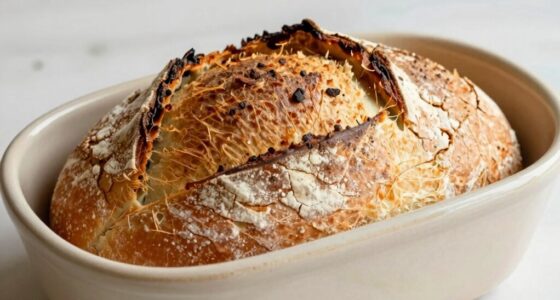
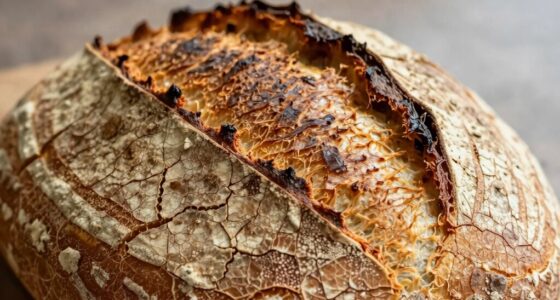
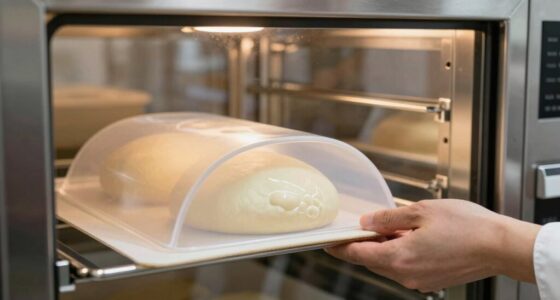
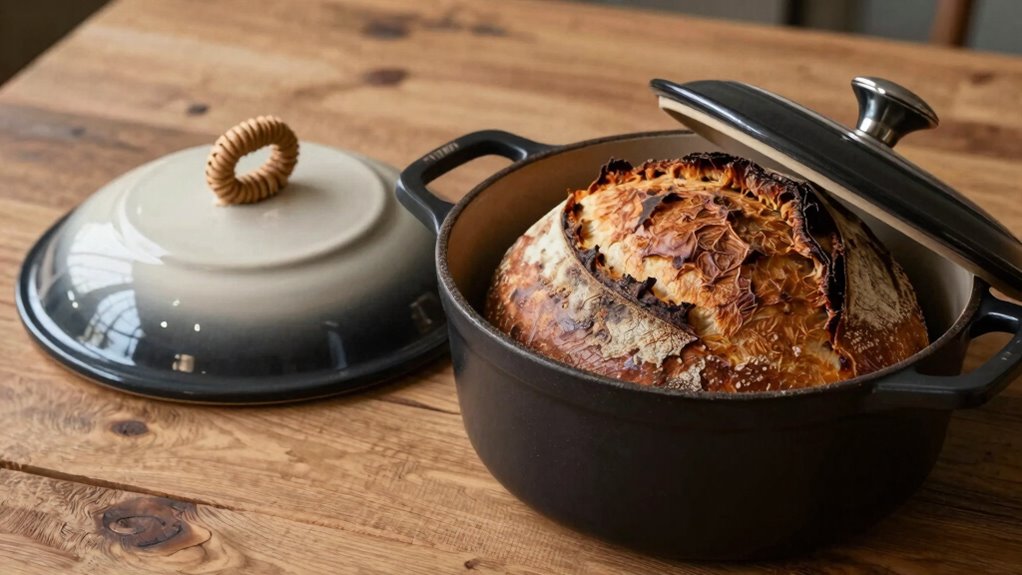
A bread cloche is traditionally a dome-shaped cover made of ceramic or clay, designed to mimic the steam environment of professional bakeries. When you bake bread in a cloche, you’re engaging in a specific baking technique that emphasizes creating a crispy crust and maintaining moisture inside the loaf. The material plays a major role here; ceramic or clay is porous, which allows moisture to evaporate slowly, creating a humid environment that results in a beautifully crackly crust. Using a bread cloche requires preheating the vessel along with your oven, then removing the lid partway through baking to let the crust develop. This method is particularly effective for achieving bakery-quality crusts and a rustic appearance, especially when baking traditional sourdough or country loaves. The porous nature of the cloche also helps in moisture regulation, which influences crust development and texture.
A Dutch oven, on the other hand, is typically made from enameled cast iron or sometimes bare cast iron. Its material comparison reveals a significant difference: cast iron is durable, retains heat exceptionally well, and distributes it evenly across the baking surface. When you bake bread in a Dutch oven, you’re utilizing its excellent heat retention to create a consistent baking environment. The heavy lid traps steam and heat, much like a cloche, but the material’s ability to hold heat makes it ideal for baking bread with a uniform crumb and crust. The technique involves preheating the Dutch oven, placing your dough inside, and then covering it during the initial baking phase. The advantage here is the straightforwardness—no need for delicate handling or pre-soaking, and the enameled surface makes cleanup easier.
In essence, the main differences boil down to material and baking techniques. The cloche’s porous ceramic material offers a more traditional, artisanal approach to creating steam, influencing the way moisture interacts with the dough. Meanwhile, the Dutch oven’s cast iron construction provides superior heat retention and even baking, with a more straightforward process. Both tools excel at trapping steam, but your choice will depend on your preferred baking style, the type of bread you want to produce, and how much maintenance you’re willing to do. Additionally, the porous nature of a bread cloche can influence the development of crust and texture in ways that differ from the non-porous surface of a Dutch oven. When you understand these material comparisons and baking techniques, you can make an informed decision to elevate your bread-baking game.
As an affiliate, we earn on qualifying purchases.
Frequently Asked Questions
Can a Bread Cloche Be Used for Baking Other Foods?
Yes, a bread cloche can be used for baking other foods, making it a versatile tool in your multi-purpose kitchen. You can bake casseroles, roasted vegetables, or even small meats inside it. Its ability to distribute heat evenly helps create delicious, well-cooked dishes. Using a bread cloche for various recipes maximizes its value and adds an authentic touch to different meals, making your cooking experience more enjoyable and efficient.
Which Is Easier to Clean: a Bread Cloche or a Dutch Oven?
You’ll find a Dutch oven easier to clean because its smooth, enameled surface requires less maintenance and can be scrubbed with simple soap and water. In contrast, a bread cloche often has a porous ceramic or clay surface that can absorb oils and crumbs, making its cleaning process more involved. Regular maintenance is essential for both, but a Dutch oven’s design generally makes cleaning less time-consuming.
Are There Size Limitations for Each Baking Vessel?
Yes, both bread cloches and Dutch ovens have size limitations, mainly due to material durability and storage considerations. A Dutch oven typically comes in various sizes, from 4 to 7 quarts, but larger models may be harder to handle and store. Bread cloches are often smaller, designed to fit standard oven shelves, and their material durability can limit their size. Make sure your kitchen storage can accommodate the size you choose.
How Do the Costs Compare Between the Two?
When comparing costs, a Dutch oven generally costs less than a bread cloche, making it a better choice for budget considerations. Dutch ovens are versatile and widely available, with prices ranging from affordable to high-end. Bread cloches tend to be pricier due to their delicate design and specialized use. If you’re looking to save, a Dutch oven offers excellent value, while a bread cloche might be a more decorative, investment piece.
Which One Offers Better Heat Retention for Baking?
A Dutch oven offers better heat retention for baking because its thick, cast iron walls hold and distribute heat evenly, helping you achieve consistent results. This makes it highly versatile for various baking styles, from bread to casseroles. A bread cloche, while excellent for creating a steamy environment, doesn’t retain heat as well. So, if you prioritize heat retention and baking versatility, a Dutch oven is your best choice.
As an affiliate, we earn on qualifying purchases.
Conclusion
In the end, choosing between a bread cloche and a Dutch oven depends on your baking style. Interestingly, over 60% of home bakers prefer Dutch ovens for their versatility, while cloches are favored for their authentic crust. Both tools can elevate your bread game, but understanding their differences helps you decide which suits your baking needs best. So, whether you opt for the traditional charm of a cloche or the all-in-one functionality of a Dutch oven, your perfect loaf awaits.
As an affiliate, we earn on qualifying purchases.
As an affiliate, we earn on qualifying purchases.
Fall Picks
fall essentials
As an affiliate, we earn on qualifying purchases.