To calibrate your thermometers for candy and baking, you’ll need an ice water bath and boiling water setup. For digital thermometers, check their accuracy in both, then adjust as needed. For analog models, immerse them in ice water and boiling water to verify readings at 32°F and 212°F. Regularly recheck calibration, especially after impacts or long use. Keep your tools in good shape, and you’ll guarantee perfect results every time—more tips await if you keep going.

Get baking supplies delivered free with Prime
- Fast, free delivery on millions of items
- Prime Video, Amazon Music and more included
- Member-only deals all year
Key Takeaways
- Use ice water (32°F/0°C) and boiling water (212°F/100°C at sea level) to verify thermometer accuracy.
- Insert the thermometer fully into the ice water without touching sides or bottom; wait for stabilization.
- Check boiling water temperature with the thermometer, adjusting if it reads above or below 212°F (100°C).
- For analog thermometers, adjust calibration nuts or marks; for digital, note discrepancies and calibrate if possible.
- Regularly recheck calibration, especially after impacts or before critical candy and baking tasks.
digital thermometer for candy making
As an affiliate, we earn on qualifying purchases.
As an affiliate, we earn on qualifying purchases.
Why Calibrating Your Thermometer Matters for Candy and Baking
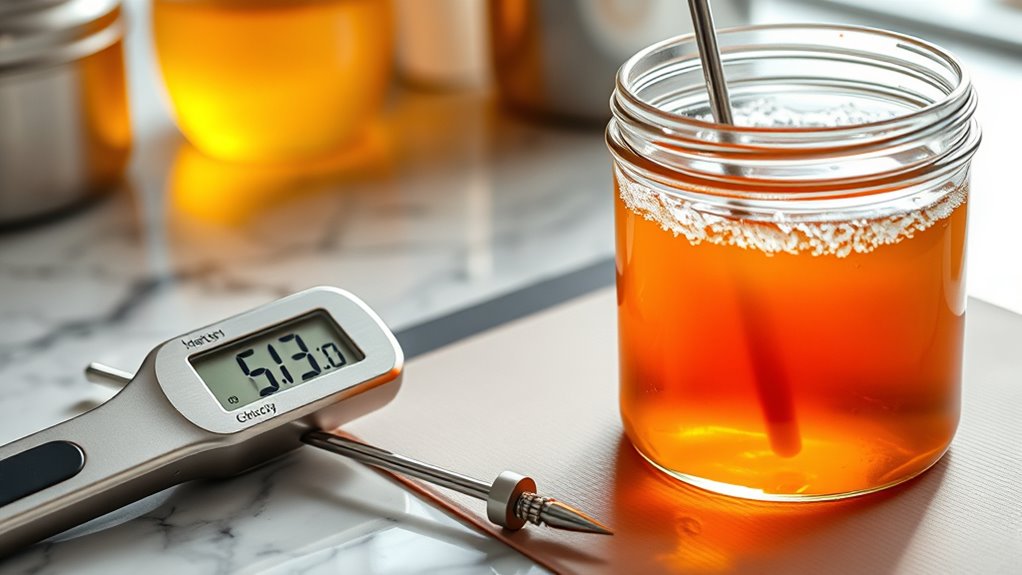
Accurate temperature readings are essential when making candy and baking because even slight variations can ruin the final product. Without proper calibration, you risk losing baking precision, which directly affects the quality of your baked goods. For candy, inconsistent temperatures can lead to poor candy consistency, causing textures that are too soft or too hard. Precise temperature control ensures that sugar, chocolate, or dough reaches the exact stage needed for perfect results. When your thermometer is off, your recipes can fail, wasting ingredients and time. Calibration helps you maintain reliable measurements, giving you confidence in every batch. Regularly checking your thermometer’s accuracy and calibrating it ensures consistent results and enhances your baking precision. Proper calibration methods are simple to perform and can significantly improve your confidence in your recipes. Additionally, understanding the importance of accurate measurements can help you troubleshoot and perfect your techniques. Implementing reliable tools like calibrated thermometers is crucial for achieving the best possible results in your culinary endeavors. Ultimately, regularly calibrating your thermometer guarantees consistent results, enhances baking precision, and guarantees candy quality every time you create something sweet.
analog oven thermometer calibration tool
As an affiliate, we earn on qualifying purchases.
As an affiliate, we earn on qualifying purchases.
What Tools Do You Need to Calibrate Your Thermometer?
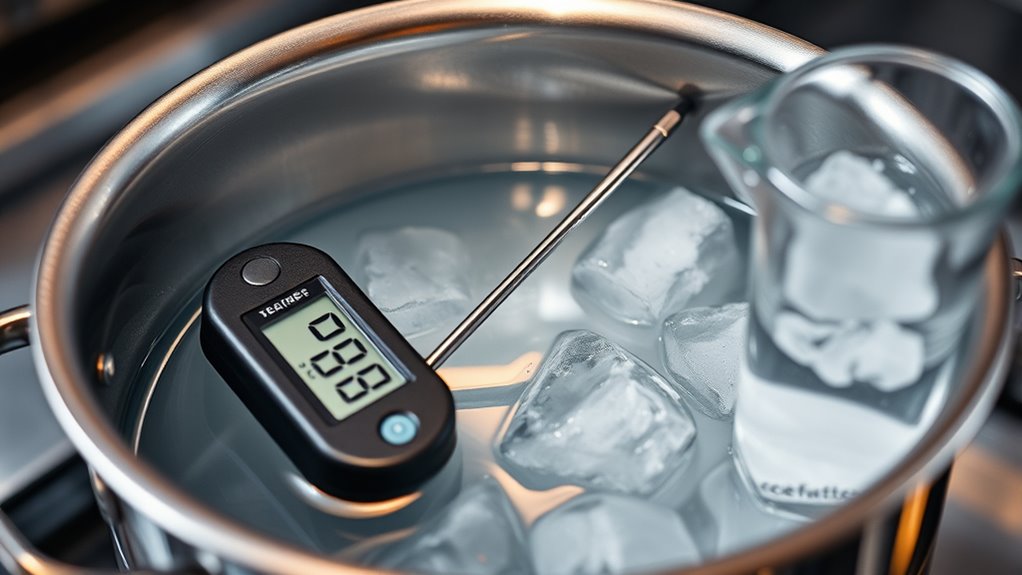
To successfully calibrate your thermometer, you’ll need a few simple tools. The most essential are calibration tools like a reliable ice water bath or boiling water setup. These help you check and adjust thermometer accuracy at specific temperatures. A sturdy container or pot for creating the ice water bath ensures consistent results, while a digital or analog thermometer designed for calibration helps verify accuracy. You might also want a small screwdriver or adjustment tool if your thermometer has calibration screws. Having a clean cloth or paper towels on hand allows you to dry the thermometer after testing. Additionally, using a temperature calibration device can further improve the precision of your readings, ensuring consistent results for your candy and baked goods. Incorporating smart appliances and connected tools can further enhance your calibration process for consistent results. Proper calibration techniques are essential for achieving accurate temperature readings, which directly impact the quality of your confections and baked items. Regularly monitoring and recalibrating your thermometer helps maintain consistent results over time, reducing guesswork in your recipes. Employing proper calibration methods can also extend the lifespan of your thermometer and improve its overall reliability.
kitchen ice water bath for thermometer calibration
As an affiliate, we earn on qualifying purchases.
As an affiliate, we earn on qualifying purchases.
How to Calibrate a Digital Thermometer for Perfect Results
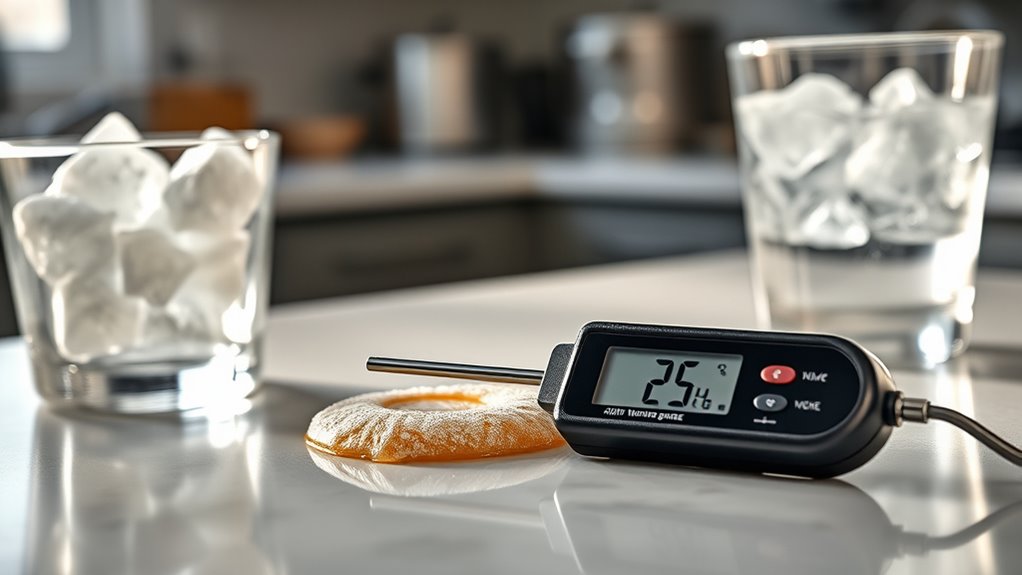
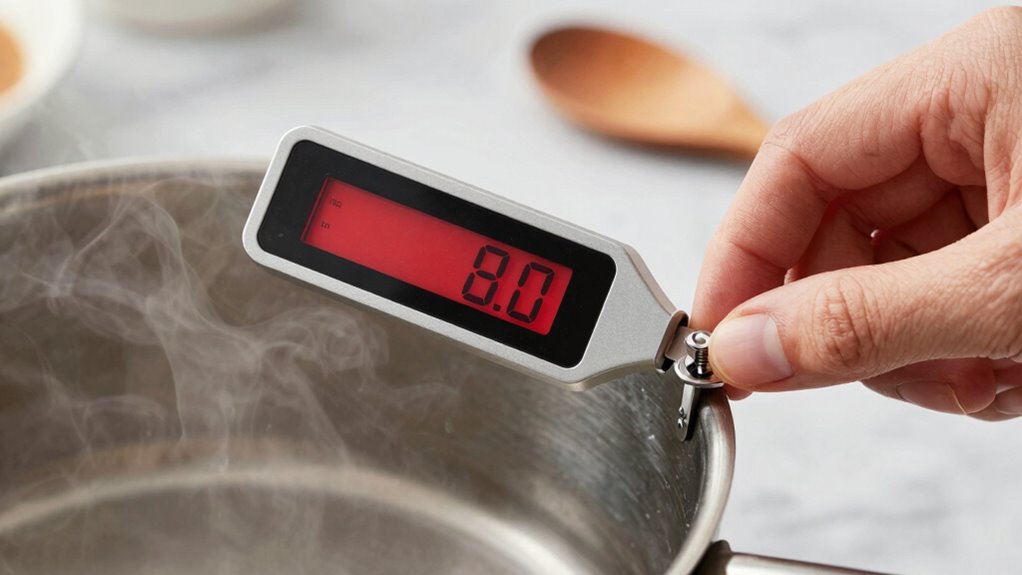
Calibrating your digital thermometer guarantees it provides precise readings essential for perfect candy and baked goods. To verify temperature accuracy, start by placing your thermometer in boiling water and note the reading; it should read 212°F (100°C) at sea level. If it doesn’t, use calibration techniques like adjusting the device if it has a calibration feature or noting the discrepancy for future reference. Next, test it in ice water, aiming for 32°F (0°C). Any deviation indicates the need for re-calibration or adjustment. Regular calibration checks help maintain accuracy, especially after drops or impacts. Remember, proper calibration techniques ensure your digital thermometer delivers reliable temperature readings, making your candy and baked goods consistently perfect. Additionally, understanding air purifier maintenance can help maintain a healthy environment in your baking and cooking space. Properly calibrated tools are essential for consistent results in your culinary endeavors, ensuring safety and quality. Incorporating smart home technology into your kitchen can also assist in monitoring and maintaining optimal cooking conditions. To further enhance accuracy, consider environmental factors that might affect your thermometer’s readings, such as ambient temperature or humidity.
boiling water thermometer calibration
As an affiliate, we earn on qualifying purchases.
As an affiliate, we earn on qualifying purchases.
How to Calibrate an Analog or Dial Thermometer at Home
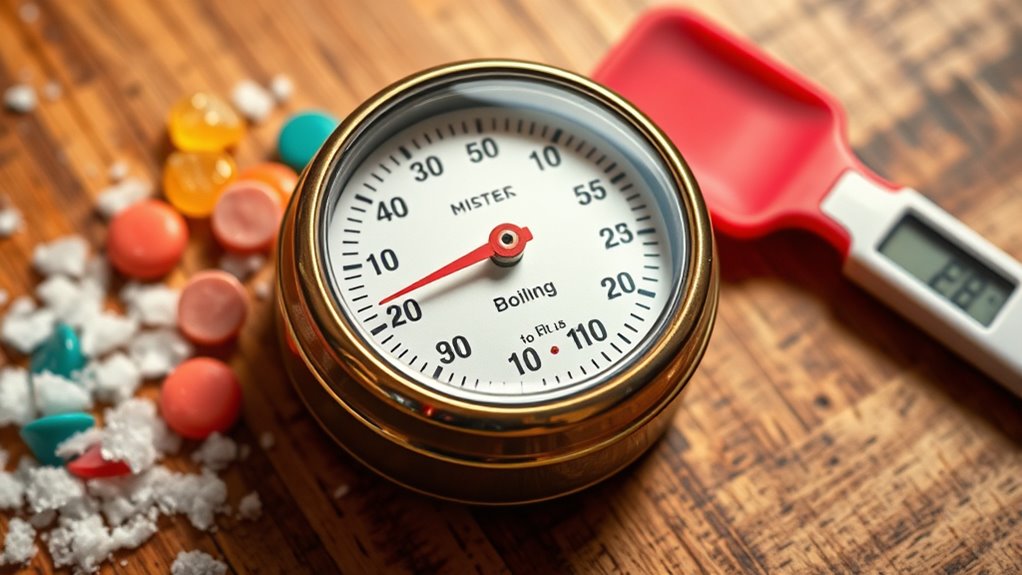
Wondering how to guarantee your analog or dial thermometer gives correct readings? Ensuring thermometer accuracy is essential for precise candy and baking results. To do this, you can use simple calibration techniques at home. First, fill a glass with ice and add cold water to create a slushy mixture. Insert your thermometer without touching the sides or bottom of the glass. Wait a few minutes until the reading stabilizes. If it doesn’t read 32°F (0°C), note the difference. You can then adjust your thermometer if it has a calibration nut or mark accordingly. Regularly checking your thermometer’s accuracy with these techniques helps maintain reliable measurements, ensuring your recipes turn out perfectly every time. Proper calibration is key to consistent baking success.
What’s the Best Way to Calibrate Using the Boiling Point Method?
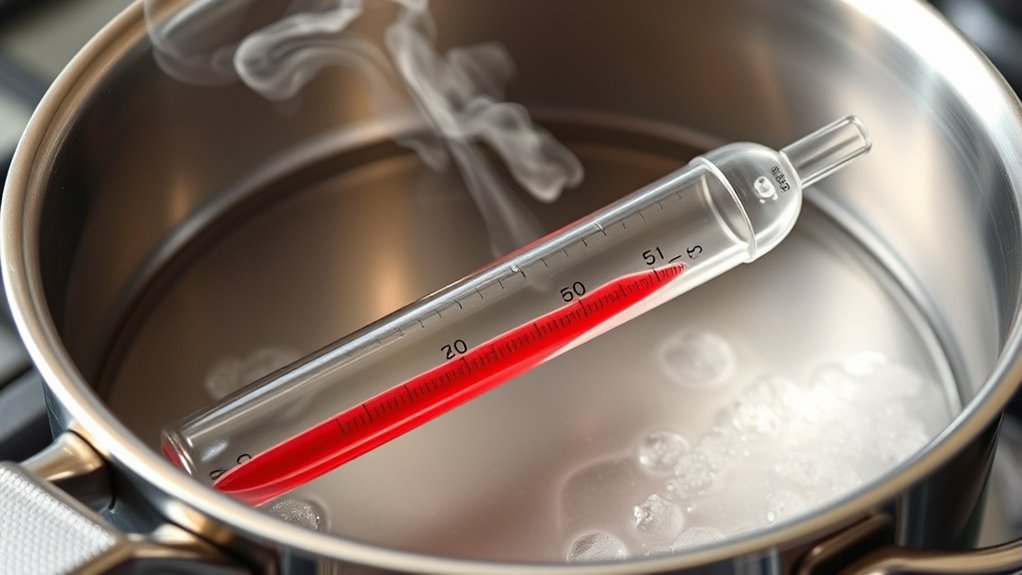
The boiling point method is one of the most accurate ways to calibrate your thermometer, especially since boiling water has a consistent temperature at sea level. To do this, bring a pot of water to a rolling boil. Insert your thermometer without touching the sides or bottom of the pan, and wait for the reading to stabilize. If your thermometer doesn’t read 212°F (100°C), note the discrepancy. Use the table below to understand how to adjust your readings:
| Actual Boiling Point | Thermometer Reading | Adjustment Needed | Final Calibration |
|---|---|---|---|
| 212°F / 100°C | Varies | Add or subtract | Corrected reading |
This method helps improve your temperature accuracy essential for precise candy and baking results. To ensure consistent results, it’s also helpful to understand how thermometer calibration impacts your cooking process.
How to Use Ice Water to Check Your Thermometer’s Accuracy
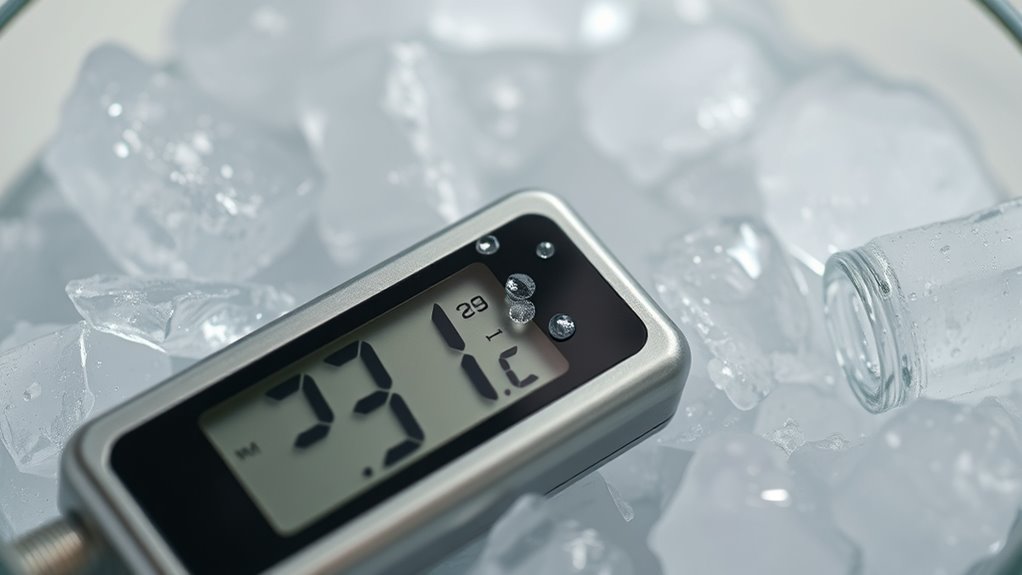
Start by preparing an ice water bath with crushed ice and a little water, ensuring it’s thoroughly mixed. Carefully insert your thermometer into the ice water, making sure the sensing tip is fully submerged without touching the sides or bottom of the container. This simple step helps you verify if your thermometer reads 32°F (0°C) accurately. A basic understanding of how thermometers work can help you interpret the readings more effectively, especially when considering the accuracy of temperature measurements, which is critical for candy and baking. Remember that factors like thermometer placement can affect your readings, so consistent testing is key. Additionally, knowing how calibration techniques influence your thermometer’s precision can help maintain accurate readings over time.
Prepare Ice Bath
To accurately check your thermometer’s calibration, preparing an ice bath is a straightforward and reliable method. Start by filling a large container with ice water, ensuring you use crushed ice or small ice cubes for better contact. Add cold water until the container is nearly full, but leave some space to prevent spilling. Stir the mixture gently to ensure uniform temperature. This forms the basis of your calibration technique, providing a stable, 32°F (0°C) reference point. Make sure your thermometer is clean before immersing it. The ice bath offers a consistent environment to verify if your thermometer reads accurately at the freezing point. Proper preparation guarantees precise results, which is essential for candy making and baking where exact temperatures matter.
Insert Thermometer Carefully
Gently insert the thermometer into the ice water, guaranteeing the sensing area is fully submerged without touching the sides or bottom of the container. Proper placement accuracy is essential for an accurate reading. Hold the thermometer steady, avoiding any sudden movements that could affect the measurement. Handle the thermometer with care to ensure safety and prevent damage. Keep the tip submerged but away from the container’s edges to avoid false readings caused by external heat or cold transfer. Make sure the thermometer’s stem isn’t touching the container’s sides or bottom, as this can skew results. Taking your time during insertion ensures a precise reading and reliable calibration. Additionally, understanding proper thermometer placement can improve your calibration accuracy and ensure consistent results. By handling the thermometer carefully and positioning it correctly, you’ll achieve the most accurate assessment of its accuracy using ice water.
Common Calibration Problems and How to Fix Them
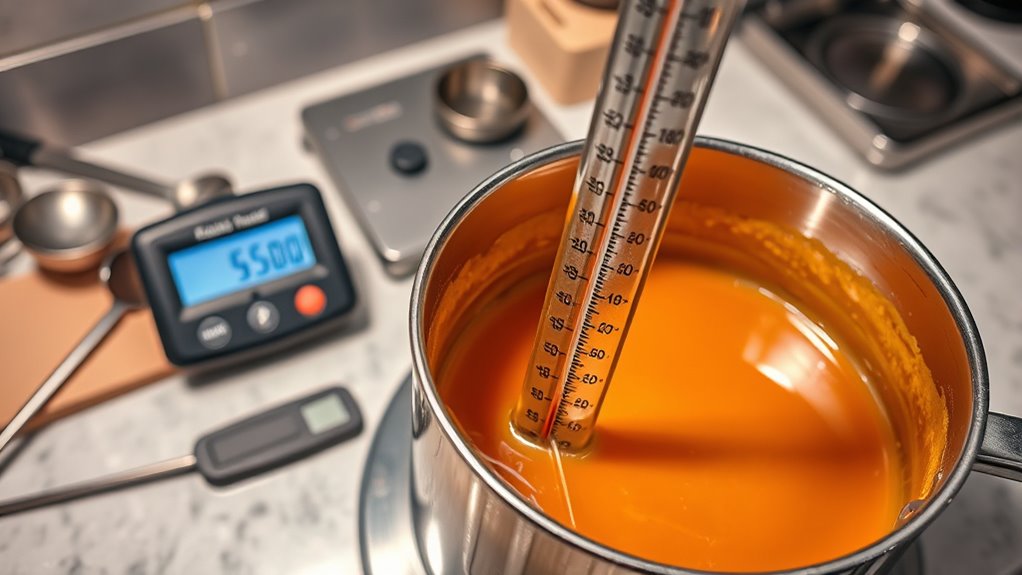
One common calibration problem is when a thermometer consistently reads too high or too low, which can lead to inaccurate candy and baked goods. This issue affects thermometer accuracy and often results from calibration errors. If your thermometer shows incorrect readings, it might be due to a misaligned sensor or a buildup of dirt and grime. To fix this, start by testing it in boiling water or ice water to identify the error. If it’s off, recalibrate following the manufacturer’s instructions or use a simple ice water test to adjust the reading. Regularly verifying your thermometer’s calibration helps prevent errors that could impact your cooking results. Addressing these problems guarantees your thermometer provides precise measurements, giving you confidence in your candy and baking processes. Ensuring your device is properly calibrated also benefits from understanding performance cookies, which can track and improve your overall equipment accuracy over time. Proper calibration practices are essential for consistent results, especially when precise temperature control is critical in candy making and baking. Additionally, understanding calibration techniques can help you troubleshoot and maintain your thermometer more effectively.
How to Keep Your Thermometer Accurate and When to Recheck It
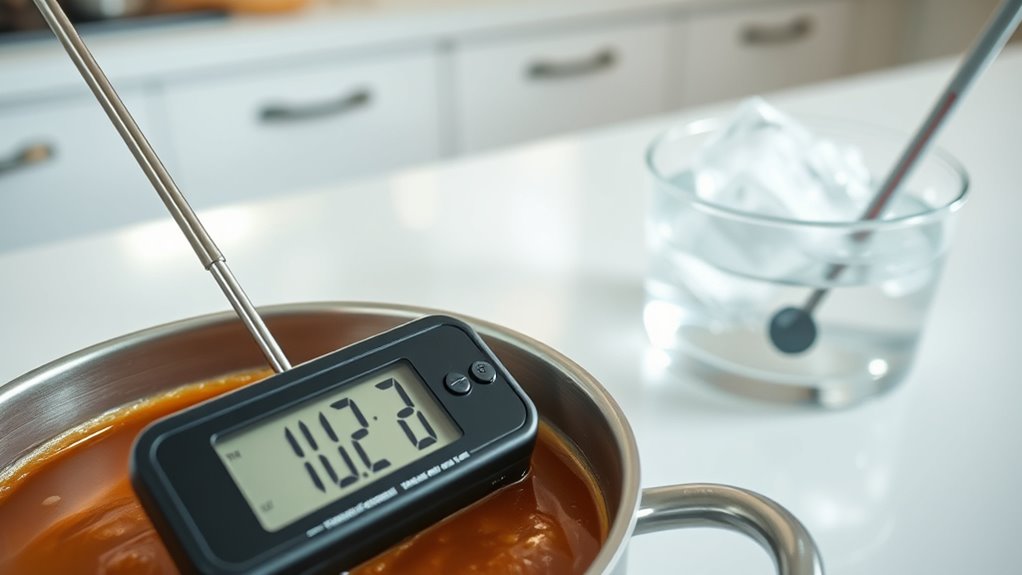
To keep your thermometer accurate, store it properly in a protective case or container to safeguard against damage. You should also set a regular calibration schedule, checking it every few months or after heavy use. Proper storage and routine checks ensure your readings stay precise when you need them most.
Proper Storage Techniques
Proper storage is essential to keep your thermometer accurate over time. To guarantee storage safety, always store your thermometer in a clean, dry place away from direct sunlight and extreme temperatures. Avoid placing it near heat sources or in humid environments, as these can affect its accuracy. Use a protective case or hang it securely to prevent damage and keep it readily accessible. Proper storage helps maintain consistent temperature control, preventing calibration drift caused by exposure to temperature fluctuations. Never leave your thermometer in a hot dishwasher or in a cluttered drawer where it can get bumped or scratched. Regularly check it for damage or dirt, and clean it according to manufacturer instructions. Correct storage habits extend your thermometer’s lifespan and ensure precise readings every time.
Regular Calibration Schedule
Maintaining an accurate thermometer requires setting a regular calibration schedule to catch any drift over time. By adhering to a consistent calibration frequency, you ensure precise readings for candy and baking. Recheck your thermometer whenever you notice inconsistent results or after accidental impacts. Incorporate simple maintenance tips to prolong accuracy, such as cleaning the probe regularly and avoiding extreme temperature shocks. Keep a calibration log to track when you last checked and adjusted your thermometer. This habit helps prevent errors during critical cooking stages and ensures reliable measurements. Remember, calibration isn’t a one-time task—regular rechecks keep your thermometer dependable. Staying proactive with your calibration schedule guarantees consistent, perfect results in your culinary creations.
- Check after accidental drops or impacts
- Recalibrate before important baking or candy-making
- Clean the probe regularly for accurate readings
- Note calibration dates in a log for consistency
- Adjust calibration as needed based on test results
Frequently Asked Questions
How Often Should I Calibrate My Candy and Baking Thermometer?
You should calibrate your candy and baking thermometer at least once a month to guarantee accurate readings. Regular calibration is key to proper thermometer maintenance, especially if you notice inconsistent temperature results or after dropping or bumping it. Frequent calibration helps prevent errors in your recipes and guarantees your thermometer stays reliable. Make calibration a routine part of your kitchen maintenance to keep your cooking and baking on point.
Can I Calibrate a Thermometer Without Special Tools?
Yes, you can do a DIY calibration without special tools using household solutions. For example, immerse your thermometer in boiling water to check if it reads 212°F (or 100°C at sea level), adjusting if possible. Alternatively, test it in ice water to see if it shows 32°F. These simple household solutions help you verify accuracy without needing professional calibration tools, ensuring your thermometer stays reliable for candy and baking.
What Signs Indicate My Thermometer Needs Recalibration?
Your thermometer’s acting like a drifting ship, showing signs of inconsistent readings and temperature drift. When it no longer matches known temperature points, it’s time to recalibrate. If your readings suddenly vary, or if it struggles to stabilize at standard temperatures, it’s a clear sign your thermometer needs attention. Trust your instincts—accurate measurements are the compass for perfect candy and baked goods. Don’t let faulty readings steer you off course.
Is It Necessary to Calibrate a New Thermometer Before First Use?
Yes, you should calibrate a new thermometer before first use to guarantee accuracy. Even new thermometers can have slight inaccuracies affecting your cooking or baking. Follow proper calibration procedures, such as testing it in boiling water or ice water, to verify its accuracy. This step helps maintain thermometer accuracy, so your recipes turn out perfectly every time. Regular calibration also ensures consistent results, especially when measuring temperatures critical for candy and baking.
How Do Environmental Factors Affect Thermometer Calibration Accuracy?
Environmental factors like ambient temperature and humidity can substantially impact your thermometer’s calibration accuracy. Studies show that high humidity levels can cause moisture buildup, leading to erroneous readings, while fluctuations in ambient temperature can temporarily skew your thermometer’s display. To guarantee precise measurements, keep your thermometer away from direct sunlight, drafts, or moisture-rich environments. Regularly check and recalibrate in different conditions to maintain reliable, consistent temperature readings during your baking or candy-making.
Conclusion
Keeping your thermometer calibrated guarantees perfect candy and baked goods every time. Regular checks and adjustments might seem small, but they make a big difference in your results. Are you ready to trust your thermometer and master your recipes? With a little effort, you’ll confidently create desserts and treats that turn out just right—no more guessing, just precision. Stay vigilant, and your culinary creations will always hit the mark!
Columbus Day / Indigenous Peoples' Day Picks
long weekend sales
As an affiliate, we earn on qualifying purchases.