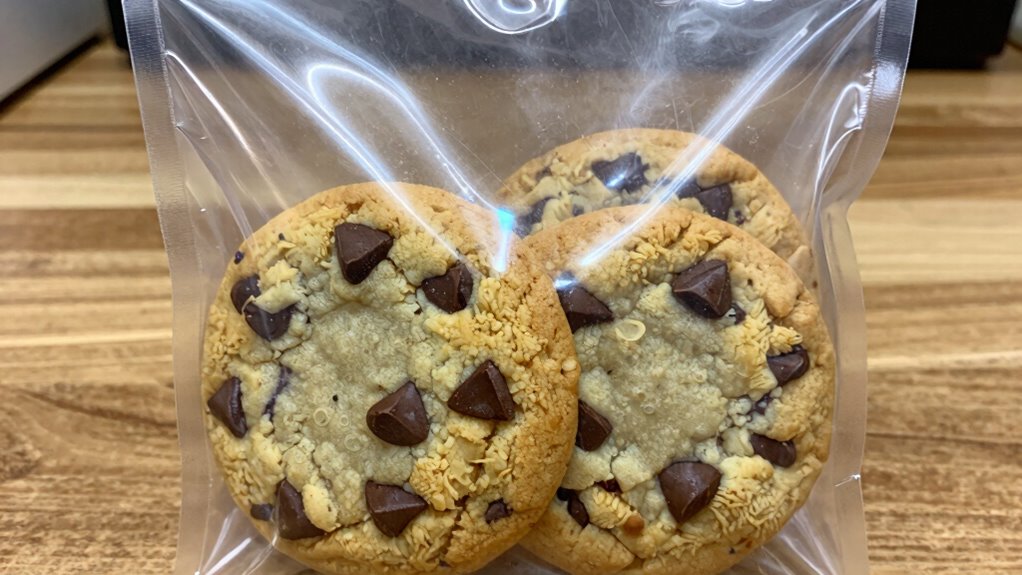

If your cookie bags make cookies go soft, it’s likely because the packaging lacks a strong moisture barrier. Poor quality materials, weak seals, or design flaws let water vapor seep in, softening cookies over time. High-quality barrier films and airtight seals prevent humidity from entering, keeping cookies crisp and fresh. Understanding how these barriers work helps you choose better packaging—stick around to learn more about ensuring your cookies stay crunchy longer.

Get baking supplies delivered free — and shop member deals
- Fast, free delivery on millions of items
- Access to Prime Big Deal Days deals on October 6–7
- Prime Video, Amazon Music and more included
Key Takeaways
- Poor seal integrity or manufacturing defects can allow moisture to seep in, softening cookies.
- Using low-quality or incompatible moisture barrier materials increases permeability and failure risk.
- Environmental factors like humidity fluctuations cause material expansion, micro-tears, and moisture ingress.
- Thin or fragile packaging films are more prone to tears, compromising moisture protection.
- Inadequate packaging design, such as missing multilayer barriers or microperforations, reduces moisture control effectiveness.
As an affiliate, we earn on qualifying purchases.
What Are Moisture Barriers in Food Packaging?

What exactly are moisture barriers in food packaging? They’re specialized layers designed to prevent moisture from entering or leaving the package. By blocking water vapor, these barriers help maintain the freshness and flavor preservation of food, especially baked goods like cookies that can turn soft and stale when exposed to humidity. Moisture barriers also support packaging sustainability by reducing food waste; keeping products dry extends their shelf life, meaning fewer packages are discarded prematurely. These barriers are often made from materials like foil, polyethylene, or multi-layer laminates, chosen for their ability to effectively control moisture transmission. Additionally, the use of advanced materials in moisture barriers enhances their effectiveness and sustainability. Incorporating innovative barrier technologies further improves moisture control, ensuring product quality over longer periods. Overall, moisture barriers are essential for enhancing product quality and promoting more sustainable packaging solutions.
As an affiliate, we earn on qualifying purchases.
How Do Material Quality and Design Affect Barrier Performance?
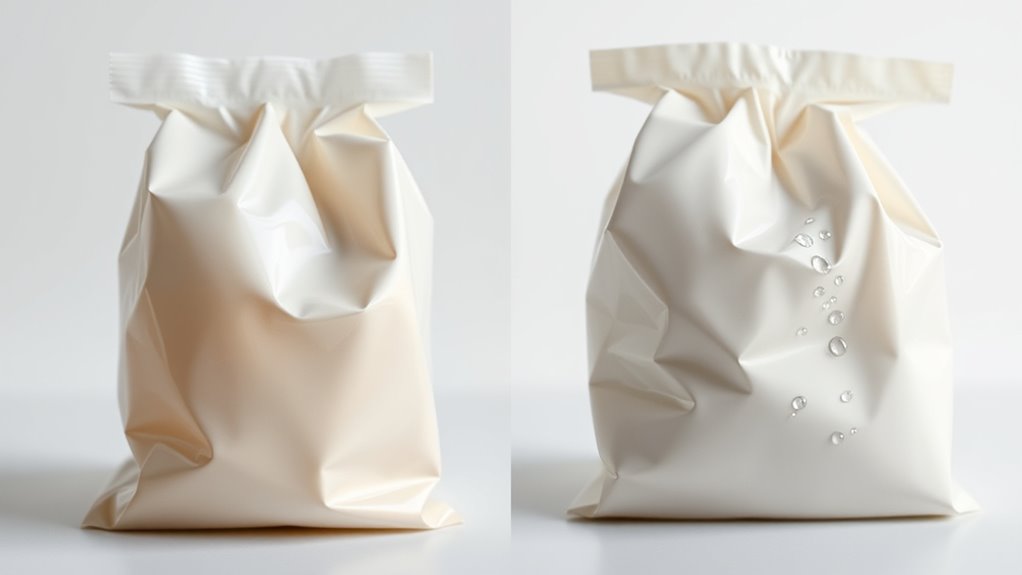
The quality of the materials you choose directly impacts how well your barrier prevents moisture transfer. A strong seal keeps freshness locked in and avoids leaks, while smart design minimizes the chances of moisture slipping through. By focusing on material composition and design, you can considerably boost your moisture barrier’s effectiveness. Incorporating high-quality content and ensuring your packaging aligns with best practices further enhances its performance and appeal. Additionally, understanding the importance of contrast ratio in visual presentation can help in designing packaging that communicates quality effectively. Recognizing the role of authenticity in packaging can also foster consumer trust and brand loyalty, much like selecting reliable and tested whole-house water filtration systems ensures ongoing water quality. Moreover, selecting materials with proven moisture resistance properties can make a significant difference in maintaining product freshness over time.
Material Composition Matters
Material quality and design play a crucial role in determining the effectiveness of moisture barriers. The composition affects fiber strength, which prevents tears and punctures, maintaining a reliable seal. Chemical resistance is equally important, as it protects the barrier from moisture or oils that could weaken the material over time. High-quality materials with strong fibers ensure durability, while a smart design minimizes gaps that allow moisture transfer. Choosing the right combination of these factors means your bags will better keep cookies fresh. Here’s a quick comparison:
| Feature | Impact on Barrier Performance |
|---|---|
| Fiber Strength | Prevents tears, enhances durability |
| Chemical Resistance | Protects against moisture and oil penetration |
| Material Composition | Dictates flexibility and barrier efficiency |
| Thickness | Adds strength, reduces permeability |
| Sealability | Ensures airtight closure, maintains freshness |
Investing in quality materials makes all the difference in moisture protection. Additionally, understanding the material composition helps in selecting the best barrier for your specific needs.
Seal Integrity Ensures Freshness
High-quality materials and thoughtful design are essential for maintaining seal integrity, which directly impacts the freshness of your products. When your packaging seals tightly, it prevents moisture and air from entering, keeping cookies crisp and fresh longer. The durability of the seal depends on the material’s strength and how well the bag is designed to withstand handling and storage stresses. Packaging aesthetics also play a role; attractive, well-designed seals can enhance product appeal while ensuring reliable barrier performance. Additionally, choosing stronger materials can improve the overall longevity and effectiveness of the moisture barrier. Using materials with proven barrier properties ensures that the packaging consistently maintains freshness over time. Incorporating top-rated packaging can further enhance moisture resistance, safeguarding the cookies effectively. Understanding material science can help manufacturers select optimal materials to maximize barrier performance. However, consider cost considerations, as high-grade materials and complex sealing features may increase production expenses. Striking a balance between durability, appearance, and affordability is key to delivering fresh, appealing products that satisfy consumers and stand out on shelves.
Design Prevents Moisture Transmission
Effective moisture barriers rely heavily on both the quality of materials used and the design of the packaging. A well-designed bag minimizes vapor transmission and prevents anti condensation issues that cause cookies to soften. To optimize performance, consider these factors:
- Material layers: Multiple layers with barrier properties reduce vapor transmission and block moisture entry. Material integrity is essential, as even small imperfections can compromise the barrier’s effectiveness and allow moisture to seep in. In addition, the technology behind barrier materials continues to advance, offering improved protection against moisture infiltration.
- Seal design: Strong, airtight seals prevent leaks and maintain a controlled internal environment.
- Venting features: Specialized vents or microperforations allow controlled moisture escape, preventing condensation buildup inside the bag.
These design elements work together to keep moisture out, ensuring your cookies stay crisp. Barrier performance depends on the combination of high-quality materials and thoughtful design, creating an effective barrier that resists moisture transmission and maintains freshness longer.
As an affiliate, we earn on qualifying purchases.
What Causes Moisture Barriers to Fail?
Moisture barriers can fail when humidity levels fluctuate greatly, causing materials to expand and contract. Poor seal integrity allows moisture to seep through weak spots, undermining the barrier’s effectiveness. Additionally, using inadequate materials means the barrier can’t withstand environmental conditions, leading to eventual failure. Incorporating high-quality materials can significantly improve moisture barrier durability and performance. Understanding barrier design principles helps in selecting the right materials and construction techniques to prevent moisture intrusion. Recognizing how environmental factors influence material behavior is crucial for maintaining effective barriers. Being aware of curiosity’s role in problem-solving can also assist in troubleshooting and enhancing barrier systems for better longevity. Furthermore, understanding material compatibility ensures that all components work together effectively to resist moisture penetration.
Fluctuating Humidity Levels
When humidity levels fluctuate dramatically, moisture barriers can become compromised. Changes in ambient humidity affect the dew point, causing moisture to move more readily through packaging. If the environment becomes more humid, the moisture barrier struggles to hold back the increased moisture. Conversely, during dry spells, the barrier may contract or develop tiny cracks.
Consider these factors:
- Sudden shifts in ambient humidity alter the dew point, making moisture transfer unpredictable.
- Extended exposure to fluctuating conditions weakens the barrier’s integrity over time.
- Rapid temperature changes can cause the barrier material to expand or contract, creating micro-tears.
These fluctuations challenge the barrier’s ability to maintain a stable environment, leading to cookies that turn soft despite the packaging’s initial moisture resistance.
Poor Seal Integrity
Poor seal integrity is a common reason moisture barriers fail, often due to improper sealing during packaging or manufacturing defects. If the sealing process isn’t done correctly, tiny gaps or weak spots develop, allowing moisture to seep in and compromise the barrier. Sometimes, packaging aesthetics are prioritized over proper sealing, leading to visible but ineffective seals that look good but don’t provide a true moisture barrier. You might notice that the bag appears sealed, but underneath, the seal isn’t airtight enough to keep out humidity. Over time, this compromised seal allows moisture to penetrate, softening your cookies. Ensuring proper sealing techniques and paying attention to the quality of the seal during manufacturing can considerably improve the moisture barrier’s performance and keep your baked goods crispy longer. Additionally, using appropriate materials that are designed for moisture resistance can further enhance the effectiveness of the barrier.
Inadequate Barrier Materials
Even with a perfect seal, moisture barriers can fail if the materials used aren’t suitable for the task. Using inadequate barrier materials can compromise packaging aesthetics and consumer convenience. Low-quality films may not provide sufficient moisture resistance, allowing humidity to seep in. For example:
- Thin or fragile films can tear easily during handling or transport.
- Materials with poor moisture resistance fail to block humidity effectively.
- Incompatible materials can lead to chemical reactions or deterioration over time.
- Selecting appropriate barrier materials is essential to prevent moisture ingress and preserve product freshness.
Choosing the right barrier material is vital to keep cookies fresh and maintain a clean appearance. If the packaging isn’t durable or moisture-proof, cookies go soft, and consumers may lose trust. The material’s quality directly impacts both product preservation and overall packaging appeal.
As an affiliate, we earn on qualifying purchases.
Why Do Some Cookie Bags Keep Cookies Crispy While Others Don’t?
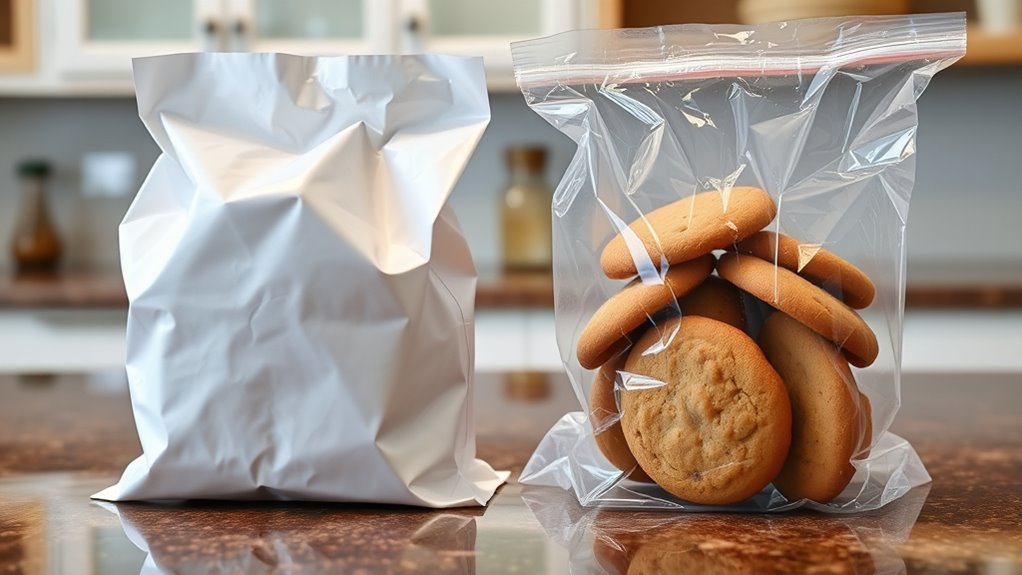
The key to keeping cookies crispy in some bags while others become soggy lies in how moisture is managed. Good cookie packaging uses effective moisture control to prevent humidity from entering or escaping. Some bags are designed with materials that act as moisture barriers, blocking moisture from reaching the cookies and causing them to soften. Others may lack these protective features, allowing moisture to seep in over time. Properly sealed packaging also helps maintain the original texture by limiting air exchange and humidity exposure. When moisture is controlled, cookies stay crisp longer, preserving their freshness and crunch. In addition, understanding moisture barriers and their properties can be crucial for selecting the right packaging. Selecting packaging with high-quality moisture barrier properties can significantly extend shelf life and maintain cookie texture. A proper seal integrity is also essential to prevent air and moisture infiltration that can compromise cookie crispness. In contrast, inadequate moisture barriers cause cookies to absorb ambient humidity, leading to sogginess. So, the secret to crisp cookies is choosing packaging that effectively manages moisture levels.
How Can You Choose Packaging That Keeps Cookies Fresh?

Choosing the right packaging is key to keeping your cookies fresh and crispy. To maximize shelf life and maintain quality, consider these storage tips. First, select resealable bags or airtight containers that prevent moisture exchange. Second, look for packaging with moisture barriers, like foil or metallized films, which block humidity from entering. Third, store cookies in a cool, dry place away from direct sunlight to slow down staling. Proper packaging and storage techniques help preserve texture and flavor longer. Keep in mind that the right environment profoundly affects shelf life; moisture exposure makes cookies go soft faster. By choosing packaging with effective moisture barriers and following these tips, you can enjoy fresh, crispy cookies for days.
How Do Moisture Barriers Help Maintain Cookie Crispness?
Moisture barriers play a crucial role in maintaining cookie crispness by preventing humidity from reaching the cookies. They act as a protective layer, blocking moisture that can make cookies soft and stale over time. Proper storage conditions combined with effective packaging help preserve texture and flavor. Moisture barriers are especially important when you use baking techniques that produce cookies with delicate edges or crisp surfaces, as these can easily soften if exposed to humidity. To understand their effectiveness, consider this table:
| Packaging Material | Effectiveness | Best Storage Conditions |
|---|---|---|
| Aluminum Foil | High | Cool, dry place |
| Plastic Bags | Moderate | Airtight, cool |
| Kraft Paper | Low | Humid environment |
Using the right moisture barrier ensures your cookies stay crispy longer, even in less-than-ideal storage conditions.
Frequently Asked Questions
Are All Moisture Barriers Equally Effective Against Humidity?
Not all moisture barriers offer the same humidity resistance. You’ll find that barrier materials like foil and certain plastics provide stronger protection, keeping cookies fresh longer. Cheaper or thinner materials may let humidity seep through, making your cookies go soft faster. So, when choosing storage, look for bags with high-quality barrier materials designed for maximum humidity resistance. This guarantees your baked goods stay crisp and delicious longer.
Can Packaging Design Influence Moisture Barrier Performance?
Yes, your packaging design can influence moisture barrier performance. When you focus on packaging aesthetics, you guarantee the bag looks appealing while maintaining its integrity. Additionally, choosing effective sealing mechanisms like zip locks or heat seals helps keep moisture out. A well-designed package with strong sealing ensures your cookies stay fresh and crispy longer, preventing them from becoming soft due to humidity. Proper design directly supports the barrier’s effectiveness.
How Long Do Moisture Barriers Typically Last?
Think of moisture barriers as the guardians of freshness, lasting anywhere from a few months to over a year, depending on their material durability. Their shelf life hinges on quality and storage conditions. Properly designed, they keep cookies crisp longer, but over time, even the strongest barriers can degrade, letting moisture in. So, check packaging dates and store in cool, dry places to maximize their protective power.
Do Environmental Conditions Affect Barrier Effectiveness?
Environmental conditions, especially humidity effects, do impact barrier effectiveness. High humidity can weaken packaging durability, allowing moisture to seep in and soften cookies. You should store sealed bags in cool, dry places to maintain their protective qualities. When humidity levels fluctuate or rise, barrier performance may decrease, making your cookies vulnerable to becoming soft. Proper storage and choosing high-quality, moisture-resistant packaging help guarantee the barrier stays effective longer.
Can Moisture Barriers Be Reused or Recycled?
Moisture barriers are typically single-use and aren’t designed for reuse or recycling. However, you can explore recycling options through specialized programs that accept packaging materials. While reuse potential is limited due to contamination and material integrity, some brands offer biodegradable or compostable moisture barriers. Always check local recycling guidelines and manufacturer instructions to guarantee proper disposal and explore eco-friendly alternatives that support sustainability efforts.
Conclusion
Understanding moisture barriers is like having a shield for your cookies, protecting them from becoming soggy. When you choose packaging with high-quality, well-designed barriers, you’re ensuring your treats stay crispy and delicious longer. Think of these barriers as a fortress, guarding against moisture invasion. So, next time you pick a bag, remember it’s not just packaging—it’s the gatekeeper of freshness, keeping your cookies at their best, just like a trusty knight guarding a treasure.
Fall Picks
fall essentials
As an affiliate, we earn on qualifying purchases.