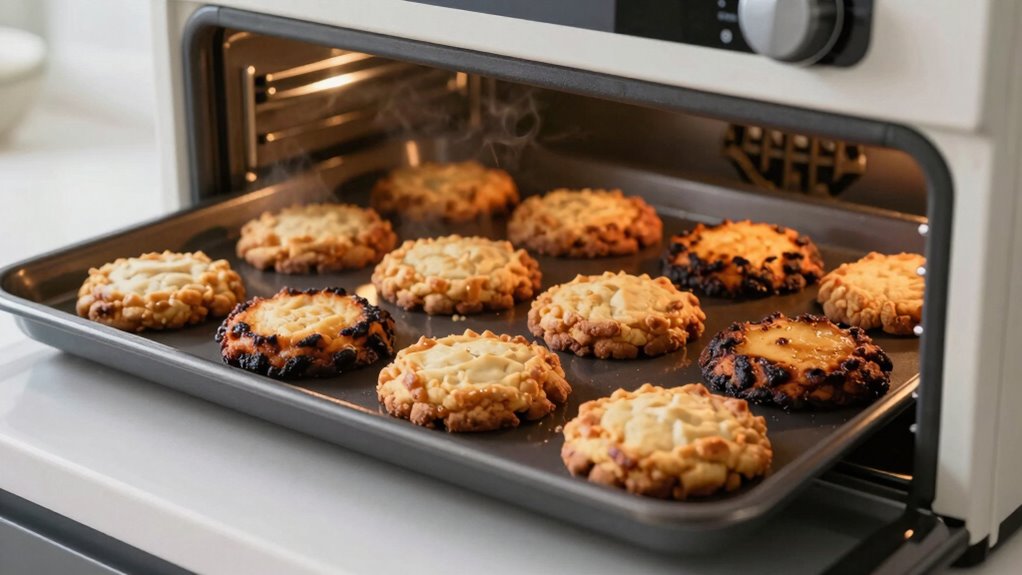
Countertop ovens often burn cookie bottoms faster because they’re smaller and heat more quickly, creating hot spots near the bottom. Limited airflow and blocked vents can make heat uneven, causing uneven baking. Placing cookies too close to the bottom heating element or overcrowding the oven worsens the problem. Adjusting rack position and lowering the temperature can help prevent burning. Want to learn more tips for better results? Keep going to find out how to fix it.
Key Takeaways
- Countertop ovens often have limited airflow, leading to hot spots that cause bottoms to burn quickly.
- They tend to heat faster and may require temperature adjustments to prevent burning.
- Overcrowding the oven restricts air circulation, increasing the risk of uneven baking.
- Placement of racks near the bottom heating element results in direct heat on cookie bottoms.
- Inconsistent or inaccurate temperature settings can cause the oven to run hotter than indicated.
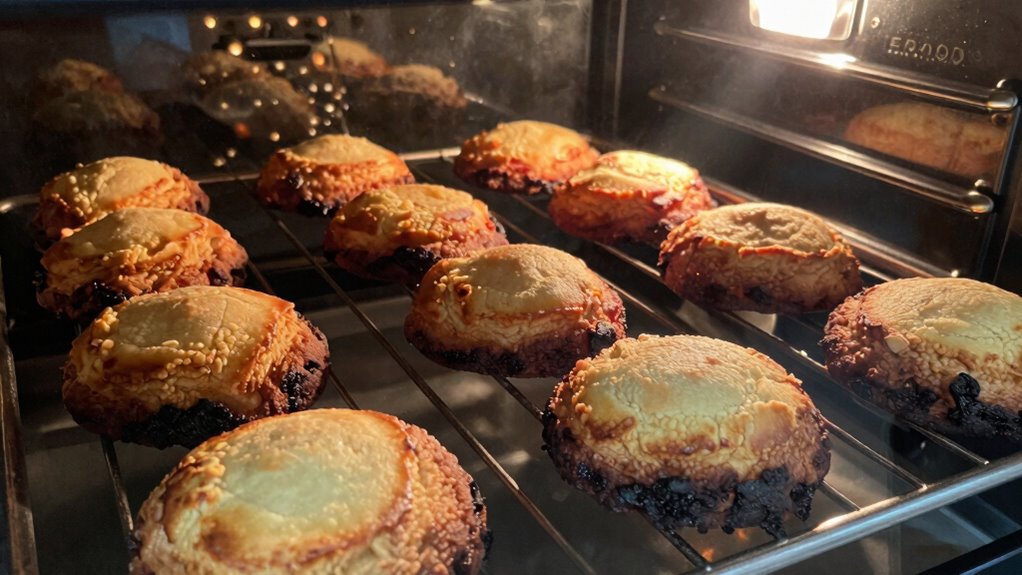
If your countertop oven keeps burning cookies, it can be frustrating and confusing, especially when you’re trying to enjoy freshly baked treats. One common reason for burnt bottoms is uneven air circulation inside the oven. Unlike traditional ovens, countertop models often have limited fans or airflow systems, which can cause hot spots. When air doesn’t circulate properly, the heat concentrates near the bottom, leading to overbaking and burning your cookies’ edges and bottoms before the rest is even done. To fix this, make sure your oven isn’t overcrowded and that the vents are clear. Using a baking sheet with a bit of space around the cookies helps air flow smoothly, reducing the risk of hot spots. Additionally, understanding heat distribution in your oven can help you identify and address uneven baking issues more effectively. Another key factor is setting the right baking temperature. Many people tend to set their oven too high, thinking it will cook cookies faster, but this only increases the chance of burning the bottoms. Countertop ovens often heat up more quickly than regular ovens, so you need to adjust the temperature accordingly. A common mistake is baking at the temperature recommended for a full-sized oven without considering the differences in size and heat distribution. Lowering the temperature slightly, often by 25°F, can ensure your cookies cook evenly without burning. Keep a close eye on the first batch to find the optimal temperature and time for your specific model. Additionally, the position of your oven rack can influence how heat interacts with your cookies. Placing the rack too close to the heating element at the bottom can cause direct heat exposure, resulting in burnt bottoms. Try moving the rack to a middle or upper position, especially if your oven has a strong bottom heat source. This placement allows heat to distribute more evenly across the cookies, preventing hotspots and scorching. Inconsistent baking temperature is another culprit. Some countertop ovens have temperature fluctuations or inaccurate displays, so what you set might not be what you get. Using an oven thermometer can help you verify the actual temperature and make necessary adjustments. If your oven runs hot, keep the temperature lower than usual and monitor the baking process more closely. Knowing how hot spots form and affect baking can help you troubleshoot and improve your results.
oven thermometer for countertop oven
As an affiliate, we earn on qualifying purchases.
As an affiliate, we earn on qualifying purchases.
Frequently Asked Questions
Can Adjusting Oven Temperature Prevent Burning?
Adjusting the oven temperature can definitely help prevent burning. You should start by checking your oven calibration, as an inaccurate setting might cause uneven baking. Using the right baking sheet material, like heavy-duty metal, can also distribute heat more evenly, reducing the risk of burnt bottoms. Lowering the temperature slightly and monitoring your cookies closely will give you better control and perfect results.
Does Oven Rack Placement Affect Cookie Burning?
Oven rack placement definitely affects cookie burning. If you place your rack too low, the bottoms tend to overheat and burn faster because they’re closer to the heating element. Conversely, higher placement allows heat to distribute more evenly, preventing burnt bottoms. Experimenting with rack positions helps you find the perfect spot for consistent baking, especially when you’re trying to avoid overly crisp or burnt cookie bases.
Are Certain Cookie Recipes More Prone to Burning?
Some cookie recipes are more prone to burning because of cookie dough consistency and baking sheet material. Thin or overly greasy dough spreads quickly, risking burn spots on the bottom. Non-stick or dark metal baking sheets absorb more heat, causing the bottoms to burn faster. To prevent this, choose light-colored baking sheets and guarantee your dough has the right consistency, like slightly firmer, to bake evenly and avoid burning.
How Does Baking Time Influence Cookie Bottoms?
Baking time directly affects cookie bottoms, especially considering cookie thickness and baking sheet material. Thicker cookies need more time, but if you bake them too long, the bottoms can burn. Using a dark or non-stick baking sheet heats up faster, increasing the risk of burning. To prevent this, monitor baking time closely, adjust based on cookie thickness, and consider switching to lighter-colored sheets for more even heat distribution.
Do Different Countertop Oven Brands Vary in Burning Issues?
Yes, different countertop oven brands vary in burning issues. You might find some brands better at even heating, while others struggle with hot spots that burn cookie bottoms. Regular oven maintenance helps, but choosing the right brand makes a difference. Using quality baking accessories, like oven thermometers and baking mats, can also prevent burning. Be mindful of these factors to enjoy perfectly baked cookies without the frustration of burnt bottoms.
As an affiliate, we earn on qualifying purchases.
Conclusion
Remember, patience is a virtue, especially when baking cookies in your countertop oven. If you notice the bottoms burning faster, try adjusting the temperature or moving the rack higher. Sometimes, it’s just a matter of trial and error to find what works best for your specific oven. Keep tweaking, and don’t be discouraged—every mistake is a step closer to perfect cookies. After all, practice makes perfect, and even burnt bottoms can teach you something sweet!
As an affiliate, we earn on qualifying purchases.
As an affiliate, we earn on qualifying purchases.