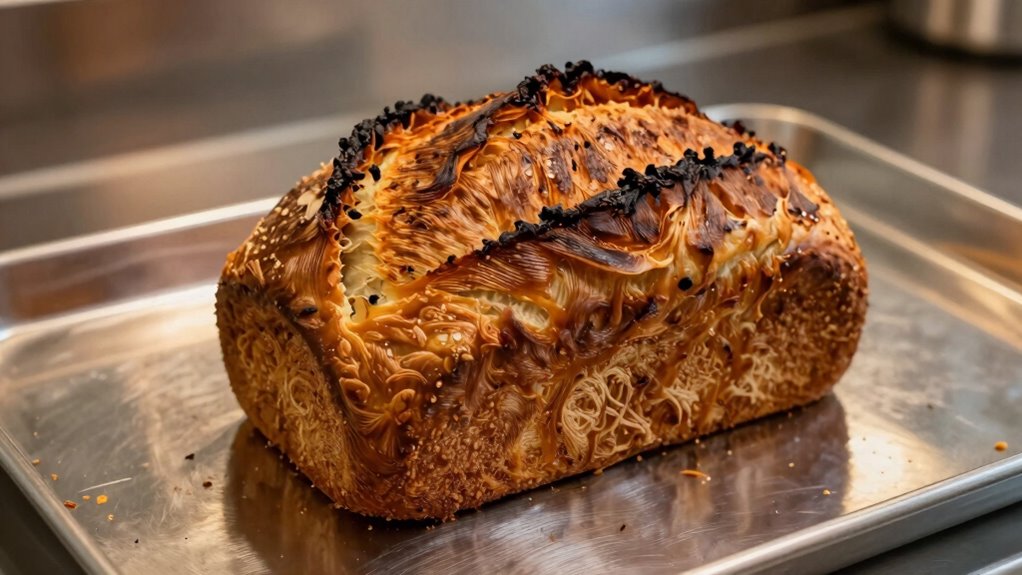
Steel’s rapid heat conduction transfers heat quickly and intensely, causing the crust to brown or burn faster than you might expect. Too high oven temps or insufficient preheating can intensify this effect, leading to uneven baking or premature burning. Adjusting your oven temperature, baking time, and dough hydration can help manage this heat transfer. Understanding steel’s properties allows you to control crust development better and avoid burning, so stay tuned for more tips on optimizing your bake.

Get baking supplies delivered free with Prime
- Fast, free delivery on millions of items
- Prime Video, Amazon Music and more included
- Member-only deals all year
Key Takeaways
- Steel’s high heat conduction rapidly transfers heat, risking overbaking or burning the crust before the interior is done.
- Elevated oven temperatures increase steel’s heat transfer, leading to quicker crust browning or burning.
- Preheated steel ensures even heat distribution, but if too hot, it can cause exterior burning early.
- Lower hydration doughs develop thinner crusts more prone to burning on steel surfaces.
- Adjusting baking time and temperature based on steel’s heat properties helps prevent premature burning.

If you’ve ever noticed your bread burning faster on a steel baking surface than on other materials, you’re not alone. Steel’s excellent heat conduction is often the culprit. Unlike ceramic or stone surfaces, steel transfers heat quickly and intensely, which can cause the outer crust to brown or burn faster if you’re not careful. This rapid heat transfer means that even a slight increase in oven temperature can significantly impact how your bread behaves. Many bakers overlook how the oven temperature interacts with the baking surface. If your oven is set too high, the steel can deliver an aggressive burst of heat directly to the dough’s exterior, leading to burning before the interior is fully baked.
Another key factor is dough hydration, which plays a vital role in how your bread reacts to the baking surface. Higher hydration doughs tend to create a more resilient crust, capable of withstanding the intense heat of steel without burning. Conversely, lower hydration doughs, which have less water, tend to develop a thinner, more delicate crust that’s prone to burning quickly under steel’s rapid heat transfer. If you’re experiencing uneven baking or burnt crusts, adjusting your dough hydration might help. Incorporating more water into your dough can create a more robust crust and better insulate the interior, giving you more control over the baking process on a steel surface. Additionally, understanding heat transfer properties can help you optimize your baking technique and prevent burning. Furthermore, understanding how oven temperature and dough hydration work together can help you prevent burning. When baking on steel, consider lowering the oven temperature slightly and extending your baking time. This gives the heat more time to penetrate the dough evenly without causing the exterior to burn. Additionally, preheating your steel surface thoroughly before placing the dough on it ensures even heat distribution. If your dough has high hydration, placing it on a preheated steel surface can help achieve a crisp crust without overexposing it to direct, intense heat. Recognizing how material properties influence heat transfer can also assist in customizing your baking approach for better results.
Products Worth Considering

Le Creuset Enameled Cast Iron Round Dutch Oven, 5.5 Qt, Flame

Breville Barista Pro Espresso Machine with Grinder, Brushed Stainless Steel

Le Creuset Enamemed Cast Iron Oval Dutch Oven, 5 qt., White/Crucible
As an affiliate, we earn on qualifying purchases.
Frequently Asked Questions
Does Oven Type Affect Bread Burning on Steel Pans?
Yes, oven type affects bread burning on steel pans. You need to pay attention to oven temperature because different ovens heat unevenly or retain heat differently. Steel’s high conductivity means it transfers heat rapidly, so if your oven runs hot or if you set a high temperature, your bread can burn faster on steel pans. Adjusting oven temperature and monitoring baking time helps prevent burning and guarantees even baking.
How Does Bread Thickness Impact Burning on Steel?
Thicker bread tends to burn less on steel because its increased bread density helps insulate the interior, delaying the crust formation that leads to burning. When you make thinner bread, the heat penetrates quickly, causing rapid crust formation and potential burning. To prevent this, monitor your baking time carefully and consider adjusting oven temperature, especially for thinner loaves, to guarantee even baking without burning.
Can Seasoning or Coating Steel Prevent Burning?
Seasoning effects and coating benefits can help prevent bread from burning on steel. By seasoning your steel, you create a non-stick surface that reduces direct contact and heat transfer, minimizing burning. Coatings, like high-temperature resistant oils or specialized oven paints, act as barriers that protect the steel from extreme heat. These methods don’t eliminate heat but help distribute it more evenly, giving your bread a better chance to cook without burning.
What Role Does Humidity Play in Bread Burning?
Humidity effects greatly influence how quickly bread burns. When humidity levels are low, moisture control becomes harder, causing the crust to dry out and burn faster. Conversely, higher humidity helps retain moisture, preventing rapid browning and burning. You should monitor humidity to maintain ideal baking conditions, adjusting oven environments or using humidifiers as needed. Proper moisture management ensures your bread bakes evenly without burning, giving you better control over the final product.
Are Certain Bread Recipes More Prone to Burning on Steel?
Did you know that thin-crust pizza is 30% more likely to burn on steel due to its delicate bread crust? Certain recipes with sugar or fat content tend to burn faster because they caramelize more quickly at high oven temperatures. When baking on steel, you should lower the oven temperature slightly or adjust the baking time to prevent the bread crust from burning, especially with recipes sensitive to direct heat.
Conclusion
So, next time you slide that dough onto the steel, remember it’s like setting a fire to a dry forest—you’re racing against the heat’s swift dance. Steel’s fierce heat can turn your golden crust into a scorched landscape faster than you imagine. Keep an eye on the oven’s heartbeat and adjust your timing; otherwise, your perfect loaf risks becoming a charred relic. Master the rhythm, and your bread will rise beautifully, not burn in haste.