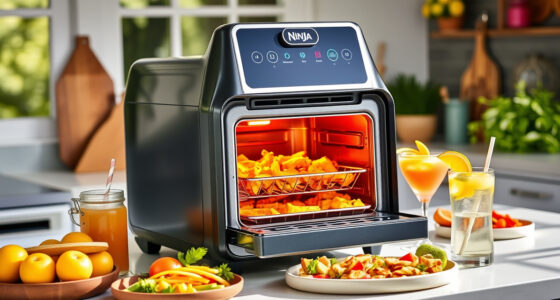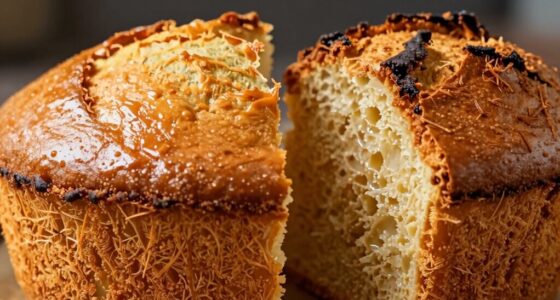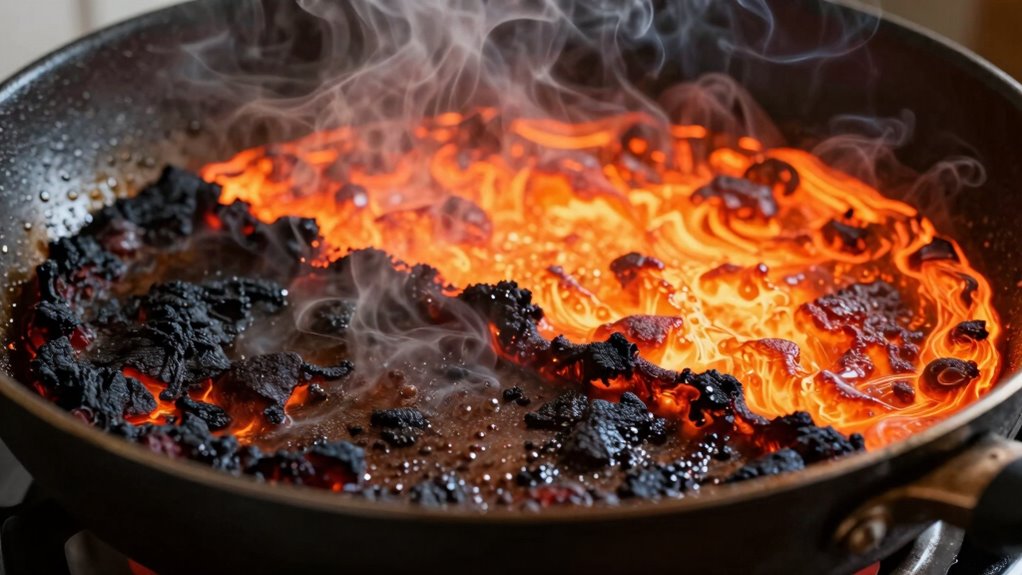

The difference between top heat and bottom heat in your oven impacts how your baked goods turn out. Top heat mainly browns and crisps the exterior, while bottom heat helps foods rise initially and cooks the interior evenly. Knowing when to use each can prevent uneven baking or burning. Adjusting these heat sources based on your recipe is key. Keep exploring to discover even more ways to master your oven’s heat for perfect results.

Get baking supplies delivered free with Prime
- Fast, free delivery on millions of items
- Prime Video, Amazon Music and more included
- Member-only deals all year
Key Takeaways
- Top heat primarily browns and crisps the surface, while bottom heat supports rising and interior baking.
- Using top heat in final stages enhances crust color and texture.
- Bottom heat provides even initial baking and helps prevent burning of the top.
- Many ovens can operate top and bottom elements independently, allowing precise control.
- Properly leveraging both heat sources improves baking consistency and professional results.
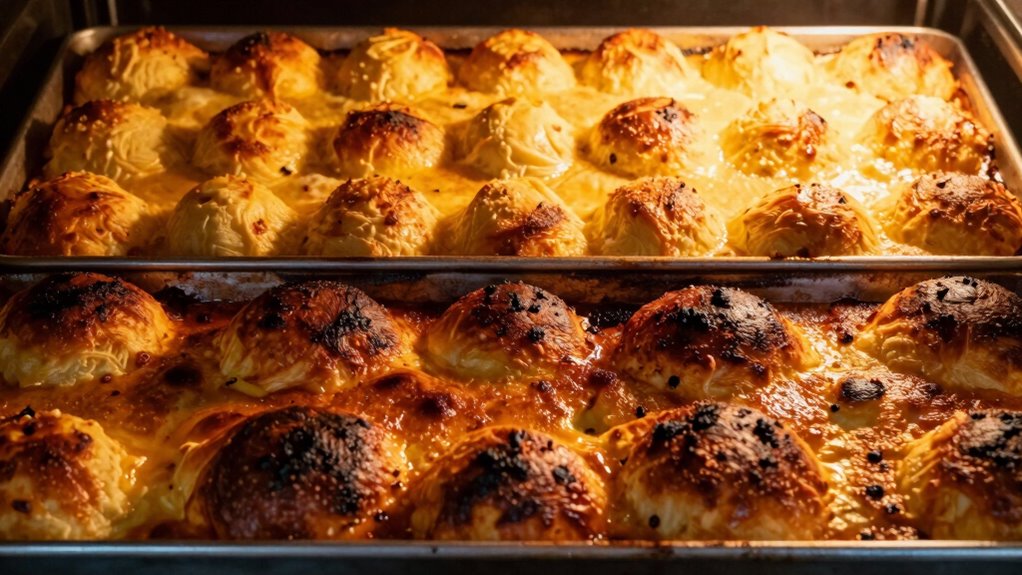
When it comes to baking, understanding the difference between top heat and bottom heat can greatly impact your results. Knowing how each influences your baked goods helps you achieve better baking consistency and avoid common issues like uneven browning or undercooked centers. Most home ovens have a heating element at the bottom and sometimes one at the top, but many bakers don’t realize that these elements can operate independently or together, depending on your oven’s settings. Recognizing when to use top heat or bottom heat is key to mastering your recipes and ensuring consistent results.
Understanding when to use top or bottom heat ensures even baking and perfect results every time.
If your oven is properly calibrated, you’ll notice that the heat distribution is more even, making it easier to control how your baked items turn out. However, many ovens aren’t perfectly calibrated, which can cause hot spots or uneven heating. This is why understanding whether to rely on top heat or bottom heat is crucial. For instance, if you’re baking bread, bottom heat is generally more effective for providing the initial rise and ensuring a well-baked interior. Conversely, if you’re browning a casserole or finishing a dish with a crispy top, switching to top heat or using the broiler setting can produce better visual appeal and texture.
Using top heat during the final minutes of baking can give your dishes that desirable golden crust without overcooking the interior. Conversely, if you notice your baked goods aren’t cooking evenly—say, the tops are browning too fast or the insides remain underdone—you might need to adjust the oven’s heat source. Sometimes, simply switching to bottom heat or lowering the oven temperature slightly can improve baking consistency. This adjustment helps you avoid burning the top or leaving the bottom undercooked, which is a common problem when oven calibration is off. Proper oven calibration and understanding its heat distribution can significantly improve your baking outcomes. Additionally, being aware of your oven’s heating elements and how they operate can help you make more precise adjustments for different recipes. Knowing the difference between various heating modes, such as convection and traditional baking, can also influence how heat is distributed and how you should adjust your baking technique.
Modern ovens with multiple heating modes such as convection or fan-assisted baking can also influence how heat is distributed, so understanding these modes is essential for precise baking. When using these modes, understanding whether the heat comes primarily from the top or bottom helps you tweak your baking process accordingly. If you’re unsure about your oven’s calibration, it’s worth testing it with an oven thermometer to see how accurate the temperature is and make adjustments as needed. Properly understanding the heat distribution in your oven ensures that whether you’re relying on top heat or bottom heat, you’ll have a more predictable and consistent baking experience, avoiding surprises and achieving professional-looking results every time.
As an affiliate, we earn on qualifying purchases.
Frequently Asked Questions
How Does Oven Type Affect Top and Bottom Heat?
Your oven type influences how top and bottom heat work. Convection ovens, with efficient airflow, distribute heat evenly, reducing hot spots, while traditional ovens rely more on oven insulation, which can cause uneven heating. In convection ovens, top and bottom heat work together more effectively, improving baking results. Conversely, in non-convection models, poor insulation may lead to uneven heat, making it harder to achieve consistent baking or roasting outcomes.
Can Adjusting Heat Settings Improve Baking Results?
Adjusting heat settings can considerably improve your baking results, especially when you consider temperature calibration and heat distribution. When you fine-tune your oven’s temperature, you guarantee consistent heat, preventing uneven baking. Sometimes, a simple increase or decrease in the heat setting aligns the actual temperature with the dial, leading to better crusts and evenly baked goods. It’s a coincidence that small adjustments often yield noticeable improvements in your baking outcomes.
What Foods Benefit Most From Top Heat?
Foods like casseroles, gratins, and dishes with a crispy topping benefit most from top heat. It helps create a browned, crispy exterior without losing food moisture inside. Using top heat in your cooking techniques guarantees you achieve a perfect crust while keeping the interior moist. This method is especially ideal for finishing baked dishes or broiling, where a direct heat source on top enhances texture and flavor effectively.
How to Prevent Uneven Cooking With Bottom Heat?
Did you know uneven cooking occurs in over 30% of home ovens? To prevent this with bottom heat, make sure your oven has good insulation, which maintains consistent temperature and prevents heat loss. Also, improve heat circulation by avoiding overcrowding and rotating your dishes halfway through. These steps help create even cooking results, so your baked goods come out perfectly every time.
Do Different Cookware Materials Influence Heat Distribution?
Different cookware materials considerably influence heat distribution because of their heat conduction properties. For example, copper and aluminum excel at conducting heat evenly, preventing hot spots. Cast iron retains heat well but heats slowly, providing steady warmth. Stainless steel offers moderate conduction but often needs better heat conduction layers. Your choice of cookware material impacts how evenly heat spreads, affecting cooking results, so select based on the dish you’re preparing and desired heat control.
baking oven with top and bottom heat control
As an affiliate, we earn on qualifying purchases.
As an affiliate, we earn on qualifying purchases.
Conclusion
So, now you see how top heat and bottom heat are like twin flames guiding your baking adventure. One warms from above, like a gentle sunbeam, while the other rises from below, like a cozy fire. Understanding their dance helps you craft perfect pastries and crispy pies, turning your oven into a symphony of flavor. With this knowledge, you’re not just baking—you’re conducting a delicious masterpiece, all thanks to the subtle magic of heat.
oven thermometer for even baking
As an affiliate, we earn on qualifying purchases.
As an affiliate, we earn on qualifying purchases.
As an affiliate, we earn on qualifying purchases.
Fall Picks
fall essentials
As an affiliate, we earn on qualifying purchases.