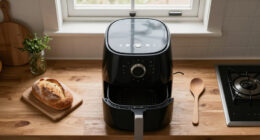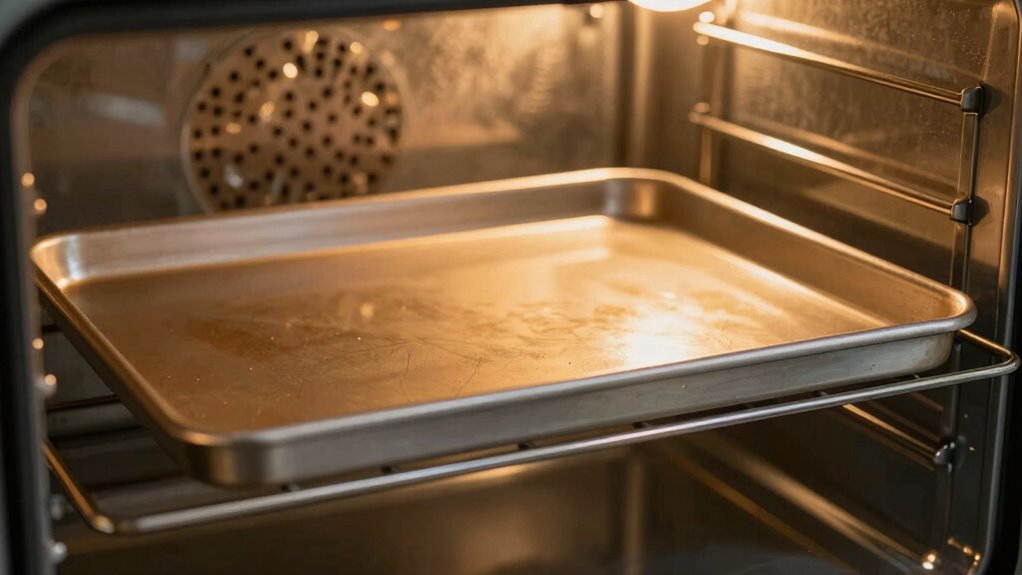

Using thin bakeware reveals every weakness in your oven because it heats up quickly and doesn’t hold heat well, leading to frequent temperature fluctuations. This makes it hard to get even baking results and exposes issues like uneven heat distribution, faulty calibration, or damaged heating elements. Over time, thin materials can warp or suffer damage faster, further highlighting your oven’s flaws. Stick with this topic to uncover how your oven’s performance truly impacts your baking.
Key Takeaways
- Thin bakeware heats quickly and doesn’t retain heat, revealing fluctuations and uneven temperature distribution in the oven.
- Its sensitivity to temperature changes exposes weaknesses in oven calibration and heat stability.
- The material’s lack of durability highlights issues like warping and damage caused by inconsistent heat exposure.
- Thin bakeware acts as a mirror, revealing flaws in heat transfer and oven performance during baking.
- Its tendency to warp amplifies problems with thermal stability, making oven heat inconsistencies more noticeable.
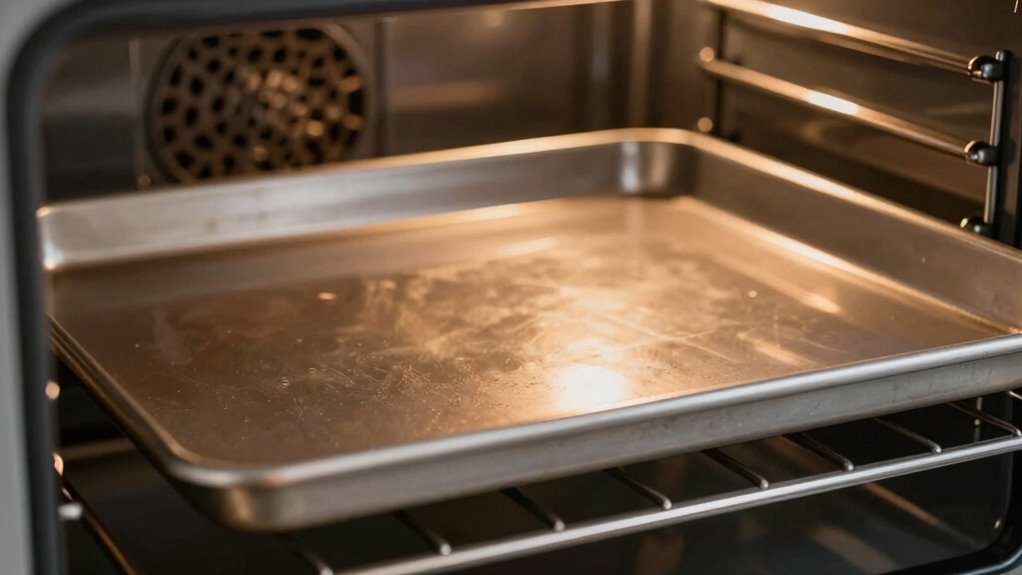
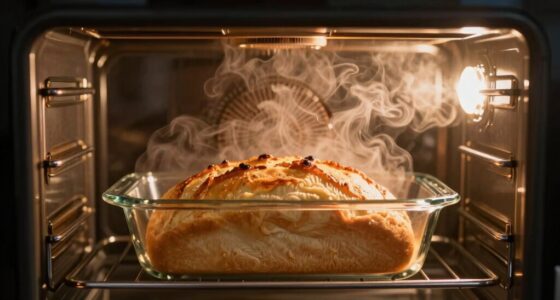
Although thin bakeware heats quickly and doesn’t retain heat well, it’s more sensitive to fluctuations in oven temperature. This sensitivity can make it harder to achieve precise results, especially when baking delicate items like cakes or soufflés that require a steady, even heat. When your bakeware is thin, any inconsistency in your oven’s temperature becomes magnified, exposing weaknesses in your oven’s ability to maintain a stable environment. As a result, you might find yourself constantly adjusting the oven or baking at lower temperatures to compensate, which can be frustrating and may not always yield the best results. Moreover, thin bakeware often lacks the material durability necessary to withstand prolonged exposure to high heat, further emphasizing the oven’s shortcomings. In essence, thin bakeware acts as a mirror, revealing flaws in your oven’s performance — from material durability issues to uneven heat distribution. Rather than masking these shortcomings, it makes them more apparent, prompting you to reconsider your choice of bakeware if you want more consistent and reliable baking outcomes. Additionally, the thermal properties of thin bakeware can lead to quicker warping or damage over time, exposing further issues with oven performance. The increased sensitivity of thin material also means that any underlying oven calibration problems become much more noticeable during baking.
Another important factor is that thin bakeware can sometimes cause an uneven heat transfer, which further highlights problems with your oven’s heating elements.
oven thermometer for accurate temperature calibration
As an affiliate, we earn on qualifying purchases.
As an affiliate, we earn on qualifying purchases.
Frequently Asked Questions
How Can I Tell if My Oven Has Weaknesses?
You can tell if your oven has weaknesses by checking its insulation and temperature calibration. If your baked goods burn quickly or cook unevenly, it’s a sign your oven insulation might be compromised, allowing heat to escape or unevenly distribute. Use an oven thermometer to verify if the temperature calibration is accurate; if it’s off, your oven’s performance could be affected, exposing weaknesses that thin bakeware can highlight.
Are There Specific Oven Models More Affected by Thin Bakeware?
Certain oven models with thinner insulation or less advanced heat distribution are more affected by thin bakeware. Ovens with poor insulation struggle to maintain consistent temperatures, exposing weaknesses when using metal or glass bakeware materials that conduct heat quickly. If your oven lacks even heat distribution, thin bakeware can cause uneven baking, revealing flaws in the oven’s design. Upgrading to models with better insulation and balanced heat flow can reduce these issues.
Does Thin Bakeware Impact Cooking Times?
Thin bakeware can impact cooking times because it has less material durability, causing it to heat up and cool down quickly. This uneven heat distribution means your food might cook faster or slower than expected, depending on how well the bakeware conducts heat. You should keep an eye on your dishes and adjust cooking times accordingly, especially if you’re using thin materials that don’t evenly distribute heat.
How Do I Prevent Damage to My Oven With Thin Bakeware?
To prevent damage to your oven with thin bakeware, focus on material durability and proper handling techniques. Always use oven mitts to carefully place and remove your bakeware, avoiding sudden impacts that could cause warping or cracks. Choose high-quality, heat-resistant materials designed for oven use, and guarantee your bakeware is evenly supported during baking. These steps help protect both your bakeware and your oven from unnecessary stress and damage.
Are There Safer Alternatives to Thin Bakeware?
Think of safer bakeware options as shields protecting your oven’s integrity. You should opt for thicker, insulated bakeware that enhances oven heat distribution, reducing stress on your oven. These alternatives help prevent hot spots and uneven cooking, safeguarding your appliance. Materials like ceramic or heavy-duty metal with good bakeware insulation make better choices, giving you peace of mind while delivering evenly baked treats without exposing your oven to unnecessary strain.
As an affiliate, we earn on qualifying purchases.
Conclusion
In the end, thin bakeware acts like a spotlight, revealing every flaw in your oven’s performance. It’s almost as if your oven is trying to hide behind a curtain, but the thin material peeks through, exposing every weakness. So, if you want perfect baked goods, don’t ignore these signs. Invest in sturdier bakeware, and your oven will thank you—because, honestly, a weak oven paired with flimsy bakeware is a recipe for disaster.
insulated oven mitts for high heat
As an affiliate, we earn on qualifying purchases.
As an affiliate, we earn on qualifying purchases.
As an affiliate, we earn on qualifying purchases.