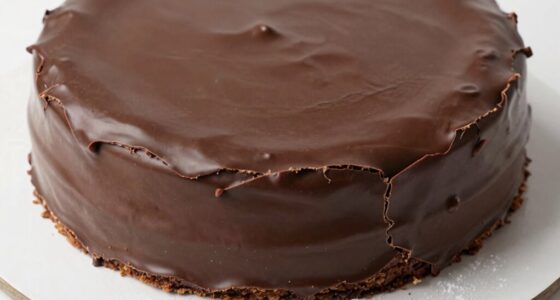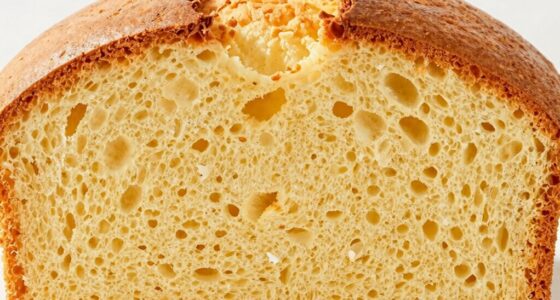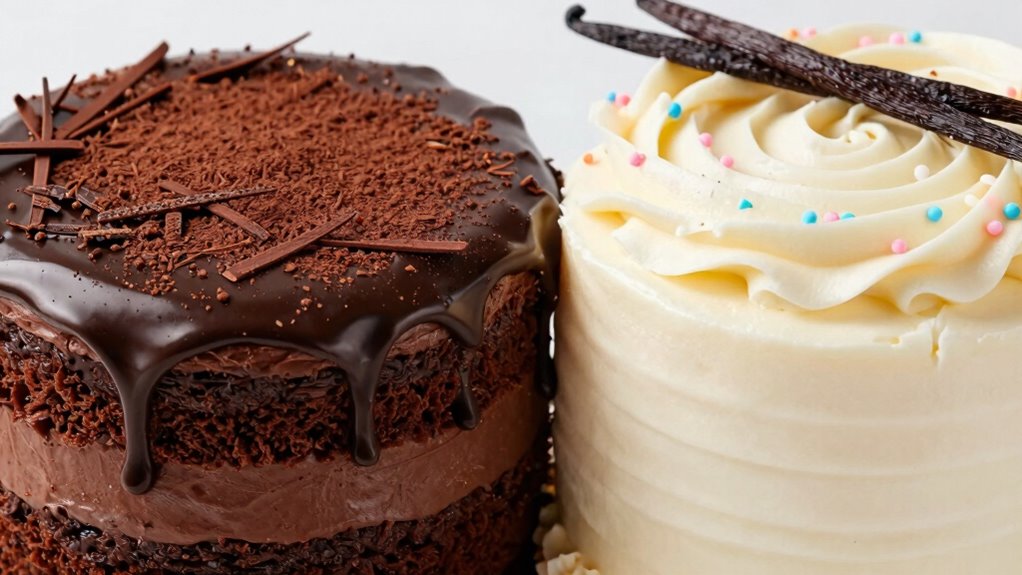

Chocolate and vanilla cakes behave differently because their key ingredients interact uniquely during baking. Cocoa’s fats and polyphenols make the cake denser, moister, and faster browning, while vanilla relies on gentle leavening for a lighter crumb. Cocoa’s acidity affects leavening and flavor, and overmixing vanilla batter can toughen it. These chemical reactions and ingredient balances influence texture, appearance, and flavor. Keep exploring to discover how precisely these differences shape each cake’s final look and feel.

Get baking supplies delivered free with Prime
- Fast, free delivery on millions of items
- Prime Video, Amazon Music and more included
- Member-only deals all year
Key Takeaways
- Cocoa’s fats and polyphenols affect moisture, browning, and texture differently than vanilla’s simpler ingredients.
- Cocoa’s acidity reacts with baking soda, influencing leavening and flavor, unlike vanilla.
- Chocolate cake’s denser, moister crumb results from cocoa compounds, whereas vanilla cake is lighter and airier.
- Cocoa accelerates browning and affects appearance, requiring different baking adjustments than vanilla.
- Ingredient interactions in cocoa alter chemical reactions, leading to distinct rise, flavor, and texture behaviors.
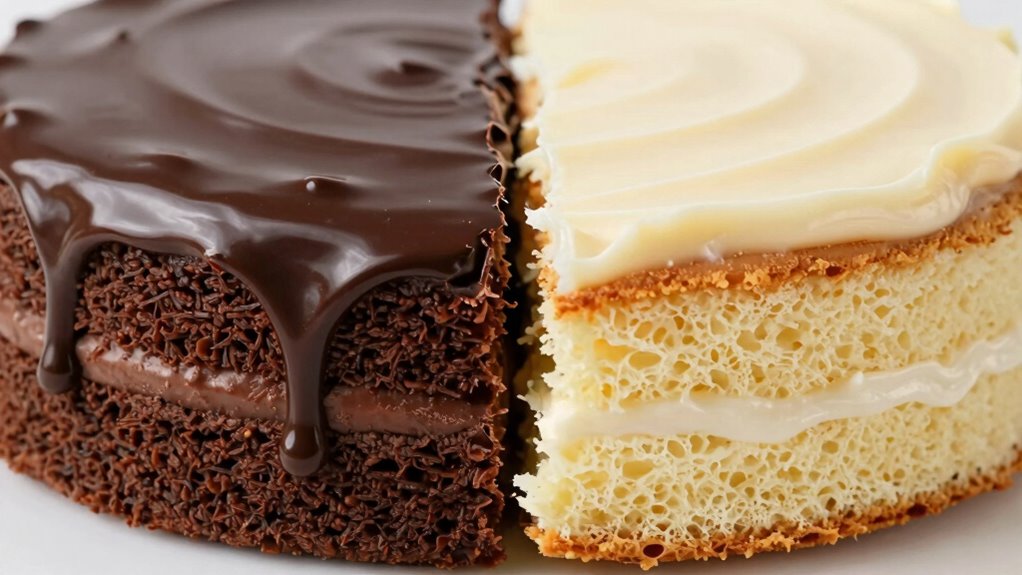
When baking chocolate and vanilla cakes, you might notice they don’t behave exactly the same way in the oven. This difference mainly comes down to flavor chemistry and how each cake’s ingredients respond during baking. Chocolate cake relies heavily on the unique compounds found in cocoa, which contain fats, proteins, and polyphenols that influence both flavor and texture. Vanilla cake, on the other hand, depends more on the delicate balance of flour, sugar, eggs, and vanilla extract to develop its light, airy crumb. Understanding these differences helps you choose the right baking techniques to get each cake just right.
Flavor chemistry plays a key role in why chocolate and vanilla cakes behave differently. Cocoa contains natural acids and alkaloids, which react during baking to produce complex flavors and affect batter structure. These compounds can also influence how the cake rises and its moisture retention. Vanilla extract adds aromatic compounds that enhance sweetness and aroma but don’t considerably alter the batter’s chemical reactions. Because of these flavor components, chocolate cakes tend to be denser and moister, as the fats and polyphenols in cocoa interact with other ingredients during baking. Additionally, the chemical reactions in baking, such as Maillard browning, can vary depending on the presence of cocoa solids, further affecting the final texture and appearance.
Baking techniques are also essential in determining how each cake turns out. With chocolate cake, you might need to adjust oven temperature or baking time slightly to prevent overbaking or drying out the moist cocoa batter. The fat content from cocoa can cause the cake to brown faster, so keeping an eye on the color is important. For vanilla cake, a lighter touch with mixing and careful measurement of leavening agents like baking powder or baking soda is important to achieve that soft, tender crumb. Overmixing vanilla batter can lead to a tougher texture, so gentle folding is often recommended. Moreover, ingredient interactions during baking can further influence the overall outcome, making precise measurements and techniques crucial.
Moreover, the leavening process responds differently in each cake. Cocoa’s acidity can react with baking soda, producing carbon dioxide that helps the cake rise, but too much can cause a bitter taste. Vanilla cakes often rely on a balanced amount of leavening to produce a fine, uniform crumb. The different reactions mean you may need to tweak ingredients or techniques slightly to optimize each cake’s rise and texture.
As an affiliate, we earn on qualifying purchases.
Frequently Asked Questions
How Does the Baking Temperature Affect Each Cake’s Texture?
You’ll see that baking temperature impacts each cake’s texture differently. Higher temperatures can make chocolate cake denser and fudgier, while vanilla cake remains light and fluffy. Proper ingredient sourcing guarantees the right moisture and structure. As you explore flavor pairing, remember that precise temperature control helps bring out the best qualities of each cake, highlighting their unique textures and flavors. Adjusting heat levels can truly transform your baking results.
Do Different Types of Cocoa or Vanilla Alter Cake Behavior?
Different types of cocoa or vanilla substantially alter your cake’s flavor and texture. For instance, Dutch-processed cocoa provides a richer, smoother flavor, while natural cocoa adds brightness and acidity. Vanilla varieties like Madagascar or Tahitian bring distinct aroma profiles, influencing flavor pairings and serving suggestions. Choosing the right type enhances your cake’s depth, making it perfect for pairing with complementary fillings or toppings, elevating your baking experience.
Can Ingredient Substitutions Change How These Cakes React During Baking?
Yes, ingredient substitutions can change how cakes react during baking. If you swap ingredients, the flavor intensity and ingredient freshness influence the cake’s structure and moisture. For example, using a different type of oil or sugar affects crumb and rise, while replacing vanilla or cocoa alters flavor depth. You’ll notice these changes because baking chemistry relies heavily on ingredient qualities, which can shift how the batter transforms in the oven.
How Does Cake pH Influence Their Rise and Crumb?
Your cake’s pH level influences its rise and crumb by affecting how leavening agents like baking soda react. A higher pH (more alkaline) creates a coarser crumb and promotes better rise, especially in chocolate cake, which benefits from a slightly more alkaline environment for richer flavor pairing. Vanilla cake’s pH should be balanced for a tender crumb. This balance also guides your frosting options, as certain flavors complement different pH levels.
Are There Specific Tips for Achieving Perfect Chocolate vs. Vanilla Cake?
To achieve perfect chocolate versus vanilla cake, focus on flavor pairing and decoration techniques. For chocolate cake, use high-quality cocoa and pair it with bold fillings like raspberry or coffee, enhancing depth. Vanilla cakes benefit from delicate flavor pairings like fresh berries or citrus. Decorate with contrasting colors or textures to highlight each cake’s unique qualities. Proper mixing and baking times also guarantee a moist crumb, making your cakes stand out beautifully.
As an affiliate, we earn on qualifying purchases.
Conclusion
Just like a tale as old as time, chocolate and vanilla cakes remind us that ingredients and chemistry dance together differently, shaping each bite. Embrace these differences, for they’re the secret behind their unique personalities—one bold, one sweet. As the story of flavors unfolds, you see that understanding these subtle shifts is what makes baking an art. So, when you next bake, remember: every cake has its own story waiting to be told.
As an affiliate, we earn on qualifying purchases.
As an affiliate, we earn on qualifying purchases.
Halloween Picks
halloween
As an affiliate, we earn on qualifying purchases.