
You’ll find that bottom heat is more critical than peak temperature because it guarantees even cooking and good rise in baked goods. Relying only on high oven temps can give you uneven browning or undercooked areas. Proper heat from the bottom promotes consistent texture, color, and structure, especially for breads and pies. If you want your baking to turn out perfectly, focusing on how heat reaches all parts of your oven is key—there’s more to discover behind this approach.

Get baking supplies delivered free with Prime
- Fast, free delivery on millions of items
- Prime Video, Amazon Music and more included
- Member-only deals all year
Key Takeaways
- Bottom heat ensures even cooking and proper browning, preventing underdone or overcooked spots.
- Consistent bottom heat promotes uniform rise and texture in baked goods.
- Peak temperature alone doesn’t guarantee even heat distribution across the oven cavity.
- Proper bottom heat improves heat conduction, leading to better crust formation and overall quality.
- Relying on bottom heat control helps troubleshoot and optimize baking results more effectively.

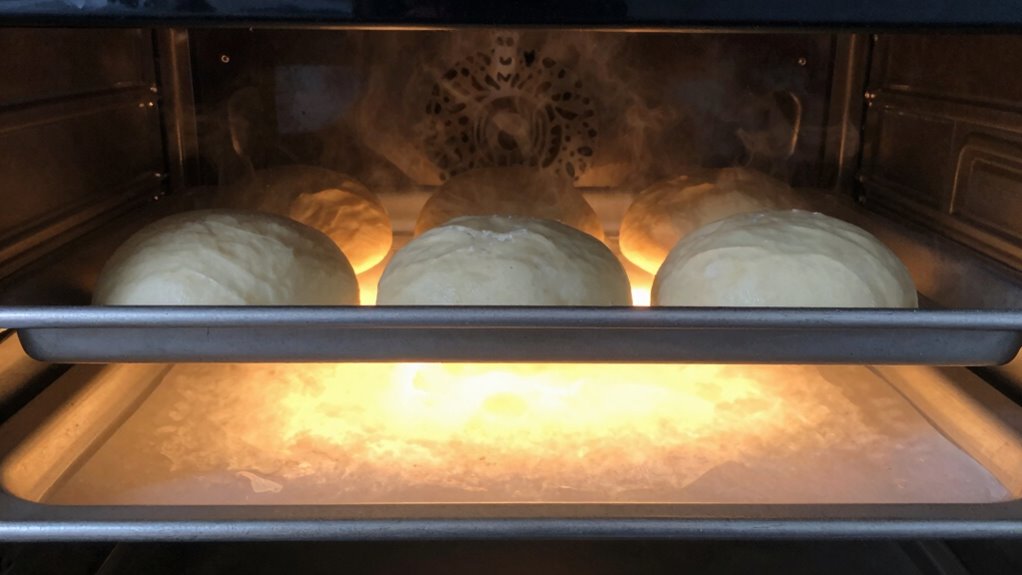
Have you ever wondered why your baked goods sometimes turn out uneven or fail to rise properly? The answer often comes down to the way heat is distributed in your oven. Many bakers focus solely on reaching a high peak temperature, but what really matters is how that heat is spread throughout the oven cavity. Proper heat distribution ensures that your baked goods cook evenly, leading to consistent results every time. When heat isn’t evenly distributed, parts of your baked item might overcook while others remain underdone, ruining the texture and appearance. This is why baking consistency hinges more on how heat reaches every corner of the oven rather than just hitting a specific temperature. Heat conduction plays a critical role in this process, ensuring that the heat transfers efficiently from the oven’s bottom to your baked goods. Additionally, many modern ovens incorporate features like convection fans to improve heat circulation, which helps distribute heat more evenly across the entire cavity. Recognizing the significance of heat distribution can help you optimize your baking setup for better results. For instance, using a baking stone or steel can significantly improve bottom heat and overall heat transfer, resulting in more evenly baked items. Ensuring proper oven calibration can also make a notable difference in achieving uniform heat. Focusing solely on peak temperature can be misleading. You might have an oven that reaches a high temperature, but if that heat isn’t distributed well, your baked goods won’t turn out as expected. An oven’s actual baking performance depends on consistent heat flow, not just the maximum temperature on the dial. When the heat distribution is flawed, it affects baking consistency, resulting in uneven textures, inconsistent rise, and uneven browning. That’s why many professional bakers emphasize the importance of monitoring and controlling bottom heat, often using baking stones or steel to improve Heat conduction from below. Ultimately, understanding the importance of bottom heat over just reaching a high peak temperature helps you troubleshoot common baking problems. It shifts your focus from just setting the oven to a certain temperature to ensuring that heat is evenly distributed throughout the baking process. When your oven provides consistent heat from the bottom, you’re more likely to produce baked goods that are evenly cooked, beautifully browned, and perfectly risen—regardless of the peak temperature. This is why bottom heat matters more than peak temperature in achieving reliable, high-quality baking results.
baking stone for even heat distribution
As an affiliate, we earn on qualifying purchases.
As an affiliate, we earn on qualifying purchases.
Frequently Asked Questions
How Does Bottom Heat Influence Baking Texture Differently Than Top Heat?
Bottom heat influences baking texture by promoting even heat convection at the base, which helps develop a crisp crust. Unlike top heat, bottom heat directly reaches the dough’s underside, encouraging better crust development and preventing sogginess. You’ll notice a more uniform texture because bottom heat guarantees the heat penetrates deeply, creating a sturdy, golden crust while keeping the interior moist. This control over heat convection improves overall bake quality.
Can Bottom Heat Prevent Over-Browning on the Crust?
Like a gentle hand guiding your baking, bottom heat can prevent over-browning on the crust. By improving heat distribution, it evenly browns the crust without turning it too dark, keeping the desired coloration intact. This helps you avoid a burnt or overly dark crust, ensuring your baked goods look perfect and taste just right. Bottom heat acts as a safeguard, maintaining ideal crust coloration while enhancing overall baking quality.
What Types of Baked Goods Benefit Most From Bottom Heat?
You’ll find that baking crusts, like artisan bread and pizza, benefit most from bottom heat because it promotes even baking and helps retain moisture. This direct heat source ensures the crust develops a crisp texture without over-browning, while keeping the interior moist. By focusing heat at the bottom, you achieve a well-baked crust with better structure, making your baked goods more delicious and visually appealing.
How Do I Adjust My Oven for Optimal Bottom Heat?
Think of your oven as a symphony conductor, guiding heat flow for harmony. To adjust for ideal bottom heat, start with oven calibration—ensuring the temperature matches your display. Use an oven thermometer to check heat distribution, and consider placing a pizza stone or baking steel on the rack below your baked goods. These tools help balance bottom heat, creating even, golden crusts and perfectly baked treats.
Does Bottom Heat Affect the Overall Baking Time?
Yes, bottom heat can affect your overall baking time. If your oven’s calibration isn’t accurate, the bottom may be hotter or cooler than expected, causing uneven cooking. When you adjust the baking temperature, it influences how quickly heat reaches the bottom, impacting the total baking time. Ensuring your oven maintains proper calibration helps achieve consistent bottom heat, so your baked goods cook evenly and within the expected timeframe.
As an affiliate, we earn on qualifying purchases.
Conclusion
So, don’t just focus on reaching that peak temperature; remember, it’s the consistent bottom heat that truly shapes your baking. Picture your oven as a cozy, warm blanket wrapping around your bread, gently encouraging it to rise and develop a perfect crust. If you overlook this warmth, your loaves might look good but lack that tender crumb inside. Keep the bottom heat steady, and your baked goods will turn out beautifully every time.
baking steel for consistent heat
As an affiliate, we earn on qualifying purchases.
As an affiliate, we earn on qualifying purchases.
As an affiliate, we earn on qualifying purchases.
Halloween Picks
halloween
As an affiliate, we earn on qualifying purchases.