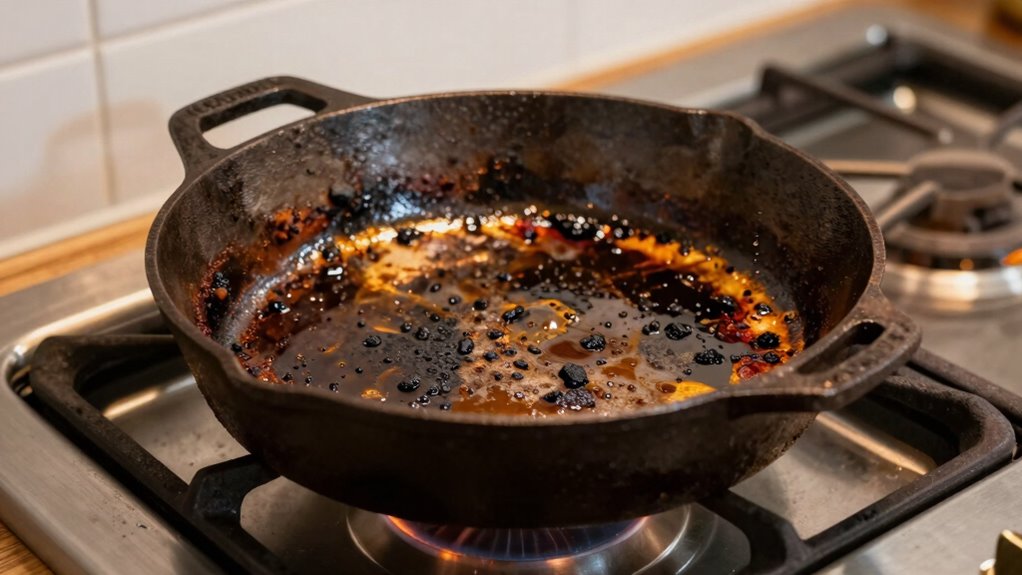

Dark pans absorb heat quickly and transfer it faster, which can cause your baked goods to brown or burn too easily. This often leads to uneven baking, with edges over-browning while the interior remains undercooked. Without adjusting your oven temperature or baking time, these pans can turn a simple recipe into a challenge. By understanding how dark pans behave, you can prevent these issues and improve your baking outcomes—stick around to learn exactly how to do that.

Get baking supplies delivered free with Prime
- Fast, free delivery on millions of items
- Prime Video, Amazon Music and more included
- Member-only deals all year
Key Takeaways
- Dark pans absorb heat quickly, causing over-browning and uneven baking if adjustments aren’t made.
- Faster heat transfer from dark pans can lead to over-baked edges before the interior is cooked.
- Without modifying baking time or temperature, dark pans increase the risk of burnt or undercooked baked goods.
- The heat-conducting properties of dark pans make precise timing crucial to prevent recipe failures.
- Using dark pans without proper adjustments often results in inconsistent textures and appearance in baked items.
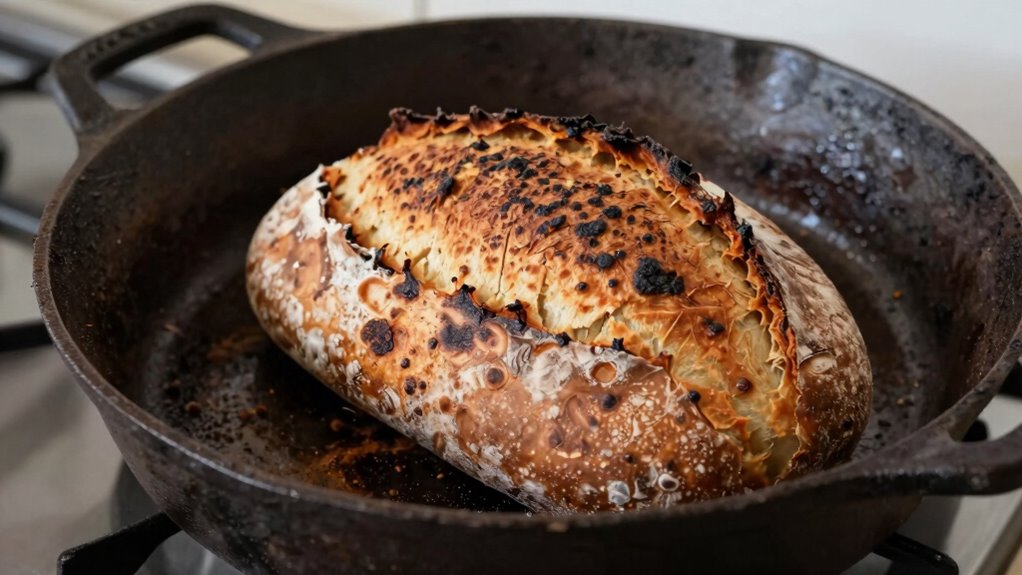
Have you ever noticed your baked goods turning out darker than expected when using certain pans? If so, you’re not alone. Dark pans, especially those made of metal or with non-stick coatings, tend to absorb and conduct heat differently than lighter-colored pans. This heat absorption effect can cause your treats to cook faster and brown more quickly on the outside, often leading to over-baked edges or uneven results. As a result, you might find yourself constantly adjusting your baking time, trying to prevent burning while still ensuring the inside is cooked through. But these adjustments aren’t always straightforward, and they can sometimes lead to inconsistent outcomes.
Dark pans absorb heat faster, causing baked goods to brown unevenly and often requiring time adjustments.
The main issue with dark pans lies in their ability to absorb heat more efficiently. When heat hits a dark surface, it’s quickly transferred into the pan and then into your batter or dough. This accelerated heat transfer means your baked goods reach the desired temperature sooner, requiring you to modify your usual baking time. Without these baking time adjustments, you risk over-browning or burning the exterior before the interior is fully baked. For example, a cake baked in a dark pan might need 10-15 minutes less than in a lighter pan, but figuring out the exact adjustment can be tricky. You might also notice that the crust forms faster, which can affect the texture and appearance of your baked goods. Additionally, the material composition of your pans can help you better predict their heat conduction properties. Recognizing the heat conduction characteristics of different pans can help you choose the right one for specific recipes, ensuring better results. Moreover, being aware of pan material can help you anticipate how heat is distributed and prevent unexpected outcomes.
Understanding these heat absorption effects and making appropriate baking time adjustments can drastically improve your results. It’s about recognizing that the pan’s color and material influence how heat interacts with your ingredients. Once you adapt your approach—lowering oven temperature, shortening baking time, or rotating pans—you’ll notice a significant difference. You can also experiment with baking techniques to further optimize outcomes based on pan types. Your baked goods will come out more evenly baked, with the right color and texture. So, next time you use a dark pan, remember that it’s not just about following the recipe but also about adjusting for these heat absorption effects to turn oven problems into recipe successes. Being aware of how different pan materials impact heat distribution can help you fine-tune your baking process even further.
As an affiliate, we earn on qualifying purchases.
Frequently Asked Questions
Do Dark Pans Require Different Oven Temperature Settings?
Yes, dark pans often require lower oven temperatures because their material properties, especially heat conduction, cause them to absorb and transfer heat more efficiently. This means they can cause baked goods to brown or burn faster. To prevent overbaking, reduce the recipe’s suggested temperature by about 25°F. Keep an eye on your baked goods, and adjust baking times as needed to avoid overcooking.
How Can I Prevent Burning Baked Goods in Dark Pans?
To prevent burning baked goods in dark pans, you should lower the oven temperature by about 25°F since dark pans conduct heat more efficiently. Opt for pans made of lighter materials like aluminum or glass, which distribute heat more evenly. Keep an eye on your baked goods and consider using a lower rack position to avoid direct heat exposure. Adjusting temperature and choosing the right pan material helps achieve perfect results.
Are Dark Pans Suitable for All Types of Recipes?
Dark pans are suitable for many recipes, but material differences matter. They heat faster and can cause burning if you’re not careful, especially with delicate baked goods. Aesthetic considerations also play a role; dark pans tend to give a richer, more browned crust, which some bakers prefer. However, for even baking and lighter results, lighter-colored pans might be better. Know your recipe and pan material to achieve perfect results every time.
How Should I Adjust Baking Time for Dark Pans?
You should reduce the baking temperature by about 25°F when using dark pans, as their material absorbs more heat. This helps prevent excessive browning or burning. Additionally, keep an eye on your baked goods and check for doneness earlier than the recipe suggests. Modifying the baking time slightly shorter can help you avoid overcooking. Remember, dark pans conduct heat differently, so these tweaks ensure better results.
Do Dark Pans Affect the Texture of Baked Items?
Dark pans, like a secret ingredient, influence your baked goods’ texture through their material properties and color. The darker hue absorbs more heat, which can lead to a crisper exterior and potentially drier interior. This color influence accelerates browning and can make cakes denser or cookies crunchier. Being aware of these effects helps you adjust baking times and temperatures, ensuring your treats turn out just right every time.
As an affiliate, we earn on qualifying purchases.
Conclusion
So, next time your dark pan turns your baking dreams into smoky nightmares, remember it’s not just your oven’s fault—blame your trusty, yet mischievous, pan. Who knew that a simple color difference could sabotage your recipe? Embrace the chaos, or maybe just switch to lighter pans and keep the culinary disasters at bay. After all, it’s not your oven’s fault if your dark pan’s got a vendetta—just poor, unsuspecting recipes caught in the crossfire.
As an affiliate, we earn on qualifying purchases.
As an affiliate, we earn on qualifying purchases.
Halloween Picks
halloween
As an affiliate, we earn on qualifying purchases.