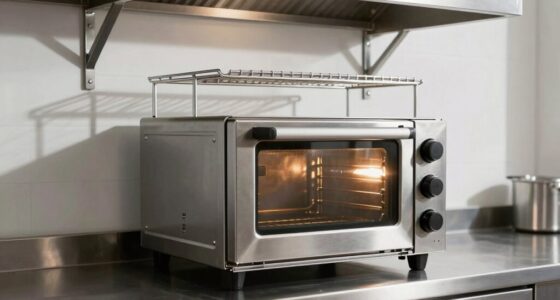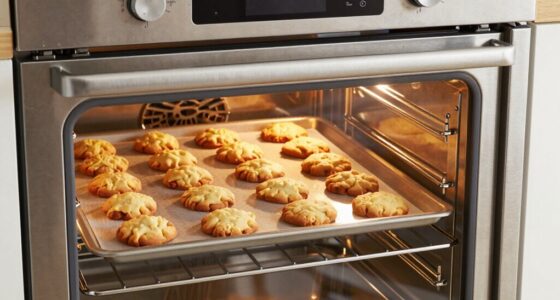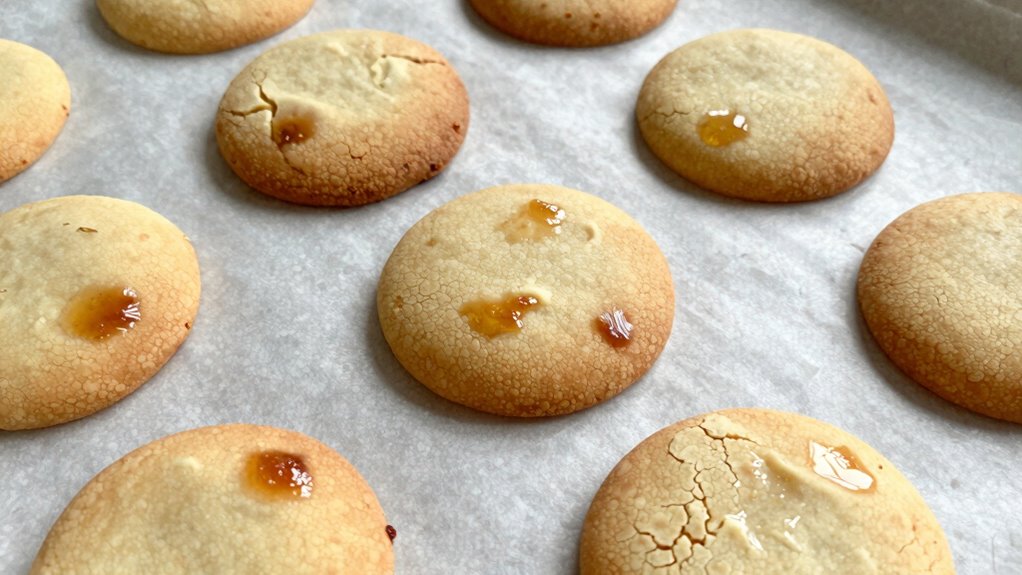

Unnoticed heat patterns in your oven often cause uneven baking, resulting in some areas overcooked while others are underdone. Hot spots tend to develop near heating elements, usually at the back or sides, leading to inconsistent results. To fix this, use an oven thermometer, rotate your sheet halfway through, and position it strategically. If you keep these tips in mind, you’ll create more evenly baked treats and avoid the common pitfalls caused by hidden heat irregularities.

Get baking supplies delivered free with Prime
- Fast, free delivery on millions of items
- Prime Video, Amazon Music and more included
- Member-only deals all year
Key Takeaways
- Hot spots near heating elements cause uneven browning and overcooking in certain oven areas.
- Older, uncalibrated ovens tend to have more unpredictable heat patterns affecting baking consistency.
- Using an oven thermometer helps identify temperature irregularities and adjust baking accordingly.
- Rotating the sheet midway prevents hot spots from causing uneven doneness.
- Knowing your oven’s heat distribution allows strategic placement to achieve uniform sheet bakes.

When baking on a sheet, you might notice that some areas turn out darker or more evenly cooked than others, even if they look similar before going into the oven. This unevenness often comes down to a hidden heat pattern inside your oven, which can significantly influence your baked goods. The oven’s temperature distribution isn’t always perfectly even, and hot spots can cause sections of your sheet to cook faster or more intensely. If you’re not aware of these heat variations, you might unintentionally overbake or underbake parts of your sheet, ruining the overall result.
Oven temperature plays a critical role here. Many home ovens have uneven heat distribution, especially if they’re older or haven’t been calibrated recently. When you set your oven to a specific temperature, it’s not always uniform across the entire chamber. Hot spots tend to develop around the heating elements, often at the back or sides, which means some areas of your sheet receive more heat. This can lead to darker, crisper edges or uneven browning, even if you’ve followed the recipe closely. To combat this, it’s a good idea to use an oven thermometer to verify the actual temperature inside. Adjust your oven’s settings as needed and consider rotating your sheet halfway through the baking duration to promote even cooking. Regular calibration of your oven’s thermostat can also help minimize these heat irregularities.
Baking duration is another factor that influences how heat impacts your sheet. If you leave your baked goods in the oven for too long, areas exposed to higher heat will overcook while others might still be underdone. Conversely, if your baking time is too short, you might miss out on that perfect golden finish. The key is to understand that different spots on your sheet may reach their ideal doneness at different times because of the hidden heat pattern. Instead of relying solely on the clock, keep an eye on your baked goods and use visual cues like color and texture. If you notice uneven browning, it’s worth adjusting your baking duration or temperature slightly and rotating the sheet to help distribute heat more evenly. Additionally, understanding your oven’s heat distribution can help you make more precise adjustments for better results. Knowing the hot spots in your oven allows you to position your baking sheet more strategically, reducing uneven outcomes, and ensuring consistent baking from edge to edge.
As an affiliate, we earn on qualifying purchases.
Frequently Asked Questions
How Can I Detect if My Oven Has a Hidden Heat Pattern?
You can detect a hidden heat pattern by testing your oven’s calibration with an oven thermometer placed in different areas, especially near the heat sensor. If the thermometer readings vary markedly across spots, it indicates uneven heat distribution. Check the heat sensor placement to ensure it’s correctly positioned, typically in the center. Regularly calibrate your oven to prevent hot spots and achieve even baking results.
Does Using Dark Baking Pans Worsen the Heat Pattern Problem?
Yes, dark pans can worsen the heat pattern problem. Their heat absorption is higher, causing the edges of your baked goods to cook faster and potentially creating uneven baking. This intensified heat can highlight or exaggerate existing heat inconsistencies inside your oven. To avoid this, try using lighter-colored pans that reflect heat rather than absorb it, promoting more even baking and reducing the impact of hidden heat patterns.
Are Certain Ingredients More Affected by Uneven Heat Distribution?
Think of ingredient sensitivity like a delicate dance—some ingredients, like custards or delicate pastries, are more affected by uneven heat distribution. I once baked a fruit tart, and the uneven heat caused the filling to overcook while crust remained underdone. Certain ingredients, especially those with moisture or delicate textures, are more vulnerable to heat inconsistencies. Understanding heat distribution helps you choose the right baking method for these sensitive ingredients.
Can Adjusting Oven Racks Help Mitigate the Heat Pattern?
Yes, adjusting oven racks can help mitigate uneven heat distribution. Positioning your racks correctly guarantees better heat flow and minimizes hot spots caused by oven calibration issues. By moving racks to different levels, you allow heat to circulate more evenly, improving your sheet bakes. Remember, an oven with proper calibration enhances heat distribution, reducing the impact of any hot spots and ensuring consistent baking results every time.
What Are the Best Tools to Identify Temperature Inconsistencies?
To identify temperature inconsistencies in your oven, you should invest in tools like a baking temperature calibration device and an oven heat mapping kit. These tools help you accurately measure your oven’s true temperature and reveal heat distribution patterns. By regularly calibrating your oven and conducting heat mapping, you can detect hot spots and uneven heating, allowing you to adjust settings or reposition racks for more even baking results.
As an affiliate, we earn on qualifying purchases.
Conclusion
So, next time you slide that tray into the oven, remember there’s a gentle dance of warmth behind the scenes. By understanding these subtle heat whispers, you can turn your sheet bakes into perfectly even creations. Embrace the quiet rhythm of your oven’s hidden patterns, and watch your baking flourish without a hitch. With just a little awareness, you’ll be guiding your treats to golden perfection, all while letting the oven’s secret song work in your favor.
As an affiliate, we earn on qualifying purchases.
As an affiliate, we earn on qualifying purchases.
Fall Picks
fall essentials
As an affiliate, we earn on qualifying purchases.