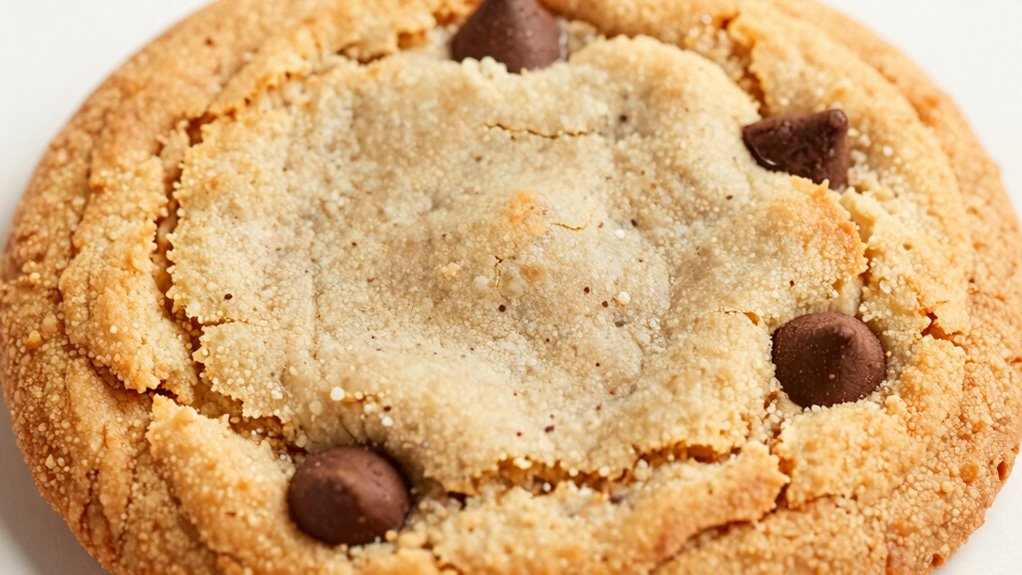

Cookie thickness reveals much about your baking process, ingredients, and final texture. Thick cookies usually mean a softer, chewier interior, while thin cookies suggest a crunchier bite. It can also indicate your baking temperature, dough consistency, or chip size choices. Adjusting these factors impacts how much your cookies spread and their overall style. Pay attention to thickness, and you’ll discover tips for perfect cookies every time—keep exploring to learn even more!

Get baking supplies delivered free with Prime
- Fast, free delivery on millions of items
- Prime Video, Amazon Music and more included
- Member-only deals all year
Key Takeaways
- Thicker cookies indicate a softer, chewier interior, reflecting dough stiffness and baking temperature.
- Thin cookies reveal a crisper texture, often caused by higher oven temperatures or more spreading ingredients.
- The size of chocolate chips influences cookie thickness by affecting melting and spreading during baking.
- Baking temperature adjustments directly impact cookie structure and thickness—higher temps produce thicker, denser cookies.
- Overall cookie thickness signals the balance of ingredients and baking conditions, revealing the intended texture and style.
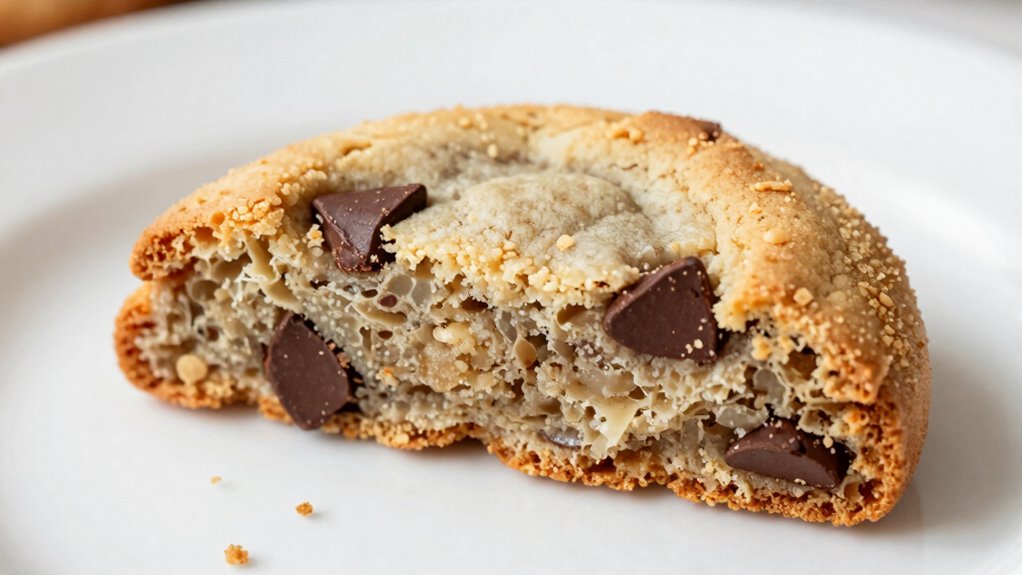
When you bite into a cookie, its thickness can tell you more than just how it looks—it’s a clue to its texture, ingredients, and even how it was baked. A thick cookie often signals a softer, chewier interior, while a thin, crisp one hints at a crunchier bite. The way your cookie turns out depends heavily on factors like the dough’s composition and the baking process. One key element influencing thickness is the choice of chocolate chip variations. For instance, larger chocolate chunks tend to melt less during baking, resulting in thicker cookies because the dough resists spreading as much. Smaller chips, on the other hand, melt more quickly and can cause the cookie to spread thin and wide, giving a flatter appearance. The type and size of chocolate chips can, therefore, directly affect a cookie’s thickness and texture.
Baking temperature effects also play a crucial role. Baking at a higher temperature causes the exterior of the cookie to set faster, which can limit spreading and help maintain a thicker profile. Conversely, baking at a lower temperature allows the dough to spread more before setting, often producing thinner, crispier cookies. If you’re aiming for a thick, chewy cookie, setting your oven to a slightly higher temperature—around 350°F to 375°F—can promote a sturdier structure. In contrast, baking at lower temperatures, say 325°F, extends the baking time, giving the dough more opportunity to spread out and result in a thinner treat. The oven’s heat intensity influences how quickly the fats melt and how the dough reacts, so adjusting the temperature can be a simple way to control cookie thickness. Additionally, understanding how baking temperature impacts the chemistry of ingredients can help you fine-tune your baking results. Temperature control is essential for achieving the ideal cookie texture, especially when experimenting with different recipes.
A further consideration is how dough consistency impacts spreading and resulting thickness, as stiffer dough tends to produce thicker cookies. Ultimately, your cookie’s thickness is a direct reflection of your baking choices—ranging from the type of chocolate chips used to the oven’s temperature. If you notice your cookies turning out too flat or crispy, consider experimenting with thicker chocolate chunks or increasing your baking temperature slightly. Conversely, if you prefer softer, thicker cookies, opt for smaller chips and bake at a higher temperature for a shorter time. These small adjustments can make a big difference in your cookie’s final texture. So next time you bake, pay attention to how your ingredients and temperature settings influence thickness. It’s a simple way to unlock better control over your baking results and create cookies that match your perfect texture.
silicone baking mats for cookies
As an affiliate, we earn on qualifying purchases.
As an affiliate, we earn on qualifying purchases.
Frequently Asked Questions
How Does Oven Temperature Affect Cookie Thickness?
Oven temperature directly impacts cookie thickness by influencing how quickly the dough spreads or rises. If your oven calibration is off, cookies might turn out flat or puffed. Baking on a hot surface causes cookies to spread more, making them thinner, while a cooler surface helps maintain thickness. Adjusting oven temperature and baking surface can help you achieve consistent cookie thickness every time.
Can Cookie Thickness Indicate Dough Consistency?
Yes, cookie thickness can indicate dough consistency. If your cookies are thick, it suggests your dough has good elasticity and proper ingredient distribution, allowing it to hold its shape during baking. Thin cookies might mean over-rolled dough or uneven ingredient mixing. Pay attention to dough elasticity and how ingredients are incorporated, as these factors directly influence the final thickness and texture of your cookies.
Does Cookie Thickness Impact Baking Time?
Yes, cookie thickness impacts baking time. Thicker cookies, which depend on cookie size and dough density, require longer baking on your baking surface to cook through evenly. Thin cookies bake faster because heat penetrates quickly, while larger, thicker cookies need more time to make sure they’re fully baked without burning the edges. Adjust your baking time based on cookie size and thickness to achieve perfect results.
How Does Ingredient Type Influence Cookie Thickness?
Ingredient variations directly influence cookie thickness, impacting both texture and flavor implications. For example, using more butter tends to create thinner, crispier cookies, while adding oats or flour can make thicker, chewier treats. Different sugars, like brown versus white, also alter the dough’s moisture and spread. So, your choice of ingredients doesn’t just change flavor—it shapes the cookie’s overall thickness, texture, and baking outcome.
Is There a Optimal Cookie Thickness for Chewy or Crispy Textures?
For chewy cookies, aim for a thicker cookie shape with minimal thickness variations, around 1/2 inch, to retain moisture and chewiness. For crispy cookies, opt for a thinner shape, approximately 1/4 inch, with uniform thickness to promote even crispness. Your cookie shape and thickness variations directly influence texture; thinner, evenly spread cookies crisp up better, while thicker, varied shapes keep them chewy. Adjust your baking approach based on your desired cookie texture.
As an affiliate, we earn on qualifying purchases.
Conclusion
So, next time you’re eyeballing those cookies, remember: thickness isn’t just a matter of preference—it’s your secret spy into their personality. Thin and fragile? Maybe a little delicate, a tad overbaked. Thick and hefty? Probably hiding a soft, gooey heart, or just loving the extra calories. In the end, whether you prefer them crispy or chewy, just savor the mystery behind each bite. Because, honestly, what your cookie’s telling you might just be the sweetest gossip of all.
chocolate chip cookie baking sheet
As an affiliate, we earn on qualifying purchases.
As an affiliate, we earn on qualifying purchases.
As an affiliate, we earn on qualifying purchases.
Columbus Day / Indigenous Peoples' Day Picks
long weekend sales
As an affiliate, we earn on qualifying purchases.