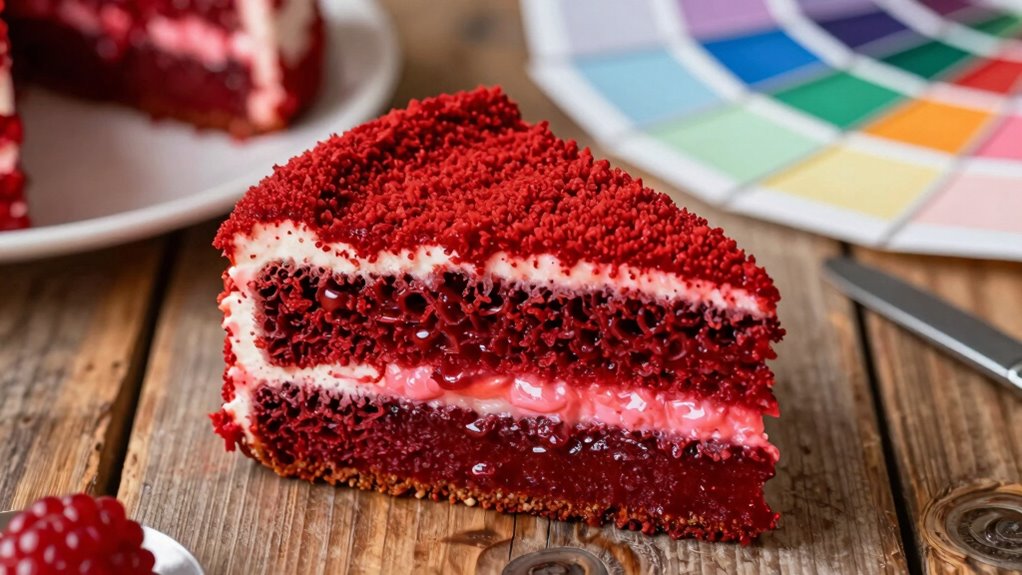

Your red turns pink when ingredients like gelatin and acids interact with your food coloring. Gelatin can dull or fade the red hue, especially if not dissolved properly or if mixed too much. Acidic ingredients like lemon juice or vinegar also weaken the color, causing it to shift toward pink. Using gel or paste colors and understanding ingredient effects help maintain vibrant reds. Keep exploring these techniques to perfect your shades and prevent unwanted color changes.
Key Takeaways
- Acidic ingredients like lemon juice can weaken red food coloring, causing it to shift toward pink.
- Using liquid food colorings dilutes the hue, making reds appear more pastel or pinkish.
- Gel or paste food colorings provide more concentrated, true red tones, reducing pinking issues.
- Overmixing or excessive gelatin can dull or fade red shades, turning them pinker.
- Proper pH balance and gradual coloring help maintain vibrant, true red hues in baked goods.

Understanding color theory is essential for bakers who want to create visually appealing confections and baked goods. When you’re working with vibrant reds, the last thing you want is for your bold hue to turn into an unwanted pink or muted shade. To prevent this, you need to understand how ingredients and techniques influence color, especially when it comes to frosting color adjustments and gelatin interactions. These factors can considerably alter your intended palette, so knowing how to manage them helps you achieve consistent, professional results.
Gelatin interactions are a common culprit behind unexpected color shifts in baked goods and frostings. Gelatin is often used in mousses, glazes, and certain frosting recipes to create stability and texture. However, gelatin can sometimes cause colors to become dull or fade over time, especially if it’s not properly dissolved or if it interacts with other ingredients. For example, acidic components like lemon juice or vinegar can weaken gelatin’s structure, leading to a change in how colors appear. When you’re adding gelatin to a frosting or glaze, it’s vital to pay attention to how it interacts with your colorants. Overuse or improper mixing can result in uneven color distribution or duller shades, impacting your final presentation.
Gelatin can dull or fade colors if not properly dissolved or mixed.
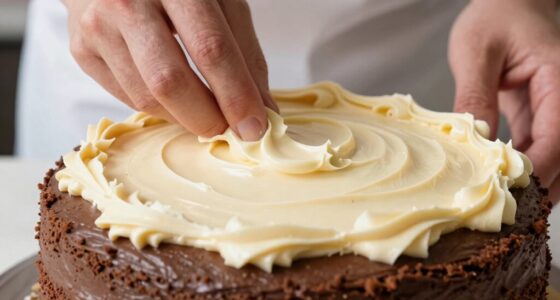
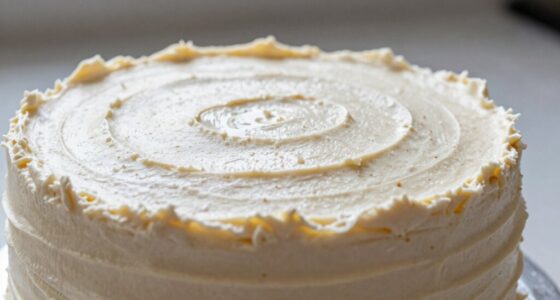
Frosting color adjustments are another key aspect to contemplate. When you’re trying to achieve a specific hue, such as a true red, it’s common to start with gel or paste food coloring rather than liquids. Liquids tend to dilute the mixture, which can make your color less vibrant or shift it toward pink or pastel shades. To avoid this, add coloring gradually, mixing thoroughly after each addition, and always test on a small amount first. If your frosting begins to turn pink instead of red, it might be due to the interaction between the food coloring and the base ingredients. For instance, butter-based frostings can sometimes alter the perceived hue because of their inherent color and fat content. Adjusting frosting color often involves balancing the right amount of coloring with the base mixture—adding a tiny bit more red or adjusting the recipe’s pH can help stabilize the intended color.
Understanding how gelatin interactions and frosting color adjustments influence your baked goods enables you to troubleshoot and perfect your creations. If your red turns pink, consider the ingredient interactions first, then tweak your coloring process accordingly. Using the right type of food coloring, adding it gradually, and being mindful of how gelatin and other ingredients interact will help you keep your colors true. With practice, you’ll learn to anticipate how different components affect your palette, ensuring your baked goods look as good as they taste.
Frequently Asked Questions
How Does Lighting Affect the Appearance of Colored Baked Goods?
Lighting effects dramatically influence how you perceive the color of baked goods. Bright, cool lighting can make reds appear more vibrant, while warm, dim lighting might dull or shift their hue. Your eyes interpret colors differently under various lighting conditions, so color perception is affected. To see your baked goods’ true colors, use natural or consistent lighting, and avoid harsh or mixed light sources that distort their appearance.
Can Natural Food Coloring Alter the Expected Hues in Baking?
Yes, natural food coloring can alter expected hues in baking because of natural dye stability and food coloring pH. You might notice colors shift or fade during baking, especially if the pH of your batter isn’t ideal, since some natural dyes change color in different pH environments. To maintain vibrant hues, you should adjust the pH or choose natural dyes known for better stability in baked goods.
What Are the Best Techniques to Prevent Color Bleeding in Layered Cakes?
To prevent color bleeding in layered cakes, you should focus on maintaining color stability and using proper layering techniques. Chill each layer thoroughly before stacking to minimize smudging. Apply a thin, even layer of frosting or filling between layers to act as a barrier. Also, consider using gel-based food colors for better stability. These steps help keep your colors vibrant and your layers clean and neat.
How Do Different Ingredients Influence the Final Color of Baked Items?
You influence your baked item’s final color through ingredient interactions and pH effects. For example, acidic ingredients like lemon juice can brighten or intensify colors, while alkaline ones like baking soda may cause colors to fade or shift. Understanding these interactions helps you control shades, ensuring your reds stay vibrant or your pastels stay soft. Adjusting ingredient ratios and pH levels allows you to achieve consistent, stunning results every time.
Is It Possible to Correct Unwanted Color Changes After Baking?
Yes, you can perform color correction after baking using edible color fixes. If your baked goods turn out a different hue, try adding small amounts of food coloring or edible gels to adjust the color. Gently blend them in to avoid over-coloring. Keep in mind, it’s best to do this carefully and gradually, as overuse can affect the overall appearance and flavor.
Conclusion
Now that you understand why your red turns pink, imagine what other surprises color can hold in your baking. Will you uncover the secrets behind your perfect chocolate or vibrant frosting? The more you explore color theory, the more you’ll reveal bakery magic you never knew existed. But beware—there’s always one more trick up its sleeve. Ready to discover what’s next? The world of baking colors is waiting, and your next masterpiece might just surprise you.