If your meringue isn’t whipping, even with clean bowls, it’s likely due to cold eggs or improper technique. Cold eggs are harder to whip into stiff peaks, so let them sit at room temperature for about 30 minutes before starting. Also, start beating slowly, then increase speed gradually, and avoid over-beating. Paying attention to these details can turn your meringue from droopy to perfect—explore more tips to perfect your process.

Get baking supplies delivered free with Prime
- Fast, free delivery on millions of items
- Prime Video, Amazon Music and more included
- Member-only deals all year
Key Takeaways
- Eggs taken straight from the fridge are too cold, preventing proper protein expansion needed for whipping.
- Using bowls that are greasy or contaminated inhibits foam formation regardless of cleanliness.
- Over-beating proteins can cause them to break down and deflate, stopping the whip from reaching stiff peaks.
- Adding sugar too early can weaken the foam, even if bowls are clean.
- Inadequate whipping technique, such as starting at high speed or not achieving proper peaks, hampers meringue development.
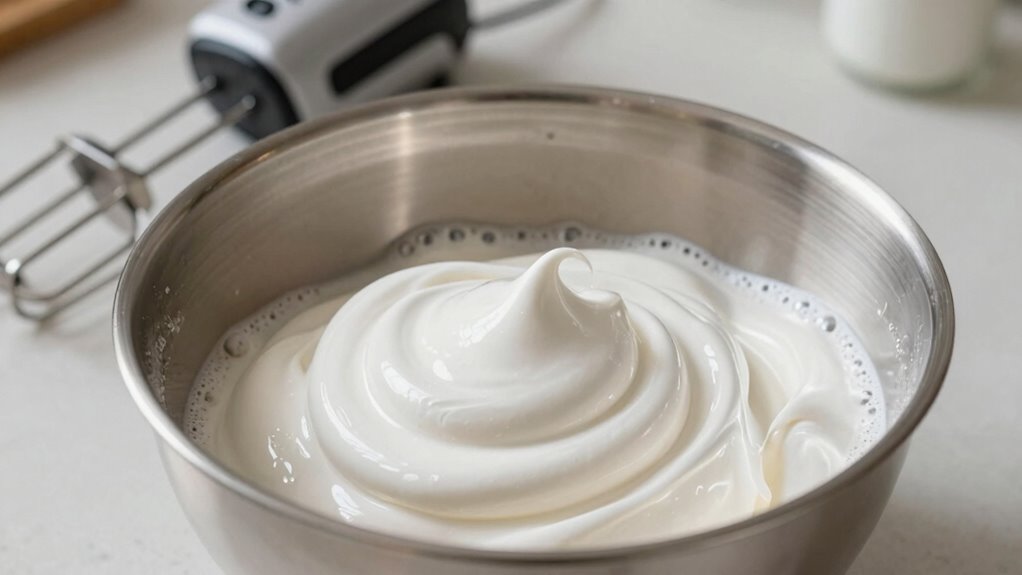
If your meringue refuses to whip up into stiff peaks, the problem is often related to simple mistakes that can be easily rectified. One common culprit is egg temperature. Using eggs straight from the fridge can make it much harder to achieve the desired volume because cold eggs don’t whip as well. For best results, let your eggs sit at room temperature for about 30 minutes before starting. This warms them slightly, making the proteins more receptive to whipping and helping you attain that perfect, glossy foam. Cold eggs can also cause the sugar to not incorporate properly, leading to a watery or flat meringue. So, always plan ahead and bring your eggs to room temperature to improve your chances of success.
Room temperature eggs whip into stiff peaks more easily and help create glossy, stable meringue.
Another significant factor that affects your meringue’s ability to whip into stiff peaks is improper technique. Whipping egg whites isn’t just about turning on the mixer; it’s about the way you handle the process. Start with a spotless, dry bowl—preferably glass or metal—and ensure no trace of grease or yolk remains. Even a tiny bit of fat can prevent your whites from whipping properly. When beating, begin at a slow speed to create small bubbles, then gradually increase to high speed. This gradual approach helps develop stable foam. Also, avoid over-beating, as that can cause the proteins to break down and deflate your whites. Look for the shiny, firm peaks that stand straight when you lift the beaters. If you’re not seeing this, it’s a sign you might need to adjust your technique or stop and start again.
Adding sugar at the right time is equally essential. Wait until the egg whites reach soft peaks before gradually incorporating sugar. This helps stabilize the foam and gives your meringue a smooth, shiny texture. If you add sugar too early, you risk weakening the foam or preventing it from reaching full stiffness. Also, be precise with your measurements—too much sugar can weigh down the whites, and too little might make the meringue unstable.
In short, getting perfect meringue is about paying attention to detail. Egg temperature influences how easily your whites whip, and proper technique ensures they hold their shape. Small adjustments, like letting eggs reach room temperature and following the correct whipping process, can make all the difference. With practice, you’ll be able to whip up firm, glossy meringue that holds peaks beautifully every time.
As an affiliate, we earn on qualifying purchases.
Frequently Asked Questions
Can Using Aged Eggs Affect Meringue Stability?
Using aged eggs can affect meringue stability because older eggs tend to have weaker whites, making it harder to whip up stiff peaks. Fresh eggs, with their firm whites, create better foam structure. Additionally, shell contaminants in aged eggs can interfere with the proteins that trap air, reducing stability. For the best meringue, always choose fresh eggs and guarantee they’re free from any shell debris to achieve the perfect, stable foam.
Does the Type of Sugar Impact Meringue Whipping?
The type of sugar definitely impacts your meringue whipping. Fine sugar or superfine sugar dissolves more easily, creating a smoother, more stable meringue. Coarser sugar takes longer to dissolve and can leave moisture or grittiness, preventing proper whip. Also, sugar’s moisture content can interfere with egg whites’ ability to form stiff peaks. Using the right sugar granularity and ensuring it’s dry helps you achieve that perfect, glossy meringue.
Should I Add Cream of Tartar or Lemon Juice?
You should add cream of tartar or lemon juice to stabilize your egg whites, helping them whip up better and hold their shape longer. Fresh eggs whip more easily, so use the freshest eggs you have. Also, the sugar type matters—superfine sugar dissolves faster, creating a smoother meringue. Adding a small amount of acid like cream of tartar or lemon juice improves stability, especially if your eggs aren’t super fresh.
How Does Altitude Influence Meringue Formation?
Altitude affects altitude effects, making your meringue more challenging to whip. As you climb higher, the lower air pressure causes the egg whites to whip faster but also increases the risk of overwhipping or unstable peaks. You might need to adjust your technique by adding a bit more acid or reducing sugar. So, stay steady, and tweak your process to tame those tricky whipping challenges at higher altitudes.
Can Humidity Prevent Meringue From Whipping Properly?
Humidity issues can definitely prevent your meringue from whipping properly. High humidity adds moisture to the egg whites, making it harder to achieve stiff peaks. Climate considerations matter because in damp environments, the sugar struggles to dissolve fully, weakening the structure. To fix this, try whipping in a dry room, use a dehumidifier, or add a little more sugar to stabilize the meringue.
As an affiliate, we earn on qualifying purchases.
Conclusion
Remember, perfect meringue depends on pristine, powder-free bowls and proper preparation. Don’t forget to double-check your ingredients and equipment before whipping away. A little diligence during the detailed steps can make a dramatic difference in your dessert’s success. So stay attentive, avoid adulterants, and embrace the art of accurate assembly. With careful consideration and clean tools, you’ll conquer your conundrum and create a cloud-like meringue that’s simply sensational.
As an affiliate, we earn on qualifying purchases.
As an affiliate, we earn on qualifying purchases.
Fall Picks
fall essentials
As an affiliate, we earn on qualifying purchases.