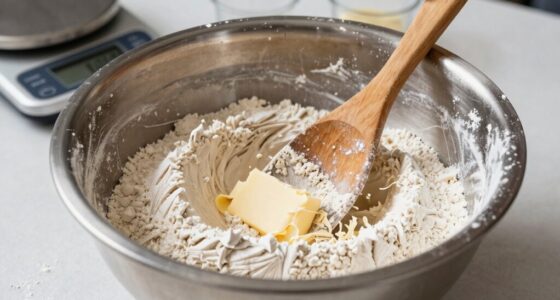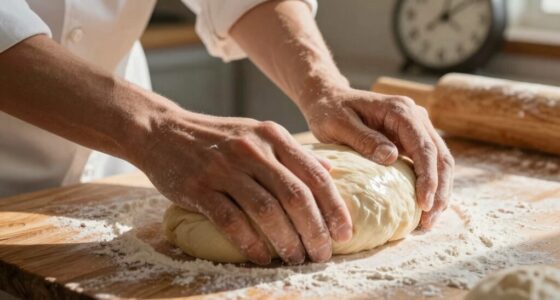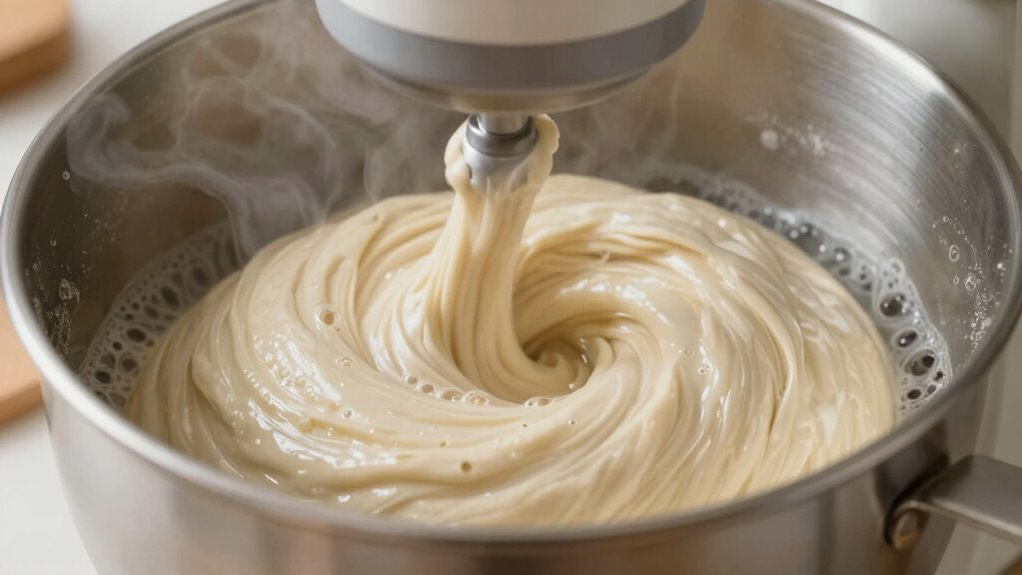

Dough temperature rises inside a mixer mainly because of friction heat produced by mechanical action and speed. When you mix, the movement generates heat through friction, which increases as you run the mixer faster. The type of mixer and dough hydration level also influence how much heat is generated. Controlling these factors helps prevent overheating, but if you want to understand how to manage temperature precisely, there’s more to uncover.
Key Takeaways
- Mechanical friction from mixing generates heat, increasing dough temperature during kneading.
- Higher mixer speeds produce more friction heat, accelerating temperature rise.
- Dough hydration levels influence heat generation; higher hydration can lead to greater temperature increases.
- The type of mixer affects heat transfer, with some equipment producing more friction heat than others.
- Using warm ingredients or ambient conditions can further elevate dough temperature during mixing.
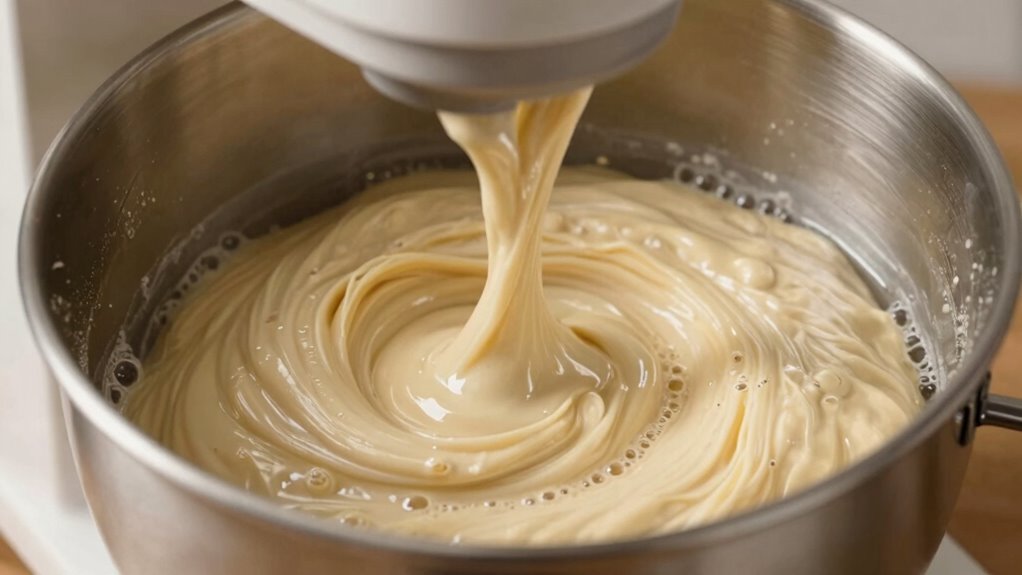
When mixing dough, understanding how its temperature rises inside a mixer is essential for achieving the perfect bake. As you knead, the combination of ingredients and the mechanical action generate heat, directly influencing fermentation and gluten development. Knowing how these factors interplay helps you control the dough’s final texture and rise. Additionally, the friction heat produced during mixing can vary depending on the dough’s hydration level and the type of mixer used. Initially, the temperature of your ingredients plays a significant role. Cold ingredients can slow down fermentation, while warm ones speed it up. During mixing, the friction created by the dough’s movement against the mixer’s paddle or hook increases its temperature. This friction can cause the dough’s temperature to rise rapidly, especially if you’re using a high-speed setting. The faster the mixer spins, the more heat it generates, which can lead to a quicker fermentation process. This is beneficial when you want to accelerate fermentation, but it can also risk over-fermentation if not monitored carefully. Understanding heat transfer principles can further assist in controlling temperature fluctuations during the process. The heat produced during mixing also influences gluten development. Gluten formation is a vital process that gives dough its elasticity and structure. As the dough warms, gluten proteins become more flexible, allowing them to align and form a strong network. Proper gluten development results in a dough that’s easier to shape and yields a light, airy crumb after baking. However, if the temperature rises too high, gluten can become overly relaxed, leading to a dough that’s weak and difficult to handle. Conversely, if the dough remains too cool, gluten development may be sluggish, resulting in a dense final product. To manage dough temperature during mixing, you can implement several strategies. Using chilled ingredients or cooling the mixer can help keep the temperature down. Some bakers place the mixing bowl in a cooler environment or use a refrigerated bowl to limit heat buildup. Monitoring the dough’s temperature with a thermometer provides real-time insight, allowing you to adjust the mix time or speed accordingly. Additionally, understanding the role of friction heat in dough temperature regulation helps bakers optimize their mixing techniques for consistent results. Being aware of heat transfer principles can further assist in controlling temperature fluctuations during the process. Ultimately, controlling how the dough’s temperature rises inside a mixer allows you to fine-tune fermentation acceleration and gluten development. This control ensures your dough reaches the ideal consistency and fermentation level for perfect baking. By understanding the relationship between mechanical action, heat, and dough properties, you can produce consistently excellent bread, rolls, or pastries. Proper management of temperature during mixing isn’t just about safety; it’s about precision—helping you craft baked goods that are consistently delicious and beautifully textured.
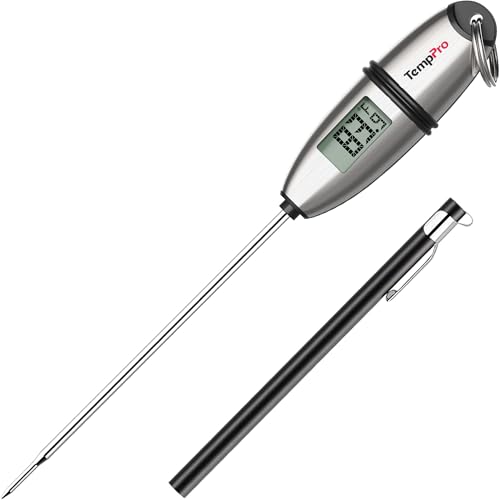
TempPro TP02S Digital Food Thermometer for Cooking Bread Baking Sourdough Liquids, Meat Thermometer Digital with Super Long Probe for Kitchen BBQ Yogurt Candy Making Accessory (Previously ThermoPro)
Fast and Accurate Reading: Kitchen thermometer for cooking features a 1 to 3 second readout speed and high…
As an affiliate, we earn on qualifying purchases.
As an affiliate, we earn on qualifying purchases.
Frequently Asked Questions
How Does Ambient Room Temperature Affect Dough Temperature?
You’ll notice that higher ambient room temperatures speed up dough fermentation effects, causing it to warm faster. Cooler environments slow down this process, helping moisture retention and preventing over-fermentation. Maintaining a stable room temperature ensures your dough remains at the ideal temperature for fermentation effects, improving texture and flavor. Temperature fluctuations can lead to inconsistent dough temperatures, impacting moisture retention and the overall quality of your baked goods.
What Role Does Ingredient Temperature Play in Dough Heating?
Ingredient temperature is like the initial spark that ignites a fire, influencing dough heating markedly. Warmer ingredients, especially water and fats, raise dough temperature quickly, while colder ones help control it. This is vital because ingredient moisture and temperature impact fermentation effects, which in turn affect gluten development and dough elasticity. Using properly tempered ingredients guarantees consistent fermentation and prevents overheating, leading to better dough quality and baking results.
Can Mixer Speed Influence Dough Temperature Rise?
Yes, mixer speed can influence dough temperature rise. Higher speeds increase mixer vibration and intensify blade design effects, which generate more heat through friction. Rapid mixing causes the dough to warm faster, potentially affecting fermentation or gluten development. To control temperature, you should adjust the speed carefully, especially during initial mixing, and consider the mixer’s blade design to minimize excessive heat buildup and guarantee consistent dough quality.
How Quickly Does Dough Temperature Increase During Mixing?
As you watch the dough spin in the mixer, its temperature climbs rapidly, like steam rising from a hot cup. Within minutes, gluten development accelerates, creating a strong, elastic structure. Meanwhile, yeast activity boosts, releasing heat that quickens the rise. You notice the dough warm and supple, signaling that the internal temperature has increased markedly, influencing texture and fermentation speed in just a few minutes of mixing.
What Are the Signs of Overheating Dough in a Mixer?
You’ll notice overheating dough when it becomes excessively sticky or starts to smell sour, indicating yeast activity has accelerated beyond normal. Signs also include a shiny or tacky surface and a rapid rise during proofing. When dough hydration is too high, it retains more heat, speeding up temperature rise. Keep an eye on these cues to prevent overproofing and guarantee ideal fermentation, especially when mixing at high speeds or in warm environments.

CUSIMAX Stand Mixer, Dough Mixer with Digital Switch Control Timer 15mins & 8-Speed, 5-Quart 650W kitchen Electric Mixer, Tilt-Head with handle, Dough Hook, Wire Whip & Beater, Grey
Powerful Motor and Digital Switch Control – 650W high performance metal motor and sturdy ABS housing for perfect…
As an affiliate, we earn on qualifying purchases.
As an affiliate, we earn on qualifying purchases.
Conclusion
So, next time you marvel at your perfectly warm dough, remember—it’s not magic, but the mixer working its clandestine heat-up routine. While you might think you’re in control, that temperamental machine secretly elevates your dough’s temperature, turning a simple mix into a covert science experiment. Truly, it’s a masterclass in culinary deception—proof that even in baking, the real artistry lies in the subtle art of temperature manipulation. Who knew mixers had a flair for espionage?

MARRTEUM 2 Pcs Bread Maker Kneading Paddle, Stainless Steel Non Stick Bread Machine Paddle Mixing Kneading Blade Replacement for Most Bread Maker (Black)
【Compatible Models】Top D shape hole diameter: 0.27". Total size (L x H): 2.6" x 1.5". Tube size (Dia….
As an affiliate, we earn on qualifying purchases.
As an affiliate, we earn on qualifying purchases.

Freshmage Glass Mixing Bowls with Lids Sets, 4 Packs Glass Bowls with Lids for Kitchen Baking, Meal Prepping and Salad, Bpa Free and Dishwasher Safe Serving Bowls, 0.2/0.5/1.1/2.1
[PREMIUM MATERIAL]: Each bowl is made of high-quality high borosilicate glass, which is high temperature resistance, corrosion resistance,…
As an affiliate, we earn on qualifying purchases.
As an affiliate, we earn on qualifying purchases.