Mixer capacity numbers can be confusing because manufacturers measure them in different ways, like quart volume, ingredient weight, or motor power. These figures don’t always show how much you can practically mix at once, especially since larger bowls don’t always mean bigger batches. Overestimating capacity can lead to overloading or damage. If you want to fully understand what these numbers really mean and find the best fit for your baking needs, keep exploring.

Get baking supplies delivered free with Prime
- Fast, free delivery on millions of items
- Prime Video, Amazon Music and more included
- Member-only deals all year
Key Takeaways
- Different manufacturers measure capacity using various units and methods, making direct comparison difficult.
- Larger bowl size doesn’t always mean the mixer can handle more or heavier ingredients effectively.
- Capacity numbers often reflect maximum ingredient weight or volume, not practical mixing ability.
- Motor power significantly impacts the mixer’s ability to handle heavy or large batches.
- Overestimating capacity can lead to overloading, damage, or safety issues during use.
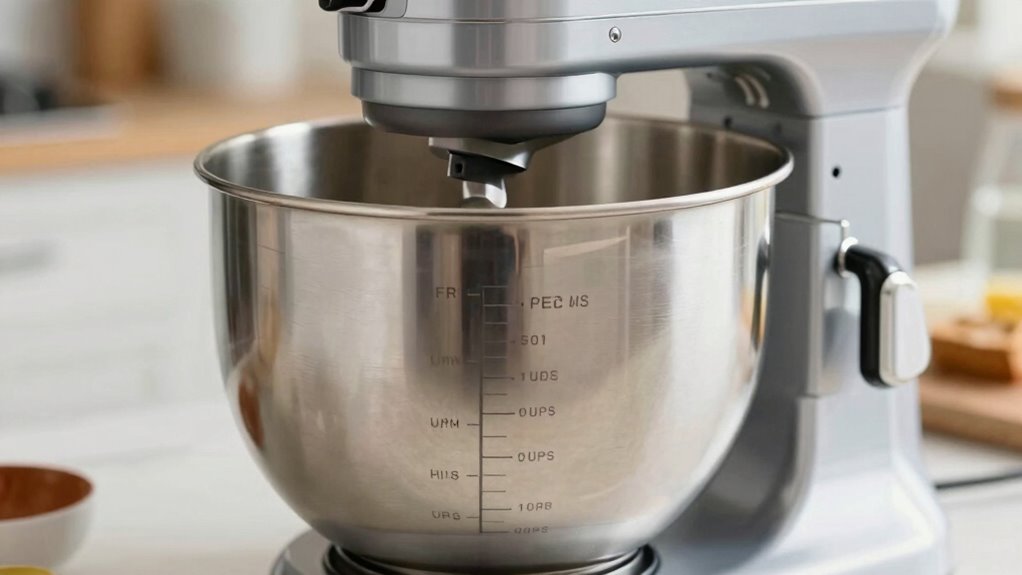
If you’re shopping for a stand mixer, the confusing capacity numbers can make it hard to choose the right one. Manufacturers often list capacities in different ways—some specify bowl volume in quarts, others mention the maximum weight of ingredients, and a few focus on the mixer’s motor power. This inconsistency can leave you feeling unsure about which model truly fits your needs. The challenge lies in understanding these numbers and how they relate to your typical baking routines, especially when it comes to ingredient scaling. You might see a mixer with a 4.5-quart bowl and think it’s suitable for all your recipes, but then realize that the actual capacity for ingredients—like flour or dough—is much less. This discrepancy can cause frustration, especially if you’re trying to determine whether a particular appliance selection will handle larger batches or delicate, small mixes.
Many home bakers don’t realize that capacity isn’t just about the size of the bowl; it also involves how well the mixer can handle ingredients in practice. For instance, a larger bowl doesn’t necessarily mean it can mix a huge amount of dough comfortably if the motor isn’t strong enough. Conversely, a smaller bowl with a powerful motor might be better suited for frequent, smaller batches. When you’re evaluating different mixers, it’s important to look beyond the capacity numbers and consider how they relate to the types of recipes you plan to make. If you bake bread often, you’ll need a model that can handle heavier doughs without strain. For lighter tasks like whipping cream or mixing batter, a smaller, less powerful mixer might suffice.
The confusion over capacity also impacts your appliance selection because it can lead to overestimating what a particular model can do. You might assume that a 5-quart mixer can handle double batches of your favorite cookies, but if it’s not designed for heavy ingredients, it could struggle or even break down. To make an informed choice, you need to combine capacity numbers with other specs like motor wattage and recommended usage. This way, you can better gauge whether the mixer will meet your baking demands and avoid disappointment. Recognizing the importance of appliance specifications can help you choose a mixer that truly matches your baking needs. Additionally, understanding manufacturer descriptions can help clarify what each capacity number really means in real-world baking situations. Being aware of capacity limitations can also prevent you from accidentally overloading your mixer, which could lead to damage or safety concerns. Familiarity with performance metrics is essential for selecting a reliable, efficient appliance that suits your baking style.
As an affiliate, we earn on qualifying purchases.
Frequently Asked Questions
How Do I Convert Mixer Capacity From Liters to Cups?
To convert mixer capacity from liters to cups, multiply the number of liters by 4.23, which is the approximate number of cups in a liter. For example, a 2-liter mixer equals about 8.46 cups. When doing recipe scaling, accurate ingredient measurement is key, so knowing this conversion helps you adjust ingredient amounts properly, ensuring your dough or batter mixes thoroughly without overloading your mixer.
Does a Larger Capacity Mean Better Mixing Quality?
A larger capacity doesn’t automatically mean better mixing quality; it’s like bringing a tank to a pillow fight. You might get more dough in, but mixing speed can slow down, and durability concerns rise if you push a big mixer too hard. Bigger isn’t always better—it’s about the right size for your tasks and how well the motor handles your mixing needs without breaking a sweat.
Are All Brands’ Capacity Numbers Comparable?
Not all brands’ capacity numbers are comparable because of differences in measurement methods and bowl shapes, affecting capacity consistency. When comparing brands, you need to look beyond the numbers and consider how each manufacturer measures capacity. Some may include attachments or space for ingredients, while others don’t. Always check product specifications carefully to guarantee you’re making an accurate brand comparison and selecting a mixer that truly fits your baking needs.
How Does Bowl Size Affect Baking Results?
Bowl size is like the stage for your baking performance, shaping your results. A larger bowl lets you mix more ingredients accurately without spillage, ensuring ingredients blend well. It also allows you to choose appropriate mixing speeds, preventing over-mixing or under-mixing. With a bigger bowl, you can maintain ingredient accuracy and control mixing speed, leading to consistent textures and better baked goods. Smaller bowls might limit your options and affect overall results.
What’s the Ideal Mixer Size for Small Kitchens?
For small kitchens, a mixer with a capacity of 3 to 4.5 quarts is ideal. It fits comfortably on limited counter space and is easier to store in your appliance storage area. You’ll still handle most baking tasks efficiently without cluttering your kitchen. This size balances power and compactness, making it perfect for home bakers with limited kitchen space who want a versatile, space-saving appliance.
As an affiliate, we earn on qualifying purchases.
Conclusion
So, remember, not all mixer capacities are created equal. Don’t get caught up in the numbers alone; focus on what suits your baking needs. Sometimes, less is more, and a smaller mixer might serve you better than a bulky one. As the saying goes, “A little knowledge is a dangerous thing,” so take the time to understand your mixer’s true capacity. That way, you’ll avoid confusion and bake with confidence.
As an affiliate, we earn on qualifying purchases.
As an affiliate, we earn on qualifying purchases.
Halloween Picks
halloween
As an affiliate, we earn on qualifying purchases.