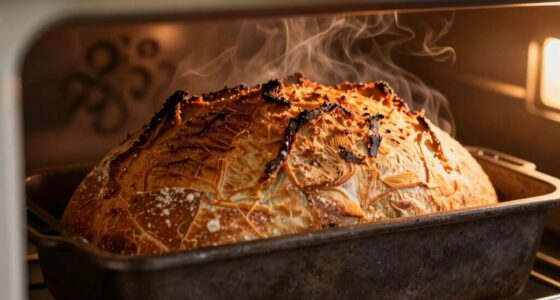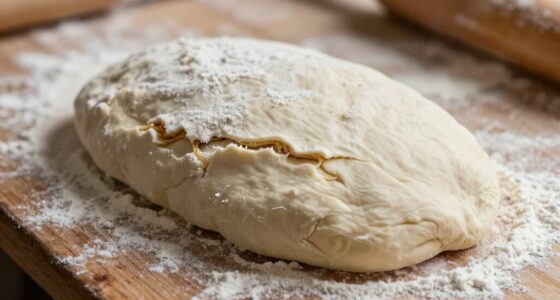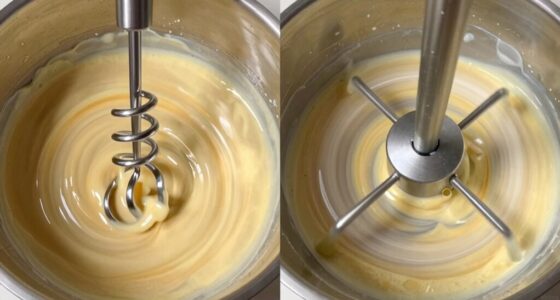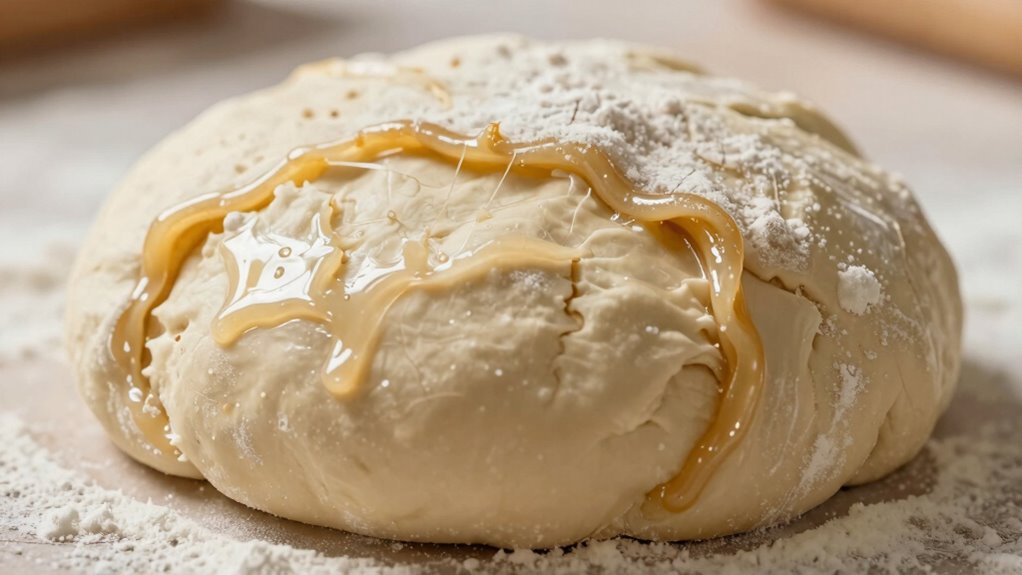

Sticky dough often signals that your ingredient ratios, fermentation, or environmental factors need attention. It may indicate excess moisture, over-fermentation, or high hydration levels, which affect handling and flavor. Pay close attention to these cues and adjust proofing time, temperature, or hydration to improve your dough’s consistency. If you want to understand more about what sticky dough is telling you and how to fix it, you’ll find useful tips and insights ahead.

Get baking supplies delivered free with Prime
- Fast, free delivery on millions of items
- Prime Video, Amazon Music and more included
- Member-only deals all year
Key Takeaways
- Sticky dough indicates high hydration, over-fermentation, or excess moisture needing adjustment.
- It signals that the dough may be over-proofed or has undergone prolonged fermentation.
- Sticky texture suggests the dough may require less water or more flour for better handling.
- Recognizing stickiness helps prevent over-proofing and guides proper fermentation timing.
- Environmental factors like humidity can influence dough stickiness, requiring adaptation during baking.
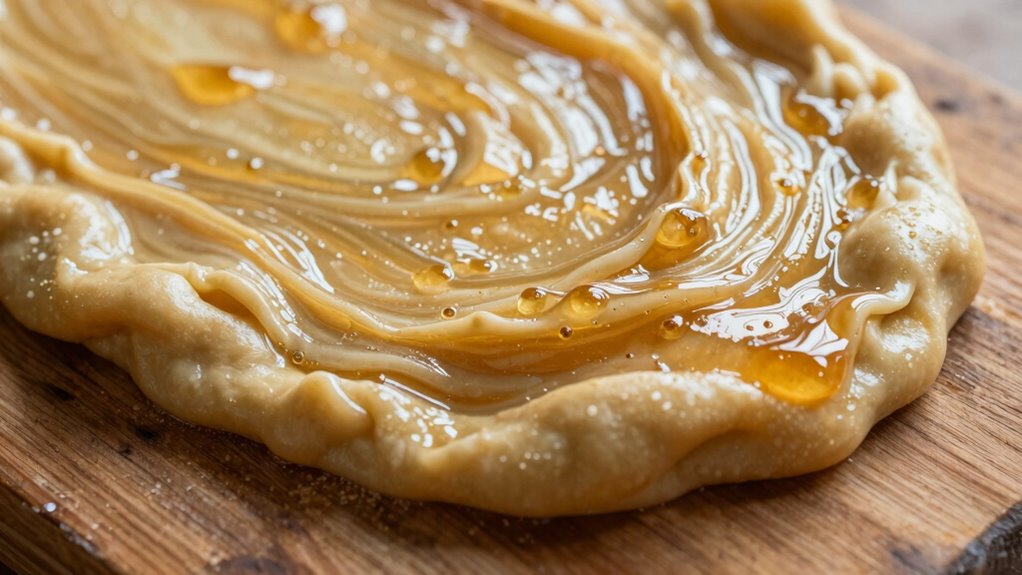
When dough feels sticky and difficult to handle, it’s not just a kitchen inconvenience—it’s a message from your baking process. Sticky dough often signals that something in your technique or ingredients needs attention. Instead of fighting it, pay close attention to what the dough is telling you. One key aspect to consider is fermentation cues. If your dough is too sticky, it might be fermenting too quickly, producing excess gas and moisture that make the dough unmanageable. Over-fermentation can lead to a wet, sticky texture, which indicates that your dough has been left to rise longer than necessary or at a temperature that accelerates fermentation. Recognizing these cues helps you determine whether to adjust your proofing time or temperature, ensuring your dough reaches the right balance for optimal texture and flavor.
Sticky dough signals over-fermentation or excess moisture—adjust proofing time, temperature, or ingredients for better handling.
Another crucial factor is ingredient ratios. When you’re working with sticky dough, it’s often a sign that the hydration level—the ratio of water to flour—is off. Too much water relative to flour creates a wetter dough that sticks more easily. If your recipe calls for a specific hydration percentage, and your dough consistently turns out sticky, you may need to tweak the ingredient ratios. Slightly reducing the water or increasing the flour can help develop a dough that is easier to handle without sacrificing the final product’s quality. Keep in mind that some recipes, like artisan sourdough or ciabatta, intentionally have high hydration levels, but even then, understanding how to manage the dough’s stickiness is essential for success. Proper hydration control is fundamental to consistent baking results. Additionally, understanding fermentation cues can help you avoid over-proofing and improve dough handling. Monitoring dough temperature can also be crucial, as it influences fermentation speed and stickiness. Being aware of environmental factors, such as humidity, can further help you adapt your technique to achieve the desired dough consistency.
artisan sourdough bread baking kit
As an affiliate, we earn on qualifying purchases.
As an affiliate, we earn on qualifying purchases.
Frequently Asked Questions
How Can I Prevent Dough From Becoming Too Sticky?
To prevent dough from becoming too sticky, you can adjust the amount of flour during kneading, especially as dough ferments and gluten develops. Use just enough flour to keep the dough manageable, but avoid adding too much, which can hinder gluten formation. Additionally, let the dough rest, allowing gluten to develop fully, which improves its elasticity and reduces stickiness naturally. Proper hydration and timing also play key roles in controlling stickiness.
Does Sticky Dough Mean I Added Too Much Water?
Yes, sticky dough often indicates you’ve added too much water relative to your flour, affecting dough hydration. When dough is overly sticky, it means the flour hasn’t fully absorbed the moisture yet, or there’s excess water. To fix this, add a little more flour gradually, allowing it to soak up the moisture and improve dough consistency. Proper flour absorption ensures your dough isn’t too sticky and bakes into perfect texture.
Can Sticky Dough Still Produce Good Baked Goods?
Yes, sticky dough can still produce good baked goods. Its stickiness often indicates active dough fermentation and strong gluten development, which contribute to a flavorful, airy crumb. Embrace the tackiness by using well-floured surfaces and gentle handling techniques. With patience, this sticky dough can yield delicious bread, rolls, or other baked treats. Remember, a little extra care helps translate the dough’s natural qualities into perfect final products.
How Should I Handle Sticky Dough During Kneading?
Handling sticky dough is like wrangling a playful puppy—gentle yet firm. To manage its stickiness, dust your hands and surface with a little flour, but don’t overdo it, or you’ll hinder dough elasticity. During kneading, consider the fermentation effects; the dough becomes more elastic over time. Keep patience in mind, and with a light touch, you’ll develop the perfect dough for baking.
What Ingredients Can Help Reduce Dough Stickiness?
To reduce dough stickiness, you can add a bit of flour during kneading—just enough to prevent sticking without hindering gluten development. Ingredient substitutions like using bread flour instead of all-purpose flour can also help, as higher protein content promotes better gluten formation, making the dough less sticky. Keep in mind, adding too much flour can stiffen the dough, so add gradually and knead until you achieve the right balance.
dough scraper and bench scraper set
As an affiliate, we earn on qualifying purchases.
As an affiliate, we earn on qualifying purchases.
Conclusion
So, next time your dough feels stubborn or overly sticky, remember it’s gently whispering that patience and gentle care are what it truly needs. It’s not a sign of failure but an invitation to slow down and listen more closely. Embrace these little quirks as part of the journey, trusting that with kindness and understanding, your bread will rise beautifully—just like the lessons hidden within the sticky moments. Sometimes, softness reveals the greatest strength.
kitchen digital dough thermometer
As an affiliate, we earn on qualifying purchases.
As an affiliate, we earn on qualifying purchases.
As an affiliate, we earn on qualifying purchases.
Halloween Picks
halloween
As an affiliate, we earn on qualifying purchases.