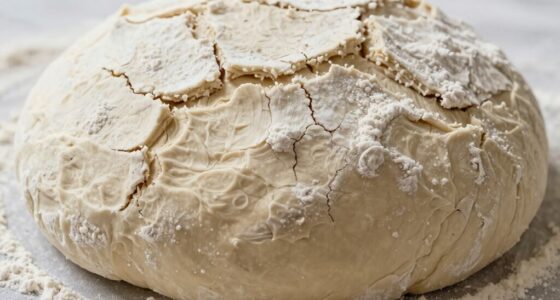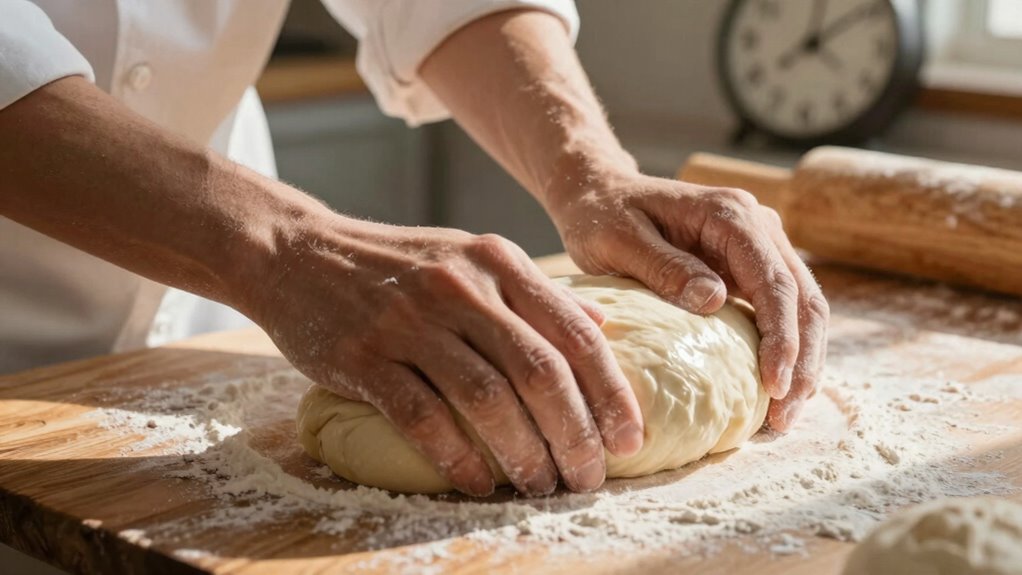

Your dough feels perfect in the morning because fermentation is steady and well-controlled, maintaining just the right elasticity and texture. By the afternoon, temperature changes and environmental factors cause fermentation to speed up or slow down, affecting how your dough feels. Over- or under-fermentation can make it sticky, dry, or lose its rise. Stay with this; you’ll discover how to keep your dough consistent and troubleshoot these shifts effectively.

Get baking supplies delivered free with Prime
- Fast, free delivery on millions of items
- Prime Video, Amazon Music and more included
- Member-only deals all year
Key Takeaways
- Temperature fluctuations throughout the day accelerate or slow fermentation, changing dough’s texture and elasticity.
- Over-fermentation by afternoon causes bubbly, sticky dough with weak structure and poor shaping.
- Under-fermentation in the morning results in tight, dry dough that doesn’t rise properly.
- Consistent environment ensures predictable fermentation, keeping dough feeling optimal at different times.
- Relying solely on time without observing dough cues can lead to mismatched fermentation stages.
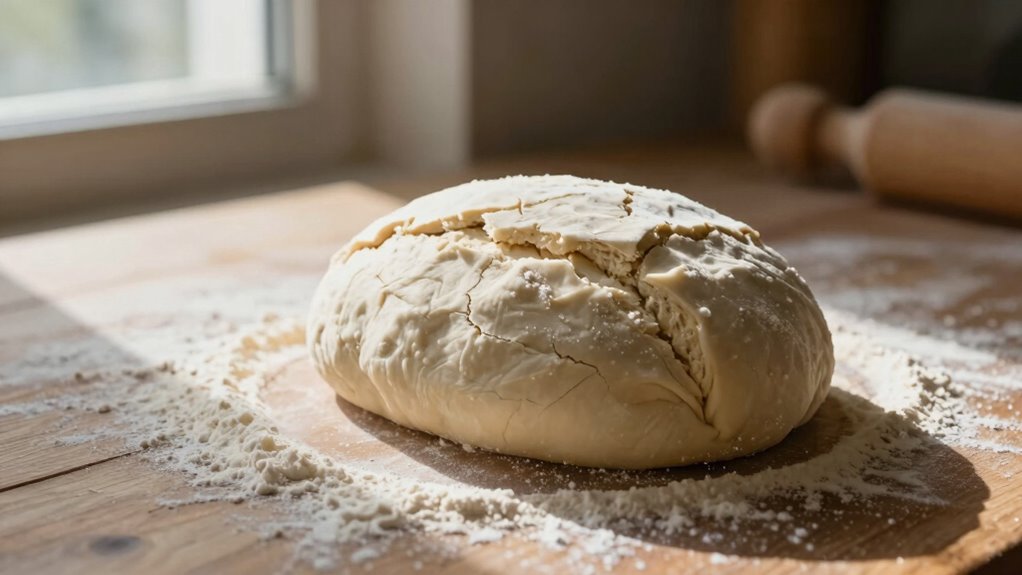
Have you ever noticed that your dough feels just right in the morning but seems off by the afternoon? It’s a common experience for home bakers, and the culprit often boils down to fermentation timing and temperature control. When you first prepare your dough, it’s still in its initial stages of fermentation. During this period, the yeast is actively consuming sugars, producing carbon dioxide, and giving your dough that perfect stretchiness and elasticity you crave. In the morning, this process is usually well-balanced because your dough has been fermenting in a controlled environment, typically at a consistent temperature. As a result, it feels just right—smooth, pliable, and ready for shaping.
Dough feels perfect in the morning but can become over or under-fermented by afternoon without proper temperature control.
However, by the afternoon, things tend to change. The fermentation process continues, but outside factors, especially temperature fluctuations, can throw it off. Warmer temperatures accelerate yeast activity, causing the dough to ferment too quickly. Over-fermentation results in a dough that’s overly bubbly, sticky, and weak in structure. It loses its elasticity, making it difficult to shape or resulting in a bread with a dense, sour taste. Conversely, if the dough is left in a cooler environment or if temperature control is inconsistent, fermentation slows down, and the dough might feel tight, dry, or under-developed, impacting the final texture and rise. Proper temperature management is crucial for maintaining the desired dough qualities throughout the day. Additionally, understanding fermentation timing allows bakers to better predict and control how their dough develops. Recognizing the impact of environment on fermentation can help you adjust your process more effectively.
Understanding fermentation timing is essential because it guides when you should start and stop the process. You want your dough to ferment long enough to develop flavor and structure, but not so long that it collapses or becomes overly sour. The key is to observe how your dough behaves at different times rather than relying strictly on clock hours. This is where temperature control becomes indispensable. Maintaining a steady, warm environment—around 75°F to 78°F (24°C to 26°C)—ensures a predictable fermentation pace. If your kitchen is cooler, consider using a proofing box or warm spot. If it’s warmer, keep an eye on the dough to prevent over-fermentation.
In essence, the difference between the morning and afternoon feelings of your dough hinges on how well you manage fermentation timing and temperature control. When these elements are balanced, your dough will stay consistent, feeling perfect at 10 A.M. and remaining manageable by 4 P.M. It’s all about creating a stable environment and paying attention to your dough’s cues. Additionally, understanding temperature fluctuations and their impact can help you better control fermentation in varying conditions. With practice, you’ll quickly learn how to fine-tune your fermentation process, resulting in bread that’s consistently delicious, no matter the time of day.
Products Worth Considering

Cuisinart PerfecTemp Electric Kettle, 1.7 L, 1500 W, 6 Temperature Settings

Instant Pot InstantChill Ice Cream Maker with Rolled Ice Cream Cold Plate, 2-Pint

Instant Pot Duo Crisp Ultimate 6.5-Quart 13-in-1 Pressure Cooker and Air Fryer
As an affiliate, we earn on qualifying purchases.
Frequently Asked Questions
How Does Ambient Temperature Affect Dough Consistency?
Temperature fluctuations markedly influence dough consistency. As ambient temperatures rise, dough becomes softer and less elastic, making it difficult to handle. Cooler temperatures enhance dough elasticity, giving it a firm, flexible feel. You notice these changes because warm air weakens the dough’s structure, while cooler air strengthens it. To maintain perfect dough, control your environment, ensuring steady, moderate temperatures that keep your dough reliably elastic and easy to work with.
Can Humidity Levels Influence Dough Fermentation?
Yes, humidity levels can influence dough fermentation. When humidity fluctuates, it affects moisture retention in your dough, making it either too dry or too sticky. High humidity helps retain moisture, encouraging active fermentation, while low humidity can cause your dough to dry out and slow down fermentation. Monitoring humidity and adjusting hydration levels accordingly guarantees consistent dough fermentation and better baking results.
What Role Does Yeast Quality Play in Dough Behavior?
Yeast quality, influenced by potency and storage conditions, directly impacts your dough’s behavior. High-quality yeast with strong potency ferments consistently, giving your dough the rise and texture you desire. Poor storage, like exposing yeast to heat or humidity, diminishes its effectiveness. Imagine fresh yeast as a reliable partner, helping your dough develop perfectly in the morning, but losing its strength by evening, resulting in inconsistent results.
How Does Kneading Time Impact Dough Flexibility?
Kneading time directly affects dough flexibility by influencing gluten development. When you knead longer, you strengthen the gluten network, making the dough more elastic and easier to shape. Proper kneading techniques guarantee even gluten formation, preventing over- or under-kneading. With ideal kneading time, your dough becomes supple, flexible, and ready for rising, leading to better texture and rise in your baked goods.
Is There an Ideal Proofing Duration for Perfect Dough?
Patience produces perfection. For a flawless proofing duration, aim for about 1 to 2 hours, or until the dough doubles in size. This window allows flavor development to flourish and gluten structure to strengthen, ensuring a tender, airy texture. Rushing the process can result in dense dough, while over-proofing may cause collapse. Trust your senses—look for size, bounce, and aroma, not just the clock.
Conclusion
Understanding why your dough changes throughout the day helps you perfect your baking. The key is managing fermentation, which is influenced by temperature and time. Did you know that dough can double in size within just four hours in warm conditions? By paying attention to these factors, you can consistently achieve that ideal texture and flavor, no matter the time. Mastering this balance guarantees your baked goods always turn out just right.