
To use controlled warmth without drying out your dough, keep it in a covered container with a damp cloth or plastic wrap to trap moisture. Place it in a warm spot, like near a radiator or inside a proofing box, but avoid direct heat or turning on the oven. You can also use a low-setting heating pad under the container for steady warmth. For more tips on maintaining perfect proofing conditions, keep exploring.

Get baking supplies delivered free with Prime
- Fast, free delivery on millions of items
- Prime Video, Amazon Music and more included
- Member-only deals all year
Key Takeaways
- Cover the dough with a damp cloth or plastic wrap to trap moisture during proofing.
- Use indirect heat sources like a proofing box, warm spot, or low-temperature heating pad.
- Maintain a consistent environment around 75-80°F to prevent drying and overproofing.
- Avoid direct contact with dry heat, such as turning on the oven, during fermentation.
- Regularly monitor and adjust humidity levels to keep the dough moist and prevent crust formation.

When proofing dough, applying gentle, controlled warmth is essential to encourage proper rising without risking dryness. Achieving this balance relies on understanding fermentation techniques and managing dough hydration levels effectively. Fermentation is the process where yeast consumes sugars, producing carbon dioxide that causes the dough to rise. Too much heat, and the yeast can become overactive or die; too little, and the dough won’t rise adequately. The key is to provide enough warmth to activate fermentation without drying out the dough.
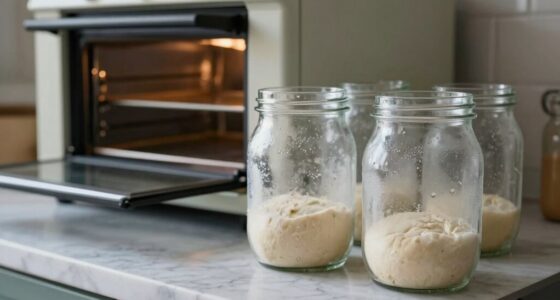
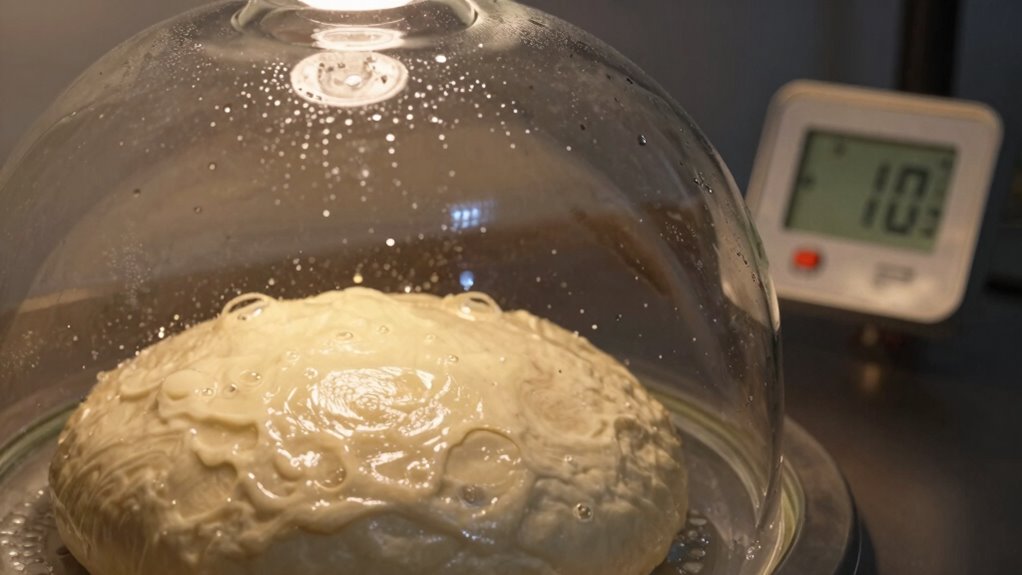
Controlling fermentation techniques involves creating a warm, moist environment. A common approach is to place your dough in a proofing container or bowl covered with a damp cloth or plastic wrap. This traps humidity and prevents moisture loss. If your kitchen is cool, you might consider using a proofing box, a warm spot near a radiator, or an oven with just the light on—never turn the oven on, as direct heat can dry out the dough. Some bakers use a heating pad set to low, placed beneath the proofing container, to maintain a consistent, gentle warmth. The goal is to keep the temperature steady around 75-80°F (24-27°C), which promotes ideal fermentation. Creating a warm environment is crucial for successful proofing and can be customized based on your kitchen conditions.
Create a warm, moist environment with cover and gentle heat for perfect dough fermentation.
Dough hydration levels play a critical role in how the dough responds to warmth. Higher hydration doughs—those with more water—tend to ferment more quickly and may require shorter proofing times. Conversely, drier doughs need a bit more time to rise and may be more sensitive to drying out. To prevent drying during proofing, ensure your dough’s hydration is adequate; it should feel tacky but not sticky. Proper hydration keeps the dough flexible, helping it expand evenly under controlled warmth, without forming a crust or surface dryness. Additionally, understanding fermentation techniques can help you better regulate the environment and timing for optimal proofing. Regularly inspecting your dough and adjusting humidity levels can also improve the final result.
As an affiliate, we earn on qualifying purchases.
Frequently Asked Questions
Can I Use a Microwave for Controlled Warmth?
You can use a microwave for controlled warmth if you follow microwave safety guidelines carefully. Keep the dough covered to prevent drying and use short, low-power bursts to avoid overheating. However, for better control, consider alternative warming methods like a proofing box or a warm spot in your oven. These options help maintain consistent temperature without risking dryness, ensuring your dough stays soft and moist.
How Do Humidity Levels Affect Dough Rising?
Humidity levels profoundly impact dough rising by influencing the fermentation process and yeast activation. When humidity is high, it keeps the dough moist, aiding yeast activity and encouraging a better rise. Conversely, low humidity can dry out the dough, slowing fermentation and hindering yeast activation. Maintaining ideal humidity ensures the dough stays moist enough for consistent rising, producing a light, airy texture.
What Temperature Is Too Warm for Dough?
You should avoid temperatures above 80°F for dough fermentation, as heat speeds up yeast activity excessively. When it gets too warm, usually over 85°F, yeast can become overwhelmed, producing too much gas quickly and risking overproofing. This can lead to a loss of dough structure and a poor rise. Keep your dough in a warm, controlled environment, ideally around 75-80°F, to guarantee steady yeast activity and ideal fermentation.
Is It Necessary to Cover Dough During Warming?
Yes, covering the dough during warming is necessary to maintain dough moisture and guarantee even warmth consistency. When you cover it, the dough retains humidity, preventing it from drying out or forming a crust. Use a damp cloth or plastic wrap to trap moisture while allowing gentle warmth to penetrate. This method helps the dough warm uniformly without losing moisture, making it easier to work with and improving baking results.
Can I Use a Heat Pad Safely for Dough?
Yes, you can use a heat pad safely for dough, but treat it like a gentle hug rather than a blazing fire. Think of it as an alternative heating method that provides consistent warmth without drying out your dough. To keep moisture in, combine this with proper dough hydration techniques, like covering your dough or adding a bit of water. Always monitor the temperature to prevent overheating and preserve your dough’s softness.
As an affiliate, we earn on qualifying purchases.
Conclusion
Mastering controlled warmth is like tending a gentle fire—warm enough to help your dough rise, but not so hot it burns out. Keep a close eye on the environment, and you’ll create a cozy haven for your dough to develop perfectly. With patience and care, you’ll turn simple ingredients into a fluffy masterpiece. Think of it as nurturing a delicate bloom—with just the right touch, your bread will flourish without drying out.
low setting heating pad for proofing
As an affiliate, we earn on qualifying purchases.
As an affiliate, we earn on qualifying purchases.
dough fermentation temperature controller
As an affiliate, we earn on qualifying purchases.
As an affiliate, we earn on qualifying purchases.
Halloween Picks
halloween
As an affiliate, we earn on qualifying purchases.