
You may have a beautiful-looking loaf, but underdeveloped flavor often results from rushing fermentation or using poor-quality ingredients. If the dough hasn’t fermented enough, it won’t develop complex flavors, or over-fermentation can cause sourness and weak structure. Temperature control also plays a key role—hot or cold environments hinder ideal yeast activity. Paying attention to these factors guarantees your bread tastes as good as it looks; there’s more to uncover for perfect flavor development.

Get baking supplies delivered free with Prime
- Fast, free delivery on millions of items
- Prime Video, Amazon Music and more included
- Member-only deals all year
Key Takeaways
- Insufficient fermentation time can result in appealing appearance but underdeveloped, flat flavors.
- Overly rapid fermentation or rushing the process prevents the full development of complex flavors.
- Using old or low-quality ingredients limits microbial activity and flavor development.
- Improper temperature control slows yeast activity, leading to a bland taste despite good looks.
- Neglecting proper fermentation monitoring causes underdeveloped flavors even if the bread appears perfect.
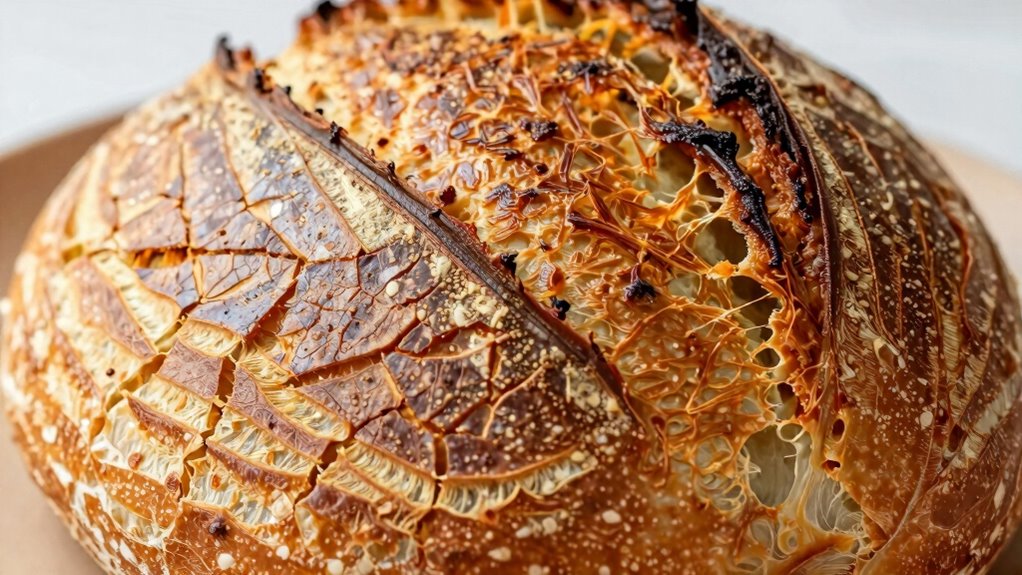
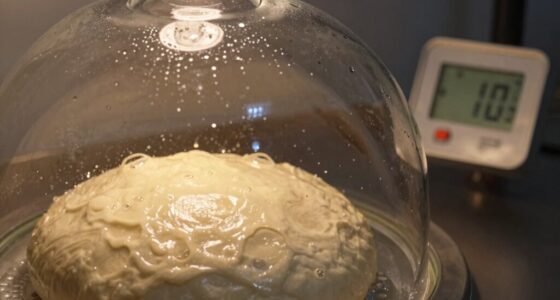
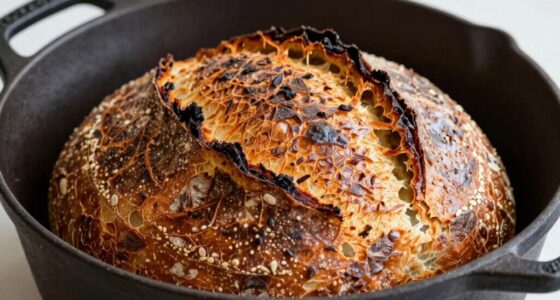
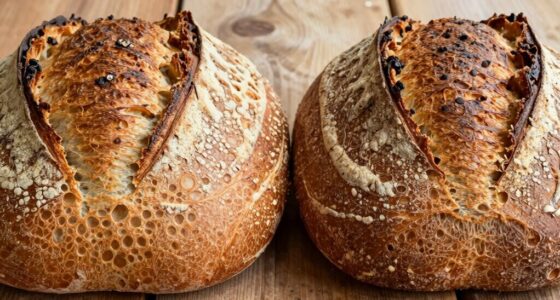
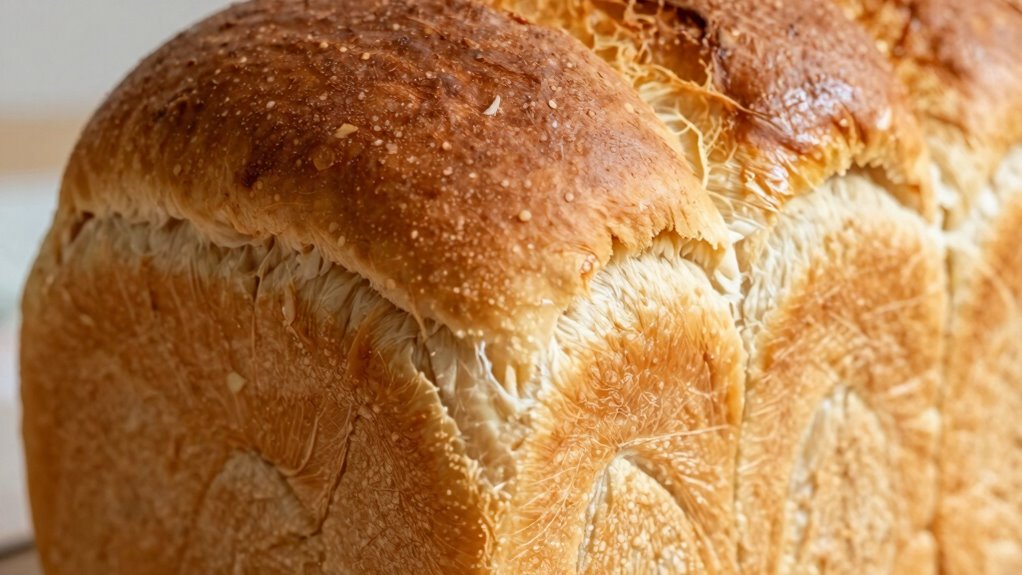
Even though your bread may have a glossy crust and a perfect rise, it can still taste underdeveloped because of issues during fermentation or baking. One of the main factors influencing flavor development is fermentation timing. If you don’t allow the dough enough time to ferment, it won’t develop the complex flavors that come from proper yeast activity. Conversely, over-fermentation can lead to a sour, off-putting taste and a weakened gluten structure, which affects both texture and flavor. To get the best flavor, you need to find the right balance—monitor your dough closely and trust your senses. Use clues like dough expansion, aroma, and texture to gauge when fermentation is complete. Rushing this process can leave your bread tasting flat or bland, despite its appealing appearance. Additionally, understanding how fermentation affects flavor can help you fine-tune your process for better results. The microbial activity during fermentation is what produces many of the flavor compounds that give bread its depth and richness.
Proper fermentation timing is key to unlocking your bread’s full flavor potential.
Another critical element is ingredient quality. Using fresh, high-quality flour and other ingredients makes a noticeable difference in flavor. Cheap or old flour may lack the necessary enzymes and nutrients to support proper fermentation, resulting in a dull or underdeveloped taste. Fresh yeast and water also matter—using stale yeast reduces its leavening power and flavor potential. When your ingredients are top-notch, you give your bread a better chance to develop rich, nuanced flavors during fermentation and baking. If you skimp on quality, your bread might look good but won’t reach its full potential in taste. Ensuring proper ingredient freshness can significantly enhance the overall flavor profile. Proper storage practices for ingredients can also help maintain their quality over time.
Temperature control during fermentation is equally vital. If your dough ferments in a cold environment, the yeast activity slows down, leading to incomplete flavor development. On the other hand, too high a temperature can cause the yeast to overreact, producing a sour or yeasty taste and weakening the dough’s structure. Keeping fermentation in a warm, consistent environment helps your dough develop the right flavors and texture. Proper temperature control also prevents unwanted microbial activity that can negatively impact flavor. Maintaining a stable environment minimizes fluctuations that could hinder optimal fermentation.
As an affiliate, we earn on qualifying purchases.
Frequently Asked Questions
Can Overproofing Cause Bread to Look Good but Taste Flat?
Yes, overproofing can cause your bread to look good with a nice crust color but taste flat. When you overproof, the dough becomes too airy and weak, leading to a bread texture that’s dense and underdeveloped in flavor. The crust may still develop a good color, but the interior lacks the complexity. To fix this, proof just until it’s risen, avoiding over-fermentation for better flavor and texture.
How Does Oven Temperature Affect Bread’s Flavor Development?
Did you know that oven temperature impacts flavor development in 80% of baked breads? When you bake at the right temperature, the crust coloration enhances through the Maillard reaction, creating rich, complex flavors. Too high, and you risk burning the crust; too low, and flavor development stalls. Keeping an ideal oven temperature guarantees your bread develops a beautiful crust and deep, satisfying taste.
Does Using High-Gluten Flour Impact Flavor Versus Appearance?
Using high-gluten flour primarily boosts gluten strength, giving your bread a better structure and chew. However, it doesn’t notably enhance flavor on its own. If you want flavor enhancement, consider adding ingredients like whole grains or longer fermentation times. While high-gluten flour improves appearance by creating a strong, airy crumb, focus on fermentation and ingredient quality for richer, more developed flavors in your bread.
Is It Better to Ferment Bread Dough Slowly or Quickly?
You should ferment bread dough slowly, though it might seem counterintuitive when you’re eager to bake. Longer fermentation enhances flavor and dough consistency, allowing enzymes to develop complex tastes. Quick fermentation might save time but often results in a bland, underdeveloped loaf. Think of it like rushing a masterpiece—skimming the surface, missing the depth. Patience in fermentation opens up rich flavors, transforming simple ingredients into extraordinary bread.
Can Adding Too Much Sugar or Fat Hinder Flavor Development?
Adding too much sugar or fat can hinder flavor development because it disrupts the sweet balance and influences the bread’s overall taste. Excess sugar can overpower subtle flavors, making the bread overly sweet, while too much fat can create a greasy texture and mask other nuanced tastes. Moderation is key; balancing sugar and fat guarantees the bread develops complex, well-rounded flavors without overpowering the natural dough characteristics.
As an affiliate, we earn on qualifying purchases.
Conclusion
Your bread’s glossy crust may shine like a polished mirror, but beneath that surface, the story remains unfinished—like a canvas waiting for its final brushstroke. To truly develop flavor, you need patience, allowing each ingredient to whisper its secrets over time. Think of your bread as a garden; the more you nurture and wait, the richer and more vibrant the harvest. Embrace the slow process, and your bread will finally reveal its true, flavorful soul.
As an affiliate, we earn on qualifying purchases.
As an affiliate, we earn on qualifying purchases.
Halloween Picks
halloween
As an affiliate, we earn on qualifying purchases.