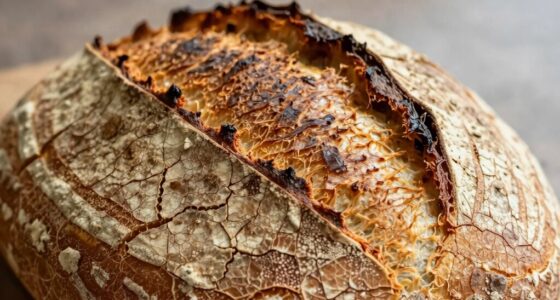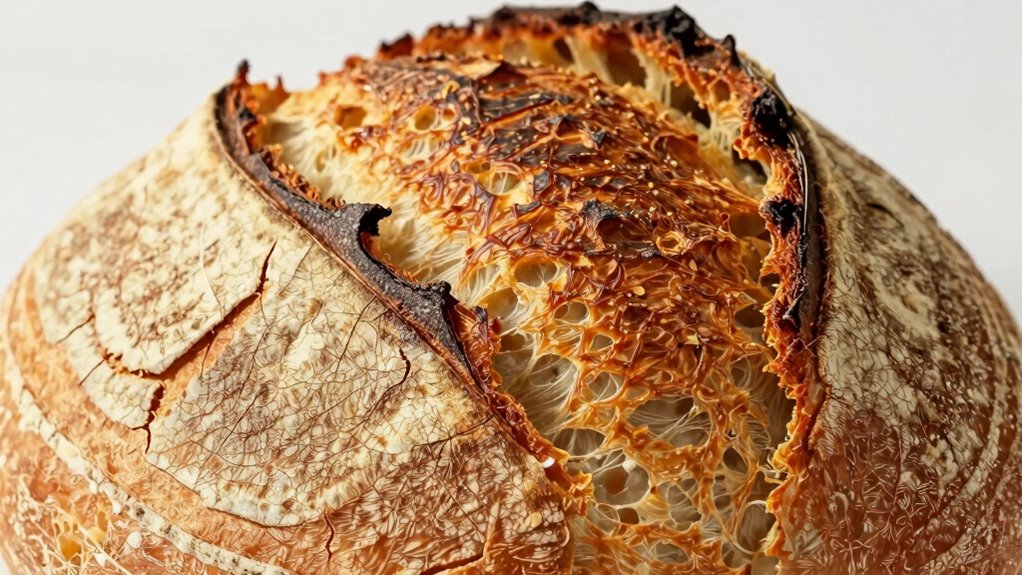

Your bread bursts on the side instead of along the score when you haven’t scored deeply or confidently, causing gases to escape through weak spots. Over- or under-proofing can weaken gluten and reduce elasticity, making controlled expansion harder. Poor handling, uneven scoring, or improper oven spring control also contribute. To prevent side bursts, make certain your dough is well-proofed, use sharp blades for precise cuts, and handle the dough gently. Keep exploring to discover more tips for perfect loaf shaping.
Open a free Amazon Business account
Business pricing, bulk buying and tax-exempt orders.
As an affiliate, we earn on qualifying purchases.
Key Takeaways
- Insufficient or uneven scoring causes gases to escape through weak spots, leading to side bursts instead of along the score lines.
- Over-proofed dough loses elasticity, making it difficult to expand properly and increasing the risk of side ruptures.
- Improper scoring depth or technique directs oven spring sideways, causing the bread to burst outside the scored area.
- Under-proofed dough has limited gas, resulting in pressure buildup that escapes through unintended side openings.
- Poor dough handling or environmental factors weaken the crust, increasing the likelihood of side bursting during baking.
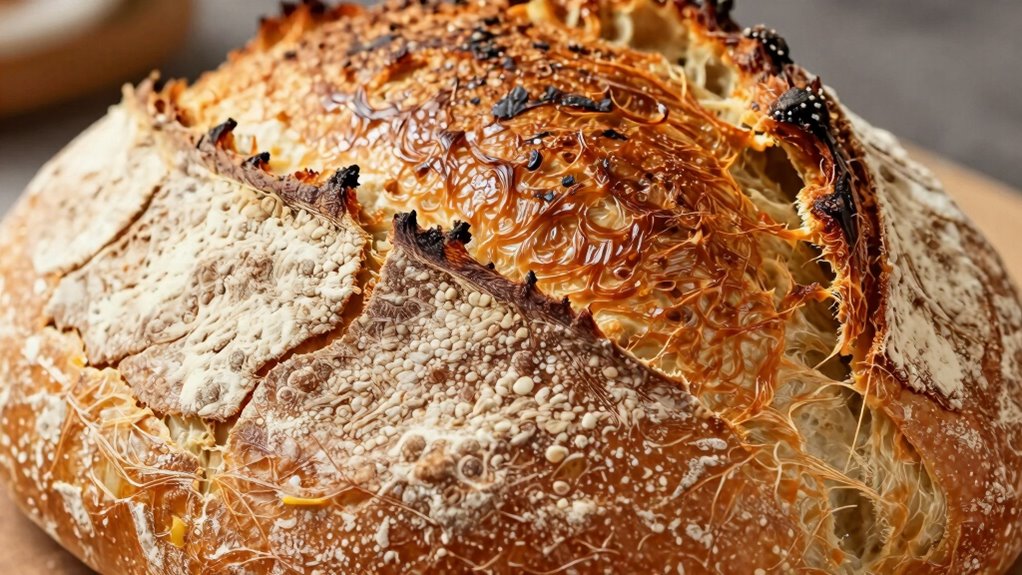
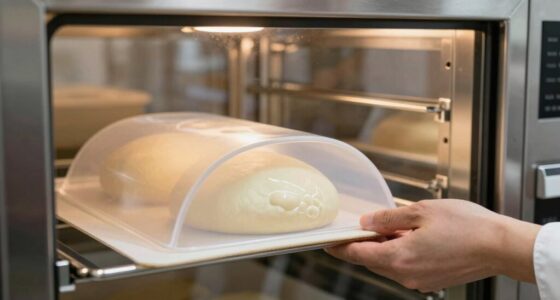
Have you ever wondered why your bread sometimes bursts open on the sides instead of splitting along the scored lines? It’s a common baking frustration, and the answer often lies in your proofing techniques and how you manage oven spring. When bread puffs up unevenly, it’s usually because the dough wasn’t prepared or handled correctly before baking. Proper proofing is essential—you want the dough to rise just enough to develop flavor and structure, but not so much that it loses its shape. Over-proofed dough can lead to weak gluten structure, causing the bread to burst unpredictably when exposed to the heat of the oven.
Proper proofing ensures your bread rises just right, preventing unpredictable bursts and uneven expansion during baking.
Oven spring, the rapid rise of bread during the first few minutes of baking, plays a significant role here. If your dough isn’t adequately proofed, or if it’s over-proofed, the oven spring can become uncontrollable. An under-proofed loaf may not have enough gas build-up to rupture along the scored lines, instead finding the weakest point—often the sides—and bursting open there. Conversely, over-proofed dough may have lost its elasticity, making it harder for the scored lines to direct the expansion properly. The key is to strike a balance: proof the dough until it’s just ready, with the surface slightly springy to the touch but not overly risen.
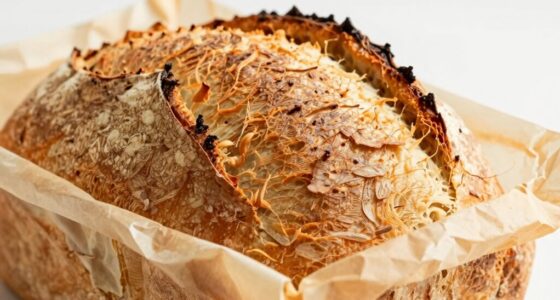
Another factor to think about is how you score your bread. Deep, deliberate cuts help control where the bread expands, guiding the oven spring along the intended lines. If your scores are too shallow or uneven, the expanding gases have fewer options but to burst out elsewhere—often on the sides. Make sure your cuts are clean, deep enough, and positioned correctly. Using a sharp blade and a confident, swift motion ensures clean cuts that facilitate proper expansion. Additionally, scoring technique can influence where the bread expands most effectively. Paying attention to the dough temperature before scoring can also make a difference, as it affects how cleanly the cuts open during baking. Properly managing proofing environment and dough handling can significantly improve your results and reduce side bursts.
As an affiliate, we earn on qualifying purchases.
Frequently Asked Questions
Can the Type of Flour Affect How Bread Expands During Baking?
Yes, the type of flour affects how bread expands during baking. Higher-protein flours, with more gluten development, give your bread better structure and elasticity, allowing it to rise evenly. Low-protein flours, like cake flour, create less gluten, leading to uneven expansion and bursting on the sides. Choosing the right flour protein content guarantees your bread expands properly, preventing it from bursting and giving you a well-shaped loaf.
Does Oven Temperature Influence Where the Bread Bursts?
You might notice your bread bursting on the side due to oven heat, which affects crust formation. When the oven is too hot, the outer layer quickly hardens, preventing proper expansion along the score lines, causing it to burst elsewhere. Conversely, a more controlled temperature allows the bread to expand evenly, following the scored pattern. So, adjusting your oven heat can guide where your bread bursts, giving you a cleaner, more predictable loaf.
How Does Humidity Impact Bread Scoring and Expansion?
Humidity effects your bread scoring and expansion considerably. High humidity makes the dough more elastic, which can reduce scoring precision, causing the cuts to close up during baking. Conversely, low humidity helps the dough hold its shape better, allowing for cleaner, sharper scores that expand evenly. To get the best results, control humidity levels in your baking environment, ensuring your scores open properly and your bread expands predictably.
Is the Shape of the Dough Before Baking a Factor?
Did you know that over 60% of bread failures come from improper dough shape? Your dough’s shape before baking influences how it expands, as it affects dough elasticity. If you don’t allow sufficient fermentation time, the dough may lack strength, causing side bursts instead of neat scoring. Proper shaping guarantees even expansion, while adequate fermentation develops gluten, making your dough more resilient and preventing those unwanted cracks on the sides.
Can the Age of the Dough Change the Bursting Pattern?
Yes, the age of the dough can change the bursting pattern. As dough ferments, yeast activity increases, which affects gluten development and dough elasticity. Over-fermented dough becomes more relaxed, making it prone to bursting on the sides instead of scoring. Conversely, fresher dough with controlled fermentation maintains better structure, guiding expansion through the score. So, managing fermentation duration helps control where your bread bursts during baking.
As an affiliate, we earn on qualifying purchases.
Conclusion
So, next time your bread bursts on the side instead of scoring properly, think of it as a stubborn knot in a shoelace—resisting your efforts. With a few tweaks, like scoring deeper or adjusting your oven temperature, you’ll tame that wild oven dance. Remember, baking bread is like a conversation—sometimes it needs a little patience and understanding. Keep experimenting, and soon your loaves will open up beautifully, like flowers blooming in the morning sun.
As an affiliate, we earn on qualifying purchases.
As an affiliate, we earn on qualifying purchases.
NFL season / tailgating Picks
team gear
As an affiliate, we earn on qualifying purchases.