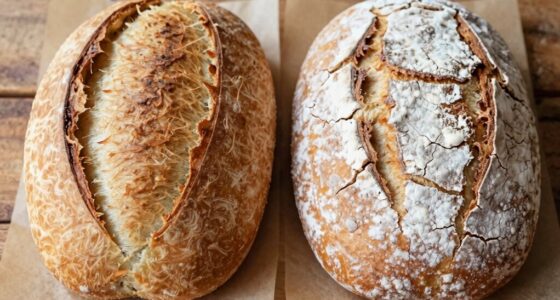

Monitoring pH in your sourdough helps you track fermentation progress and microbial activity, revealing acidity levels and dough development. As fermentation advances, pH drops, indicating active bacteria and yeast, but it doesn’t show everything about dough health or flavor. Factors like temperature, ingredients, and environment also influence pH. To get a complete picture, you’ll want to take into account other signs. Keep exploring to learn how pH fits into the bigger picture of sourdough baking.

Get baking supplies delivered free with Prime
- Fast, free delivery on millions of items
- Prime Video, Amazon Music and more included
- Member-only deals all year
Key Takeaways
- pH indicates fermentation progress and acidity, helping determine dough readiness and microbial activity.
- It shows acid production levels but doesn’t reflect dough strength, flavor complexity, or gluten development.
- Monitoring pH guides optimal fermentation timing but can be influenced by external factors like temperature and flour type.
- pH readings alone don’t reveal microbial diversity or overall dough health; they should be combined with other indicators.
- Accurate measurement requires proper sampling and calibration; pH is a useful tool but not a comprehensive assessment.
As an affiliate, we earn on qualifying purchases.
What Does pH Reveal About Sourdough Fermentation?

Understanding the pH level in sourdough is essential because it reveals how fermentation progresses and how the dough’s acidity develops over time. By monitoring pH, you can gauge the fermentation timing, knowing when your sourdough is at its ideal stage. As the dough ferments, the pH drops, indicating increased acidity, which directly influences flavor development. A lower pH usually means a tangier taste, while a higher pH results in milder flavors. Tracking pH helps you determine when to continue fermenting or when to stop, ensuring consistent results. It also provides insight into the activity of wild yeasts and bacteria, giving you a clearer understanding of your sourdough’s maturation process and overall health. Energy-efficient cloud servers are an example of innovative solutions that prioritize sustainability and security, similar to how monitoring pH promotes consistent and healthy fermentation.
sourdough fermentation pH tester
As an affiliate, we earn on qualifying purchases.
As an affiliate, we earn on qualifying purchases.
How Does pH Change as Your Sourdough Ferments?

As your sourdough ferments, you’ll notice the pH gradually drops, signaling increased acidity. This change is driven by bacterial activity producing acids that influence the dough’s environment. Understanding how acid production affects pH helps you control fermentation and achieve the desired flavor. Proper piercing care and hygiene practices can prevent infections that might disrupt fermentation processes. Monitoring pH levels also offers insights into Gold IRA Markets, which emphasize transparency and quality in investment options. Additionally, tracking pH can help identify effective email marketing strategies to optimize your baking communications.
pH Drop Over Time
When your sourdough ferments, the pH level steadily drops, indicating increasing acidity. This decline reflects the fermentation rate, which influences how quickly the pH decreases. A faster fermentation causes a more rapid pH drop, while a slower process results in a gradual change. Maintaining pH stability is essential to prevent excessive acidity that can hinder yeast activity or produce sour flavors. As fermentation progresses, the acidity rises, often stabilizing once the microbes reach equilibrium. Monitoring the pH drop over time helps you gauge fermentation progress and adjust timing accordingly. Understanding this pattern allows you to control the sourness and texture of your bread, ensuring consistent results. Ultimately, tracking pH changes offers valuable insight into your dough’s fermentation dynamics and the microbial activity involved.
Bacterial Activity Influence
Bacterial activity plays an essential role in driving pH changes during sourdough fermentation. As bacteria consume sugars, they produce acids that lower the pH, shaping the dough’s acidity. The fermentation temperature influences bacterial growth rates; warmer temperatures accelerate activity, causing a quicker pH drop, while cooler temps slow the process. The type of flour you use also affects bacterial activity, as different flours provide varying nutrient profiles and buffering capacities. Whole grain flours tend to support faster acidification due to their higher mineral and nutrient content, whereas refined flours may result in a more gradual pH decline. Understanding how bacterial activity responds to these factors helps you control fermentation, ensuring your sourdough develops the desired acidity and flavor profile. Additionally, the adoption of proper feeding and maintenance routines can influence the stability and consistency of the fermentation process.
Acid Production Dynamics
Ever wondered how your sourdough’s pH shifts during fermentation? As the fermentation timeline progresses, acid production accelerates, causing pH to drop. Initially, the dough’s pH is neutral, but as lactic and acetic acids develop, it becomes more acidic. This change reflects the evolving microbial balance, with lactic acid bacteria dominating early, then shifting as fermentation continues. Understanding pH dynamics can help you better interpret fermentation stages.
- Early stages see a stable pH around 6.0, with gentle acid buildup
- Midway, pH drops more rapidly as microbial activity intensifies
- Later, pH stabilizes around 3.8–4.0, indicating peak acidity and active fermentation
Understanding these acid production dynamics helps you gauge fermentation progress and adjust timing for most favorable sourness and dough strength.
kitchen pH test strips for bread
As an affiliate, we earn on qualifying purchases.
As an affiliate, we earn on qualifying purchases.
How Can You Measure pH in Sourdough?

You can measure pH in sourdough using simple tools like pH test strips or digital pH meters. It’s important to follow proper sampling techniques to get accurate readings. In this section, we’ll explore how to use these methods effectively for reliable results. Additionally, understanding the accuracy of measurements is crucial for assessing the fermentation process and achieving consistent baking outcomes. Ensuring proper calibration of your pH measuring device can significantly improve measurement accuracy and provide more reliable data. Monitoring sound quality and levels during fermentation can also offer indirect insights into the activity within your sourdough starter. Recognizing how measurement techniques impact your results can help you better interpret your pH data.
Using pH Test Strips
Measuring the pH of sourdough with test strips offers a simple and effective way to monitor the dough’s acidity. To get accurate readings, you’ll want to contemplate factors like fermentation temperature and flour mineral content, which influence pH levels. Using test strips is straightforward: dip, wait, and compare the color change to a chart. Understanding pH can help you interpret your results more effectively, ensuring better control over your fermentation process. The strip quickly reacts to acidity, giving you immediate feedback. It helps you track fermentation progress without complex equipment. You can adjust your process based on pH trends to ensure consistent sourdough quality. Keep in mind, environmental factors like temperature can affect pH, and flour mineral content may influence initial acidity. Additionally, understanding fermentation conditions can help optimize your sourdough development. Being aware of how microbial activity impacts acidity can further enhance your baking results. These strips provide a practical, low-cost method to stay in tune with your dough’s development.
Digital pH Meters
Digital pH meters provide a fast and accurate way to measure the acidity of sourdough. They help you monitor the fermentation timeline, giving real-time insights into how your dough develops over time. By measuring pH precisely, you can better understand the microbial balance, ensuring the right environment for beneficial bacteria and yeast to thrive. Unlike test strips, digital meters offer consistent readings, making it easier to track changes and adjust your process accordingly. Proper calibration and clean probes are essential for accurate results. Using a digital pH meter regularly can help you optimize fermentation conditions, improve flavor, and achieve reliable sourdough quality. This method is especially helpful if you want detailed data to refine your baking techniques over multiple batches.
Sampling Technique Tips
To get accurate pH readings in sourdough, it is essential to follow proper sampling techniques. Sampling variability can lead to inconsistent results, so consistency is key. Make sure to use a clean, sterilized utensil to prevent contamination risks that could skew your readings. When collecting a sample, avoid taking just surface material; instead, mix the dough thoroughly for a representative sample. Always measure the pH promptly after sampling to prevent changes due to fermentation. Keep your sample at a stable temperature, as fluctuations can affect pH readings. Proper technique ensures reliable data, helping you monitor fermentation progress accurately and maintain dough quality.
professional sourdough starter kit
As an affiliate, we earn on qualifying purchases.
As an affiliate, we earn on qualifying purchases.
What Does pH Tell You About Your Dough’s Health?
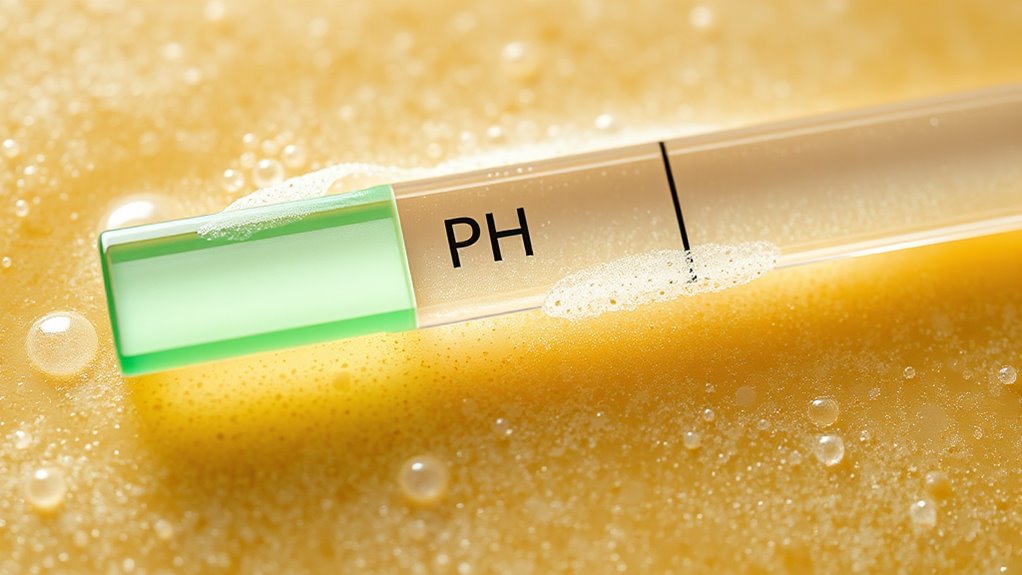
Have you ever wondered what your dough’s pH level reveals about its health? A properly balanced pH indicates good gluten development, which affects dough elasticity and strength. If the pH is too high, it may suggest insufficient fermentation or that the dough hasn’t developed enough acidity, potentially leading to weak gluten structure. Conversely, a low pH shows active fermentation, but if it drops too quickly or too low, it might signal overly warm fermentation temperatures, risking overacidification. Monitoring pH helps you gauge whether fermentation conditions are *ideal*. Consistent pH readings can alert you to issues with temperature control or fermentation progress, ensuring your dough develops properly. In short, pH acts as a window into your dough’s fermentation health and gluten quality.
Why You Shouldn’t Rely Only on pH Measurements
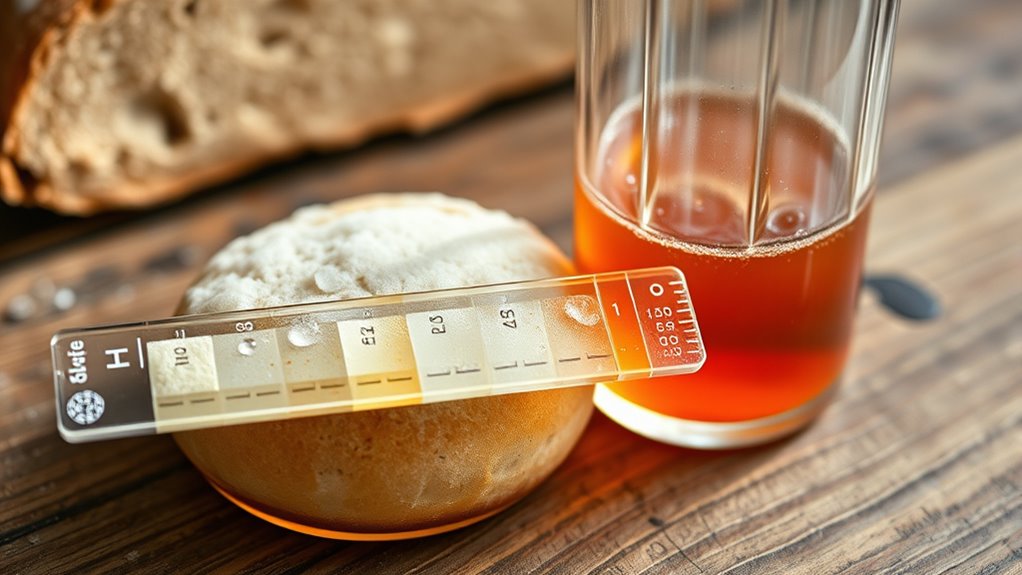
While pH measurements provide valuable insights into your dough’s fermentation, relying solely on them can be misleading. pH doesn’t tell the full story about dough strength, texture, or flavor development, and it can fluctuate due to factors unrelated to dough health. For example, fermentation timing influences pH but doesn’t reveal microbial diversity, which impacts flavor complexity. Also, pH can change quickly with temperature shifts or ingredient variations, giving a false sense of progress. Additionally, understanding the ventilation considerations and how they influence fermentation conditions can help you interpret pH readings more accurately. Proper air flow management is essential because it affects temperature and humidity, further impacting fermentation and pH levels. Recognizing how environmental factors influence your dough can prevent misinterpretation of pH data, especially when ambient conditions fluctuate unpredictably. Being aware of temperature fluctuations and their effects can also help you interpret pH readings within the broader context of fermentation.
What Other Factors Affect pH in Sourdough?

pH in sourdough isn’t determined solely by fermentation activity; many other factors can influence its level. Fermentation byproducts, such as lactic acid and acetic acid, directly impact acidity, but their concentration depends on the fermentation process. Additionally, baking temperature plays a role; higher temperatures can accelerate yeast activity and affect the pH balance. The ingredients you use, like flour type and water mineral content, also influence pH levels, as different compositions can alter fermentation pathways. Even the dough’s hydration level affects how acids develop and stabilize. Moreover, astrological signs are sometimes whimsically linked to different baking outcomes, although scientific skepticism remains. Understanding these factors helps you control pH more effectively, but remember that pH can fluctuate due to multiple variables beyond just fermentation activity. Recognizing the influence of fermentation conditions can further refine your sourdough results, especially considering how microbial activity impacts acid production. Additionally, pH monitoring techniques can help bakers maintain more consistent results in their sourdough. Incorporating proper equipment like pH meters can significantly improve the accuracy of your measurements and resulting bread quality.
How Is pH Different From Other Signs of Dough Readiness?
Understanding how pH differs from other signs of dough readiness is key to mastering sourdough baking. While fermentation indicators like bubbles or aroma can show activity, pH measures the acidity level directly, providing a more precise assessment. Unlike dough texture, which can feel firm or sticky, pH offers a scientific reading of fermentation progress.
- Fermentation indicators like visual bubbles and smell give you a general sense of activity, but aren’t exact.
- Dough texture reveals physical changes, such as elasticity or stickiness, but can be subjective.
- pH provides an objective measure of acidity, helping you determine if fermentation is on track or if adjustments are needed.
Together, these signs help you understand dough readiness more accurately, but pH adds an essential layer of precision.
How Can Bakers Use pH Data to Improve Baking?

Bakers can leverage pH data to fine-tune their fermentation process and achieve more consistent results. Monitoring pH helps you control fermentation speed, ensuring it doesn’t stall or accelerate too quickly, which impacts dough structure. Adjusting fermentation based on pH levels also enhances flavor development, as specific pH ranges promote desirable sour notes. Use the table below to interpret pH readings and their effects:
| pH Range | Fermentation Speed | Flavor Development |
|---|---|---|
| 3.5–3.8 | Slow | Mild, subtle sour |
| 3.8–4.2 | Moderate | Well-rounded flavor |
| 4.2–4.5 | Fast | Tart, pronounced |
| >4.5 | Very fast | Less sour, flat |
Why Should You Look Beyond pH When Assessing Dough?

While pH provides valuable insights into the fermentation process, relying solely on it can give an incomplete picture of dough’s readiness and quality. Dough elasticity, yeast activity, and overall texture are equally important indicators. If you focus only on pH, you might miss signs of overfermentation or underdevelopment. For example, dough with good pH levels might still lack the proper elasticity, leading to poor oven spring. Similarly, yeast activity can vary despite similar pH readings, affecting rise and flavor. To truly assess dough, consider these factors:
- Dough elasticity and how it holds shape during shaping
- Yeast activity and gas production
- The dough’s feel and extensibility during handling
Frequently Asked Questions
How Accurately Does pH Predict Sourdough Flavor Development?
pH gives you a rough idea of sourdough flavor development, but it doesn’t predict it precisely. As the dough ferments, gluten strength and microbial activity influence flavor more than pH alone. You might see a certain pH, but the final flavor profile depends on many factors, like fermentation time and ingredients. So, while useful, pH isn’t a foolproof predictor of your sourdough’s taste outcome.
Can pH Levels Indicate the Presence of Unwanted Bacteria?
You can’t rely solely on pH levels to detect bacterial contamination, but they do serve as acidity markers. If the pH drops suddenly or stays unusually high, it might signal unwanted bacteria thriving or bacterial contamination. Keep an eye on pH shifts to catch potential problems early. Remember, pH provides clues, but it’s not foolproof; always combine it with visual and scent checks for a safer sourdough.
How Does Temperature Influence pH Readings During Fermentation?
Temperature effects during fermentation directly influence pH readings: higher temperatures speed up fermentation, causing pH to drop faster, while cooler temps slow the process, resulting in more gradual pH changes. You’ll notice that at warmer temperatures, acid production accelerates, lowering pH quickly. Conversely, colder environments slow microbial activity, leading to more stable pH levels over time. Adjusting temperature helps you control fermentation speed and pH development effectively.
Is There an Ideal pH Range for Optimal Gluten Development?
Imagine you’re the wizard of your bread, and the ideal pH range for gluten development is between 5.0 and 6.0. Maintaining this range boosts gluten strength and dough elasticity, giving your bread that perfect rise and chewy texture. If pH drops too low, gluten weakens, and your bread might not hold its shape. Keep an eye on pH to craft consistently delicious sourdough with excellent gluten development.
How Often Should I Monitor pH During the Fermentation Process?
You should monitor pH measurement frequency at least once every few hours during fermentation to track its progress effectively. Use simple monitoring techniques like a pH meter or test strips for quick, accurate readings. Keep an eye on pH changes to ensure your dough develops properly, but don’t overdo it—frequent testing can disrupt fermentation. Regular checks help you maintain ideal acidity and achieve consistent sourdough results.
Conclusion
Remember that pH provides valuable insights into your sourdough’s fermentation, but it doesn’t tell the whole story. It’s a tool to understand acidity, to gauge progress, and to refine your process. Yet, it’s just one piece of the puzzle—don’t rely solely on numbers. Observe your dough, trust your senses, and consider other factors. By balancing pH with intuition and experience, you’ll bake better bread, improve your skills, and enjoy the craft more deeply.
Halloween Picks
halloween
As an affiliate, we earn on qualifying purchases.