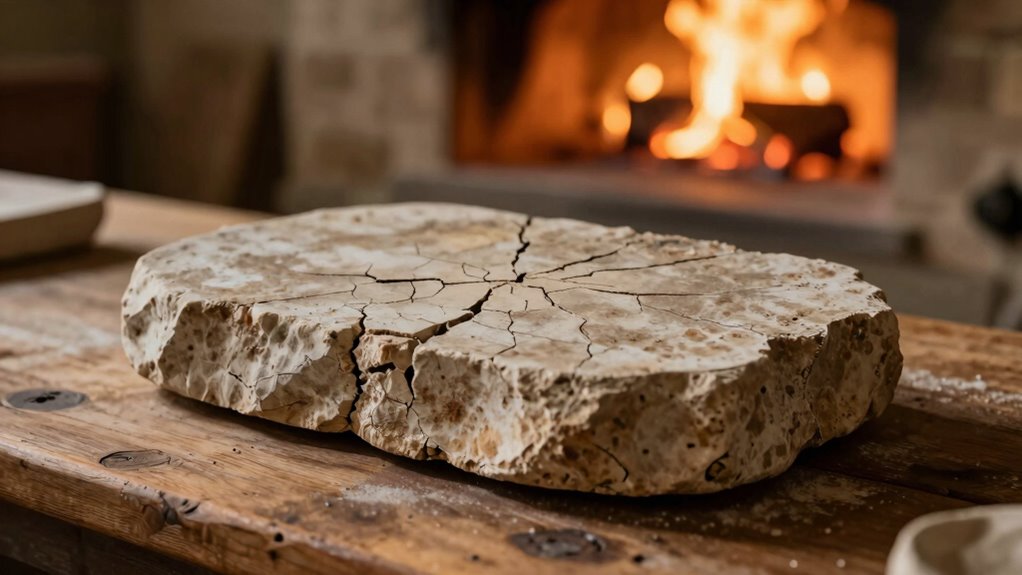

The real risk of thermal shock with baking stones comes from exposing the stone to sudden temperature changes, like placing a cold stone into a hot oven or pouring cold liquids on a hot surface. These rapid shifts create stress that can crack or break your stone unexpectedly. To avoid damage, always preheat your stone gradually and handle it carefully. Keep going to discover more tips that can help protect your baking tool and extend its life.
Key Takeaways
- Rapid temperature changes cause internal stress, risking cracks or breakage in baking stones.
- Cold stones exposed to hot oven temperatures are most vulnerable to thermal shock damage.
- Proper gradual preheating minimizes stress and extends the stone’s lifespan.
- Handling stones carefully, especially during heating and cooling, prevents sudden thermal stress.
- Rinsing hot stones with cold water or quick temperature shifts significantly increase fracture risk.
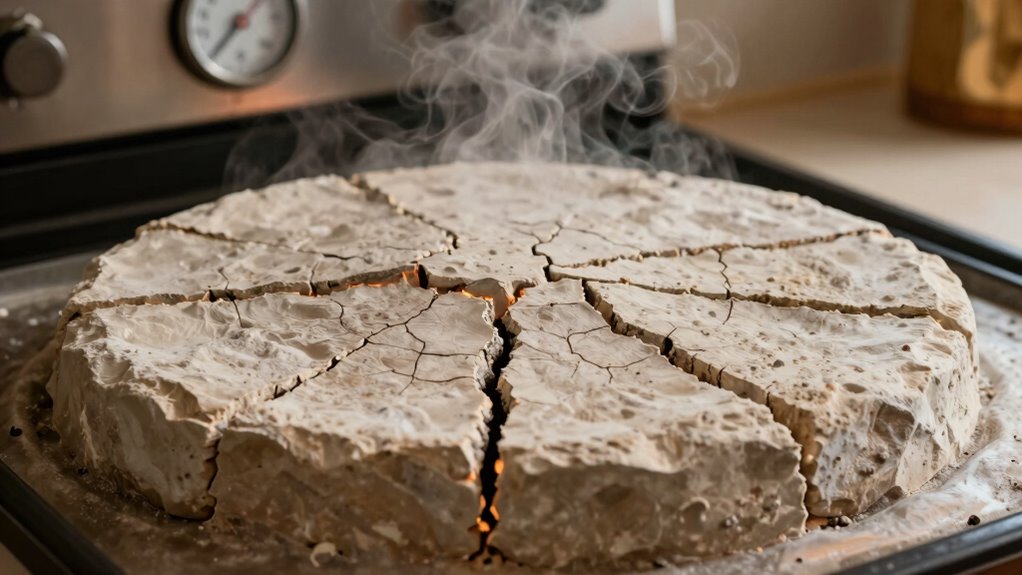
Baking stones are popular tools for achieving a crisp crust and even heat distribution, but they require careful handling to prevent damage. One of the main risks you face is thermal shock, which can crack or break your stone unexpectedly. Understanding how to manage this risk involves knowing about stone durability and heat transfer efficiency. When you place a cold stone into a hot oven or expose a hot stone to cold liquids, rapid temperature changes occur. These sudden shifts cause stress within the material, and if the stone isn’t designed to withstand such forces, it can crack.
Handle baking stones gradually to prevent cracks and ensure long-lasting, even baking results.
Stone durability varies depending on the type of material used. Most baking stones are made from firebrick, cordierite, or similar ceramics, each with different resistance levels to thermal stress. Cordierite, for example, is known for its high durability and ability to handle thermal shocks better than other ceramics. However, even the most durable stones have their limits. If you don’t handle them properly, even a high-quality stone can crack or break. Avoiding rapid temperature changes is key to maintaining the stone’s integrity and prolonging its lifespan. Proper preheating techniques are essential to prevent thermal stress and ensure longevity.
Heat transfer efficiency plays a significant role in how quickly and evenly your stone heats up or cools down. When you preheat your stone gradually, you give it time to reach an even temperature, reducing stress. If you add cold ingredients or accidentally introduce cold air during baking, the sudden temperature difference can cause thermal shock. To maximize heat transfer efficiency without risking damage, always preheat your stone slowly—start the oven at a lower temperature and gradually raise it. This approach ensures the stone warms evenly, reducing the risk of cracks from thermal stress. Additionally, proper handling practices can help prevent accidental damage and extend the lifespan of your baking stone. Recognizing the importance of material composition can further inform how you care for your stone and avoid potential damage. Properly understanding heat transfer properties can also help you optimize your baking process and prevent thermal shock. Moreover, understanding material thermal properties can guide you in choosing the best stone for your specific baking needs. Furthermore, avoid rinsing a hot stone with water, as the sudden contact with a cold liquid can cause immediate thermal shock. Instead, let the stone cool down naturally inside the oven or at room temperature before cleaning. When you handle your baking stone with care, respecting its limits and warming it gradually, you minimize the risk of cracking and maximize its heat transfer efficiency. Proper handling not only preserves the stone’s durability but also ensures you get the best results in your baking—crisp crusts, even heat, and a long-lasting tool. Remember, patience and gradual temperature changes are your best defense against the dangers of thermal shock.
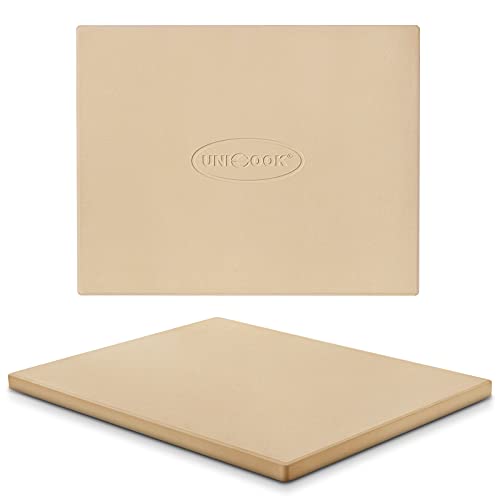
Unicook Pizza Stone, Heavy Duty Cordierite Pizza Pan for Oven and Grill, Thermal Shock Resistant Baking Stone for Bread, 15 X 12 Inch Rectangular, 6.8 lbs
- Rectangular Baking Surface: 15 x 12 inches, 0.6 inch thick
- Heavy Duty Material: Made of high-quality Cordierite
- Thermal Shock Resistant: Withstands up to 1450°F (787°C)
As an affiliate, we earn on qualifying purchases.
As an affiliate, we earn on qualifying purchases.
Frequently Asked Questions
Can Baking Stones Be Safely Used on Induction Cooktops?
You shouldn’t use baking stones on induction cooktops because of material compatibility issues. Most baking stones, like clay or ceramic, aren’t designed for direct contact with magnetic fields, which can cause damage or cracking. To keep your stone safe, avoid cleaning methods like sudden temperature changes or water immersion. Instead, gently wipe with a damp cloth and let it cool gradually before cleaning, preventing thermal shock and preserving your stone’s integrity.
What Temperature Range Is Safest for Baking Stones?
The safest temperature range for baking stones is between 450°F and 500°F. You should guarantee your oven is properly calibrated to maintain consistent heat, which helps prevent sudden temperature changes. Good heat distribution is key, so avoid abrupt temperature increases that could cause thermal shock. By monitoring your oven’s settings and allowing the stone to heat gradually, you minimize the risk of cracking and extend its lifespan.
How Long Does a Baking Stone Typically Last?
On average, your baking stone lasts about 3 to 5 years with proper care. Material durability depends on frequent use and maintenance. To extend its lifespan, avoid sudden temperature changes, and always let it cool gradually. Regularly clean off baked-on residues and avoid harsh soaps. Following these maintenance tips guarantees your baking stone remains in peak condition, helping you enjoy perfectly baked goods for years to come.
Are There Specific Brands More Resistant to Thermal Shock?
Yes, some brands are more resistant to thermal shock due to their durability and material composition. Look for baking stones made from cordierite or ceramic blends designed for high thermal stability, like Baking Steel or Emile Henry. These brands prioritize material quality, ensuring your stone withstands sudden temperature changes better. Choosing a reputable brand with strong durability ratings can greatly reduce the risk of cracking from thermal shock.
Can I Repair a Cracked Baking Stone?
Think of your baking stone as a loyal friend’s heart—cracks show where it’s vulnerable. You can attempt crack repair by carefully filling the fissures with a heat-resistant adhesive or food-safe surface sealing, but results vary. Keep in mind, repairs might not restore full strength, and the stone could crack again under thermal stress. Sometimes, embracing the imperfections with a new stone offers peace and better baking resilience.
Unicook Pizza Stone, Heavy Duty Cordierite Pizza Pan for Oven and Grill, Thermal Shock Resistant Baking Stone for Bread, 15 X 12 Inch Rectangular, 6.8 lbs
- Rectangular Baking Surface: 15 x 12 inches, 0.6 inch thick
- Heavy Duty Material: Made of high-quality Cordierite
- Thermal Shock Resistant: Withstands up to 1450°F (787°C)
As an affiliate, we earn on qualifying purchases.
As an affiliate, we earn on qualifying purchases.
Conclusion
To prevent thermal shock, you need to handle your baking stone with care, avoid sudden temperature changes, and always follow proper heating and cooling procedures. You must preheat your stone gradually, avoid pouring cold water on it, and let it cool slowly before storing. You should understand the risks, respect the material, and prioritize safety. By doing so, you guarantee your baking stone lasts longer, performs better, and keeps your baking safe and enjoyable.
Unicook Pizza Stone, Heavy Duty Cordierite Pizza Pan for Oven and Grill, Thermal Shock Resistant Baking Stone for Bread, 15 X 12 Inch Rectangular, 6.8 lbs
- Rectangular Baking Surface: 15 x 12 inches, 0.6 inch thick
- Heavy Duty Material: Made of high-quality Cordierite
- Thermal Shock Resistant: Withstands up to 1450°F (787°C)
As an affiliate, we earn on qualifying purchases.
As an affiliate, we earn on qualifying purchases.
Unicook Pizza Stone, Heavy Duty Cordierite Pizza Pan for Oven and Grill, Thermal Shock Resistant Baking Stone for Bread, 15 X 12 Inch Rectangular, 6.8 lbs
- Rectangular Baking Surface: 15 x 12 inches, 0.6 inch thick
- Heavy Duty Material: Made of high-quality Cordierite
- Thermal Shock Resistant: Withstands up to 1450°F (787°C)
As an affiliate, we earn on qualifying purchases.
As an affiliate, we earn on qualifying purchases.