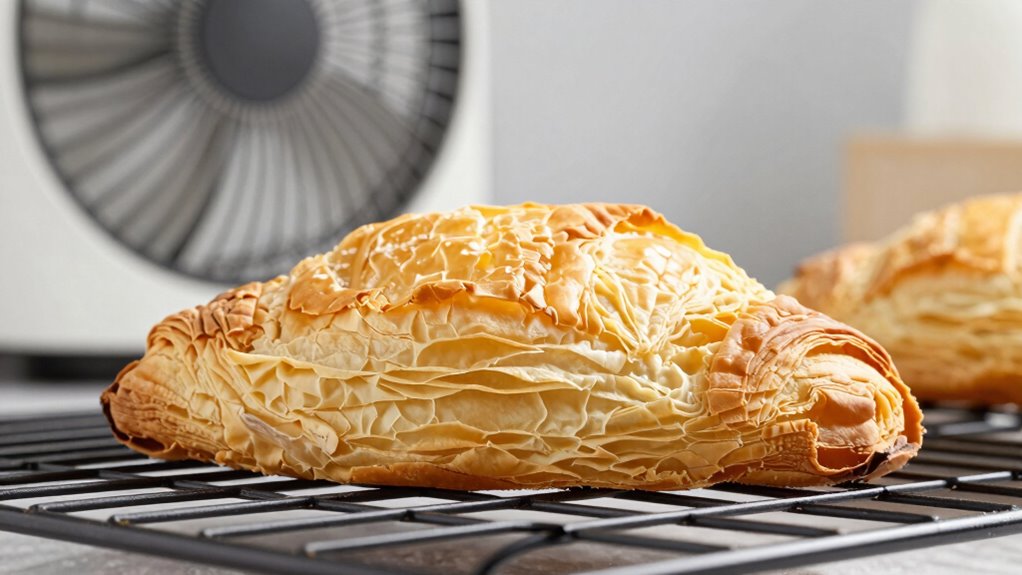

When you bake with high fan settings, the circulating hot air dries out moisture quickly in your pastries. This rapid moisture loss weakens the gluten and fat layers that help pastries hold their shape. As a result, they may rise early but then collapse or deflate. Managing how much air blows around your baked goods is key, and understanding the balance can help prevent your pastries from falling flat—there’s more to discover on how to perfect this technique.

Get baking supplies delivered free with Prime
- Fast, free delivery on millions of items
- Prime Video, Amazon Music and more included
- Member-only deals all year
Key Takeaways
- High fan speeds rapidly dry out moisture, weakening dough structure and causing pastries to collapse.
- Excessively high temperatures combined with strong fans lead to quick outside cooking and internal collapse.
- Reduced humidity from strong fans prevents proper pastry setting, increasing the risk of collapse.
- Rapid moisture loss from high fan settings causes pastry layers to weaken and fall.
- Balancing fan speed and temperature is essential to prevent uneven baking and pastry collapse.
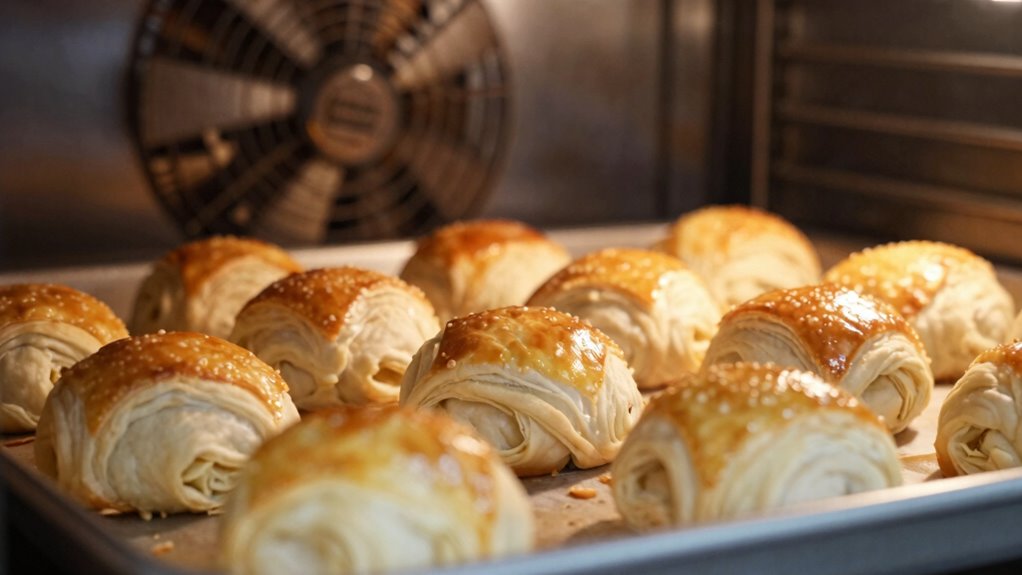
Using the right fan setting in your oven can make all the difference in preventing pastry collapse. When you bake pastries, the oven’s environment—especially the baking temperature and oven humidity—plays a crucial role in how well your pastry holds its shape. If these factors aren’t balanced correctly, your delicate creations can end up deflated and misshapen, which can be frustrating after all your effort.
Fan-assisted ovens tend to circulate hot air more evenly around your baked goods. This is generally beneficial because it ensures consistent heat, but it can also cause problems if you’re not careful. The key is understanding how the fan impacts the baking temperature and oven humidity. When the fan runs at a high setting, it often increases the overall baking temperature slightly, but more critically, it reduces the oven humidity. This drop in humidity causes moisture to evaporate faster from your pastry dough, which can lead to a weaker structure. Without enough moisture, the pastry’s gluten and fat layers don’t develop properly, making it prone to collapsing as it cools.
High fan settings can dry out pastries quickly, causing collapse—balance fan speed and humidity for perfect baking results.
If you’re using a high fan setting, you might notice that your pastries rise quickly but then deflate once out of the oven. That’s because the rapid moisture loss prevents the pastry from setting firm enough to support its own weight. To avoid this, you need to manage the oven humidity by adjusting the fan setting or the baking process itself. For example, reducing the fan speed can help retain more moisture inside the oven, maintaining a more stable environment for your pastry to set properly. Alternatively, you can introduce a small tray of water into the oven to boost humidity, which helps keep the dough moist during baking. Additionally, understanding how oven environment factors impact baking can help you achieve better results. Properly managing these baking conditions can significantly improve your consistency in pastry outcomes. Recognizing the impact of airflow on moisture retention can help you fine-tune your baking process.
Furthermore, paying attention to baking techniques and how they interact with oven settings can make a noticeable difference in your final product. Baking temperature also interacts with fan settings. When the oven is too hot, combined with a high fan setting, the outside of your pastry may cook too quickly, sealing in moisture initially but causing rapid drying afterward. This mismatch can cause the pastry to collapse as it cools. Conversely, setting the oven at a slightly lower temperature and using a gentler fan setting can give your pastry time to develop a sturdy structure before the moisture escapes. This delicate balance between temperature and humidity ensures your pastry bakes evenly, remains stable, and retains that perfect flakiness or rise you’re aiming for. Adjusting oven settings based on the type of pastry and desired outcome is essential for optimal results.
Ultimately, understanding how your oven’s fan affects baking temperature and oven humidity is essential. Use the right fan setting for the type of pastry you’re making, and don’t be afraid to experiment with adjustments. A little attention to these details can mean the difference between a beautifully risen, flaky pastry and one that collapses before you even get to enjoy it.
Products Worth Considering

Instant Pot Vortex Plus 10-Quart 7-in-1 Air Fryer Oven

Le Creuset Enamemed Cast Iron Oval Dutch Oven, 5 qt., White/Crucible

Le Creuset Signature Enameled Cast Iron Round Dutch Oven, 5.5 qt, Deep Teal
As an affiliate, we earn on qualifying purchases.
Frequently Asked Questions
Can Adjusting Fan Settings Prevent All Types of Pastry Collapse?
Adjusting fan settings can help prevent some types of pastry collapse, but it won’t eliminate all issues. By controlling air circulation and temperature, you guarantee even baking, which supports proper rising. Lowering the fan reduces drafts that might cause collapse, especially for delicate pastries. However, for certain recipes, other factors like ingredients and baking time matter too. So, while adjusting fan settings is helpful, it’s not a foolproof solution for every pastry.
How Do Fan Settings Affect Different Pastry Textures?
You might not realize it, but fan settings dramatically influence your pastry’s texture. When you turn the fan on high, air circulation and heat distribution become intense, often causing delicate pastries to collapse or dry out. Conversely, lower fan settings provide gentler air flow, helping fragile baked goods like meringues or soufflés maintain their structure. So, adjusting the fan isn’t just about baking speed—it’s about mastering the perfect texture.
Are Fan Settings the Only Factor Causing Pastry Collapse?
Fan settings aren’t the only factors causing pastry collapse. Ingredient freshness plays a vital role—using stale ingredients can weaken structure. Additionally, baking vessel materials matter; for example, glass pans can cause uneven heat, leading to collapse. You need to take into account all these elements together—fan settings, ingredient quality, and vessel type—to guarantee your pastries turn out perfectly. Ignoring any of these aspects might result in undesirable results.
Do Oven Brands Have Different Default Fan Settings?
Oven brands definitely have different default fan settings, and it can feel like traversing a maze! These variations affect oven temperature and baking duration, which are essential for pastries. Some brands run hotter or cooler, impacting how your pastry rises or collapses. Always check your oven’s manual and monitor baking closely—adjust fan settings if needed. This way, you’ll avoid surprises and achieve perfect pastries every time!
Should Fan Settings Be Changed During Baking for Better Results?
Yes, you should adjust fan settings during baking to improve results. Turning the fan off or lowering it helps delicate pastries like soufflés or cakes that might collapse with too much airflow. Use cooling racks to prevent overheating, and be cautious with ingredient substitutions, as they can affect baking times and airflow needs. Monitoring your oven and adjusting the fan accordingly guarantees your baked goods turn out perfectly.
Conclusion
Remember, a watched pot never boils—and the same goes for your oven. When you use a fan setting, it can cause your pastries to collapse if the heat isn’t balanced properly. Keep a close eye on your baking environment and adjust accordingly. Sometimes, less is more. By understanding how fan settings affect your pastries, you’ll avoid disappointment and get perfect results every time. After all, practice makes perfect, so don’t be discouraged—bake on!