
If your ganache breaks, an immersion blender can quickly fix it by re-emulsifying the mixture. First, warm the ganache slightly if it’s too thick, then insert the blender and blend gently in steady motions. Keep the blender moving until the mixture becomes glossy and smooth again. Using this tool restores the silky texture efficiently. For step-by-step techniques and tips to prevent future issues, there’s more to explore.

Get baking supplies delivered free with Prime
- Fast, free delivery on millions of items
- Prime Video, Amazon Music and more included
- Member-only deals all year
Key Takeaways
- Use an immersion blender to re-emulsify broken ganache by blending gently until smooth and glossy.
- Ensure ganache is warm but not hot for effective re-emulsification with the immersion blender.
- Insert the blender into the center of the mixture and blend at low to medium speed with steady motion.
- Continue blending until the ganache regains a uniform, silky texture, indicating emulsion has been restored.
- Clean the immersion blender thoroughly after use to prevent residue buildup and maintain optimal performance.
As an affiliate, we earn on qualifying purchases.
Why Does Ganache Break and How Can You Fix It?
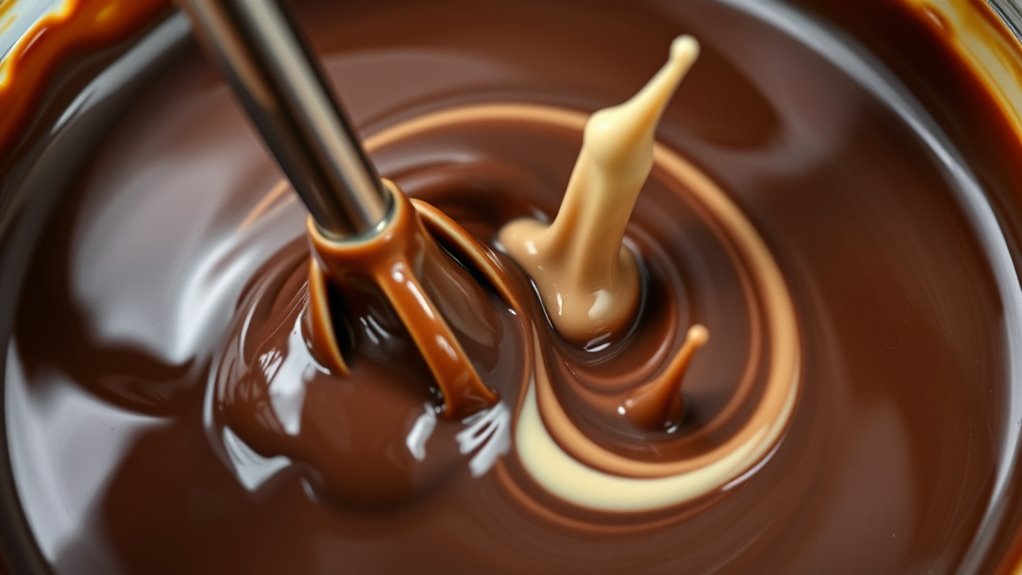
Ganache can break when the fats and liquids in it fail to combine properly, often due to temperature issues or sudden changes in ingredients. One common cause is incorrect chocolate temperature; if the chocolate is too hot or too cold when added to the cream, it can cause separation. To fix this, ensure your chocolate is melted gently and cooled to the right temperature before mixing. Ingredient substitution can also lead to breaking if you replace cream or butter with different fats or liquids, disrupting the emulsion. Always use stable, compatible ingredients, and avoid sudden temperature shifts. If your ganache breaks, gently reheat it over low heat or stir vigorously to encourage emulsification. Proper temperature control and ingredient choices are key to preventing and fixing broken ganache. Additionally, understanding the importance of color accuracy in your ingredients can help maintain a stable emulsion during the process. Maintaining consistent ingredient temperatures is crucial for a stable emulsion and successful ganache.
As an affiliate, we earn on qualifying purchases.
How Do Emulsions Form in the Kitchen? The Science Made Simple
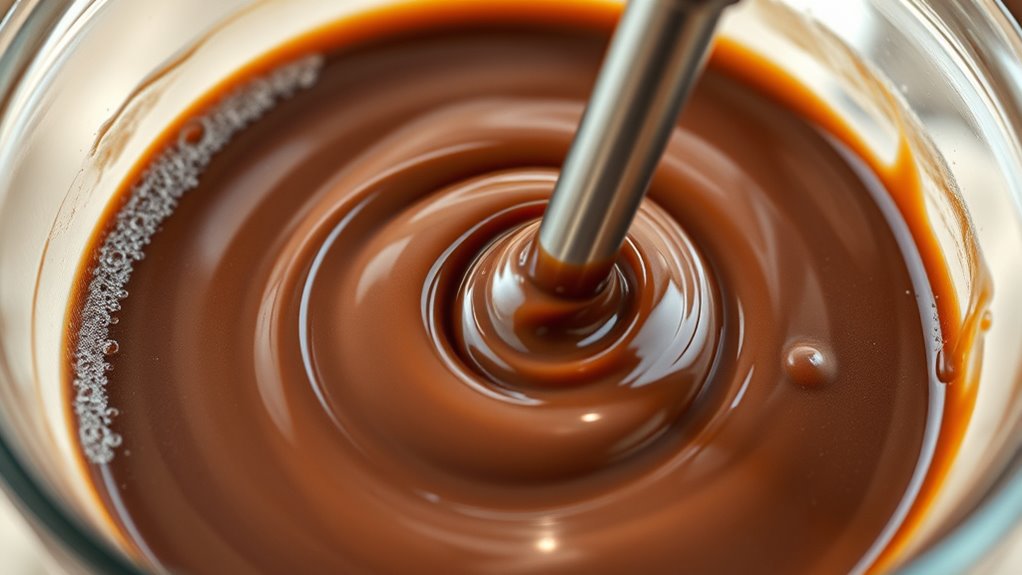
When ingredients don’t naturally mix, understanding how emulsions form can help you create stable sauces and dressings in your kitchen. Emulsions occur when two liquids that normally don’t combine—like oil and water—are forced into a stable mixture. This happens because small droplets of one liquid disperse within the other, often stabilized by an emulsifier such as egg yolk or mustard. Proper food pairing and technique are key to a successful emulsion, enhancing flavors and creating richer textures. When you whisk or blend, you break the liquids into tiny particles that can stay suspended, giving your dish a smooth, cohesive feel. Recognizing this science helps you troubleshoot broken emulsions and develop new flavor combinations with confidence. Understanding emulsification is essential for mastering the art of creating perfect ganache and other dairy-based emulsions. Additionally, knowing the role of net worth and other personal factors can influence your approach to culinary projects or ingredient sourcing. Gaining a deeper knowledge of emulsion stability can further improve your ability to troubleshoot and perfect your culinary creations. Moreover, implementing proper technique and tools can significantly impact the success of your emulsions by ensuring even mixing and stabilization. Developing an awareness of how temperature and environment affect emulsions can also help you achieve more consistent results in your kitchen.
immersion blender with variable speed
As an affiliate, we earn on qualifying purchases.
As an affiliate, we earn on qualifying purchases.
How an Immersion Blender Helps Rescue Broken Ganache
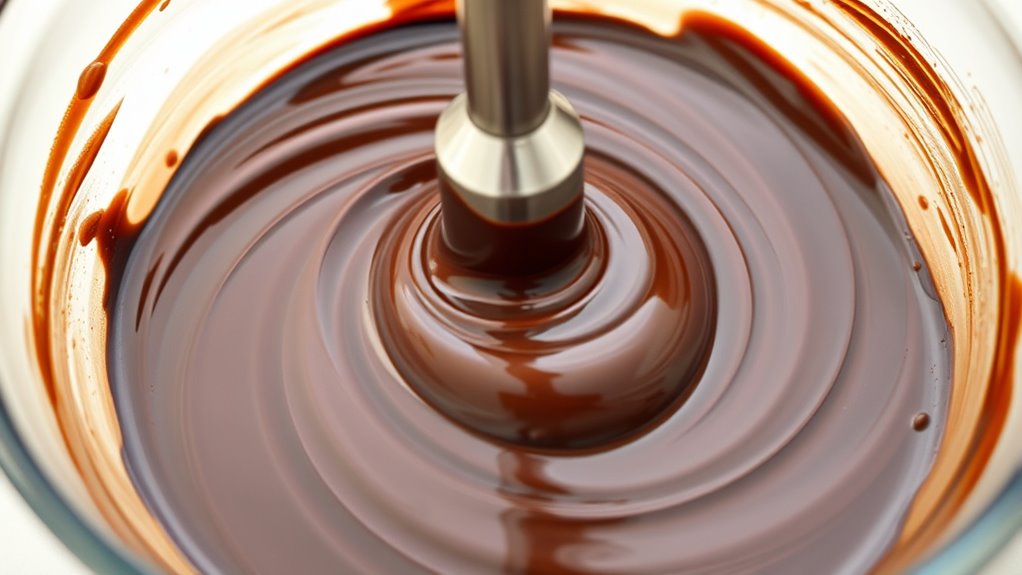
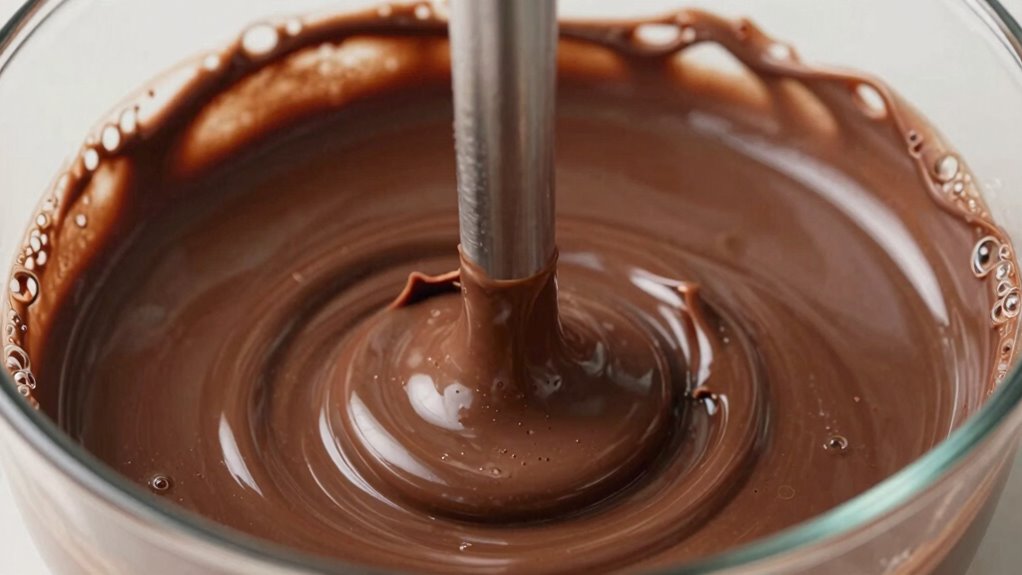
If your ganache has become greasy or separates, an immersion blender can quickly rescue it by re-emulsifying the mixture. Unlike a whisk or spoon, which can take longer and may not fully blend stubborn fats, an immersion blender delivers powerful, direct force to bring the ingredients back together. Simply insert the blender into the bowl and pulse gently until the ganache smooths out. A silicone spatula can be used afterward to scrape down the sides and ensure even mixing, but the blender does the heavy lifting. This method restores a silky, cohesive texture without overworking the mixture. It’s a fast, effective way to fix broken ganache and save your dessert.
As an affiliate, we earn on qualifying purchases.
Step-by-Step: Fix Your Broken Ganache Using an Immersion Blender
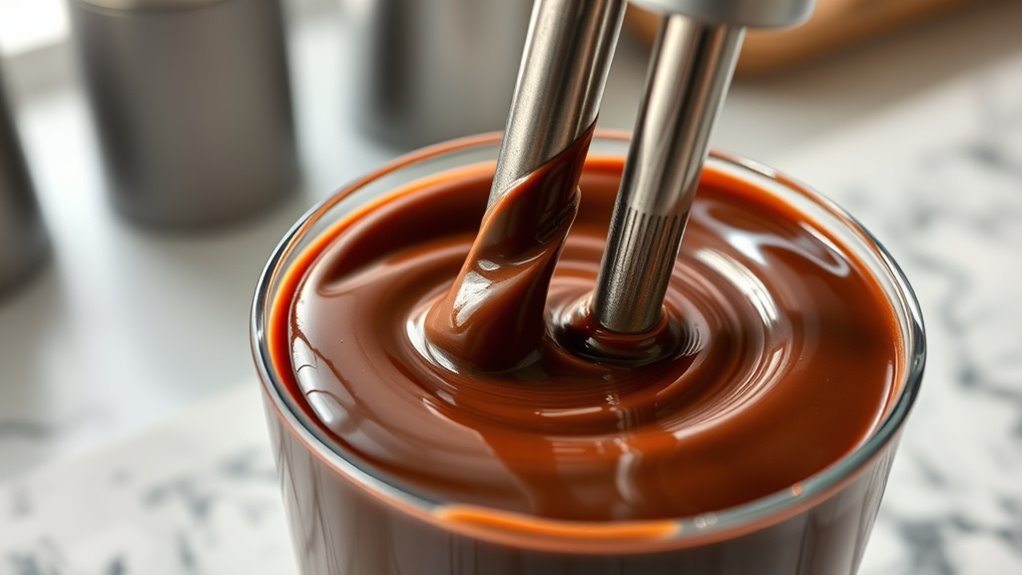
To fix broken ganache with an immersion blender, start by gathering all your tools and ingredients. You’ll need your immersion blender, a heatproof bowl, and your chocolate ganache. Ensure your ganache is warm but not hot, as temperature affects emulsion stability. Place the broken chocolate ganache into the bowl. Insert the immersion blender and start blending at a low speed, gradually increasing as the mixture begins to come together. Keep the blender moving in gentle, steady motions to incorporate the oil and water phases smoothly. Continue blending until the ganache becomes glossy and uniform. This process helps restore emulsion stability, turning a separated chocolate ganache back into a silky, cohesive mixture perfect for your dessert.
Tips for Making Smooth, Stable Ganache Every Time
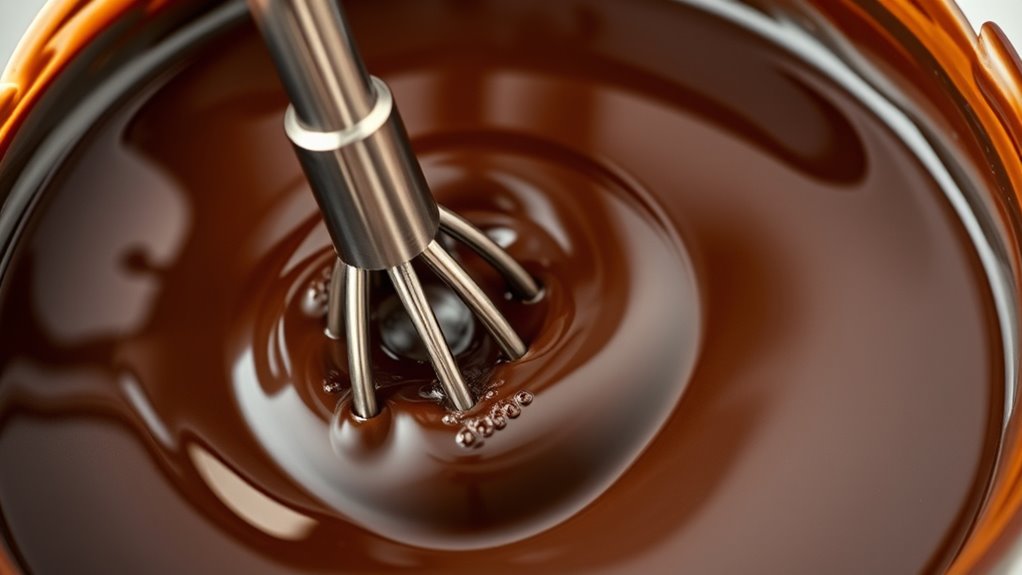
To make smooth, stable ganache, controlling the temperature is essential—you don’t want it too hot or cold. Pay close attention to your emulsification technique, ensuring you add ingredients gradually and blend steadily. Mastering these tips will help you achieve perfect consistency every time.
Proper Temperature Control
Maintaining the right temperature is essential for creating a smooth, stable ganache. Proper temperature control guarantees the ingredients blend smoothly without seizing or becoming gritty. Start by bringing your cream and chocolate to the correct ingredient temperature before combining. Typically, heat the cream just until it’s steaming, but don’t let it boil, as excessive heat can cause separation. When adding the cream to the chocolate, ensure both are close in temperature—around 110°F to 115°F (43°C to 46°C). Use a thermometer to monitor these temperatures closely. If the mixture cools or overheats, gently reheat it to the proper temperature. Consistent temperature control prevents curdling and helps achieve a glossy, silky ganache every time. Temperature control is particularly important when working with ingredients that have different melting points or compositions, especially since proper temperature helps maintain emulsions.
Emulsification Technique
Ever wonder why some ganaches turn out silky and stable while others are lumpy or separate? Achieving perfect emulsification is essential. First, confirm your chocolate is properly tempered; this creates a smooth base for emulsification. Second, add hot cream gradually while blending with an immersion blender; this helps form a stable emulsion. Third, focus on flavor pairing—using complementary ingredients like butter or liqueurs can enhance stability and texture. Maintain consistent temperature throughout, as it’s vital for emulsification. Avoid rushing the process or adding ingredients too quickly. When done right, your ganache will be luxuriously smooth and glossy. Additionally, understanding the emulsification process can help troubleshoot common issues and improve your technique. Paying attention to natural ingredients can also make a significant difference in achieving a perfect emulsion. Recognizing the importance of proper temperature control can prevent the separation of ingredients and ensure a harmonious blend.
Common Mistakes That Cause Ganache to Break—And How to Avoid Them
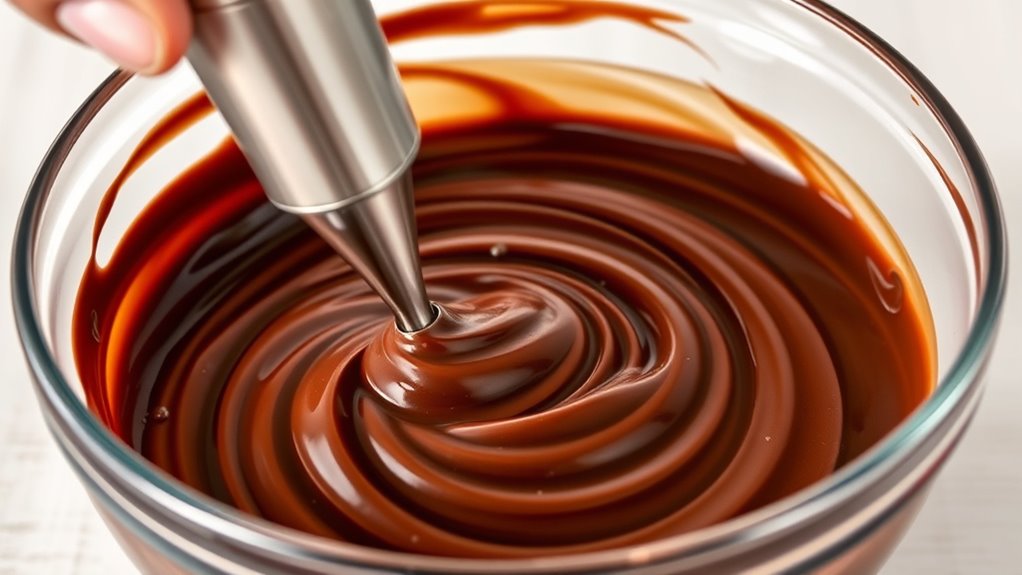
One common mistake is overmixing your ganache, which can cause it to break by destabilizing the emulsion. Using ingredients that are too cold or warm can also lead to separation, so temperature control is key. Additionally, improper technique, like rushing or using the wrong tools, can compromise the smoothness and stability of your emulsion. Ensuring proper temperature management throughout the process helps maintain a stable and glossy ganache. Incorporating connected equipment such as smart temperature monitors can provide real-time data to help you keep the ideal temperature range. Paying attention to emulsion stability techniques can further improve your success rate.
Overmixing Emulsions Risks
Overmixing emulsions can lead to broken ganache, ruining its smooth texture and glossy appearance. When you overmix emulsions, you risk disrupting the delicate balance that maintains emulsification stability. This can cause the fat and liquid to separate, resulting in a curdled or grainy ganache. To avoid this, pay attention to these common pitfalls: 1. Using high speed for too long, which adds unnecessary shear force and destabilizes the emulsion. 2. Incorporating ingredients too quickly, preventing proper integration and risking overmixing. 3. Ignoring signs of thickening or curdling, which indicate you should stop before the emulsion breaks. Additionally, understanding the science of emulsification can help you better control the process and prevent these issues.
Too Cold or Warm Ingredients
Temperature plays a crucial role in maintaining a stable emulsion; if your ingredients are too cold or too warm, the ganache can break easily. Proper temperature control is essential because ingredient temperature influences how fats and liquids combine. If the chocolate and cream are too cold, they may solidify quickly, preventing proper emulsification. Conversely, if they’re too warm, the fats can separate, causing the ganache to break. To avoid this, ensure both ingredients are at similar, moderate temperatures—around room temperature or slightly warmer. Use a thermometer if necessary to monitor ingredient temperature closely. Consistent temperature helps the fats melt smoothly and blend seamlessly, resulting in a stable, glossy ganache. Adjust ingredient temperature as needed before combining to prevent common breaking issues. Additionally, temperature regulation is vital for maintaining the emulsion’s stability during the mixing process, as it influences the emulsification process and helps prevent separation.
Improper Technique Use
Using proper technique ensures a smooth, shiny ganache. Stick to gentle, steady motions and use ingredients as intended. If you need to substitute, research compatible alternatives to prevent breaking. Proper technique and understanding are key to success. Additionally, maintaining consistent temperatures helps preserve the vehicle’s performance, preventing the emulsion from breaking due to thermal shock. Being aware of how emulsion stability impacts the final product can help you troubleshoot and refine your process effectively.
What Are Other Ways to Use an Immersion Blender in Pastry?
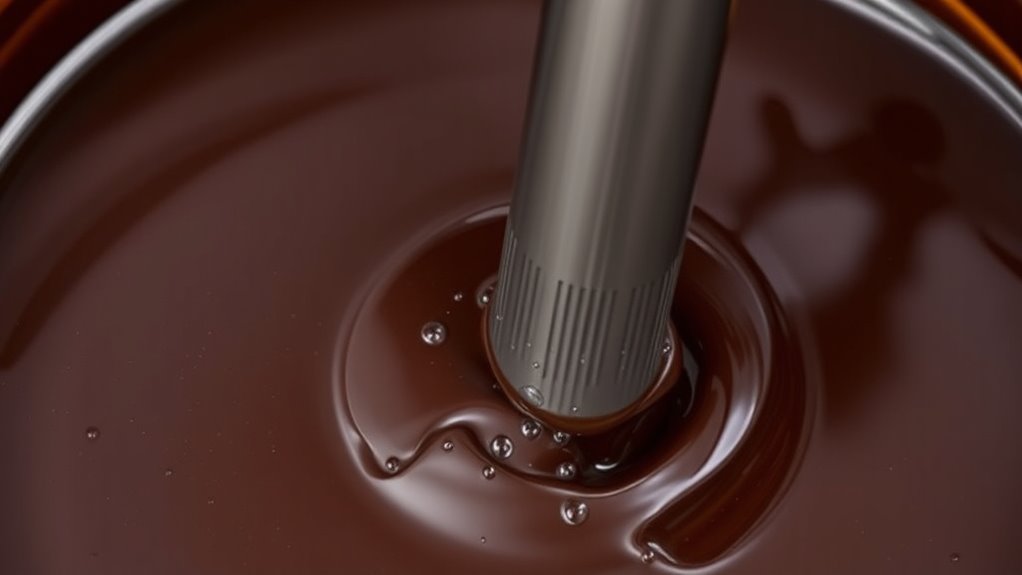
An immersion blender can do more than just create emulsions; it’s a versatile tool that can enhance your pastry-making process in several ways. You can use it for pastry decoration by quickly blending fruit purees or creams into smooth, vibrant textures. It’s also excellent for flavor infusion, allowing you to blend herbs or spices directly into batters or fillings, intensifying taste. Additionally, its portability makes it perfect for small, precise tasks like emulsifying chocolate or nut butters. To maximize its use, consider this table:
| Use in Pastry | Technique | Benefits |
|---|---|---|
| Pastry decoration | Blending fruit purees | Smooth, professional finish |
| Flavor infusion | Mixing herbs/spices into batters | Enhanced flavor profiles |
| Emulsifying | Combining oils and liquids | Stable, glossy textures |
| Pureeing | Preparing fruit or vegetable purees | Consistent consistency |
| Whipping | Lightly aerating creams | Fluffy, airy results |
Furthermore, understanding the various cookie categories can help you select the best techniques and tools for your pastry projects. Mastering emulsion stability can also improve your results when working with sauces and creams, making your pastry creations more successful. Developing a good technique for emulsification can lead to more reliable and beautiful desserts. Practicing emulsion techniques will help you achieve more consistent and appealing textures in your baking.
When Your Ganache Can’t Be Saved—Troubleshooting Tips
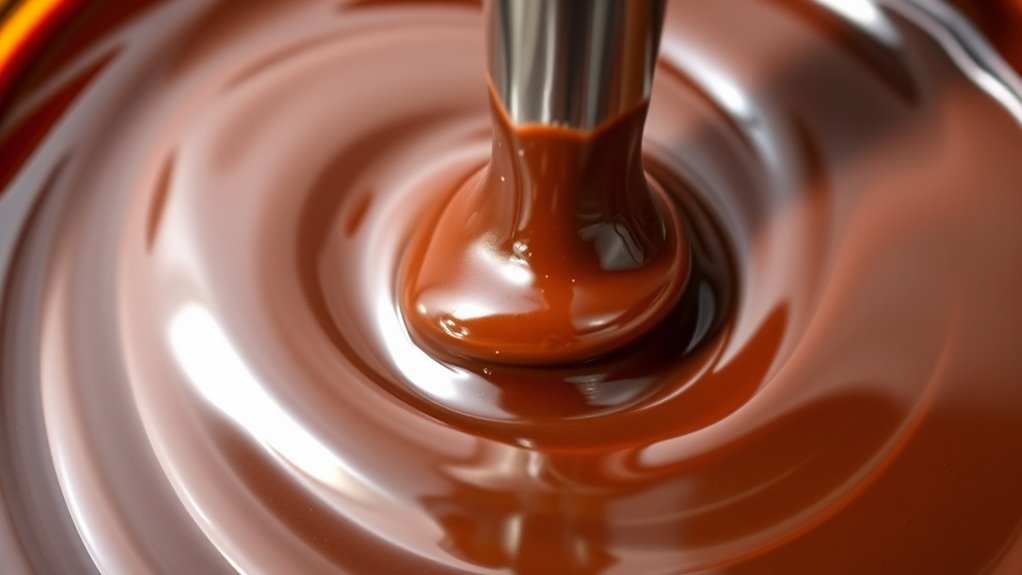
Even with careful attention, sometimes ganache can seize or become unusable. When this happens, don’t panic. Here are some troubleshooting tips to try:
Even if ganache seizes, gently add hot cream or butter to rescue it.
- Add a small amount of hot cream or milk, gently stirring or blending to loosen the mixture. This can help salvage the emulsion.
- Consider ingredient substitution, like melting in a bit of butter or shortening, which can help smooth out the texture and restore stability.
- Use flavor enhancement techniques, such as adding a splash of vanilla or a pinch of salt, to mask any off-textures and improve overall taste if the ganache remains imperfect.
These steps can often rescue a broken ganache, saving your dessert and maximizing your ingredients.
How to Keep Your Immersion Blender in Top Shape for Dessert Making
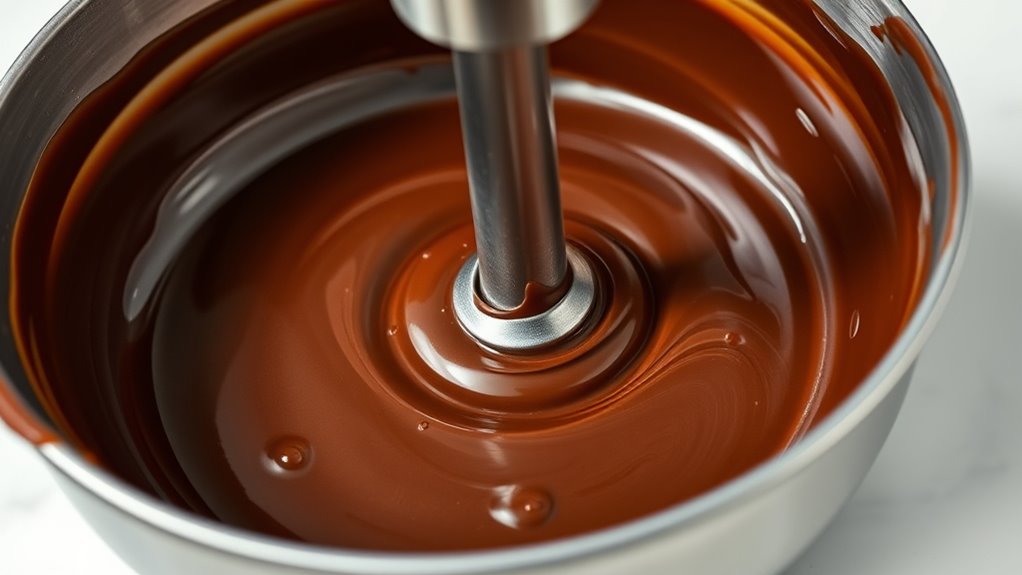
Keeping your immersion blender in top shape is essential for consistently smooth and delicious desserts. Regular equipment maintenance ensures it performs well, especially when incorporating seasonal flavors into your recipes. After each use, wash the blending shaft thoroughly to prevent residue buildup that can affect emulsions. Check the blade for dullness or damage, replacing it if needed to maintain peak performance. Store your immersion blender in a dry, safe place to prevent corrosion. Occasionally, run a short cycle with warm, soapy water to keep the motor clean. Proper maintenance also involves inspecting the cord for wear. By caring for your immersion blender, you’ll enjoy reliable results every time, making dessert creation easier and more enjoyable, especially when experimenting with seasonal flavors.
Frequently Asked Questions
Can Immersion Blenders Be Used for Other Dessert Emulsions Besides Ganache?
Yes, you can use immersion blenders for other dessert emulsions like fruit mousses and citrus creams. They quickly blend and incorporate ingredients, creating smooth, stable textures. Just be careful not to overmix, which can affect the delicate structure of mousses and creams. An immersion blender makes achieving an even, creamy consistency easier, saving you time and effort while ensuring your desserts look and taste perfect.
What Types of Fats and Liquids Work Best for Stable Emulsions?
You’re on the right track—when it comes to stable emulsions, choosing the right fat combinations and liquid selection is key. For fats, butter, heavy cream, and coconut milk work well because they blend smoothly. Use liquids like warm milk or water to help stabilize the mixture. Keep in mind, the right balance prevents your emulsion from breaking, so don’t be afraid to experiment until you find the perfect harmony.
How Do Different Immersion Blender Speeds Affect Emulsion Stability?
You should adjust the immersion blender speed carefully during emulsification. Using a lower speed initially helps you control the mixture, preventing splattering or breaking, while increasing speed gradually allows for thorough blending. Speed adjustments are vital for stable emulsions, as they guarantee proper incorporation of fats and liquids. Mastering these techniques helps you achieve smooth, consistent emulsions, whether for ganache or other recipes, by preventing separation and ensuring a professional finish.
Is It Safe to Use an Immersion Blender Directly in Hot Ganache?
Using an immersion blender directly in hot ganache isn’t the safest move, despite how tempting it might be. Hot safety is essential because immersion risks include splattering and burns. You should let the ganache cool slightly before blending to avoid accidents. Rushing in hot liquids can cause dangerous splatters, so exercise caution. Remember, patience keeps your kitchen safe and your ganache perfectly smooth—no burns required.
How Long Should I Blend to Properly Fix a Broken Emulsion?
You should blend the broken emulsion for about 30 seconds to a minute, keeping a close eye on the consistency. This blending duration helps re-establish emulsion stability without overmixing, which can cause the ganache to become too thin or greasy. If it doesn’t come together after a minute, stop and try gently warming the mixture or adding a bit more cream to aid recovery.
Conclusion
Now that you know how to fix broken ganache with an immersion blender, you’re well on your way to perfect desserts every time. Don’t let a mishap throw you off course—think of it as a blessing in disguise. With a little patience and the right technique, you can turn a ruined batch into a creamy masterpiece. Keep experimenting, stay sharp, and remember, every cloud has a silver lining in the kitchen!
Halloween Picks
halloween
As an affiliate, we earn on qualifying purchases.