
To judge brownie doneness without guessing, look for visual cues like edges pulling slightly away from the pan and a center that’s set but still a bit moist. Gently shake the pan—if it jiggles like jello, it needs more time; if it’s firm, it’s done. Check with a toothpick—moist crumbs mean perfect doneness. Trust your senses and observe closely; there’s more to discover that can help you perfect your baking every time.

Get baking supplies delivered free with Prime
- Fast, free delivery on millions of items
- Prime Video, Amazon Music and more included
- Member-only deals all year
Key Takeaways
- Look for edges pulling slightly away from the pan sides.
- Gently shake the pan; a slight jiggle indicates the center is set but moist.
- Use a toothpick; moist crumbs suggest doneness, wet batter indicates more baking needed.
- Check for cracks on the surface, which can signal overbaking or readiness.
- Rely on visual cues and tactile feedback rather than exact timing for accurate judgment.
Ever wonder how to tell when your brownies are perfectly baked? Achieving that ideal texture and flavor isn’t just about guessing; it’s about understanding the details that signal doneness. One of the most vital factors is the type of chocolate you use, which can impact how you judge whether your brownies are ready. Different chocolate types—like bittersweet, semisweet, or cocoa powder—have varying melting points and moisture contents. For example, brownies made with melted dark chocolate tend to be denser and moister, so they may require a slightly different baking time or visual cues compared to those made with cocoa powder. Recognizing these differences helps you adjust your baking process and avoid over or underbaking. Knowing how chocolate types behave during baking can make all the difference in achieving the perfect brownie texture. Additionally, understanding baking chemistry can help you better anticipate how your ingredients will react during the baking process. For instance, the interaction between fats, sugars, and leavening agents influences the final consistency of your brownies. A deeper understanding of heat transfer can also aid in selecting the right baking equipment and pan materials for even baking. Being aware of how different oven types distribute heat can further improve your baking results.
Choosing the right chocolate affects baking time and texture, helping you achieve perfectly baked, moist brownies.
Baking equipment also plays an essential role in determining doneness. The size and material of your baking pan influence how heat is distributed and retained. A metal pan heats quickly and can cause the edges to cook faster, while glass or silicone pans may require a longer baking time. Using the right equipment guarantees even baking, but it also means you need to pay close attention to visual and tactile cues rather than relying solely on recipe times. The oven itself can vary, so getting familiar with your specific appliance is key. Regularly preheating and knowing your oven’s hot spots help prevent surprises when checking for doneness.
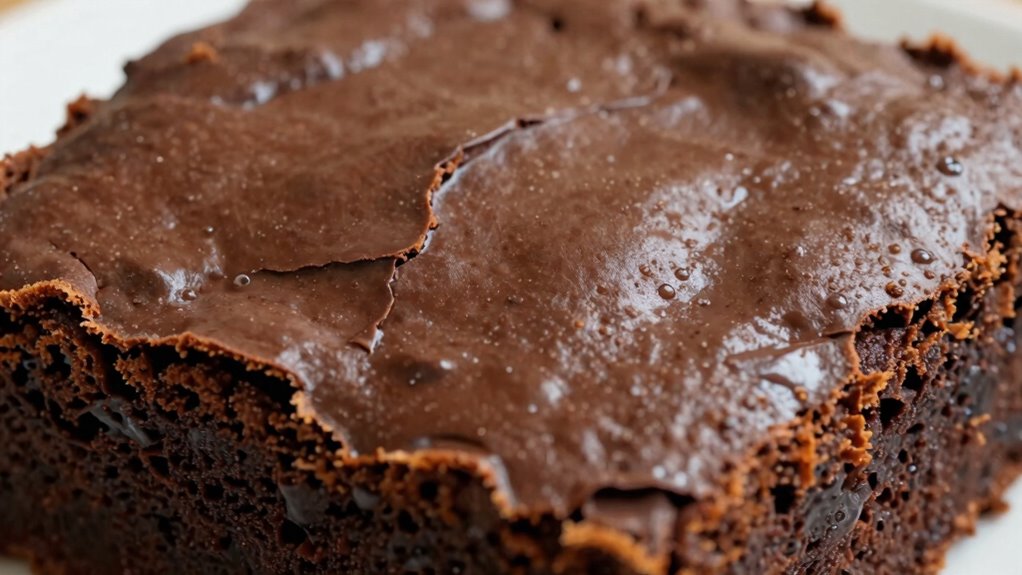
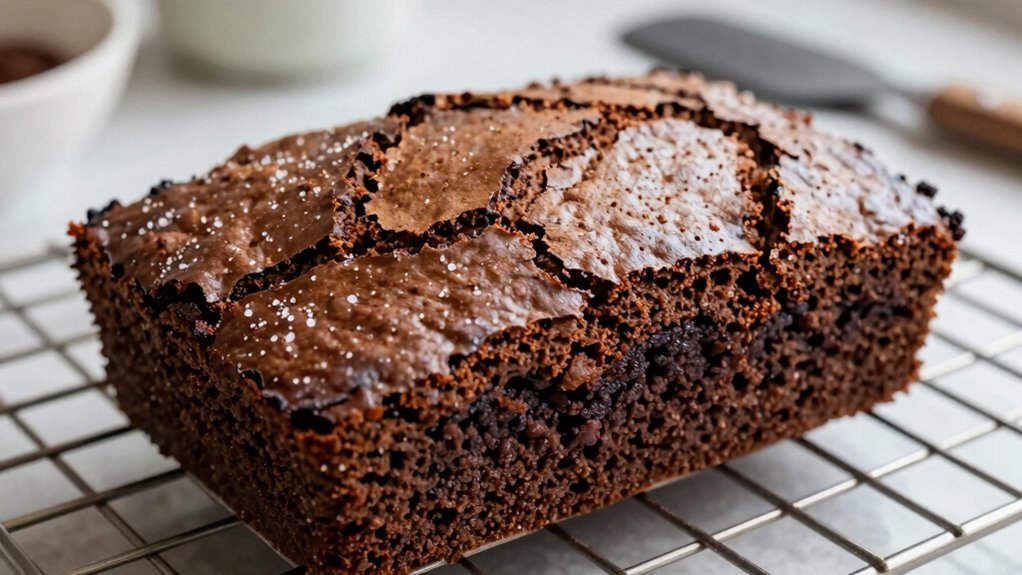
When it comes to actually judging if your brownies are done, the most reliable method is to look for visual cues. The edges should pull slightly away from the sides of the pan, and the center should look set but still slightly moist. You can also gently shake the pan—if the middle jiggles like jello, it’s probably underdone. Conversely, if it’s too firm and leaves a crack on top, it might be overbaked. For added precision, insert a toothpick into the center; it should come out with moist crumbs but no wet batter. Keep in mind that residual heat continues to cook the brownies even after removing from the oven, so slightly underbaking can result in a fudgier finish.
Ultimately, judging brownie doneness involves a combination of understanding your ingredients, equipment, and visual cues. Knowing how different chocolate types behave and how your baking tools influence heat distribution helps you make smarter decisions. Trusting your senses—sight, touch, and even smell—will guide you to perfect brownies every time, rather than relying solely on the clock. Developing baking intuition through practice and observation will help you become more confident in your baking skills. With a little practice and attention to detail, you’ll confidently know exactly when your brownies are just right.
Products Worth Considering

Instant Pot Vortex Plus 10-Quart 7-in-1 Air Fryer Oven

Le Creuset Enamemed Cast Iron Oval Dutch Oven, 5 qt., White/Crucible

Le Creuset Signature Enameled Cast Iron Round Dutch Oven, 5.5 qt, Deep Teal
As an affiliate, we earn on qualifying purchases.
Frequently Asked Questions
Can I Use a Toothpick to Check Brownie Doneness?
Yes, you can use a toothpick to check brownie doneness. Perform a toothpick test by inserting it into the center of the brownies; if it comes out with wet batter, they need more time. Look for texture cues like a slightly gooey center or a firm, set edge. These indicators help you judge if your brownies are perfectly baked without guessing, ensuring a moist and tender result.
How Does Oven Calibration Affect Brownie Baking Times?
Oven calibration is like tuning a guitar—if it’s off, your brownies may never hit the right note. When your oven’s accuracy drifts, baking times become unpredictable, sabotaging consistency. You’ll find that precise calibration guarantees your oven’s heat matches recipe expectations, giving you perfect brownies every time. Regularly checking and adjusting your oven helps maintain baking consistency, so your treats turn out just right, not underdone or burnt.
Should I Cover Brownies While Baking to Prevent Overcooking?
You shouldn’t cover brownies while baking, as it can trap moisture and alter the baking temperature, potentially leading to uneven results. Instead, focus on proper cooling techniques after baking to prevent overcooking. Allow brownies to cool in the pan for a few minutes, then transfer them to a wire rack. This helps set the texture without overdoing the baking temperature and guarantees even cooling for perfect brownies.
What Role Does Humidity Play in Brownie Baking?
Humidity levels greatly influence your brownie baking, as a high humidity environment can make the batter more moist and extend baking times, while low humidity can cause faster drying. In a humid baking environment, you might need to adjust baking time or temperature slightly to achieve the perfect doneness. Keep an eye on your brownies, and consider slightly reducing moisture in your batter if your kitchen is very humid to guarantee consistent results.
How Do Different Brownie Recipes Influence Doneness Indicators?
Imagine each brownie recipe as a unique symphony, where chocolate intensity and texture variations play distinct notes. Some recipes yield fudgy, dense layers, signaling doneness when edges pull away slightly, while others produce cakier textures, needing a moist toothpick test. Your judgment depends on these cues—darker, richer brownies indicate full chocolate depth, and the feel of the surface guides you, ensuring you don’t miss that perfect, baked-to-glory moment.
Conclusion
Now that you know how to judge your brownies perfectly, you can confidently bake like a seasoned pro. Remember, just like a trusty pocket watch, your senses—touch, smell, and a quick toothpick test—are your best guides. Don’t rely on guesswork or ancient remedies; instead, trust your instincts and modern methods. With a little patience and attention, you’ll be serving moist, fudgy brownies that even Sherlock would applaud—no need for a crystal ball!