If your frosting slides off the cake unexpectedly, it’s likely due to a hidden temperature mismatch. When frosting is too warm, the fats melt, making it runny and prone to sliding. Cold frosting, on the other hand, becomes stiff and hard to spread smoothly. Proper temperature control—keeping frosting cool but not cold, and ensuring your cake is fully cooled—helps improve stability. Keep going to discover more tips for achieving a flawless finish.

Get baking supplies delivered free with Prime
- Fast, free delivery on millions of items
- Prime Video, Amazon Music and more included
- Member-only deals all year
Key Takeaways
- Frosting too warm melts fats, making it runny and prone to sliding off the cake surface.
- Cold frosting stiffens, causing difficulty spreading and potential uneven slipping.
- Applying frosting on a warm or unevenly cooled cake increases the risk of slippage.
- Improper temperature control during preparation or decorating can destabilize frosting adhesion.
- Adjust frosting temperature—chill or warm slightly—to maintain a firm but spreadable consistency.
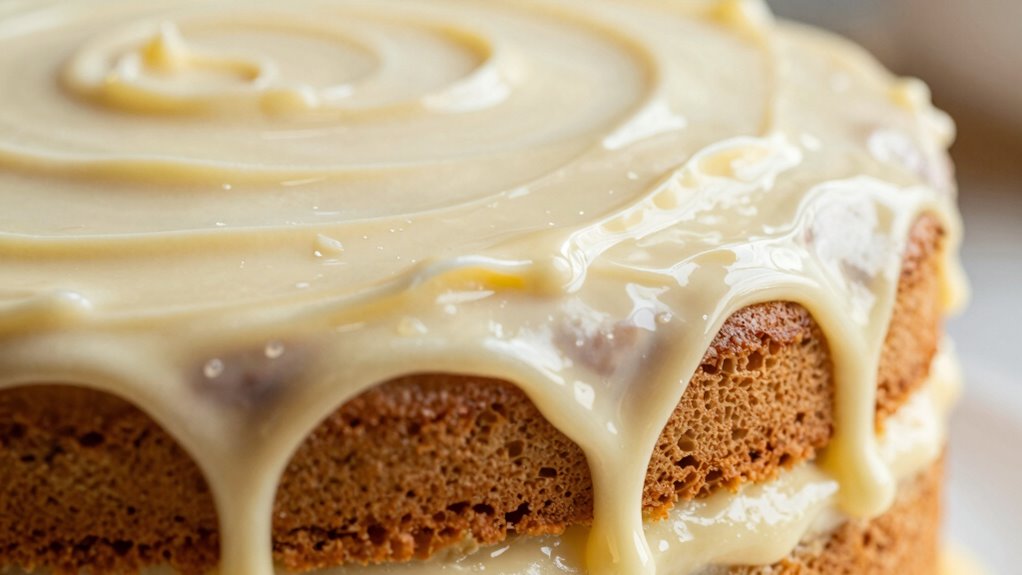
If your frosting starts sliding off the cake, it’s often a sign that something went wrong during the preparation or application process. One common culprit is the frosting’s consistency, which is essential for successful cake decorating. When your frosting is too warm or too cold, it can behave unpredictably, making it difficult to achieve a smooth, stable finish. Understanding how temperature affects frosting consistency helps you troubleshoot and prevent slipping issues, ensuring your cake looks as good as it tastes.
Frosting consistency is key—temperature issues can cause slipping and uneven finishes.
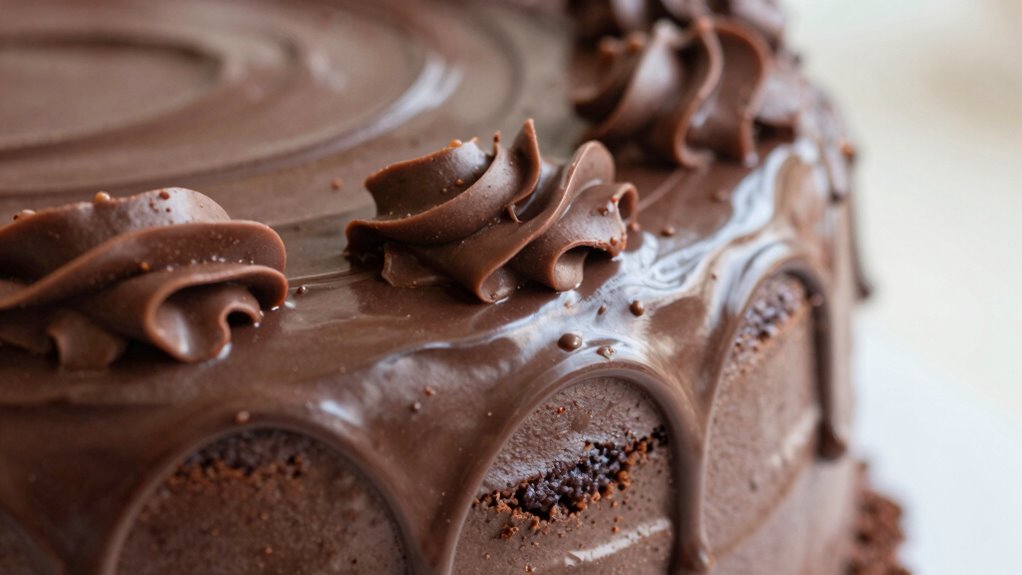
When the environment or ingredients aren’t at the right temperature, your frosting can become too soft or too stiff. If it’s too warm, the fats in butter or shortening melt slightly, turning the frosting runny and prone to sliding off the cake. On the other hand, if it’s too cold, the frosting stiffens, making it hard to spread smoothly and creating a lumpy or uneven surface. Both extremes compromise the cake decorating process, making it difficult to achieve that perfect, seamless finish. To avoid this, always start with ingredients at room temperature, which helps create a balanced frosting consistency that’s easy to work with.
Temperature control is key during application. When applying frosting, you want it to be cool but not cold. If your kitchen is warm, consider chilling the frosting for a few minutes before use, or work in a cooler part of your space. Conversely, if the frosting is too stiff, gently warming it by letting the bowl sit in a warm water bath can help loosen it up. The goal is to maintain a frosting consistency that’s firm enough to hold its shape but soft enough to spread smoothly. This balance enables you to decorate confidently without the risk of the frosting sliding or sagging.
Another tip is to pay attention to the cake’s temperature. If your cake is warm or has just been baked, it can transfer heat to the frosting, making it soften too quickly. Cooling the cake thoroughly in the fridge before applying your frosting can prevent this. Additionally, using a crumb coat—a thin layer of frosting—helps seal the cake’s surface and stabilizes the final layer, reducing the chance of sliding due to temperature fluctuations.
In essence, managing the temperature and understanding frosting consistency are essential in cake decorating. When you control these factors, you’re more likely to achieve a smooth, professional-looking finish that stays put. By paying close attention to ingredient temperature, environmental conditions, and application techniques, you can prevent frosting from sliding off and create stunning cakes that impress every time.
cake frosting temperature control tools
As an affiliate, we earn on qualifying purchases.
As an affiliate, we earn on qualifying purchases.
Frequently Asked Questions
How Does Humidity Affect Frosting Adhesion?
Humidity impact can substantially affect frosting adhesion. When humidity is high, it introduces extra moisture, causing your frosting to become too soft and prone to sliding off the cake. Conversely, low humidity helps the frosting set firmly. To prevent this, you should adjust your frosting consistency based on humidity levels, keep your cake in a cool, dry place, and choose the right frosting type to guarantee ideal frosting adhesion.
Can Certain Frosting Types Resist Sliding Better?
Like a steadfast knight, fondant offers superior stability, resisting sliding better than whipped frosting. If you want a cake that stays pristine, choose fondant for its resilience and smooth finish. Whipped frosting, while light and airy, is more prone to slipping in warm conditions. To prevent sliding, keep your cake cool and opt for fondant when you need long-lasting, elegant coverage that endures.
Does Cake Moisture Level Influence Frosting Stability?
Yes, cake moisture considerably influences frosting stability. When your cake is too moist, the excess humidity can cause the icing consistency to weaken, making the frosting more prone to sliding off. Use frosting ingredients that are suitable for your cake’s moisture level, and ensure your cake is adequately cooled before applying the icing. Properly balancing moisture helps your frosting stay put and maintain a smooth, beautiful finish.
How Long Should a Cake Cool Before Frosting?
Waiting at least 2 hours is essential, or your cake might turn into a soggy mess of despair. You should let it cool until it reaches room temperature, ensuring temperature consistency. Rushing this step risks melting your frosting or causing it to slide right off. For the best results, keep your frosting at the right temperature—slightly chilled but not cold—to stay perfectly stable and beautifully spread.
Are There Special Techniques for Hot Weather Frosting?
In hot weather, you should chill your cake and frosting beforehand, and use fondant tricks like keeping your fondant cool and well-prepared. For fondant preparation, knead in a bit of shortening to prevent sticking and keep it firm. Work quickly and avoid exposing your frosted cake to heat. Using a crumb coat also helps seal in moisture, making your frosting less likely to slide off.
frosting spatula for smooth finish
As an affiliate, we earn on qualifying purchases.
As an affiliate, we earn on qualifying purchases.
Conclusion
So, next time your frosting slides off, remember it’s likely a temperature mismatch—not just poor technique. Some say the real culprit is your fridge’s cold air causing the butter or cream to loosen. While science supports this, it’s worth experimenting with slightly warmer ingredients or adjusting storage times. By understanding the hidden temperature secrets, you can confidently tame your frosting and enjoy a perfectly smooth, stable cake every time.
As an affiliate, we earn on qualifying purchases.
chilling cake and frosting tools
As an affiliate, we earn on qualifying purchases.
As an affiliate, we earn on qualifying purchases.
Halloween Picks
halloween
As an affiliate, we earn on qualifying purchases.