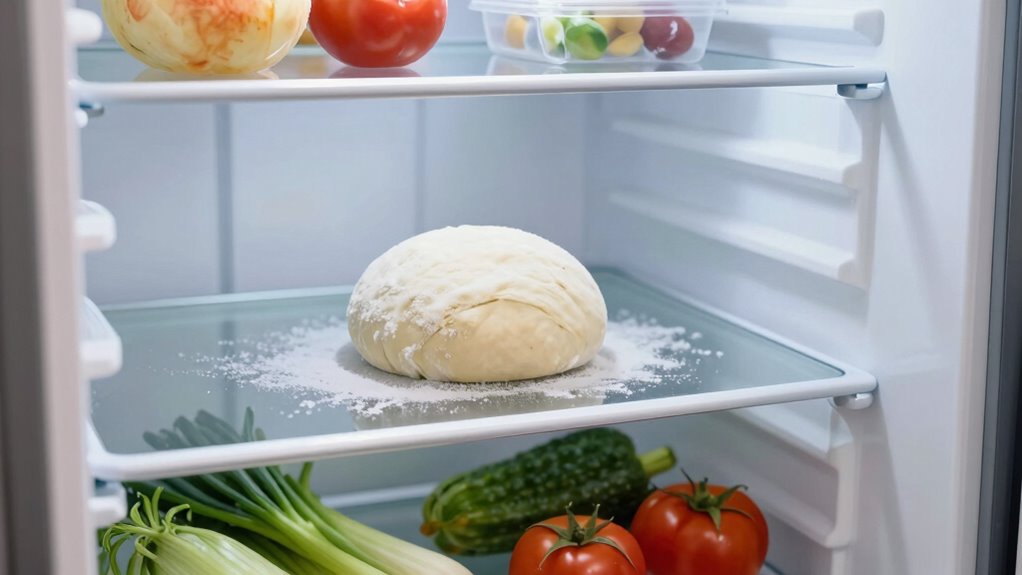

Your fridge is designed with specific temperature zones, and cold air naturally settles at the back or bottom, especially on the back shelf. This pooling of cold air causes that area to be colder and can even freeze delicate items like dough unintentionally. Understanding how airflow and cold air drains work helps explain why the back shelf gets so much colder. Keep exploring to discover tips on how to prevent your dough from freezing and keep your fridge functioning properly.

Get baking supplies delivered free with Prime
- Fast, free delivery on millions of items
- Prime Video, Amazon Music and more included
- Member-only deals all year
Key Takeaways
- Cold air sinks and pools at the back shelf, creating colder zones prone to freezing delicate items like dough.
- Vents near the back direct cold airflow, making the back shelf more susceptible to lower temperatures.
- Cold air from the drain vent can cause hotspots and freezing in areas close to the back shelf.
- Improper placement of dough on the back shelf exposes it to cold spots, risking unintentional freezing.
- Frequent door openings disrupt airflow and temperature balance, increasing the chance of freezing on the back shelf.
fridge temperature zone organizer
As an affiliate, we earn on qualifying purchases.
As an affiliate, we earn on qualifying purchases.
How Is Your Fridge Designed, and What Are Its Zones?

Understanding how your fridge is designed helps you organize your food better. Your fridge has specific temperature zones that enhance airflow, ensuring even cooling throughout. The coldest zone is typically at the back or bottom, where airflow is most efficient, making it ideal for storing perishable items like meats and dairy. The middle shelves often serve as versatile storage spaces, maintaining a balanced temperature for leftovers and produce. The door shelves are exposed to warmer air, so they’re best for condiments and beverages. Proper airflow enhancement ensures consistent temperatures, preventing food spoilage. Recognizing these zones helps you place items correctly, keeping everything fresh longer. Efficient airflow also plays a crucial role in preventing unexpected freezing of items like dough, ensuring they stay at the right temperature. Additionally, understanding how temperature regulation works in different zones allows you to prevent items from freezing unintentionally, such as dough on the back shelf, especially when air circulation is restricted. Ensuring proper ventilation within your fridge can help maintain optimal conditions for all stored items, highlighting the importance of fridge design in overall food preservation.
As an affiliate, we earn on qualifying purchases.
Why Does the Back Shelf Get So Much Colder?

You may notice the back shelf stays colder because cold air tends to sink and settle there due to circulation patterns. Your fridge’s design directs airflow unevenly, making some areas cooler than others. Shelf placement and airflow dynamics work together to create that temperature difference.
Cold Air Circulation Patterns
Cold air circulation patterns in your fridge play a significant role in why the back shelf often feels much colder. The airflow patterns inside your fridge tend to direct cold air from the vents toward specific areas, creating distinct temperature zones. Since cold air is denser, it sinks and pools at the bottom or near the back, leading to a concentrated chill in that area. As the compressor runs, it pushes cold air along designated pathways, which means the back shelf receives more direct and consistent exposure. This uneven distribution of airflow results in certain zones being colder than others. Understanding these patterns helps explain why the back shelf is prone to freezing dough, as it’s typically situated where cold air settles most heavily.
Shelf Placement and Airflow
The placement of shelves in your fridge directly influences how cold air flows and settles. Air tends to move from the cooling vents near the back and top, creating specific airflow patterns that cause colder air to gather on the back shelf. Because of fridge insulation, this cold air doesn’t circulate evenly, so areas near the vents stay colder longer. When you place items on the back shelf, they’re exposed to this concentrated cold airflow, making them prone to freezing or freezing dough. Proper shelf placement allows for better airflow distribution, preventing hotspots and uneven temperatures. Understanding how airflow patterns interact with fridge insulation helps you position items more effectively, avoiding unnecessary freezing and keeping your food at a consistent, ideal temperature. Additionally, knowing the airflow dynamics within your fridge can help optimize temperature regulation across all shelves. Recognizing these patterns can also contribute to more energy-efficient fridge operation, saving you power over time. Being aware of air circulation can further improve how your fridge maintains temperature stability and reduces cold spots. Enhancing your knowledge of net worth and other factors can also guide you in optimizing your household appliance usage for better efficiency. Moreover, understanding the airflow patterns helps prevent food spoilage and extends the freshness of your groceries.
dough storage container for fridge
As an affiliate, we earn on qualifying purchases.
As an affiliate, we earn on qualifying purchases.
How Does Cold Air Movement Change Fridge Temperatures?

When cold air moves freely within the fridge, it helps maintain a consistent temperature across different zones. This circulation ensures humidity levels stay balanced, preventing food from drying out or freezing unpredictably. As the compressor operates smoothly, it pushes cold air evenly, avoiding hot spots that could spoil perishables. Proper airflow reduces temperature fluctuations, which can cause dough to freeze or warm areas to spoil. When airflow is restricted, the cold air pools in certain spots, leading to uneven temperatures. This unevenness can make your fridge less efficient and compromise food quality. Effective airflow is essential for optimal fridge performance, ensuring your food stays fresh and safe. Additionally, air circulation systems play a key role in distributing cold air effectively throughout the unit. Ensuring proper airflow patterns helps maintain consistent temperatures and prevents issues like dough freezing unexpectedly. Proper air movement also minimizes energy consumption and extends the lifespan of your refrigerator components. Proper airflow also helps prevent hot spots, which can cause localized spoilage or freezing of specific items.
As an affiliate, we earn on qualifying purchases.
What Does the Cold Air Drain Do to Different Fridge Areas?

The cold air drain directs airflow throughout your fridge, influencing how temperature varies from zone to zone. This flow impacts food preservation by maintaining consistent temperatures or creating cold spots. Understanding these dynamics helps you optimize storage and keep your food fresher longer. Proper design and awareness of the cold air circulation can also prevent issues like uneven cooling or spoilage. Additionally, airflow management plays a crucial role in ensuring all fridge areas maintain optimal conditions for different types of food. Recognizing the air circulation patterns within your fridge can aid in troubleshooting temperature inconsistencies and improve overall efficiency. Employing cooling system design principles can further enhance temperature stability and prevent unintended freezing of delicate items like dough. Airflow control is essential for achieving a balanced temperature distribution across all zones. Being mindful of how the cold air drain influences each zone allows you to better prevent freezing or spoilage of sensitive foods.
Cold Air Flow Dynamics
Cold air flows through the fridge via a dedicated drain that helps maintain consistent temperatures across different zones. This drain directs cold air from the freezer into the main compartment, creating specific airflow patterns. These patterns influence how air circulates, ensuring even cooling but also generating temperature gradients. You’ll notice that the coldest air settles at the back or bottom shelves, where it sinks and flows less freely. As a result, certain areas become colder, which can cause items like dough to freeze. Understanding how these airflow patterns work helps you predict where cold spots form and why temperature gradients develop inside your fridge. Proper placement of items can prevent unwanted freezing and keep everything at an ideal, consistent temperature.
Temperature Variations Across Zones
As cold air exits the drain, it creates temperature differences across various zones in your fridge. This uneven airflow can lead to hot spots near the door and colder areas at the back or on shelves directly below the drain vent. These variations affect airflow efficiency, making it harder for the fridge to maintain consistent temperatures throughout. As a result, some zones may become colder or warmer than intended, impacting food freshness and safety. To minimize these fluctuations, ensure that air vents are unobstructed and organize items to promote even circulation. Proper airflow helps your fridge maintain temperature stability across its zones, preventing issues like freezing dough on the back shelf while keeping other areas appropriately chilled. Additionally, understanding Free Floating principles can assist in optimizing your fridge’s airflow and temperature control.
Impact on Food Preservation
Temperature differences caused by uneven airflow in your fridge directly influence how well different foods stay fresh. Poor air circulation can create temperature zones that vary greatly, affecting preservation. For example, the back shelf often becomes colder due to cold air draining from vents, risking freezing delicate items like dough or produce. Conversely, the front areas may stay warmer, leading to quicker spoilage of perishables. Understanding these temperature zones helps you optimize food placement, ensuring items stay within their ideal storage range. Consistent airflow maintains uniform temperatures, slowing bacterial growth and reducing spoilage. Proper air circulation is essential for evenly distributing cold air and preventing unwanted temperature fluctuations. By managing air circulation and recognizing how cold air drains affect each zone, you can prolong freshness, avoid waste, and keep your food safer.
Why Do I Keep Freezing My Food by Mistake?

Ever wonder why your food keeps ending up frozen when you didn’t intend it to be? It often comes down to fridge organization and misunderstanding temperature zones. Your fridge isn’t just a single cold space; it has specific zones with different temperatures. If you store items in the wrong area, like near the back or on the top shelf, they can freeze unintentionally. Many people overlook this, assuming the entire fridge maintains a uniform temperature. To prevent this, organize your fridge so that items that shouldn’t freeze are placed in the middle or front sections. Adjust the temperature settings if needed, and regularly check your fridge’s temperature with a thermometer. Proper fridge organization helps you avoid accidental freezing and keeps your food fresh and safe. Additionally, understanding the design of your fridge, including temperature zones, can help you better manage your food storage. Using appropriate storage tips can further ensure your food remains at the optimal temperature and avoids freezing. Recognizing how home appliances distribute cold air can also assist in maintaining proper food placement.
Where Should I Store Dough and Bread for Best Freshness?

To keep your dough and bread fresh, store them at the right temperature—ideally around room temperature or slightly cooler. Avoid freezing them unless necessary, as this can cause freezer burn and affect texture. Using proper containers helps prevent moisture loss and keeps your baked goods tasting their best.
Ideal Storage Temperatures
Wondering where to store your dough and bread for maximum freshness? The ideal storage temperature is between 35°F and 40°F (1.7°C to 4.4°C). Keeping items within this range guarantees food safety by slowing bacterial growth without risking freezing or spoilage. Proper temperatures also promote appliance efficiency, as your fridge works less hard maintaining consistent conditions. Avoid storing bread and dough in the back shelf’s coldest zones, where temperatures can drop below freezing, causing dough to freeze and spoil texture. Instead, place them in the middle or upper shelves where temperature stability is higher. Maintaining the right temperature helps preserve freshness, prevents mold, and ensures your bread remains soft and dough stays workable for longer periods.
Avoiding Freezer Burn
Are you aware of the best practices to prevent freezer burn when storing dough and bread? Temperature fluctuations are a main cause, so keep your freezer at a consistent temperature, ideally around 0°F (-18°C). Humidity control is equally important; excess moisture can lead to freezer burn, so wrap your bread tightly in airtight packaging or use moisture-resistant containers. Avoid leaving packages partially open or exposed, which lets air and moisture in. Label your items with dates to ensure you use older items first. Proper sealing and maintaining stable temperatures minimize dehydration and ice crystal formation. By regulating humidity and avoiding temperature swings, you protect your baked goods from freezer burn, ensuring they stay fresh and flavorful longer.
Using Proper Containers
Choosing the right containers for storing dough and bread plays a key role in maintaining their freshness. Proper containers help control airflow patterns, preventing moisture loss and exposure to air that can cause staleness. Use airtight containers or resealable bags that fit within specific temperature zones of your fridge. The middle or upper shelves typically offer more stable temperatures, ideal for bread and dough. Avoid storing these items in the back shelf, where temperature fluctuations and cold spots can lead to freezing or drying out. Properly sealed containers also protect against fridge odors and mold. By selecting containers that promote consistent airflow and are suited for the fridge’s temperature zones, you ensure your baked goods stay fresh longer and maintain their quality.
How Can I Use My Fridge’s Temperature Settings Properly?

To keep your food fresh and safe, you need to set your fridge’s temperature correctly. Start by setting the temperature between 35°F and 38°F (1.7°C to 3.3°C), which ensures proper humidity control and prevents spoilage. Use your fridge’s temperature controls to maintain consistent cooling, avoiding frequent fluctuations that can affect food quality. Proper temperature settings also boost energy efficiency by reducing unnecessary compressor work. Regularly check the temperature with a thermometer to ensure accuracy, especially if your fridge has manual controls. Avoid overcrowding, which can restrict airflow and hinder temperature regulation. By optimizing your fridge’s temperature settings, you extend food freshness, prevent freezing issues, and save on energy costs.
What Are Tips to Stop Dough From Freezing on the Back Shelf?

Preventing dough from freezing on the back shelf starts with proper storage techniques. Focus on temperature control by placing dough in the middle or front of the fridge, where temperatures are more stable. Good shelf organization helps prevent accidental placement in colder zones. Keep dough in airtight containers or wrap it tightly to avoid direct contact with cold air drafts.
Here’s a quick guide:
| Shelf Position | Best Practice | Reason |
|---|---|---|
| Front Shelf | Store dough in the middle or top | Maintains consistent temperature |
| Back Shelf | Avoid placing dough directly here | Risk of freezing due to cold spots |
| Door Shelves | Use for condiments, not dough | Temperature fluctuates more |
| Top Shelf | Keep dough away from cold air vents | Better temperature control |
| Bottom Shelf | Use for raw meats, not baked goods | Keep temperature stable |
How Do Loading and Opening Your Fridge Change Its Temperature?

Have you ever noticed that opening your fridge causes the temperature to fluctuate? When you open the door, warm air rushes in, disrupting the airflow patterns inside. This sudden change affects the temperature zones, causing cold air to escape and warm air to enter. Each time you load or unload items, you alter how air circulates, which can lead to uneven cooling. For example, placing hot leftovers directly on a shelf can raise the temperature nearby. Frequent opening lets warm air in, making the fridge work harder to maintain a consistent temperature. To minimize fluctuations, try to limit how often and how long you open the door. Proper loading and closing help maintain stable airflow patterns and keep your fridge’s temperature zones balanced.
How Regular Maintenance Keeps Your Fridge Running Right

Regular maintenance is key to guaranteeing your fridge stays efficient and reliable. Regularly check and calibrate the temperature sensors to prevent inaccurate readings that can cause unnecessary energy use. Proper sensor calibration ensures your fridge maintains the right temperature, protecting your food and saving you money. Additionally, keeping the compressor clean and well-maintained improves compressor efficiency, reducing strain and energy consumption. Clear dust and debris from the coils and ensure the compressor runs smoothly. Regularly inspecting door seals also prevents cold air leaks, helping maintain consistent internal temperatures. By performing these simple maintenance steps, you extend your fridge’s lifespan, optimize performance, and keep it running right without costly repairs or wasted energy.
Frequently Asked Questions
Can Placing Dough on the Back Shelf Cause It to Freeze?
Yes, placing dough on the back shelf can cause it to freeze because that area often falls within the fridge’s cold temperature zones. Poor airflow dynamics there can lead to uneven cooling, making the back shelf colder and more prone to freezing items. To prevent this, position your dough in the middle or front of the fridge, where airflow is better and temperatures stay consistent, keeping your dough from freezing.
Does the Size of the Fridge Affect Cold Air Circulation?
Did you know that a larger fridge can reduce air circulation efficiency by up to 20%? The size of your fridge definitely affects cold air circulation. In bigger fridges, air often doesn’t circulate as evenly, leading to colder spots like the back shelf. Smaller fridges tend to promote better circulation, ensuring consistent temperatures and preventing items like dough from freezing unexpectedly. Proper air circulation keeps everything evenly cooled, regardless of size.
How Often Should I Adjust My Fridge’s Temperature Settings?
You should check and adjust your fridge’s temperature calibration every few months or whenever you notice spoilage or uneven cooling. Aim for about 37°F (3°C) and 0°F (-18°C) for ideal freshness. Use the control settings to fine-tune humidity control and prevent overcooling, especially on the back shelf. Regular adjustments help maintain consistent temperatures, ensuring your food stays fresh and avoids freezing or spoilage.
Are Certain Materials More Prone to Freezing in the Fridge?
Certain materials are more prone to freezing in your fridge because of their thermal properties. Thin plastics, glass, and metal conduct heat quickly, making them more susceptible to freezing due to insulation effectiveness. You notice this especially with items like dough or liquids stored on the back shelf, where the cold air settles. To prevent freezing materials, choose insulated containers and keep sensitive items toward the front or middle of your fridge.
What’s the Best Way to Prevent Other Items From Freezing Near Dough?
To prevent other items from freezing near dough, you should optimize airflow and improve shelf insulation. Keep your fridge organized so cold air flows evenly, avoiding overcrowding that causes cold spots. Use shelf liners or insulating mats to buffer temperature fluctuations. Also, store dough away from the back shelf, where cold air tends to settle, ensuring consistent temperatures and preventing unintended freezing of your baked goods.
Conclusion
Now you know the nuances of your fridge’s zones and zones’ nuances. By understanding air flow, adjusting settings, and adopting simple storage strategies, you prevent perishables from peril and preserve freshness. Keep your cool with clever cues, calm the cold, and conquer the chaos of cold spots. With mindful maintenance and measured management, your fridge functions flawlessly, fostering food freedom and freshness. Master your machine, maximize your meals, and enjoy an efficient, easy-everyday eating experience.
Halloween Picks
halloween
As an affiliate, we earn on qualifying purchases.