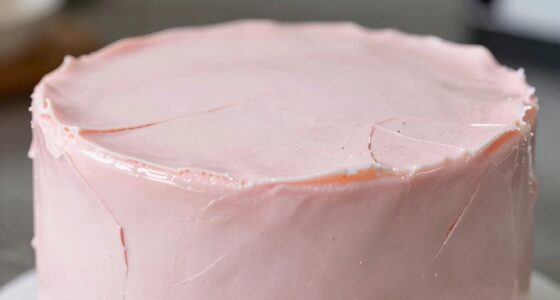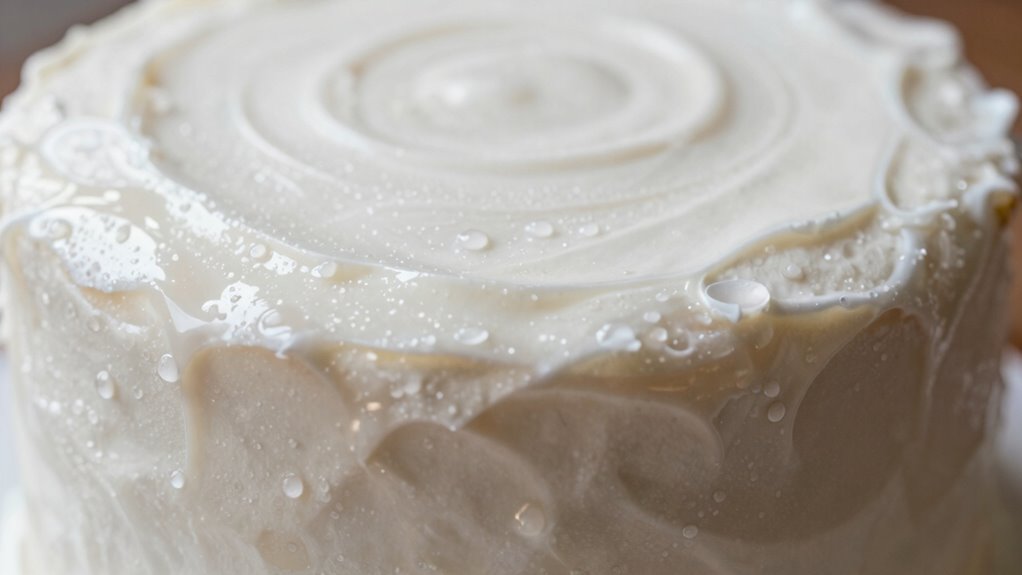

Condensation undermines your cake finishes because moisture forms on the surface when warm, moist air contacts cooler surfaces, creating water droplets. These droplets act as barriers between the icing or fondant and the cake, weakening adhesion and causing bubbling, slipping, or peeling. This surface moisture can ruin the smooth, polished look you’re after and lead to imperfections. To keep your cake perfect, understanding how to control humidity and temperature is key—you’ll find out more if you keep exploring.

Get baking supplies delivered free with Prime
- Fast, free delivery on millions of items
- Prime Video, Amazon Music and more included
- Member-only deals all year
Key Takeaways
- Condensation creates water droplets that form barriers, preventing proper adhesion of icing or fondant.
- Excess moisture weakens the bond between the cake surface and decorative layers.
- Surface moisture causes bubbling, sliding, or peeling of cake decorations.
- Moisture from condensation can lead to a shiny, uneven finish on the cake.
- It increases the risk of mold growth and spoilage, compromising cake quality.
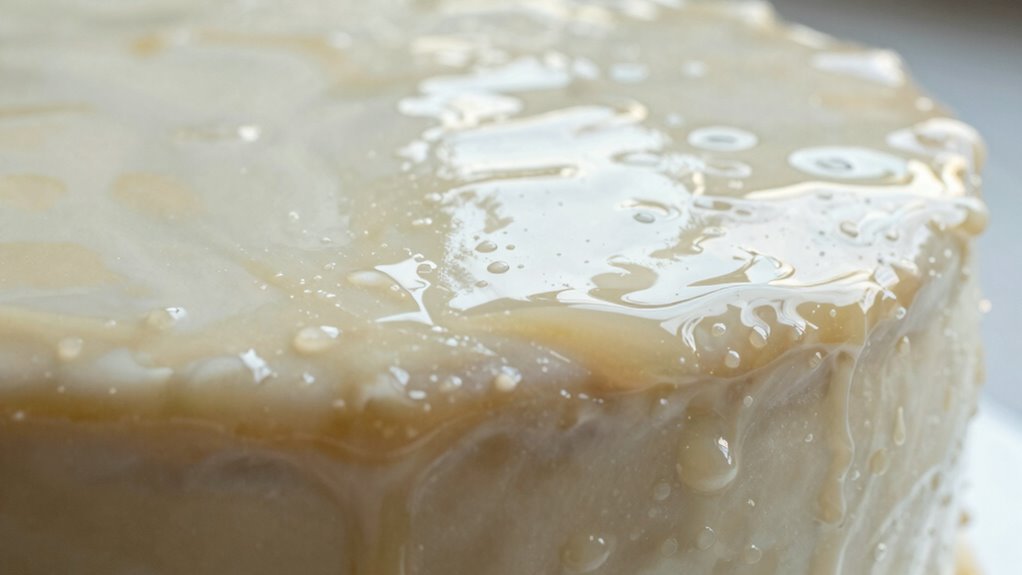
Have you ever wondered why understanding condensation is crucial when finishing a cake? When you’re working on decorating or applying a finish, the last thing you want is moisture interfering with your work. Condensation occurs when warm, moist air comes into contact with cooler surfaces, causing water droplets to form. This process can seriously undermine your efforts to create a smooth, flawless cake finish. It’s not just about aesthetics; it also affects the structural integrity of your decorations and the overall look of your cake.
One critical aspect to take into account is humidity control. If the environment around your cake has high humidity, moisture levels remain elevated, increasing the likelihood of condensation. When you take a cake from a cool fridge into a warmer room, or if the room itself is humid, moisture can quickly settle on the surface. This moisture can create a slick layer that prevents your fondant or icing from adhering properly. Without proper humidity control, your finishing work becomes more prone to bubbling, sliding, or even peeling away. Managing humidity effectively can help you keep the surface dry and steady, ensuring your decorations stay in place and look professional.
Surface adhesion is another vital factor impacted by condensation. When water droplets form on the cake’s surface, they create a barrier between your icing or fondant and the cake itself. This barrier weakens the bond, making it difficult for your decorations to stick properly. If you notice tiny droplets forming, it’s a sign that the surface isn’t ready for finishing. Failing to address this can lead to unsightly imperfections or even the need to redo parts of your work. To prevent this, you might need to adjust the cake’s environment or wait until the surface is completely dry and free of moisture. Proper surface adhesion ensures your decorations not only look good but also stay intact over time. Being aware of temperature differences can help you prevent unexpected condensation from forming in the first place. Additionally, understanding the role of air circulation in moisture buildup can help you maintain a controlled environment and avoid problematic condensation. Proper environmental conditions, including temperature and humidity, are crucial to prevent moisture issues from arising during the finishing process.
Ultimately, recognizing how air circulation influences moisture buildup is also essential, as poor airflow can trap humidity and promote condensation. Whether you’re a professional baker or a home enthusiast, paying attention to how temperature and humidity influence condensation can save you time and frustration. It helps you achieve a sleek, polished appearance and ensures your cake decorations remain flawless from the first glance to the final reveal. Ultimately, mastering these aspects means you’ll produce cakes that look as stunning as they taste, with finishes that stay smooth and beautiful long after you’ve finished decorating.
As an affiliate, we earn on qualifying purchases.
Frequently Asked Questions
How Can I Prevent Condensation on My Cake During Decorating?
To prevent condensation during cake decorating, you should control humidity and improve air circulation in your workspace. Keep the room cool and avoid sudden temperature changes, which cause moisture buildup. Use a fan or open windows to promote airflow, helping moisture evaporate. Cover the cake with a breathable material if needed, and work in a well-ventilated area. These steps help minimize condensation and keep your cake finish pristine.
Does Refrigeration Always Cause Condensation on Cakes?
Refrigeration rarely results in relentless rain on your cake, but improper cake storage can cause condensation. When you chill a cake without humidity control, moisture from the air condenses on its surface, creating a soggy situation. To prevent this, let your cake come to room temperature before decorating, and store it in an airtight container. Proper humidity control and careful cooling keep your cake fresh and flawless, free from unwanted moisture mishaps.
Can Condensation Affect Cake Flavors Over Time?
Yes, condensation can affect cake flavors over time. When moisture from condensation seeps into the cake, it impacts flavor preservation by diluting or altering the original taste. The moisture impact can cause the cake to become soggy or develop off-flavors, especially if stored improperly. To maintain your cake’s flavor, guarantee proper sealing and storage in a cool, dry place, reducing condensation and preserving its intended taste and texture.
What Tools Are Best for Applying Finishes in Humid Conditions?
Imagine your cake surface as a canvas fighting against the humid sky. For the best finish in humid conditions, use tools like spatulas and smoothing knives designed for controlled application. Keep humidity control in mind—use a fan or dehumidifier if possible—and work quickly to prevent moisture from causing imperfections. These tools help you achieve a smooth, flawless finish despite the challenges of humidity.
Are There Alternative Methods to Avoid Condensation in Cake Decorating?
To avoid condensation in cake decorating, you should focus on humidity control and maintaining temperature stability. Keep your workspace cool and dry, using dehumidifiers if needed. Cover your cakes with a breathable wrap or a damp cloth to prevent moisture buildup. Additionally, work in a climate-controlled environment, and allow cakes to reach room temperature gradually before decorating. These steps help reduce condensation, ensuring a smooth, professional finish.
humidity control for cake decorating
As an affiliate, we earn on qualifying purchases.
As an affiliate, we earn on qualifying purchases.
Conclusion
While it might seem minor, condensation can seriously undermine your cake’s finish, causing unsightly streaks or even ruining delicate details. Don’t dismiss it as just a small issue—taking preventive steps like proper storage and cooling can save your hard work. Some might think it’s not worth the fuss, but trust me, a perfectly finished cake isn’t just about looks—it’s about confidence in your craft. Address condensation early, and your cakes will always look their best.
As an affiliate, we earn on qualifying purchases.
cake decorating heat and humidity monitor
As an affiliate, we earn on qualifying purchases.
As an affiliate, we earn on qualifying purchases.
Halloween Picks
halloween
As an affiliate, we earn on qualifying purchases.