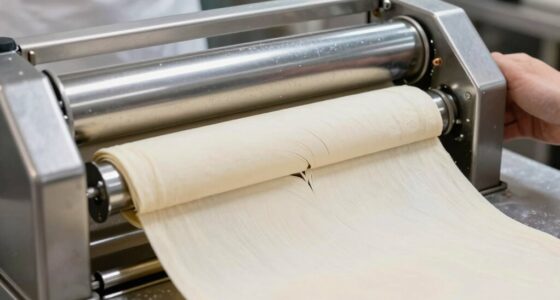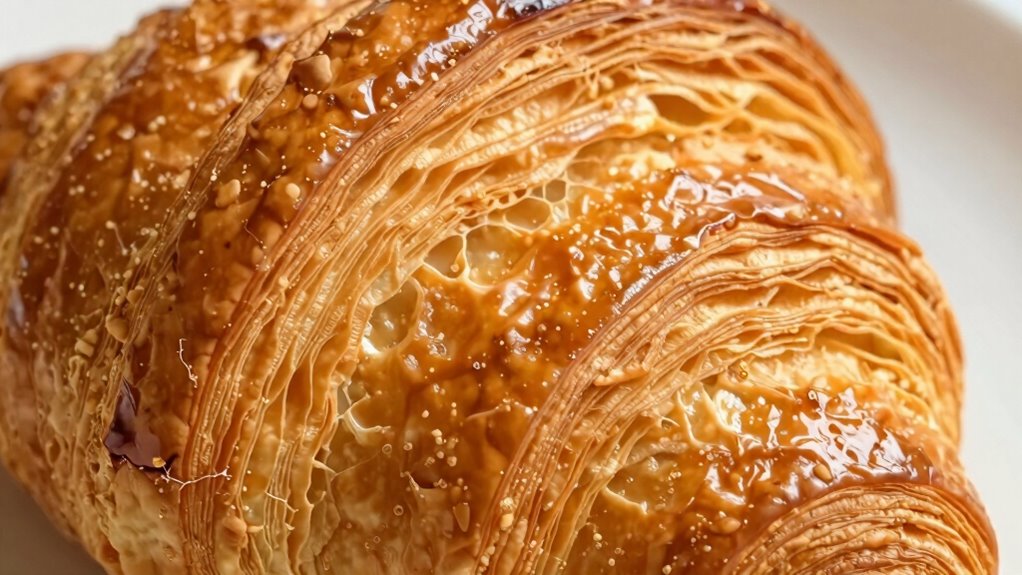

Puff pastry and croissant dough need different handling because their ingredients and textures require distinct techniques. Puff pastry relies on layering butter through folding, with minimal or no fermentation, so keeping the dough cold is essential to prevent butter from melting. Croissant dough includes yeast and requires fermentation, so it needs to be handled gently and kept at the right temperature for rise and tenderness. Understanding these differences helps you achieve perfect flaky layers or airy interiors, if you keep going.

Get baking supplies delivered free with Prime
- Fast, free delivery on millions of items
- Prime Video, Amazon Music and more included
- Member-only deals all year
Key Takeaways
- Puff pastry requires cold handling to maintain butter layers and prevent melting, ensuring crisp, flaky layers.
- Croissant dough involves fermentation, necessitating careful temperature control to develop flavor and gluten structure.
- Different ingredients (yeast in croissants, minimal yeast in puff pastry) influence handling techniques and dough elasticity.
- Proper folding and chilling are essential for both, but croissants need additional fermentation steps for rise and tenderness.
- The final desired textures—crisp layers in puff pastry versus airy, tender croissants—dictate distinct handling methods.
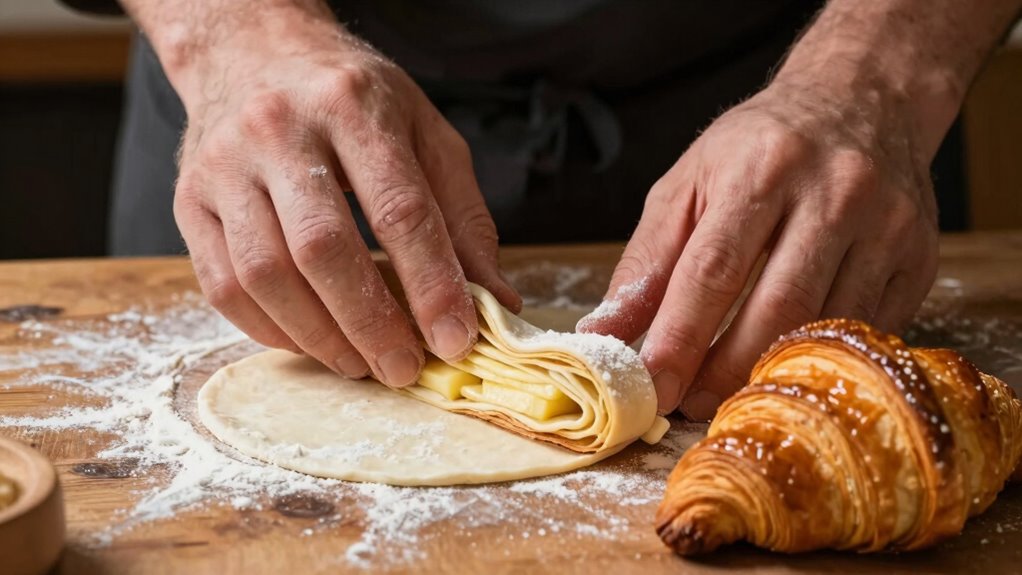
Although puff pastry and croissant dough both rely on laminated layers of dough and butter, they require different handling techniques because of their distinct dough compositions and desired textures. This difference primarily stems from their unique folding techniques and the importance of dough temperature during preparation. Puff pastry is made with a lean dough that contains minimal or no yeast, emphasizing a crisp, flaky texture achieved through precise layering and folding. Croissant dough, on the other hand, includes yeast and slightly more moisture, creating a tender yet airy interior once baked.
When working with puff pastry, your folding techniques focus on creating numerous thin layers. Typically, you perform a series of folds—called turns—by folding the dough into thirds or quarters, then chilling it between each fold. This process develops the layers needed for that signature crispness. Maintaining the right dough temperature is crucial here; the dough should stay cold but pliable. If it warms too much during rolling or folding, the butter can melt into the dough, ruining the flaky layers. To prevent this, you often chill the dough after each fold, ensuring the butter remains firm and the layers stay distinct. Proper dough temperature control is essential for maintaining the integrity of the lamination process in puff pastry. Additionally, knowing how to handle butter consistency is key to achieving the perfect layers. Proper handling techniques also involve managing dough elasticity to prevent tearing and uneven layers. Ensuring consistent lamination technique helps produce uniform, professional results.
Croissant dough requires a different approach. Its folding techniques involve a series of lamination steps that incorporate yeast fermentation, which gives the pastry its characteristic rise and tenderness. You typically perform a series of turns—often three to four—by rolling out the dough and folding it into thirds, then chilling again. The dough temperature is equally essential here; it needs to be kept cool enough to prevent the butter from melting prematurely but warm enough to allow the dough to stretch and fold smoothly. Managing this temperature ensures the butter stays laminated within the layers, creating the flaky, airy structure that defines a good croissant. Additionally, fermentation process plays a significant role in developing the dough’s flavor and texture. Proper fermentation time and temperature control are vital for optimal gluten development and flavor complexity. Proper fermentation also enhances the dough’s extensibility, making it easier to roll out and fold properly.
In both cases, your handling techniques are guided by a delicate balance of folding and chilling. For puff pastry, the focus is on creating thin, uniform layers that bake into a crisp, golden crust. For croissants, the goal is to develop a layered, airy interior with a tender crumb, which hinges on proper fermentation and lamination. Consistently controlling the dough temperature throughout the process is key to achieving the ideal textures for each pastry. Whether you’re making puff pastry or croissants, understanding these differences helps you handle each dough correctly, ensuring professional-quality results every time.
Products Worth Considering

De'Longhi Stilosa Compact Manual Espresso Machine with Milk Frother

Instant Pot Vortex Plus 10-Quart 7-in-1 Air Fryer Oven

Traeger Woodridge Pro Wood Pellet Grill and Smoker, 970 sq. in., WiFIRE
As an affiliate, we earn on qualifying purchases.
Frequently Asked Questions
Can Puff Pastry Be Used as Croissant Dough Substitute?
You can’t really use puff pastry as a croissant dough substitute because their butter layering and dough elasticity differ. Puff pastry has more butter layers, resulting in a flaky, crisp texture, while croissant dough’s gluten develops more, creating a tender, airy interior. Croissants require gentle handling to maintain dough elasticity, whereas puff pastry is rolled and folded differently. So, substituting them affects the final texture and structure of your baked goods.
What Tools Are Best for Handling Croissant Dough?
You should use a rolling pin for dough rolling when handling croissant dough, as it helps you evenly flatten the layers without overworking the dough. A bench scraper is also essential for neatly dividing and turning the dough. For tool selection, opt for a pastry brush to apply butter smoothly and a dough knife for precise cuts. These tools help maintain the dough’s lamination and achieve the perfect flaky texture.
How Does Dough Temperature Affect Puff Pastry?
Dough temperature directly impacts puff pastry by affecting its elasticity and layering ability. When the dough is too warm, it becomes sticky and loses structure, making it difficult to achieve the desired flaky layers. Maintaining proper temperature control keeps the dough firm yet pliable, ensuring it layers correctly during folding. Properly chilled dough allows the butter to stay solid, creating distinct layers that puff up beautifully when baked.
Are There Gluten-Free Options for Puff Pastry and Croissants?
Yes, you can find gluten-free alternatives and dairy-free options for puff pastry and croissants. Many brands now offer gluten-free puff pastries made with rice, almond, or tapioca flour, while vegan and dairy-free versions use plant-based margarines or oils. These options provide delicious, flaky textures without gluten or dairy, perfect for those with allergies or dietary restrictions. Just be sure to check ingredients to guarantee they meet your specific needs.
How Long Do You Rest Puff Pastry Versus Croissant Dough?
You should rest puff pastry for about 30 minutes, while croissant dough benefits from a longer rest of 1 to 2 hours or even overnight. Proper dough resting allows gluten to relax, making handling easier and ensuring flaky layers. Use gentle handling techniques during shaping to prevent overworking the dough. Resting times differ because puff pastry needs less gluten development, whereas croissant dough requires more time for ideal lamination and texture.
Conclusion
Remember, puff pastry and croissant dough are like twin flames—each with its own dance. Treat puff pastry gently, like a whispering breeze, folding softly to preserve its delicate layers. Croissant dough, on the other hand, demands a firm, confident hand—like a steady drumbeat—building layers through careful folds. Mastering their differences is like tuning two instruments; when you listen and respond accordingly, you create a symphony of flaky perfection that delights with every bite.