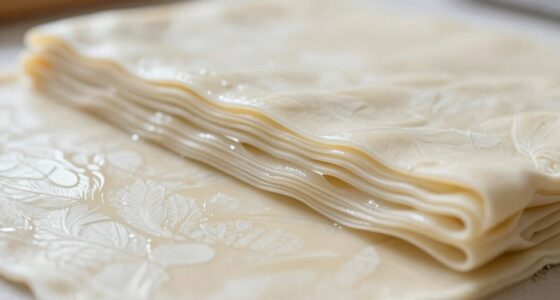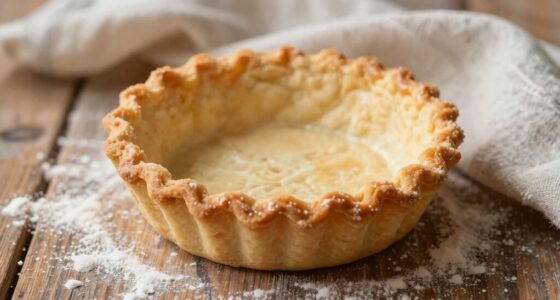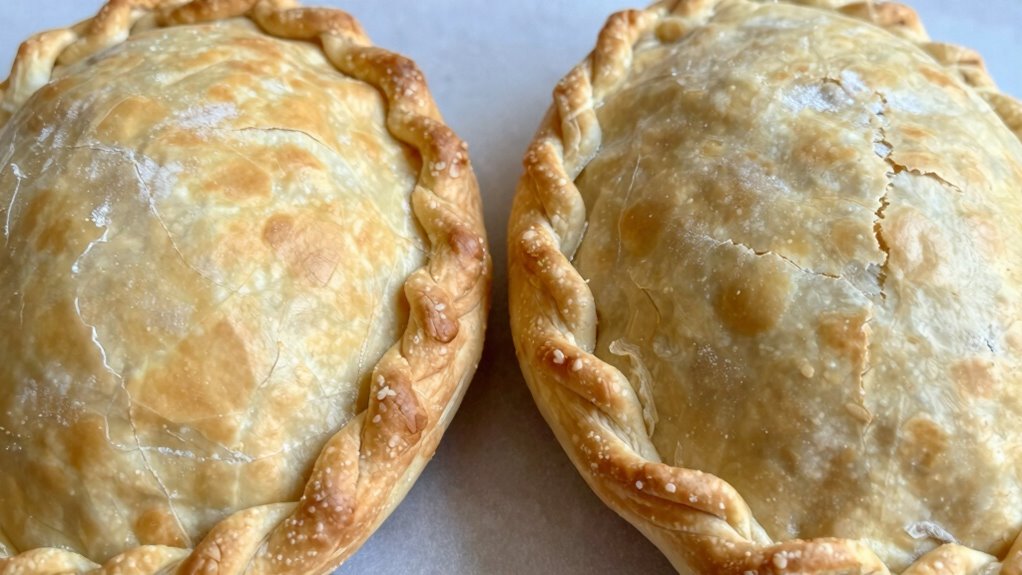

Dough thickness is key to making better hand pies because it affects the crust’s texture, even cooking, and how well the filling stays inside. If your dough is too thin, filling might poke through or leak, while too thick dough can make the pie heavy and doughy. Finding the right balance guarantees a flaky, tender crust that complements your filling perfectly. Keep exploring to discover more tips for achieving flawless hand pies.

Get baking supplies delivered free with Prime
- Fast, free delivery on millions of items
- Prime Video, Amazon Music and more included
- Member-only deals all year
Key Takeaways
- Proper dough thickness ensures even heat distribution, resulting in perfectly cooked filling and crust.
- Uniform thickness prevents leaks and maintains structural integrity during baking.
- Achieving the right thickness balances crispness and tenderness for an ideal crust.
- Consistent dough thickness simplifies handling, rolling, and shaping of hand pies.
- Correct thickness enhances overall texture, ensuring a flaky, tender, and satisfying bite.
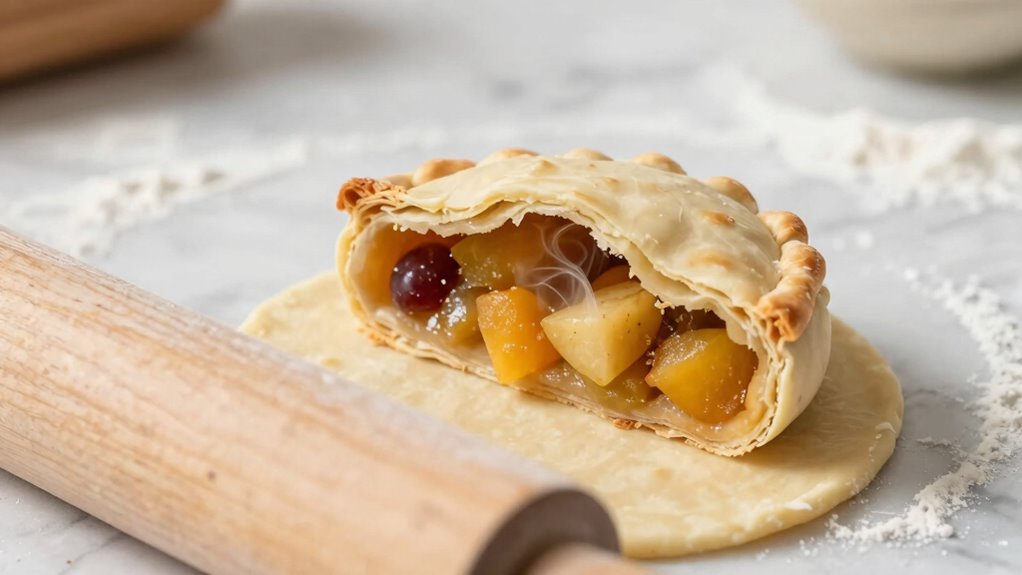
Have you ever wondered how the thickness of your dough can make or break your hand pies? The way you handle pastry rolling directly impacts the final product. When you roll out your dough, you’re not just flattening it; you’re shaping the foundation that determines whether your hand pies turn out flaky and tender or dense and tough. Achieving the right dough thickness starts with understanding the importance of proper pastry rolling techniques. If you roll too thin, the filling might poke through or leak, and the crust could become fragile and tear easily. On the other hand, if it’s too thick, the crust might overshadow the filling, resulting in a heavy, doughy bite. Finding that perfect balance depends on your skill and attention during pastry rolling, but it also hinges on the ingredient ratios you use.
Your ingredient ratios — the balance of flour, fat, liquid, and sometimes sugar — influence how easily your dough can be rolled out to the right thickness. For example, too much fat can make the dough more tender but also more difficult to roll evenly, leading to uneven thickness. Too little liquid, and the dough becomes crumbly and resistant to rolling, forcing you to apply more force, which can distort the shape. When you measure your ingredients precisely and maintain the proper ratios, you create a dough that’s easier to work with, yielding a consistent thickness throughout. This consistency is key to achieving a perfectly cooked hand pie where the crust isn’t underdone or overbaked. Additionally, understanding dough elasticity helps in developing better rolling techniques to prevent tearing and ensure uniformity. Developing a good understanding of dough temperature can also improve your control during rolling, as warmer dough tends to be more elastic and easier to manipulate.
The dough consistency affects how well the dough can be rolled out smoothly without cracking or tearing. The ideal dough thickness allows heat to penetrate evenly during baking, ensuring your filling heats through without burning the crust. Proper pastry rolling techniques are essential for controlling the dough’s resistance and achieving a uniform layer. It also affects the texture—aim for a thin enough layer to be crisp and flaky but thick enough to hold up to the filling’s moisture and weight. As you develop your pastry rolling skills, pay close attention to the feel of the dough and the resistance it offers. Using a rolling pin with guides or a dough thickness ruler can help you maintain uniformity. Remember, the secret isn’t just in the ingredients but in how you manipulate the dough during pastry rolling. With practice, you’ll instinctively know when your dough is at the right thickness, leading to hand pies that are consistently delicious—crisp, tender, and perfectly filled.
As an affiliate, we earn on qualifying purchases.
Frequently Asked Questions
Can Dough Thickness Affect the Baking Time of Hand Pies?
Yes, dough thickness affects the baking time of hand pies. Thinner dough bakes faster because it allows heat to penetrate evenly, ensuring a crispy crust. If your dough is too thick, it may need extra baking time, risking undercooked centers. Proper thickness maintains dough elasticity, making it easier to handle, and promotes better flavor absorption, resulting in delicious, well-baked hand pies with a perfect balance of texture and taste.
What Tools Are Best for Achieving Consistent Dough Thickness?
Think of dough rolling as sculpting a masterpiece; your tools shape perfection. Use a rolling pin with adjustable rings to guarantee consistent dough thickness measurement, like setting a precise blueprint. A silicone rolling mat with marked measurements acts as your guide, helping you roll evenly every time. For best results, choose a sturdy, smooth roller and keep checking thickness to create uniform hand pies that bake evenly and look irresistible.
Does Dough Thickness Impact the Filling-To-Dough Ratio?
Yes, dough thickness directly impacts the filling-to-dough ratio. When you roll your dough evenly, it maintains consistent thickness, ensuring each hand pie has the right balance of filling and crust. Thinner dough enhances dough elasticity, making it easier to seal without tearing. Plus, it improves flavor absorption, allowing the filling’s taste to shine through. An even thickness results in a more professional appearance and a better overall eating experience.
How Does Dough Thickness Influence Hand Pie Crunchiness?
Dough thickness directly impacts the crunchiness of your hand pies by affecting dough elasticity and flavor absorption. Thinner dough tends to be crispier because it’s more elastic, allowing it to stretch and crisp up nicely during frying or baking. Plus, a thinner crust absorbs flavors better, enhancing overall crunch. Thick dough, on the other hand, may stay softer, reducing crunchiness. So, adjusting the thickness helps you achieve that perfect crispy bite.
Is There an Ideal Dough Thickness for Different Pie Fillings?
Think of your dough as a flexible canvas; for lighter fillings, aim for a thinner, more delicate layer to let the flavor shine through. For denser fillings, a slightly thicker dough guarantees sturdiness. Achieving the perfect dough thickness depends on dough elasticity and proper gluten development, which helps maintain structure without cracking. Adjust thickness based on filling weight, and you’ll craft hand pies that taste as good as they look.
As an affiliate, we earn on qualifying purchases.
Conclusion
So, remember, just like Goldilocks found her porridge just right, your hand pies need the perfect dough thickness—not too thin, not too thick. It’s the secret that transforms a good snack into a memorable treat. When you master this detail, you’ll craft hand pies that sing with crispness and tenderness, much like a well-tuned instrument. Trust this little secret, and your baked creations will always hit the sweet spot—just like the stories we cherish.
As an affiliate, we earn on qualifying purchases.
As an affiliate, we earn on qualifying purchases.
Halloween Picks
halloween
As an affiliate, we earn on qualifying purchases.