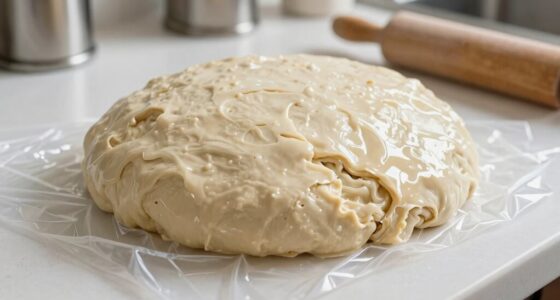
You might think less resting is fine, but more time allows your croissant dough to relax properly, ensuring the layers stay distinct and flaky. Resting helps develop flavor, relaxes gluten to prevent tearing, and keeps butter from melting into the dough. It also supports fermentation, which boosts flavor and creates a light, airy crumb. Patience pays off—if you’re curious about how to perfect your croissants, keep exploring these essential resting steps.

Get baking supplies delivered free with Prime
- Fast, free delivery on millions of items
- Prime Video, Amazon Music and more included
- Member-only deals all year
Key Takeaways
- Resting allows butter layers to set and prevents them from melting into the dough during rolling.
- Extended resting relaxes gluten, reducing tearing and ensuring even, flaky layers.
- More resting time enhances fermentation, developing better flavor and a lighter, airy crumb.
- It helps maintain dough elasticity and temperature, crucial for precise layering and shaping.
- Patience with resting prevents dense, tough croissants, ensuring optimal flakiness and overall quality.

Resting croissant dough is an essential step that can’t be skipped if you want flaky, layered pastries. When you take the time to let the dough rest properly, you allow the butter layering to set and stabilize, which is fundamental for achieving that signature croissant texture. During this resting period, the dough relaxes, reducing gluten development that can make layers tough or chewy. This patience guarantees the dough remains tender yet strong enough to hold the delicate layers of butter, which is what creates the pastry’s iconic flakiness.
A key reason to give your dough adequate rest is to support the fermentation process. When you first mix your ingredients, fermentation begins as the yeast starts producing carbon dioxide, which helps the dough rise and develop flavor. However, if you handle or roll out the dough too soon, this fermentation can be disrupted, preventing it from fully developing. Resting allows the yeast to work undisturbed, resulting in a richer flavor and a more airy, light crumb. It’s a subtle but important step that transforms simple ingredients into complex, flavorful layers. Additionally, fermentation process is influenced by temperature, so maintaining a cool environment during resting maximizes flavor development.
Moreover, the resting period is indispensable for the butter layering process. When you enclose butter between layers of dough, it’s important to keep the dough cold to prevent the butter from melting into the dough. Resting in the fridge helps maintain a cool temperature, allowing the butter to stay firm and well-distributed. This stability makes it easier to roll out the dough without the butter seeping out or blending in unevenly, which would compromise the layers’ distinctness. The more you rest your dough, the more the butter can firm up, making subsequent folds and rollouts smoother and more effective. Proper rest also enhances the dough’s elasticity, making the rolling process more manageable and resulting in cleaner, more precise layers.
Patience during this resting phase also improves the dough’s elasticity. By allowing the gluten to relax, you make the rolling and folding process less tough, reducing the risk of tearing or creating uneven layers. This results in a more uniform, professional-looking croissant with perfectly layered textures. Resting is also vital for the dough’s structure, as it helps develop the necessary strength and balance for shaping and baking. In essence, resting isn’t just about convenience — it’s about shaping the dough’s structure, flavor, and texture in a way that’s impossible to achieve with hurried handling.
In addition, the resting period allows the dough to develop better flavor through fermentation, which enhances the overall quality of your croissants. In the end, giving your croissant dough enough time to rest is what separates a good pastry from a great one. It’s a fundamental step that nurtures the development of butter layering, supports the fermentation process, and ensures your croissants will turn out flaky, airy, and full of flavor. Rushing through this step means risking flat, dense results, so patience truly pays off when making perfect croissants.
Products Worth Considering

Vitamix 5200 Professional-Grade Blender, 64 oz. Container, Black

Ninja Artisan 5-in-1 Portable Electric Pizza Oven, Blue & Gold

Ninja Foodi DZ201 8-Quart DualZone 6-in-1 Air Fryer
As an affiliate, we earn on qualifying purchases.
Frequently Asked Questions
Can I Skip the Resting Period Altogether?
You shouldn’t skip the resting period, as it’s essential for dough elasticity and proper butter layering. Resting allows the gluten to relax, making the dough easier to roll out and shape. It also helps the butter stay evenly layered without breaking through. Skipping this step can lead to tough, uneven croissants with poor texture. So, take the time for a proper rest to achieve flaky, tender layers.
How Does Rest Time Affect Croissant Flavor?
Skipping rest? No way, you’re missing out on flavor development and texture improvement. When you give croissant dough ample rest, the flavors deepen, and the layers become irresistibly flaky. It’s like a secret handshake for taste buds, ensuring your pastry isn’t just buttery but also complex and satisfying. So don’t rush—rest periods are your best friends in transforming dough into a masterpiece, not just a quick snack.
What Happens if I Over-Rest the Dough?
If you over-rest your croissant dough, fermentation continues, which can lead to overly sour flavors and a weakened gluten structure. This prolonged resting may cause the butter layers to soften excessively, making it harder to achieve the flaky, layered texture you want. Over-fermented dough also risks tearing during shaping, resulting in uneven layers. To avoid these issues, keep an eye on your resting times and refrigerate if needed.
Is Refrigeration Necessary During Resting?
Refrigeration isn’t always necessary during resting, but it’s like putting your dough in a cool cave to slow yeast activity and keep dough temperature steady. If your kitchen’s warm, chilling helps prevent over-fermentation and keeps the layers perfect. When you refrigerate, you give the dough time to relax, develop flavor, and stay manageable. So, if your dough’s warm, refrigeration becomes a helpful tool in your croissant-making journey.
Can Rest Time Vary With Different Flour Types?
Yes, rest time can vary with different flour types because of differences in flour hydration and gluten development. Some flours absorb more water, requiring longer resting periods to fully hydrate and develop gluten structure. This helps achieve the right dough elasticity and layers. You should adjust resting times based on your flour’s characteristics, ensuring the dough is smooth, pliable, and ready for shaping, regardless of the flour used.
Conclusion
Remember, patience is key when making croissants. Resting the dough allows the gluten to relax, the butter to firm up, and the layers to develop—each step building on the last. Resting longer means better lamination, flakier layers, and a richer flavor. So, don’t rush the process. Embrace the wait, trust the method, and enjoy the reward: perfect croissants that impress every time. Because in baking, as in life, good things come to those who wait.