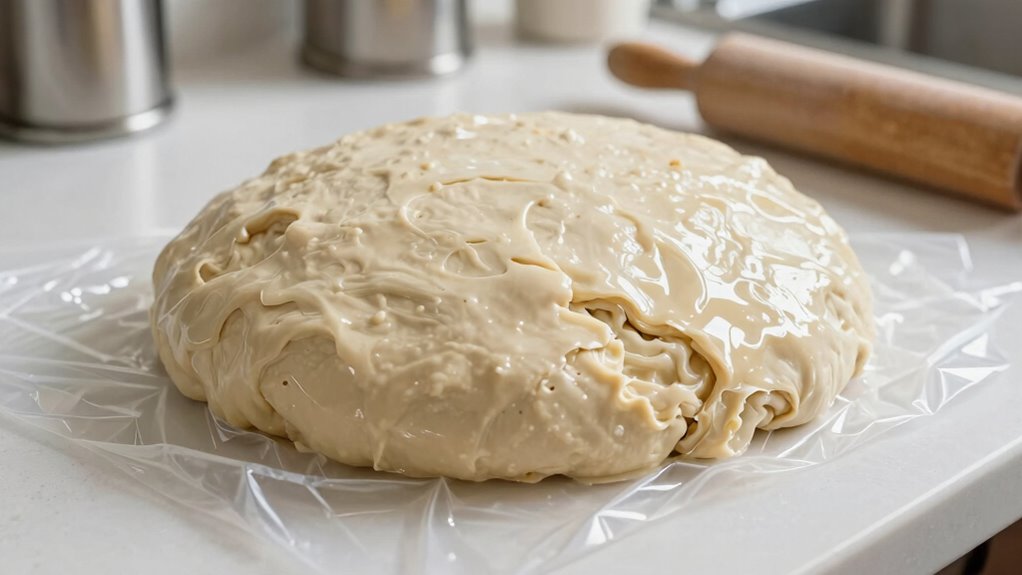

Sheeting may hide surface flaws, but it doesn’t fix the real problems behind poor dough development. If your gluten isn’t well-developed through proper mixing and fermentation, sheeting only masks those flaws without strengthening the dough. It can even weaken it further, making it more prone to tearing and collapsing during baking. To achieve better results, you need to focus on proper gluten development and fermentation—there’s much more to discover on how to improve your dough’s structure.

Get baking supplies delivered free with Prime
- Fast, free delivery on millions of items
- Prime Video, Amazon Music and more included
- Member-only deals all year
Key Takeaways
- Sheeting masks dough flaws without improving gluten structure or strength.
- Proper gluten development requires adequate mixing and kneading, not just shaping.
- Fermentation is essential for extensibility; sheeting cannot compensate for poor fermentation.
- Sheeting can worsen weak gluten networks, leading to tearing and uneven dough.
- High-quality final products depend on thorough dough development, which sheeting alone cannot achieve.

Sheeting is often seen as a quick fix for dough that hasn’t developed properly, but it doesn’t address the root causes of poor dough development. When you rely on sheeting to salvage underdeveloped dough, you’re fundamentally forcing it into a shape that may mask flaws rather than fixing them. The core issue lies in the gluten structure, which is essential for dough’s elasticity and strength. If the gluten hasn’t formed properly during mixing or hasn’t been developed through kneading, sheeting won’t make it any stronger or more resilient. Instead, it can lead to a fragile, tear-prone dough that won’t hold its shape, no matter how many times you pass it through the rollers.
Sheeting masks dough flaws without fixing gluten development or strength. Proper mixing and fermentation are essential.
The fermentation process plays a key role in dough development, too. Proper fermentation allows enzymes to break down starches and proteins, creating a more extensible and flavorful dough. If fermentation is rushed or skipped altogether, the dough will lack the necessary gluten development and gas retention capacity. When you shear or sheet poorly fermented dough, you risk flattening the weak gluten network rather than improving it. The dough might stretch thin but won’t have the elasticity or structure to support oven spring or maintain its shape during baking. Additionally, understanding the importance of enzyme activity in fermentation can help you optimize dough development. Recognizing the impact of fermentation time on gluten strength can guide you to improve overall dough quality. Ensuring proper dough handling techniques is vital for building a resilient gluten network that can withstand the sheeting process without tearing or collapsing. Proper temperature and humidity control during fermentation also influence gluten development, helping to create dough that is more resilient and easier to work with.
You might think sheeting can compensate for underdeveloped dough, but it often results in a compromised final product. Instead of fixing the gluten structure, sheeting can exacerbate existing issues, causing uneven thickness, tearing, or a dense texture. The true solution lies in proper mixing, kneading, and fermentation. These steps help develop a strong gluten network capable of trapping gases generated during fermentation, which is critical for a light, airy crumb. Rushing these essential steps may save time initially but ultimately leads to inferior bread quality. When you understand that dough’s quality depends on its gluten structure and fermentation process, you realize that sheeting isn’t a shortcut. Proper gluten development ensures the dough has the right elasticity and strength, while fermentation enhances flavor and extensibility. Rushing these steps or trying to fix their absence with sheeting only leads to inferior results. Instead, focus on developing the gluten thoroughly and allowing sufficient fermentation time. This approach guarantees a dough capable of stretching, rising, and baking into a perfect loaf, rather than relying on superficial adjustments that don’t address the root issues.
bread dough gluten development tools
As an affiliate, we earn on qualifying purchases.
As an affiliate, we earn on qualifying purchases.
Frequently Asked Questions
Can Sheeting Improve Dough if Developed Improperly Initially?
Sheeting can’t improve dough if it was developed improperly from the start. If dough hydration was off or fermentation control was lacking, sheeting won’t fix these fundamental issues. Instead, it may even worsen the problem by overstretching weak dough. To get better results, focus on proper dough development first—adjust hydration levels and manage fermentation carefully—before using sheeting to shape or refine the dough.
Does Sheeting Affect Gluten Structure in Poor Dough?
Sheeting might stretch your dough thin, but it doesn’t change the gluten formation inside. Imagine pulling on a tangled web; if the gluten network is weak, dough stretching only reveals its flaws, not fixes them. Poor dough development means the gluten structure isn’t strong enough, so sheeting can’t improve it. Instead, it risks tearing or flattening what’s already fragile, giving you a false sense of a well-formed dough.
Is Sheeting Suitable for All Types of Dough?
Sheeting isn’t suitable for all types of dough, especially if dough hydration levels are off or ingredient quality varies. For delicate or high-fat doughs, sheeting can cause overworking or uneven texture. If your dough has poor hydration or subpar ingredients, sheeting won’t fix these issues and may even worsen them. Always assess dough type and ingredient quality first, then decide if sheeting’s appropriate for your specific recipe.
How Does Sheeting Influence Dough Elasticity?
Back in the day, sheeting can seem like a magic wand, but it doesn’t truly influence dough elasticity. When you sheet dough, the sheet impact isn’t enough to develop gluten properly, so elasticity remains poor. Instead, you should focus on kneading and resting the dough to improve its stretch and resilience. Sheeting may help with shaping, but it won’t fix underlying issues with dough elasticity caused by poor development.
Can Sheeting Mask Underlying Dough Quality Issues?
Sheeting can’t mask underlying dough quality issues. While it may temporarily improve texture consistency and even enhance flavor through gentle stretching, it doesn’t address fundamental problems like poor gluten development or improper fermentation. Relying solely on sheeting might hide these flaws, but they’ll surface during baking, affecting the final product’s structure and taste. To truly improve quality, focus on proper dough preparation rather than just manipulating its appearance.
As an affiliate, we earn on qualifying purchases.
Conclusion
Remember, sheeting is like trying to smooth out a rough diamond—it can’t polish poor dough development into perfection. If your dough isn’t well-developed, no amount of stretching will make it shine. Focus on proper mixing, fermentation, and kneading first. Sheeting should be the finishing touch, not the remedy. Think of it as fine-tuning a masterpiece, not fixing its foundation. Only with solid dough can your sheeting truly bring out the best in your baked goods.
As an affiliate, we earn on qualifying purchases.
As an affiliate, we earn on qualifying purchases.
Halloween Picks
halloween
As an affiliate, we earn on qualifying purchases.