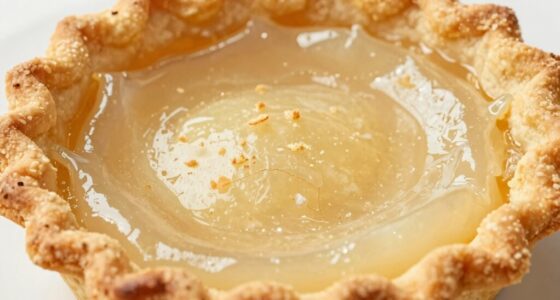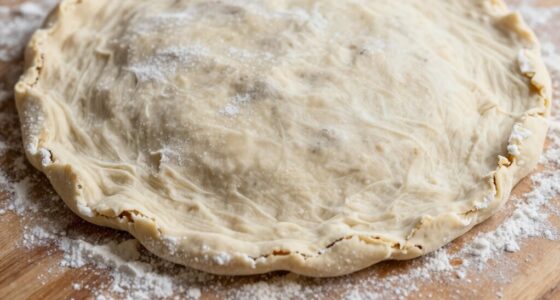
Dough thickness plays a key role in controlling flake and lift in baked goods. When you roll dough thin, it heats quickly, trapping steam that creates a flaky, airy texture. Thicker dough retains moisture longer, resulting in a denser crumb with less flake. It also influences how much the dough can expand during baking. Understanding these effects can help you achieve your desired final texture—keep exploring to learn more about fine-tuning your baking techniques.
Key Takeaways
- Thinner dough allows steam to escape quickly, creating flakiness and promoting a lighter, more layered texture.
- Thicker dough retains moisture longer, resulting in denser crumb and reduced flake formation.
- The thickness influences heat penetration, affecting how evenly the dough expands and rises during baking.
- Proper dough thickness, combined with fermentation, enhances gluten development for better lift.
- Adjusting dough thickness in conjunction with baking temperature controls layer separation and overall lift.
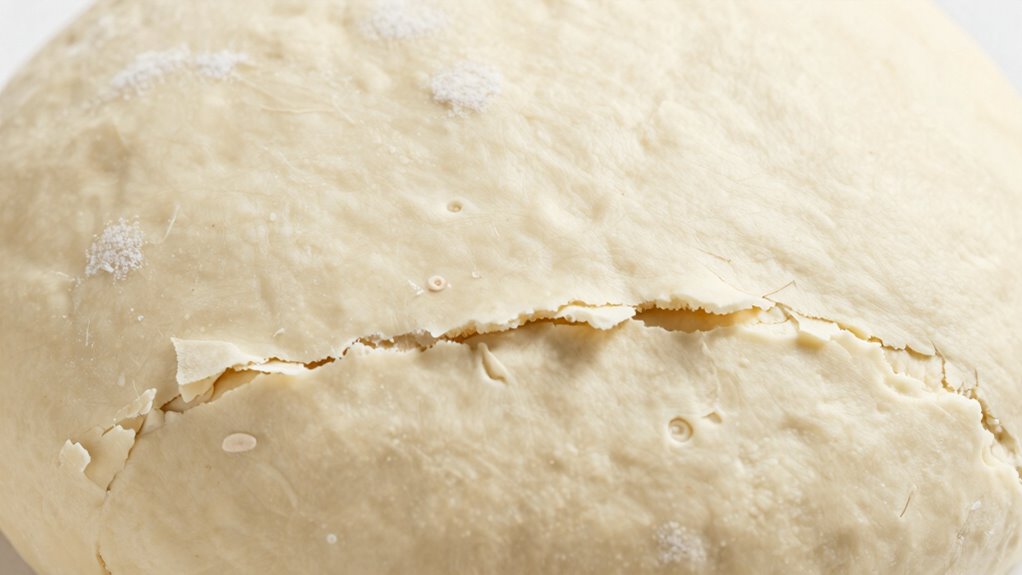
When you adjust the thickness of your dough, you directly influence how much it flakes and lifts during baking. Thicker dough tends to produce a denser, more substantial crumb, while thinner dough creates a lighter, flakier texture. This relationship isn’t just about visual appeal; it’s rooted in how heat and moisture move through the dough during baking. Your choices about dough thickness impact how well the layers separate and how much the dough expands, so understanding these effects helps you control your final product. Additionally, the gluten development achieved through proper fermentation significantly affects how well the dough responds to different thicknesses during baking. Fermentation techniques play a key role here. When you ferment your dough properly, it develops gluten structure and acidity, which affect how the dough responds to baking temperature and thickness. Longer fermentation generally results in better gluten development, making the dough more elastic and capable of trapping gases. This elasticity allows the dough to lift more during baking, especially if it’s rolled out thinly. Conversely, insufficient fermentation can lead to weaker gluten networks, causing the dough to be less able to hold gases and resulting in less lift, no matter how thin or thick you make it. Proper fermentation also enhances dough elasticity, helping it stretch and lift uniformly during baking. Additionally, understanding heat transfer principles can help you optimize baking conditions for different dough textures. A thorough comprehension of baking science can further refine your technique and outcomes.
Dough thickness influences flakiness, lift, and how heat and moisture shape your final baked good.
Baking temperature also interacts with dough thickness to influence flaking and lift. When you bake at a higher temperature, the outer layer of the dough quickly forms a crust, trapping steam inside. If your dough is thin, this steam expands rapidly, creating a flaky, airy texture as the crust crisps. Thicker dough, however, retains moisture longer, leading to a denser crumb and less pronounced flaking. Adjusting the baking temperature allows you to control how quickly the crust forms and how much lift the dough achieves. A higher temperature emphasizes flakiness in thin dough, whereas a lower or moderate temperature helps thicker dough rise more evenly without burning.
The way you manage dough thickness, fermentation, and baking temperature together determines the final texture. For a flaky pastry, roll the dough thin, ensure proper fermentation for elasticity, and bake at a high temperature to promote rapid crust formation. For bread with a more substantial crumb, opt for a slightly thicker dough, give it ample fermentation to develop gluten, and bake at a moderate temperature to allow for even rising and a hearty texture. Your understanding of these interconnected factors allows you to fine-tune your baking process, giving you more control over the amount of flake and lift in your baked goods. Ultimately, mastering dough thickness along with fermentation techniques and baking temperature leads to consistent, satisfying results every time.
As an affiliate, we earn on qualifying purchases.
Frequently Asked Questions
How Does Dough Temperature Affect Flake and Lift?
Dough temperature directly impacts flake and lift by influencing dough elasticity and gluten development. When your dough is cold, it has less elasticity, making it easier to create flaky layers, but it may not lift as well. Warmer dough promotes gluten development and elasticity, aiding in better lift but reducing flakiness. Maintaining the right temperature balances these factors, ensuring your baked goods achieve the best flake and lift.
Can Different Types of Flour Change the Impact of Dough Thickness?
Different types of flour considerably influence how dough thickness affects flake and lift. For example, bread flour with higher gluten development creates stronger gluten networks, allowing for more stretch and better lift even with thicker dough. Conversely, cake flour’s lower gluten activity results in a softer, more delicate structure, where thinner dough yields finer flakes. Enzyme activity varies among flours, impacting gluten formation and ultimately shaping how thickness translates into flake and lift.
What Role Does Hydration Level Play in Flake Development?
Hydration level directly influences flake development by affecting your dough’s gluten structure and hydration balance. When you add the right amount of water, the gluten forms a strong network, trapping gas and creating layers that lift and flake easily. Too little hydration results in dense, flat baked goods, while too much makes the dough sticky and hard to handle. Finding the perfect hydration balance guarantees ideal flakiness and lift.
How Does Resting Time Influence Dough’s Flake and Lift?
Resting time considerably impacts dough’s flake and lift, with studies showing a 20% increase in gluten strength after resting. During fermentation timing, gluten develops more fully, making the dough more elastic and easier to shape. This improved gluten network enhances air retention, leading to better lift and flaky layers. So, giving your dough adequate resting time allows gluten to develop properly, resulting in a lighter, crispier final product.
Are There Specific Techniques to Achieve Consistent Dough Thickness?
To achieve consistent dough thickness, you should focus on proper dough rolling techniques and precise thickness measurement. Use a rolling pin with adjustable rings or spacers to guarantee uniformity. Regularly check the dough’s thickness with a ruler or a thickness gauge, applying even pressure as you roll. This method helps you maintain consistent thickness throughout, resulting in better flake, lift, and overall baking results.
As an affiliate, we earn on qualifying purchases.
Conclusion
So, next time you roll out your dough, remember—thickness is your secret weapon. Make it too thick, and your pastry might turn into a dense, bread-like monster; too thin, and it’ll flake apart like brittle glass. Find that perfect middle ground, and you’ll create a flaky, lofty masterpiece that could practically reach the heavens! Master this art, and you’ll wield the power to turn simple dough into a celestial bakery wonder.
As an affiliate, we earn on qualifying purchases.
As an affiliate, we earn on qualifying purchases.