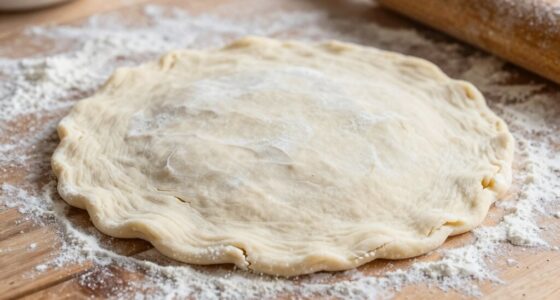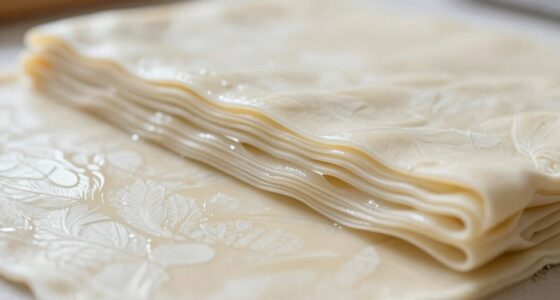
The biggest mistake that ruins clean lamination is using uneven or excessive flour. Too much flour creates dry, tough layers that tear easily, while uneven application can cause sticking or tearing in certain areas. It disrupts the delicate layering process needed for a flaky finish. Consistent, light flouring helps maintain dough pliability and prevents damage. Keep this in mind, and you’ll discover more tips to perfect your lamination technique as you continue.

Get baking supplies delivered free with Prime
- Fast, free delivery on millions of items
- Prime Video, Amazon Music and more included
- Member-only deals all year
Key Takeaways
- Applying too much flour creates dry, tough layers that hinder smooth lamination.
- Inadequate flour leads to sticking, tearing, and uneven dough sheets.
- Uneven flour distribution causes inconsistent layers and compromises flaky texture.
- Excess flour can dry out dough, making it difficult to handle during lamination.
- Proper, light, and even flouring maintains dough pliability and prevents tearing.

Laminating dough can be tricky, especially when a simple flouring mistake ruins the entire process. One of the most common issues you might face is improper flour distribution, which directly impacts the dough consistency. When flour isn’t evenly spread, the layers can stick together or tear during lamination, making it impossible to achieve that clean, flaky finish you’re aiming for. To avoid this, you need to focus on how you distribute flour at every step. Too much flour can make the dough dry and tough to work with, while too little can cause sticking and tearing. Striking the right balance means paying close attention to how much flour you apply and where.
Your goal should be a dough that’s smooth, pliable, and slightly tacky but not sticky. This requires consistent flouring techniques, especially when rolling out and folding the dough. If you notice the dough sticking to your work surface or rolling pin, it’s a sign you’re not applying enough flour, or perhaps you’re not distributing it evenly. Conversely, if the dough feels dry and cracks when you roll it, you may have over-floured or not integrated the flour well enough into the dough. The key is to lightly dust your work surface and rolling pin with flour, ensuring you don’t overload it, then gently brush away excess as needed.
Achieve perfect lamination with even, gentle flouring for a smooth, pliable dough.
Another thing to watch out for is how you handle the dough during lamination. When you fold and roll it, uneven flouring can cause parts of the dough to stick or tear, ruining the lamination process. You want to keep the flour distribution uniform so each layer remains intact, creating those delicate, distinct sheets. If you notice pockets of flour or uneven patches, it’s a sign you need to re-flour lightly and evenly before proceeding. Consistency in your flouring technique makes a huge difference in maintaining the dough’s integrity and achieving that perfect flaky texture. Additionally, proper technique can help prevent common mistakes and ensure a more successful lamination.
Furthermore, understanding the importance of flour distribution can help you troubleshoot issues quickly and improve your lamination skills over time. Ultimately, controlling dough consistency hinges on mindful flour distribution. It’s tempting to add more flour as you work, but doing so haphazardly leads to tough, dry layers. Instead, you should focus on gentle, even dusting and adjusting as needed. This approach helps keep the dough pliable, prevents tearing, and ensures the lamination process stays clean and precise. When your flouring is consistent and your dough has the right consistency, you’ll find lamination becomes a smoother, more predictable process—free of the frustration that comes with uneven flouring and tearing.
As an affiliate, we earn on qualifying purchases.
Frequently Asked Questions
How Can I Prevent Over-Flouring During Lamination?
To prevent over-flouring during lamination, focus on maintaining the dough’s elasticity by using just enough flour to prevent sticking. Use a gentle rolling technique, applying even pressure without pressing too hard, which can cause excess flour absorption. Keep a light hand, frequently lift and turn the dough, and dust only as needed. This approach helps preserve the dough’s texture, ensuring a smooth, clean lamination without over-flouring.
What Type of Flour Is Best for Lamination?
You should use unbleached, all-purpose flour for lamination, as it strikes the perfect balance for dough hydration and gluten development. It’s like a reliable partner in your baking journey, helping you create layers that are resilient and tender. Avoid bread or specialty flours, which can alter hydration and weaken gluten structure, risking a flaky mess. Stick with all-purpose, and your laminated dough will turn out beautifully layered and perfect.
How Does Flour Affect the Final Lamination Quality?
Flour impacts lamination quality by influencing dough elasticity and absorption. If you use too much flour, it can make the dough stiff, reducing elasticity and causing tearing during rolling. Conversely, too little flour might result in sticking, making it challenging to achieve a smooth, even layer. Balancing flour absorption guarantees your dough remains pliable without becoming sticky, helping you create crisp, clean layers in your laminated pastry.
Can Alternative Powders Be Used Instead of Flour?
Think of your dough as a dance floor—flour is the familiar partner guiding each step. You can swap in gluten alternatives or powder substitutes like cornstarch or rice flour, but you must choose carefully. These alternatives act as the dance’s rhythm, influencing glide and grip. Experimenting with different powders helps you find the perfect partner for clean lamination, ensuring your pastry’s layers stay smooth and flawless.
What Are Common Signs of a Flawed Lamination Process?
You’ll notice flawed lamination when the lamination consistency is uneven or when you see inconsistent flour distribution, causing uneven layers or tearing. If the dough feels too sticky or too dry, it indicates improper flour application, leading to weak spots. Additionally, bubbles or creases can signal problems in the lamination process. Staying attentive to these signs helps you identify issues early and guarantees a smooth, well-layered final product.
As an affiliate, we earn on qualifying purchases.
Conclusion
If you keep making this common flouring mistake, your lamination project might not turn out as perfect as you hope. Remember, over-flouring can cause tears and bubbles, ruining your effort. Did you know that nearly 60% of beginners struggle with lamination because of improper flouring techniques? Don’t let frustration get the best of you—practice carefully and stay patient. With a little attention, you’ll achieve smooth, professional-looking lamination every time.
As an affiliate, we earn on qualifying purchases.
non-stick work surface for baking
As an affiliate, we earn on qualifying purchases.
As an affiliate, we earn on qualifying purchases.
Fall Picks
fall essentials
As an affiliate, we earn on qualifying purchases.